
(Spatial) Ethnography on Islands in Southeast Asia: Comparative Reflections from Ambon and Southwest Sumba
October 21, 2026
4:00 pm
Kahin Center
Discussion Format
The session will combine a keynote address, concise case presentations, and a moderated academic discussion. Professor Janet Hoskins will provide a keynote frame connecting the Southwest Sumba material with wider Indonesian and Southeast Asian scholarship. The Spatial Ethnography team will then present selected findings from Ambon and Southwest Sumba, followed by a facilitated exchange with SEAP faculty, graduate students, and scholars.
To assist the organizers, attendees are asked to please complete this form.
Background
The project “Developing Collaborative Methodological Frameworks for Spatial Ethnography” examines how communities experience, negotiate, remember, and transform space by connecting ethnographic inquiry with selected forms of spatial analysis. Its empirical foundation lies in field research in Ambon from 2024 to 2025 and Southwest Sumba from 2025 to 2026.
In Ambon, the research focuses on Mardika Market and borderline trade points as socially dense spaces where mobility, livelihoods, memory, and everyday peacebuilding intersect. Against the historical background of communal conflict and segregation, market activity and cross-boundary exchange reveal how residents continuously negotiate access, trust, belonging, and practical coexistence. The case therefore treats space not simply as infrastructure, but as a lived field of social relationships and post-conflict transformation.
In Southwest Sumba, the research examines tourism expansion, the commercialization of land and cultural space, changing relationships between ritual economies and cash-based income, and implications for local food sovereignty. These transformations involve customary authority, social memory, gendered responsibilities, material culture, and unequal access to emerging opportunities. The case asks how communities interpret and respond to development pressures while sustaining locally meaningful forms of social and ecological life.
A comparative discussion of the two sites offers a productive entry point into wider Southeast Asian debates on island societies, mobility, markets, ritual, tourism, political economy, and the production of place. Ambon and Southwest Sumba differ in historical trajectory and contemporary pressures, yet both demonstrate that spatial change is inseparable from memory, identity, livelihood, power, and everyday social practice.
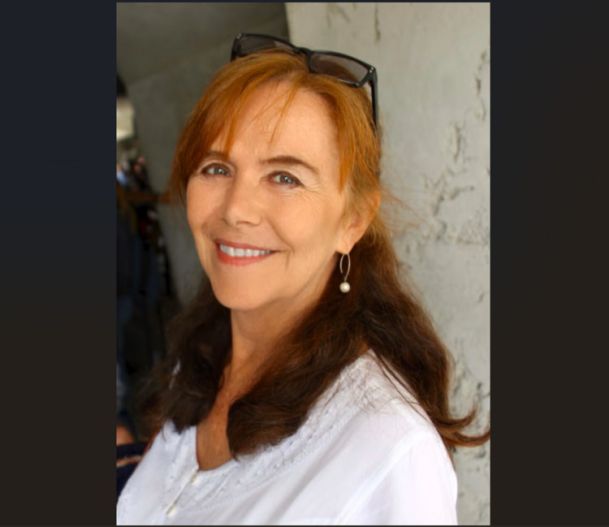
Keynote Speaker: Professor Janet Hoskins
Janet Hoskins is Emerita Professor of Anthropology and Religion at the University of Southern California. Her books about Sumba are The Play of Time: Kodi Perspectives on History, Calendars and Exchange (1996 Benda Prize in Southeast Asian Studies), Headhunting and the Social Imagination in Southeast Asia (1996) and Biographical Objects: How Things Tell the Stories of People’s Lives (1998). Two later books, The Divine Eye and the Diaspora; Vietnamese Syncretism Becomes Transpacific Caodaism (2015) and Transpacific Studies: Framing an Emerging Field (with Viet Thanh Nguyen, 2014) deal primarily with research in Vietnam. She also produced and wrote two ethnographic films about Sumba, “Horses of Life and Death” and “Feast in Dream Village”, and one on transnational Vietnam “The Left Eye of God: Caodaism travels from Vietnam to California” (all available at der.org).
Speaker: Dr. Abellia Anggi Wardani
Abellia Anggi Wardani serves as an Assistant Professor in the Faculty of Humanities at Universitas Indonesia and is a member of the Border and Migration Research Cluster (RANTAU). In addition to her academic role, she currently holds the position of Vice Chair at UI GreenMetric, focusing on advancing sustainability initiatives within society. Dr. Wardani earned her PhD from Tilburg University in the Netherlands and has over ten years of experience in community-based research across various regions in Southeast Asia, including in Indonesia: Maluku, East Nusa Tenggara, and Papua, as well as in Myanmar, Bangladesh, and Thailand. Her scholarly work has been published in reputable journals, including the Journal of Global Security Studies, Routledge Handbook, LSE Press, and the Journal of Small Wars and Insurgencies.
Additional Information
Program
Einaudi Center for International Studies
Reppy Institute for Peace and Conflict Studies
Southeast Asia Program