
Synchronized Sixth Sense
February 22, 2024
12:00 pm
How disparate humanitarian agents leverage AI tools to cultivate collaborative, anticipatory, and timely aid responses during conflicts.
This empirical study examines an overlooked yet deeply disconcerting dilemma facing humanitarian organizations operating in conflict zones. As complex conflicts evolve into new and numerous demands on humanitarian agents, they are often met with specialized, independent, organized efforts. But these well-meaning efforts often devolve into piecemeal, un-coordinative, post-hoc responses that are characterised by effort duplication, and even inadvertent violations of the 'leave no one behind' humanitarian principle. The elusive 'holy grail' in humanitarian work is to find a way to transform such uncoordinated and post-hoc efforts into an anticipatory, coordinative template of interpretation and action (i.e. collaborative praxis).
This multi-site digital ethnography examines one such transformative process - a Human AI (HAI) assemblage consisting of various human agents (NGOs, Transnational humanitarian agents, governments), and machine intelligences (NLP and predictive analytics tools) that collaboratively develop shared interpretation and anticipatory action trajectories for two ongoing humanitarian conflicts zone (Sudan and Gaza). This study finds that human and machine interactions here are distinguished by opposite mechanisms of sensemaking convergence (i.e. converging interpretations over 'temporal flow' of crises, agreements over institutional factors that exacerbate crisis, etc) and institutional divergence (i.e. Intentionally maintaining unique institutional subject positions, 'baking in' different normative understandings into models etc). The insights from our grounded, processual model contribute to literatures on AI coordination, Humanitarian organizations, and sensemaking analysis.
About the Speakers
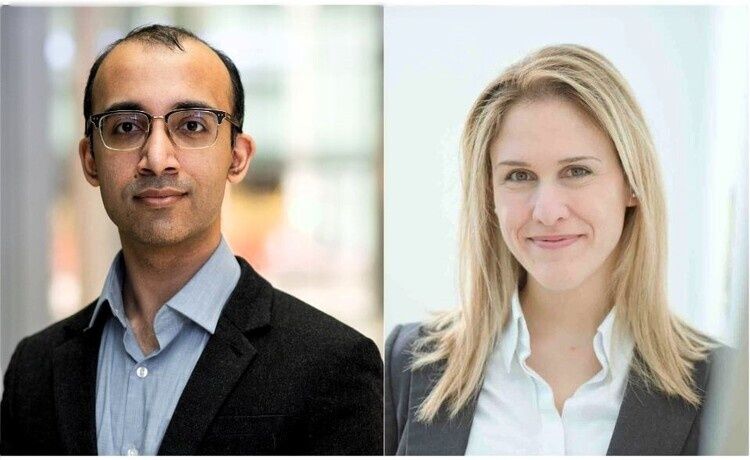
Shivaang Sharma is a PhD candidate on Collective Intelligence Systems and Adjunct lecturer on Social Innovation at UCL School of Management, UK. He is currently working alongside a cluster of INGOs to monitor and respond to ongoing armed conflicts in Africa and the Middle East. He has 11 years of experience of working in conflict zones for organizations including UN-OCHA (Office for the Coordination of Humanitarian Affairs), IMMAP, WWF (World Wide Fund for Nature). He is leading an initiative to build a collaborative community around the use of AI tools across humanitarian sectors.
Angela Aristidou specialises in strategy and entrepreneurship at University College London's School of Management and she is a Fellow (Faculty Affiliate) at Stanford University's Digital Economy Lab, in the Human-centred AI Centre. Angela is an international award-winning academic (among other: Fulbright; Stanford University's CASBS), she is solo grant-holder for a UK Research Innovation Future Leader Fellowship (approx. £1.7 UK million pounds; 2020-2028) and she currently leads a team of researchers examining digital innovations in the UK, USA, China and Canada. Angela is an expert in how private tech companies, governments and public sector organisations, nonprofits and communities collaborate to innovate for public good.
Register to attend the seminar here
Host
Judith Reppy Institute for Peace and Conflict Studies
Additional Information
Program
Einaudi Center for International Studies
Reppy Institute for Peace and Conflict Studies