
The Terror and the Time and In the Sky's Wild Noise I Victor Jara Collective - Film Screening and Discussion
October 26, 2026
4:45 pm
Schwartz Center for Performing Arts, Film Forum
The Terror and the Time and In the Sky's Wild Noise I Victor Jara Collective
Film Screening and Discussion
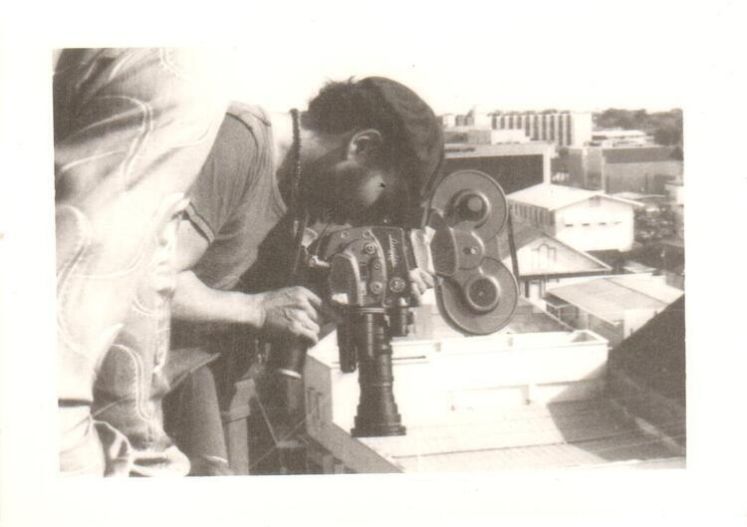
In the mid-1970s, a group of students, staff, and professors at Cornell University united by an urgency to make revolutionary art formed the Victor Jara Collective, named after the Chilean musician assassinated during the Pinochet regime. Among its members were Rupert Roopnaraine, Raymond Kril, Susumu Tokunow, and Lewanne Jones. In 1976, members of the Collective traveled to Guyana to, as Jones puts it to, “make film, forge cultural alliances, and activate revolution.” They returned with The Terror and the Time, a landmark of anticolonial cinema.
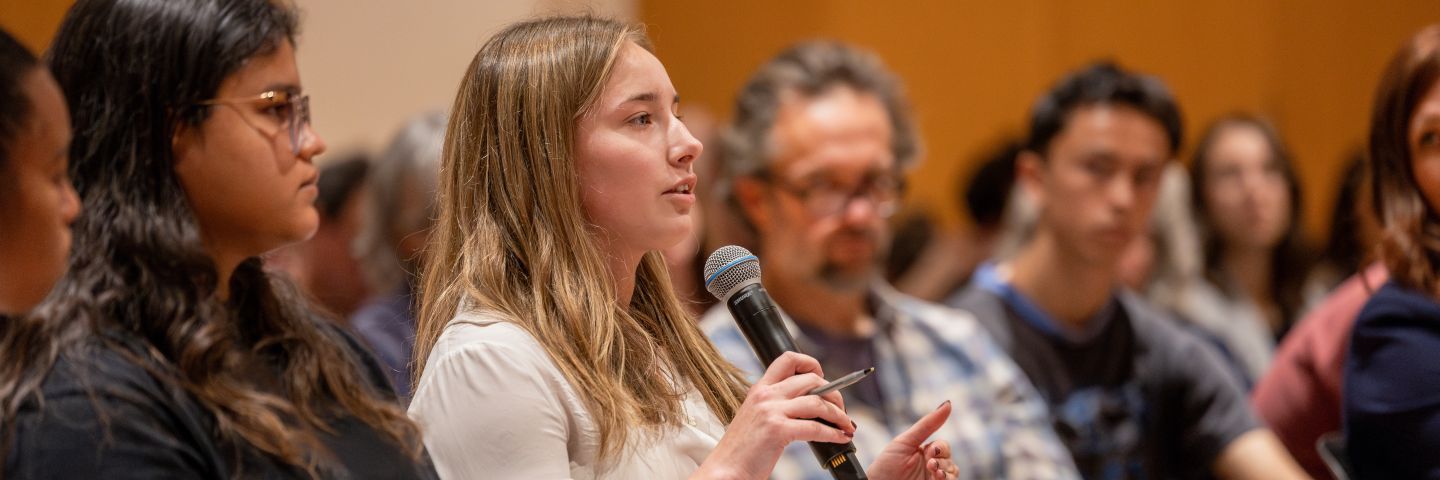
In the 50th anniversary year of the Victor Jara Collective’s formation, the Anthropology Department will present newly restored versions of The Terror and the Time and In the Sky’s Wild Noise, followed by a conversation with Victor Jara Collective member Lewanne Jones and Associate Professors Parisa Vaziri (Comparative Literature & Near Eastern Studies) and Russell Rickford (History).
THE TERROR AND THE TIME (1978, 75 min)
The terror is British colonialism in Guyana; the time is 1953, the year of the first
elections under a provisional democratic constitution. Stylized scenes photographed
throughout Georgetown, capital of Guyana and the Guyanese countryside,
accompany the poems of Martin Carter and convey a sense of intense political
reform against a backdrop of poverty, repression and silence. The local scene is
viewed against the international mise-en-scene of the Cold War, 1950s: the growth
of foreign economic and military interests in the Caribbean basin, the coronation of
Queen Elizabeth, Mau Mau revolts in Kenya, and the U.S. covert wars against Cuba,
Malaysia, Vietnam, and Iran.
IN THE SKY’S WILD NOISE (1983, 29 min)
In the Sky’s Wild Noise is presents Guyana in the 1970s focused around an interview
with Walter Rodney, Guyanese historian and political activist, who was assassinated
in 1980. The interview with Walter Rodney was clandestinely filmed by the Victor
Jara Collective in 1976 in Georgetown during the production of The Terror and The
Time. After Rodney’s death in 1980, Lewanne Jones produced and edited In the Sky’s
Wild Noise, making use of the interview and incorporating newly acquired footage of
Rodney after his release from jail 1979 and his funeral in 1980. Rodney speaks
about the political, social and economic conditions of the working class in Guyana in
the 1970s.
Lewanne Jones is an audio-visual researcher and Archival Producer in New York
City. She began her work in archives in the late 1970s as a member of the Victor
Jara Collective that produced a ground-breaking documentary about colonialism in
British Guiana, The Terror and The Time. Since then, she has conducted international
research for films and television series, museum installations and online educational
productions. Her work has been recognized by two nominations for News &
Documentary Emmy awards (in the archival research category) and she received an
Acker Award for community archival contributions in New York City. Eyes on the
Prize, ABC’s Century, PBS’s Freedom Riders and Black Panther: Vanguard of the
Revolution, 32 Sounds and Borderland are among the award-winning projects to
which she has contributed. She has conducted workshops on archival theory and
practice at media research centers including at Union Docs and BRIC TV (Brooklyn)
the Better Angels Foundation (Washington DC) and the Global Media Research
Center (Illinois), and has mentored emerging filmmakers in the craft of using
archival materials. Since 2018, she has been presenting the work of the Victor Jara
Collective at festivals in the US, Great Britain, Belgium and Chile and is the project
manager for the preservation and restoration of its two films, The Terror and The
Time (1978) and In The Sky’s Wild Noise (1983).
Co-sponsored by the Institute for Comparative Modernities; the Latin American and Caribbean Studies Program; the Department of Performing and Media Arts; the Public History Initiative; the Africana Studies and Research Center; the Asian American Studies Program; Cornell Media Studies; the Nazaara Media Lab; the Department of Comparative Literature; and Cornell Cinema.
Additional Information
Program
Latin American and Caribbean Studies