
Where the Ghosts of War Sleep: Enemy Property and the Ruins of 1971 in Pakistan
February 2, 2026
12:15 pm
Uris Hall, G08
Talk by Sadia Mahmood, South Asia Program, Cornell University
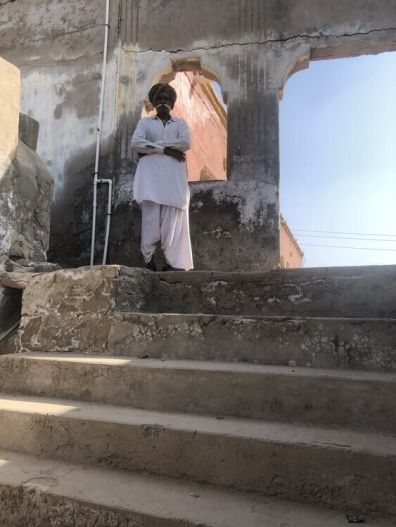
Mainstream historiography on South Asia has largely overlooked the afterlives of the colonial Enemy Property regime in postcolonial India, Pakistan, and Bangladesh. Drawing on archival records from Pakistan and India, as well as oral accounts from the Thar borderlands of Sindh, this talk traces how “enemy property” was produced, contested, and redistributed in early postcolonial South Asia. I situate Pakistan’s practices of seizing and reallocating enemy-owned assets within a longer international legal genealogy that emerged during World Wars I and II, when the confiscation of enemy property became a routine instrument of wartime governance. Transplanted into British India, this legal and administrative apparatus continued to shape Pakistan’s bureaucratic imagination during the 1965 and 1971 Indo-Pak wars. I argue that the category of enemy property migrated from a European imperial wartime technology to a postcolonial mode of governing minorities in South Asia, often blurring the distinction between wartime enemies and religious communities deemed politically suspect. In the Thar borderlands, the ruins of officially classified “enemy properties” function not only as material remnants but also as markers of social and emotional vulnerability through which local populations continue to navigate their dispossession.
Sadia Mahmood is an Assistant Professor at Quaid-e-Azam University, Pakistan, and a Visiting Scholar at the South Asia Program, Cornell University. Her work examines the making of postcolonial religious minorities, the histories of caste-oppressed communities, and state-making in Pakistan. Her research centers on the desert borderlands of Tharparkar, where memories of the 1971 Indo-Pak war continue to shape collective memory and everyday life. She works with Pakistan’s diverse Hindu and Sikh communities in Sindh and Punjab provinces. Her articles have appeared in South Asia: Journal of South Asian Studies (2024), where she published “The Long Migration: Revisiting the Postcolonial Minority/Refugee Crisis and Governance in East Pakistan,” and in The Indian Economic & Social History Review (2023), where she published “Untouchability, Caste, and the Electorate: Revisiting Legacies of the Poona Pact in Pakistan.” She also has forthcoming contributions, including “Historical Lines in the Dunes: Tharparkar,” in the Handbook of Sindhi Studies (Routledge).
Additional Information
Program
Einaudi Center for International Studies
South Asia Program