
Development, Law, and Economics
Higher Inflation is Real, But We're Not Returning to the 1970s

Daniel Alpert, CRADLE
“That the unique historical and economic circumstances of the 1970s gave rise to a near cultish obsession with changes in price levels, shunting aside the importance of equitable growth, is a tragedy,” says Daniel Alpert, visiting fellow at the Law School.
Additional Information
Who's Afraid of Saule Omarova?

Saule Omarova, Cornell Law
This piece features the life and work of Saule Omarova, professor of law, and the banking lobby’s campaign against Omarova after she was nominated to lead the Office of the Comptroller of the Currency.
Additional Information
Biden Sells Infrastructure Improvements as a Way to Counter China

Eswar Prasad, SAP
“It’s an important step, although it’s not a huge one, if one thinks about the progress China has made in building up its physical and soft infrastructure,” says Eswar Prasad, professor of economics and trade policy. Prasad also discusses President Biden’s meeting with President Xi Jinping of China in The Wall Street Journal.
Additional Information
Don't Let Them Tell You Inflation is Good For The Poor. It's Not.
Gustavo Flores-Macias, Government
Gustavo Flores-Macias, associate vice provost for international affairs, writes this opinion piece arguing that inflation levels are likely to be most consequential for the poor, women and underrepresented minorities.
Additional Information
Supply Chain Lessons From Long Beach

Daniel Alpert, CRADLE
This opinion piece references recent research by Daniel Alpert, visiting fellow in the Law School, about the challenges underemployment is likely to pose in coming years.
Additional Information
IAD Global Africa Monthly Webinar Series

African Continental Free Trade Agreement: Promises and Perils
October 29, 2021
@10:00am (EST) 2:00pm (GMT) Register
Launched on January 1, 2021, the Africa Continental Free Trade Area (AfCFTA) Agreement will create the largest free trade area in the world measured by the number of countries participating. The pact connects 1.3 billion people across 55 countries with a combined gross domestic product (GDP) valued at US$3.4 trillion. It has the potential to lift 30 million people out of extreme poverty, but achieving its full potential will depend on putting in place significant policy reforms and trade facilitation measures (African Union).
Moderator: Muna Ndulo, William Nelson Cromwell Professor of International & Comparative Law; Elizabeth and Arthur Reich Director, Leo and Arvilla Berger International Legal Studies Program
Panelists: Steve Kayizzi-Mugerwa – Lead, Zziyika and Associates, LLC, former Acting Chief Economist and Vice President, former Director of Research, African Development Bank
Landry Signé - Senior Fellow, Global Economy and Development Program and the Africa Growth Initiative, Brookings Institution
This event is funded by the UISFL grant from the Department of Education.Trade has long been recognized as playing an important role in the economic growth of states. Africa lags behind other regions and has struggled to participate meaningfully in world trade. In the past decade, Africa’s participation in world trade has been on average around 5% of world trade. The regional picture is not any different, intra-Africa trade remains insignificant, around 10%, compared to the 70% , 50% 52% and26% in intra-regional trade that has been achieved by Europe, North America, Asia and South America.
The Chair of the AU, Moussa Faki Mahamat stated; “Today is a historic day for Africa. In 1963, the founders of the Organization of African Unity (OAU) had a vision of creating an African Common Market. The start of trading under the African continental free trade are today is an operational start towards the African Common Market. It has been a long journey of focus, determination and resilience.”
Successful implementation of the African Free Trade Agreement, will require governments and business leaders across Africa to commit to clear plans and consistent action to maximize its offering. Without adequate roads, the right equipment for customs at the border to facilitate the fast and efficient transit of goods; the infrastructure; the manufacturing capacity, the skills to propel trade and the payments system to support trade, it reduces the impact and effectiveness of the agreement. In this webinar, we seek to interrogate the challenges and prospects of African economic integration.
Additional Information
Former Myanmar Parliamentary Candidate to Speak on 2020 Elections in Gatty Lecture Series
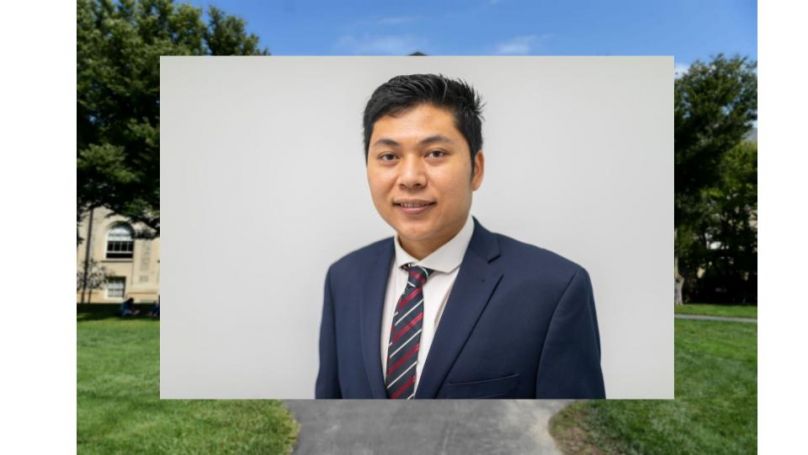
By the Cornell Sun
Check out this piece from the Cornell Sun on our next Gatty Lecture!
Additional Information
IAD Global Africa Monthly Webinar Series

African Continental Free Trade Agreement: Promises and Perils
Africa has about 12% of the world’s oil reserves, 42% of its gold, 80%–90% of chromium and platinum group metals, and 60% of arable land in addition to vast timber resources. The African Continental Free trade Agreement will accelerate intra-African trade and boost Africa’s trading position in the global market by strengthening Africa’s common voice and policy space in global trade negotiations. (African Union)
The general objectives of the agreement are to:
- create a single market, deepening the economic integration of the continent
- establish a liberalised market through multiple rounds of negotiations
- aid the movement of capital and people, facilitating investment
- move towards the establishment of a future continental customs union
- achieve sustainable and inclusive socioeconomic development, gender equality and structural transformations within member states
- enhance competitiveness of member states within Africa and in the global market
- encourage industrial development through diversification and regional value chain development, agricultural development and food security, and
- resolve challenges of multiple and overlapping memberships
Additional Information
Upcoming Events

Some exciting happenings next week on Southeast Asia at Cornell!
Check out the events below, taking place at Cornell next week.
Understanding and Combating Insidious Forms of Anti-Asian Racism
October 4, 2021, 12:00 to 1:30pm ET
This session of the 2021-22 Virtual Building Allyship Series, co-hosted by the Graduate and Professional Student Diversity Council and the Graduate School Office of Inclusion and Student Engagement (OISE), will include an invited talk and moderated panel discussion focused on developing an understanding of Anti-Asian racism and the many insidious forms in which it can manifest. It will also center on sharing strategies on how those seeking to serve as allies can actively help combat Anti-Asian racism including overt and covert forms of violence.
Dancing "Asia" on the Global Stage
October 5, 2021, 9:40 to 10:55pm ET
How are the varieties of dance forms rooted in the vast expanse of Asia represented on the global stage? This lecture will offer examples of contemporary Southeast Asian dance that challenge outdated imaginaries of "Asia" and the "global" in relation to the western expectations of the "Orient". We will also compare and contrast notions of "Asian" and "Asian American" in concert dance to reveal distinctions in the cultural politics of performance within and outside U.S contexts.
This lecture is connected to the Global Dance seminar taught by Dr. Juan Manuel Aldape Muñoz in the Department of Performing and Media Arts at Cornell University.
Gatty Lecture Series: The Mass Killings of 1965-66 in Indonesia: Problems of History and Responsibility
October 7, 2021, 12:15 to 1:30pm
Geoffrey Robinson is a Professor of History at UCLA, where he teaches and writes about political violence, genocide, and human rights, especially in Southeast Asia. His major works include: The Dark Side of Paradise: Political Violence in Bali; East Timor 1999: Crimes against Humanity; If You Leave Us Here, We Will Die: How Genocide Was Stopped in East Timor; and The Killing Season: A History of the Indonesian Massacres, 1965-66. Robinson earned his BA at McGill University and his PhD at Cornell, where he was a student of Benedict Anderson and George Kahin. Before coming to UCLA in 1997, he worked for six years at Amnesty International’s Research Department in London, and in 1999 he served as a Political Affairs Officer with the United Nations in East Timor. His current projects include a co-authored visual history of the mass violence of 1965-66 in Indonesia; and a study of the “Swedish Connection” to those events.
Click here to register, or join us at the Kahin Center.
Additional Information
Theranos Judge Requires Covid Shots for Jurors, But Will That Skew the Jury Pool?

Valerie Hans, Law
"I think it's a reasonable decision in the midst of the pandemic, but yes, the elimination of unvaccinated people is likely to affect the makeup of the jury pool,” says Valerie Hans, professor of law.