
Development, Law, and Economics
Grad Student Grants Support Sustainability, Biodiversity
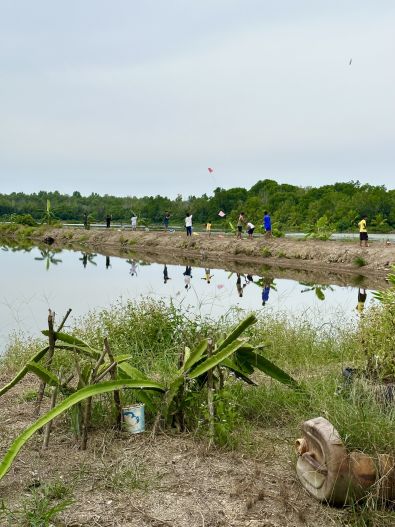
Congratulations to Tamar Law and Made Adityanandana!
Thirty-one graduate students across three colleges have been awarded research grants from the Cornell Atkinson Center for Sustainability. The grants provide support for up to two years to doctoral students whose research advances sustainable biodiversity, energy transitions, food security, human health or reducing climate risk.
Additional Information
With Russian Economy Far From Collapse, U.S. Opts for Tougher Punishment

Nicholas Mulder, IES
“This is the first geopolitical crisis without all of the major Asian economies on board. The West does not have decisive economic power anymore. India and China are enough to keep Russia afloat,” says Nicholas Mulder, professor of history.
Additional Information
Indonesian Markets Cheer as Prabowo's Likely Victory Removes Uncertainty
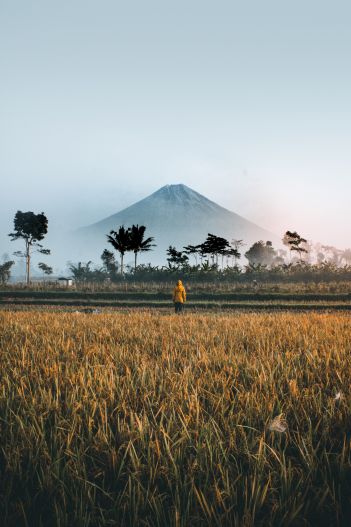
Thomas Pepinsky, SEAP
Tom Pepinsky, professor of government and director of the Southeast Asia Program, says “But as always with Prabowo, one must be wary of how he would respond to disappointing or negative economic news, and his dominating performance will mean that he will assume office with a relatively free hand.”
Additional Information
Wiping Out Bad Data Will Not Solve China’s Economic Woes

Eswar Prasad, SAP
Eswar Prasad, professor of international trade policy and economics, writes about China's economy in this opinion essay.
Additional Information
IAD Special Topic Seminar Series
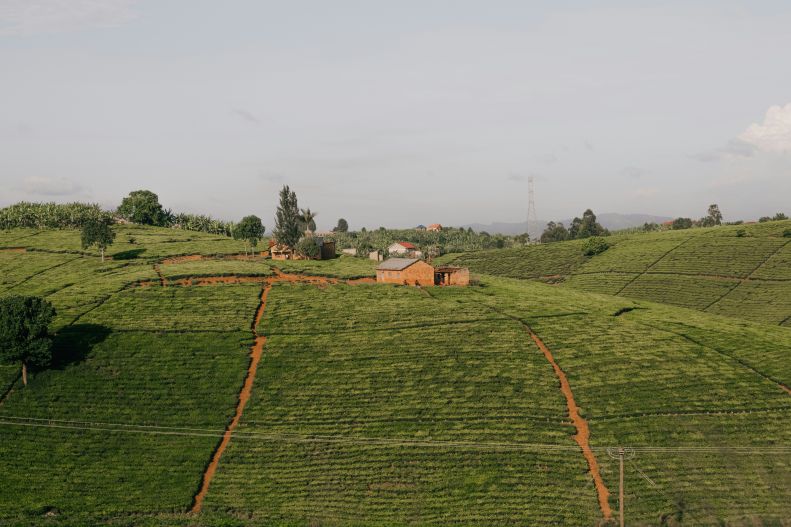
Could a Sustainable African Rural Future be the Antidote to Climate Change?
Thursday, February 8, 2024 at 2:30pm to 4:30pm G-08 Uris Hall
Ojok Okello, visionary rural futurist, community organizer, artist, and Humphrey Fellow
Recent assessments of climate change impacts in Sub-Saharan Africa indicate that the continent is already experiencing impacts from rising temperatures, including water shortages, reduced food production, loss of lives and biodiversity loss. There are an increased number of extreme events, from drought, floods and tropical storms, and these events will worsen if global greenhouse gases are not significantly reduced. At the same time, Africa is one of the lowest contributors to greenhouse gas emissions, and many countries struggle to manage with the cost of climate change adaptation, while also paying high levels of debt. Alongside these climate challenges are ongoing extractive industries looking to Africa as a new or ongoing source of resources – including mining precious minerals to support renewable alternatives to fossil fuels. Despite this bleak picture, alternative models that are transformative and reparative are emerging as ways to imagine just climate futures in Africa. These alternatives include attention to multiple types of social inequities and building development strategies through dialogue and careful attention to power dynamics. Adaptation approaches that support decent livelihoods alongside biodiversity, ecosystems and indigenous knowledge are being tested and expanded. Recognition of power inequities at multiple scales and reparation of these inequities is part of such approaches.
Additional Information
Students Abroad in Cambodia Share Their Experiences
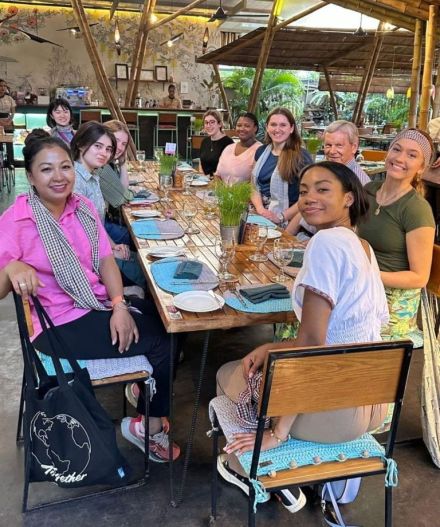
Check it out on the CU in Cambodia Blog
Cambodia is the land of stark contrasts. This course introduces students to Cambodian economic, social, and labor development. We start by examining Cambodia’s history (and ancient architecture) to provide the background to its economy and society. We then explore Cambodia’s more recent development, focusing on the role of political institutions, economic development strategies, human rights, and labor policies. The highly interactive course involves a mix of lectures by scholars and policy makers, with field visits. Given that the labor-intensive garment industry has contributed to making Cambodia one of the fastest growing economies in Asia, we will specifically focus on the role of labor and human capital in Cambodia’s development.
Additional Information
CANCELED - Why Don’t Indian Voters Hold Politicians Accountable For Air Pollution?

May 6, 2024
12:15 pm
Uris Hall, G08
Talk by Tariq Thachil (Political Science, University of Pennsylvania)
Urban citizens in low-income democracies rarely hold elected officials accountable for toxic air. To understand why, we fielded a large citizen survey in Delhi, India, a highly polluted megacity where voters rarely prioritize air pollution at the polls. We find no evidence of conventional explanations for accountability failures: residents are aware of pollution’s adverse impacts, do not privilege development over curbing emissions, and are not fractured along class or ethnic lines on this issue. Instead, we find partisanship and sensitivity to the potential private costs of mitigation policies reduce accountability pressures. On the other hand, a simple randomized intervention (sharing indoor air quality information) that personalizes the costs of air pollution increases its electoral salience. We reveal key opportunities and constraints for mobilizing public opinion to reduce air pollution in developing democracies.
Tariq Thachil is Professor of Political Science, Director of the Center for Advanced Study of India (CASI), and Madan Lal Sobti Professor for the Study of Contemporary India at the University of Pennsylvania. His recent book (coauthored with Adam Auerbach), Migrants and Machine Politics, focuses on the political lives of poor migrants in Indian cities. His first book, Elite Parties, Poor Voters examines how elite parties can use social services to win mass support, through a study of Hindu nationalism in India. He received his PhD in Government from Cornell University in 2009.
Additional Information
Program
Einaudi Center for International Studies
South Asia Program
The Fed Has Put Our Housing Market in Jeopardy

Daniel Alpert, CRADLE
"Resolving an unusual problem requires an unusual solution. The Fed should immediately reverse course and buy mortgage securities to help moderate consumer mortgage rates," said CRADLE's Daniel Alpert in the New York Times (November 14, 2023).
Additional Information
An Approach to Teaching Twi as A Second Language Using Progressive Learning.

African Language Pedagogy Lecture
November 9, 2023 G25 Stimson Hall, our Learning Space, 5:00 pm
Francis Akutey-Baffoe, Preceptor of African Languages, Department of African and African American Studies, Harvard University
(sponsored by the Institute for African Development with funding from the US Department of Education UISFL grant and cosponsored by the Language Resource Center, Cornell)
Additional Information
Institute for African Development Seminar

Land Use and Tenure Insecurity in the Drylands of Southern Ethiopia
John McPeak, Professor, Public Administration and International Affairs, Syracuse University
Register Wednesday, October 25, 2023 2:30pm G-08 Uris Hall
The seminar series for fall 2023 explores the future of African land, agriculture and food, digging into the contestations, conflicting and converging visions from a wide range of perspectives.
How might land be used, valued and lived in, across cities, rural communities, forests, deserts and grasslands on the continent in the future? Who is proposing different visions of land futures in Africa, what are the histories, politics, socio-cultural, environmental and economic implications of these potential visions? In one of the regions with the most youthful populations, how are young people considering possible futures? What are ways that land, agriculture and food systems could be resilient, healthy, ecological, thriving and just? Can there be a decolonial agriculture and food future in Africa that celebrates Indigenous and local foodways?