
East Asia Program
Andrea Bachner
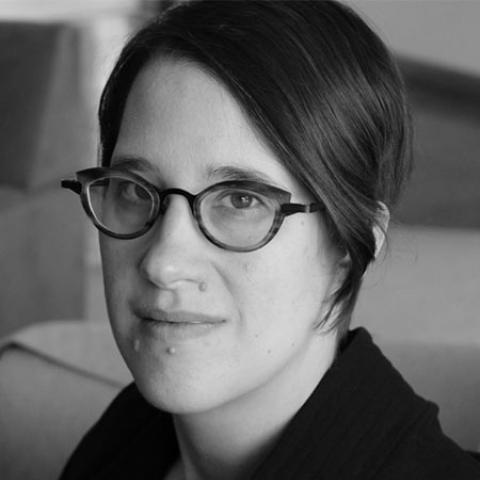
Professor, Comparative Literature
Andrea Bachner is a professor of comparative literature. She was the director of the East Asia Program for the term 2019-22 and a member of the East Asia Program steering committee and the CEAS editorial board.
She holds an MA from Munich University, Germany, and a PhD from Harvard University. Her research explores comparative intersections between Sinophone, Latin American, and European cultural productions in dialogue with theories of interculturality, sexuality, and mediality.
Additional Information
Program
Role
- Faculty
- EAP Core Faculty
- SEAP Faculty Associate
Contact
Email: asb76@cornell.edu
Phone: 607-255-6795
Background Briefing: November 19, 2026
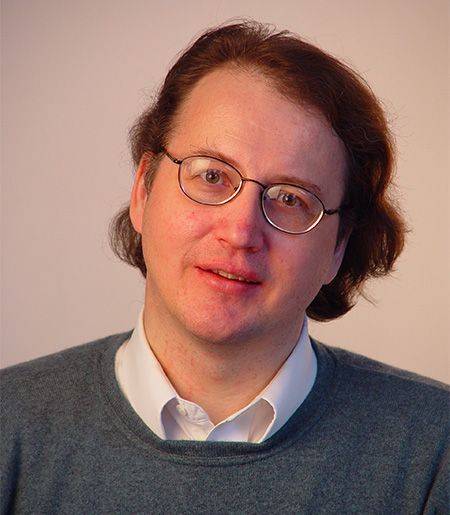
Magnus Fiskesjö, EAP/PACS/SEAP
Magnus Fiskesjö, a Cornell University anthropology professor, is featured for his expertise in genocide studies and Southeast Asia.
Additional Information
2026 Korean Noraebang Contest

December 8, 2026
8:00 pm
Goldwin Smith Hall, HEC auditorium (132)
Come cheer on your friends, enjoy live performances, and celebrate Korean music at the 2026 Korean Noraebang Contest! Vote for your favorite performers, learn about study abroad opportunities in Korea, and enjoy special performances by Cornell student groups (E.Motion, LOKO, and Shimtah) throughout the evening.
Date: Monday, December 7
Time: 8:00-9:30 PM
Location: Goldwin Smith Hall, HEC Auditorium (132)
No registration required. Bring your friends, support your favorite performers, and experience a night of Korean music and culture!
Additional Information
Program
East Asia Program
Prof. John Whitman to Retire
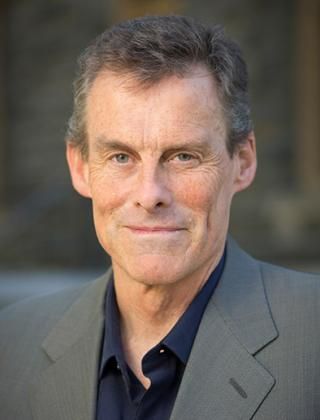
After 39 years at Cornell
Linguistics Prof. John Whitman, East Asian languages expert and co-developer of Gayogo̱hó꞉nǫˀ language class, to retire after 39 years at Cornell.
Additional Information
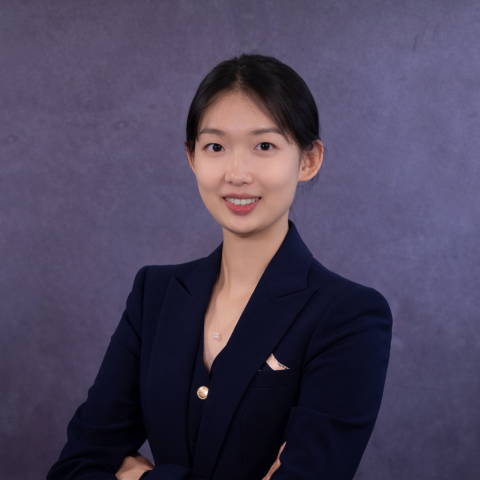
Tina Zhao
Graduate Student
Degree Pursued: PhD
Anticipated Degree Year: 2029
Discipline: City and Regional Planning
Research Interests: City and Regional Planning, regional economic development, local governance, equity planning, public policy
Additional Information
Tamenori and the “Sinographic Subaltern” of Genji-Era Japan Peasants, Prisoners, and Castaways
December 3, 2026
4:30 pm
Rockefeller Hall, 374 (Asian Studies Lounge)
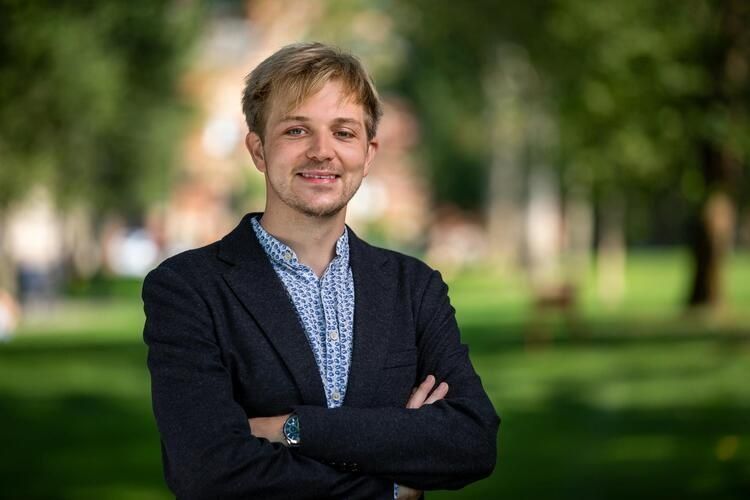
Speaker: Jeffrey Niedermaier, Brown University
Title: Tamenori and the “Sinographic Subaltern” of Genji-Era Japan Peasants, Prisoners, and Castaways
Abstract: Early in Murasaki Shikibu’s Tale of Genji, the titular prince overhears laborers in a down-and-out neighborhood of the Japanese capital grumbling about the cold weather and sluggish economy. Hardly another syllable is uttered in the voices of the capital’s working poor for the rest of the tale. This talk follows up on their complaints by turning away from the kana prose that commands so much of our attention toward the Genji era. Its focus is instead on Murasaki Shikibu’s contemporary, the poet-official Minamoto no Tamenori (d. 1011). Tamenori was an adept provincial governor and a prolific composer of kanshi: poetry in the multilegible Chinese “world-script” that wove elites across prenational East Asia into a network of mutual intelligibility, recognition, and disavowal that is studied today as the “Sinographic Cosmopolis.”
A subset of Tamenori’s sinographic poems registers brushes with those whose labor and suffering sustained court life. These include farmers granted tax relief amid famine; convicts fed by the monarch’s deputies; and a babbling castaway from the island of Ullŭng repatriated by imperial grace. Convention obliges these poems to praise a merciful monarch. Yet they are not so much exercises in dreary mannerism as textual sites where compulsory encomium calls into question who toils and languishes so that a privileged few may eat, drink, and write poetry.
To tease out these tensions, I draw on Marxist and postcolonial theory in order to articulate a “sinographic subaltern”: the downtrodden who are at once represented in and effaced from an elite, cosmopolitan discourse that, in a sense, produces the very subordination it portrays and dissimulates. Tamenori’s castaway, who ostensibly “cannot speak” (kare wa monoiu koto ni atawazu), leads the poet to anticipate Gayatri Spivak’s famous question in a sinoxenic context where the relation between speech and writing is anything but straightforward.
The sinographic subaltern, I propose, can serve as a vector for comparative approaches to the Sinographic Cosmopolis that would not confine themselves to East Asian societies’ uppermost strata. At the same time, the unfortunate figures behind Tamenori’s poems harbor latent solidarity with the elite Genji-era women who lived and wrote under what we might dub “sinographic patriarchy”: both groups were imperfectly excluded from sinographic poetics.
About East Asia Program
As Cornell’s hub for research, teaching, and engagement with East Asia, the East Asia Program (EAP) serves as a forum for the interdisciplinary study of historical and contemporary East Asia. The program draws its membership of over 45 core faculty and numerous affiliated faculty, graduate, and undergraduate students from eight of Cornell’s 12 schools and colleges.
Additional Information
Program
Einaudi Center for International Studies
East Asia Program
Exhibit Opening: Images and Texts of Labor in China - A Thirty Year History (1993-2023)

November 14, 2026
1:00 pm
Goldwin Smith Hall, History of Art Gallery (ground floor, south end of Goldwin Smith)
Since 2016, the China labor collection at Kheel Center in the ILR School’s Catherwood Library, has amassed a vast audio-visual archive consisting of photographs, films, brochures, oral interviews, poetry, and other materials on labor in the People’s Republic of China between the years 1993-2023. This exhibition is a curation of this invaluable collection, made available for the first time to the Cornell and greater Ithaca community. Come and learn about the multifaceted lives of China’s workers: their struggles, their efforts to determine their own working conditions through strikes and protests, and their self-expression in the form of documentation, poems, videos and more.
Acknowledgements: Cornell Kheel Center, ILR School; Department of Asian Studies; The East Asia Program; Department of History of Art & Visual Studies; the China Asia Pacific Studies Program; and the Asian Labor Institute
Sat, Nov 14
1 p.m.: Exhibit opens
5 p.m.: Opening Reception
6 p.m. : Opening Roundtable: “Thirty Years of Chinese Labor”
(with Eli Friedman, Kevin Lin, Shaoling Ma, Xiangzi, and A-Gan)
For more information and a full list of events, please see the main event page.
Additional Information
Program
East Asia Program
Taiwan at a Crossroads: What the Future Holds
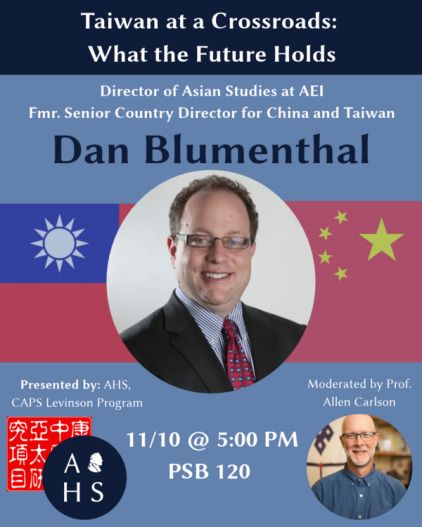
November 10, 2026
5:00 pm
Physical Sciences Building, 120
Taiwan is at a crossroads, and its future is far from clear. Dan Blumenthal, Director of Asian Studies at AEI and former Senior Country Director for China and Taiwan, joins us for a discussion on recent Taiwanese history, Trump's ever-changing policy towards Taiwan, and what the future holds. This event will be moderated by Professor Allen Carlson from the Government Department, and it is presented by the Alexander Hamilton Society at Cornell as well as the CAPS Levinson Program.
Additional Information
Program
East Asia Program
Information Session: Dissertation Proposal Development Program
November 9, 2026
5:00 pm
Develop your dissertation on global issues with a toolkit of resources! The Einaudi Dissertation Proposal Development Program (DPD) supports 24 PhD students annually through seminars, workshops, mentoring sessions, and up to $2,000 for international airfare for summer research. Applicants’ research projects must focus on global issues, but the proposed research setting may be international or domestic. Join this session to learn more and find out how to apply!
Applications are due November 30, 2026.
Registration is required for the virtual session. Register here.
Can't attend? Email programs@einaudi.cornell.edu for more information.
***
The Mario Einaudi Center for International Studies hosts info sessions for graduate and for undergraduate students to learn more about funding opportunities, international travel, research, and internships. View the full calendar of fall semester sessions.
Additional Information
Program
Einaudi Center for International Studies
Reppy Institute for Peace and Conflict Studies
East Asia Program
Southeast Asia Program
Latin American and Caribbean Studies
Institute for African Development
Institute for European Studies
South Asia Program
Migrations Program
Southwest Asia and North Africa Program