
East Asia Program
Makiko Nishikaze: Chamber Works (CU Music)

February 14, 2026
7:30 pm
Barnes Hall
Join us for the final evening recital of guest composer Makiko Nishikaze’s visit to Cornell. A wide array of chamber works from throughout Nishikaze’s eclectic career will be performed by members of the Cornell community, as well as by the composer herself. From four-hands arrangements of J.S. Bach to forays in 9-piece open instrumentation, come experience the multiple facets of Nishikaze’s unique artistic voice.
This event is part of a week-long residency sponsored by the Department of Music, the Department of Asian Studies, the East Asia Program, the Cornell Center for Historical Keyboards, and Ensemble X.
Additional Information
Program
East Asia Program
Piano-ongoing: The Piano Music of Makiko Nishikaze (CU Music)
February 13, 2026
7:30 pm
Barnes Hall
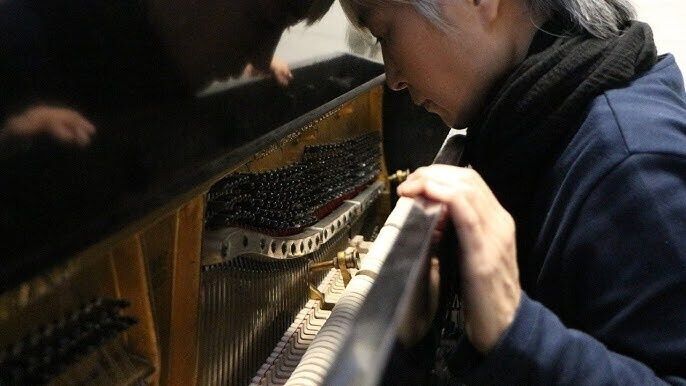
As part of guest composer Makiko Nishikaze’s visit to Cornell, pianist Jack Yarbrough presents a lecture-recital on her vast output of piano music. Selections from over 30 years of creative engagement with the instrument will be performed with extensive commentary. The evening will conclude with the world premiere of Nishikaze’s newly commissioned piano work, piano-ongoing. This event is part of a week-long residency sponsored by the Department of Music, the Department of Asian Studies, the East Asia Program, the Cornell Center for Historical Keyboards, and Ensemble X.
Additional Information
Program
East Asia Program
Mother, Border, Other: Third World Internationalism and the Politics of Motherhood in Indonesia and China
March 19, 2026
12:15 pm
Kahin Center
Gatty Lecture Series
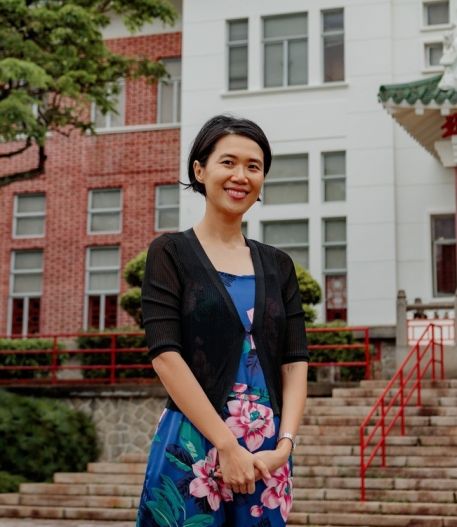
Join us for a talk by Taomo Zhou, Associate Professor of Chinese Studies, National University of Singapore.
This Gatty Lecture will take place at The Kahin Center, 640 Stewart Ave. Lunch will be served. For questions, contact seapgatty@cornell.edu.
Abstract
Motherhood—one of the most important and yet mundane social institutions—is central to our understanding of the latter half of the twentieth century. This talk focuses on a left-wing Indonesian activist in the Afro-Asian movements, Francisca Casparina Fanggidaej (1925–2013), a mother of seven who endured decades of forced separation from her family. Based on a close reading of Fanggidaej’s diaries, personal letters, and oral history interviews with her family and friends, I discuss the politics of maternal absence in Indonesia and China—two leading countries in the Afro-Asian movements. I explore how these two countries shaped the public and self-perceptions of non-residential mothers through their welfare provisions and reproductive policies; and how a transnational figure like Fanggidaej navigated motherhood within frameworks of revolutionary anticolonialism in Indonesia, state socialism in China, and the global rise of capitalist neoliberalism, which ultimately displaced the Third World internationalist vision once championed by both nations. I argue that the fall of Third World internationalism signaled not only a missed opportunity to reconfigure global geopolitics, but also a lost chance to redefine motherhood—not as the individualized enterprise of the birth mother alone but as a communal effort involving an assemblage of caretakers regardless of kinship or gender.
About the Speaker
Taomo Zhou is an Associate Professor in the Department of Chinese Studies and Dean’s Chair in the Faculty of Arts and Social Sciences, National University of Singapore. Her first book, Migration in the Time of Revolution: China, Indonesia and the Cold War (Cornell University Press, 2019), won a Foreign Affairs “Best Books of 2020” award and an Honorable Mention for the 2021 Harry J. Benda Prize from the Association for Asian Studies. Taomo is currently working on her second book project tentatively entitled “Made in Shenzhen: A Global History of China’s First Special Economic Zone,” which is under advance contract with Stanford University Press. She is also researching on motherhood during the Cold War.
Additional Information
Program
Einaudi Center for International Studies
East Asia Program
Southeast Asia Program
Composers' Forum: Makiko Nishikaze
February 13, 2026
1:30 pm
Lincoln Hall, B27
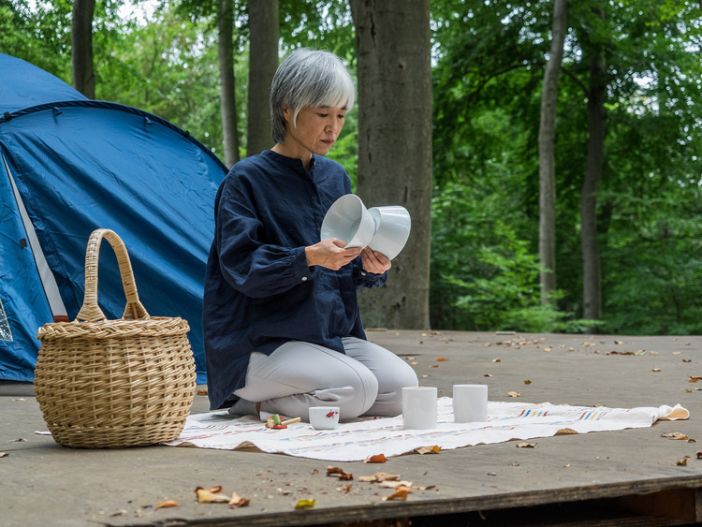
Composer, pianist, performance, and video artist Makiko Nishikaze joins Cornell’s composers' forum to present on her music. Born in Wakayama, Japan and residing in Berlin, Germany, Nishikaze’s highly varied work comfortably spans mediums and practices, with a particular emphasis on spatial performance, early and modern keyboards and intermedial composition. She writes, “I have for some time been concerned with spatial music. The performance space itself is used as an instrument to unite visual and acoustic impressions in a single whole. I often extend the concept of my composition with performative-action, using everyday objects and materials, with which I explore the spatial dimensions visibly and audibly. My compositions are not directed at some eccentric or stunning result but are rather intended as a guide towards a higher level of the ability to listen.” This event is part of a week-long residency sponsored by the Department of Music, the Department of Asian Studies, the East Asia Program, the Cornell Center for Historical Keyboards, and Ensemble X.
Additional Information
Program
East Asia Program
Korean Conversation Hour
April 30, 2026
5:00 pm
Stimson Hall, G25
Come to the LRC or join us on Zoom to practice your language skills and meet new people. Conversation Hours provide an opportunity to use the target language in an informal, low-pressure atmosphere. Have fun practicing a language you are learning! Gain confidence through experience! Just using your new language skills helps you learn more than you might think. Conversation Hours are open to any learner, including the public.
Additional Information
Program
East Asia Program
Early Career Development Grants
Details
The Einaudi Center's newest grants support career advancement for tenure-track Cornell faculty with demonstrated commitment to international studies.
The awards are intended to help early-career scholars—primarily at the assistant professor level—make essential progress on research activities required for tenure. All disciplines and research topics are welcome.
Amount
Up to $10,000 for activities supporting an upcoming tenure application.
Eligibility
Tenure-track Cornell faculty in all colleges and schools are eligible to apply. Early Career Development Grants are awarded to individual researchers, not research teams.
- Funding-eligible activities: Field research, data collection, travel, editorial/research assistance, book development workshops, meetings, publication-related expenses, purchase of essential books/software/subscriptions
- Not eligible for funding: Salary offset, summer salary, computers and equipment, student stipends/tuition
Requirements
- All funds must be used within one year of the award date.
- You must participate in activities of the Einaudi Center and our international studies programs during the award year, including sharing your expertise in at least one talk, seminar, or panel.
- You must submit a final report to the Einaudi Center director within one year of the award date. The report must include:
- A summary of the activities you accomplished and assessment of how they support your tenure application.
- An overview of your Einaudi Center engagement.
- A promotional paragraph written for nonspecialists (100 words maximum) describing the progress you made on tenure-eligible research—for example, a book or peer-reviewed articles.
- Please inform the Einaudi Center when you receive your tenure decision and in advance of publications and other project outcomes. The Einaudi Center must be acknowledged in all publications, promotion, and media coverage related to your funded research and activities.
How to Apply
Complete the early career funding application and submit a proposal including the following:
- Curricula vitae (CV)
- Statement including research objectives, activities, work plan, expected outputs, and impact
- Explanation of how the proposed activities support your tenure application
- Human subjects approval, if relevant
- Detailed budget with justification of expenses
Evaluation
All successful proposals will meet these criteria. The proposal:
- Supports research informed by international studies perspectives that promises to advance knowledge of key economic, environmental, social, cultural, or political problems in the world.
- Indicates a commitment to engage with the Einaudi Center during the award year.
- Includes clearly articulated deliverables.
- Includes a budget appropriate for planned activities.
Questions?
Please email our academic programming staff if you have questions about your eligibility or application.
Additional Information
Funding Type
- Award
Role
- Faculty
Program
Information Session: Graduate Student Opportunities at the Einaudi Center
February 9, 2026
4:30 pm
Uris Hall, G08
Join us to learn about opportunities for graduate students with the Einaudi Center for International Studies. This session will discuss how to discover or strengthen global interests, including research and travel grants, guest lectures, fellowships, and more!
Can't attend? Email programs@einaudi.cornell.edu for more information.
Additional Information
Program
Einaudi Center for International Studies
Reppy Institute for Peace and Conflict Studies
East Asia Program
Southeast Asia Program
Latin American and Caribbean Studies
Institute for European Studies
South Asia Program
Migrations Program
Institute for African Development
Southwest Asia and North Africa Program
Campana Wins MLA's Scaglione Prize for Book on Japanese Poetry
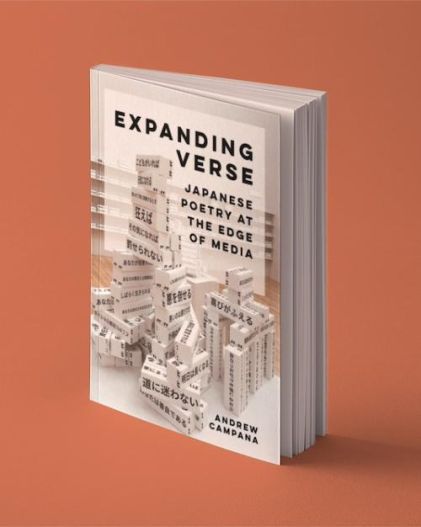
Andrew Campana, EAP
“Expanding Verse: Japanese Poetry at the Edge of Media,” by Andrew Campana (EAP), “opens a strikingly original conversation at the crossroads of media, language, technology, and the body.”
Additional Information
Speculative Fiction from South Asia: A Conversation with Vajra Chandrasekera
March 19, 2026
4:45 pm
A. D. White House, Guerlac Room
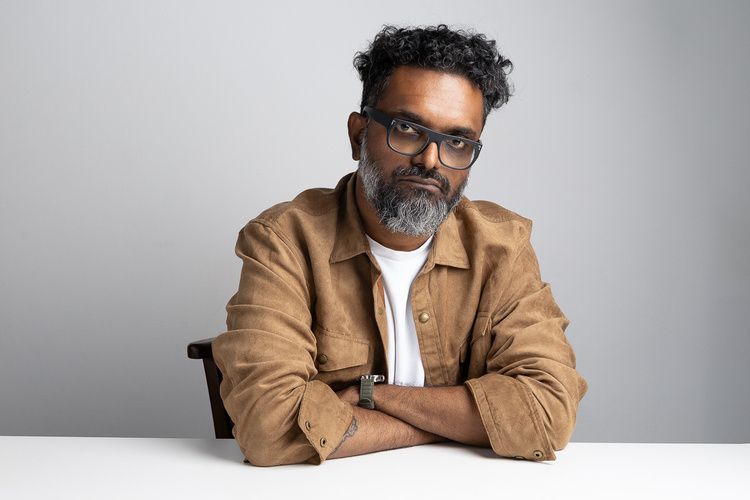
Nebula and Ursula K. Le Guin Award winning author Vajra Chandrasekera discusses his writing with Anindita Banerjee, Associate Professor of Comparative Literature, and Suman Seth, Stephen H. Weiss Presidential Fellow and Marie Underhill Noll Professor of the History of Science.
Vajra Chandrasekera is from Colombo, Sri Lanka. His novels The Saint of Bright Doors and Rakesfall have between them won Nebula, Le Guin, Ignyte, Locus, Crawford, and Otherwise awards, been selected as New York Times Notable Books of 2023 and 2024, and been nominated for Dragon and Lamda Awards, among others. He is one of the 2025-2026 Fellows of the Dorothy and Lewis B. Cullman Center for Scholars and Writers at the New York Public Library. His short stories, poems, and articles have appeared in many publications including Clarkesworld, West Branch, and The Los Angeles Times. He has worked as a fiction editor for Strange Horizons, The Deadlands, and Afterlives: The Year’s Best Death Stories, and as a contest judge for the Dream Foundry and the Salam Award. He is online at vajra.me and probably on whatever social media still exists at the time you’re reading this.
Books will be available for sale and signing after the lecture, from Odyssey Bookstore.
Additional Information
Program
Einaudi Center for International Studies
South Asia Program
East Asia Program
Information Session: Laidlaw Scholars Leadership & Research Program
January 6, 2026
11:00 am
The Laidlaw Scholars Leadership and Research Program promotes ethical leadership and international research around the world—starting with the passionate leaders and learners found on campuses like Cornell. Open to first- and second-year students, the two-year Laidlaw program provides generous support to carry out internationally focused research, develop leadership skills, engage with community projects overseas, and become part of a global network of like-minded scholars from twenty universities worldwide.
At this session, we'll share more information about the program, including independent international projects with the Einaudi Center’s trusted partners around the world for the summer 2026 leadership-in-action portion of the program, and tips for writing a successful application. Applications are due January 12, 2026.
Register here. Can’t attend? Contact programs@einaudi.cornell.edu.
Additional Information
Program
Einaudi Center for International Studies
Reppy Institute for Peace and Conflict Studies
East Asia Program
Southeast Asia Program
Latin American and Caribbean Studies
Institute for African Development
Institute for European Studies
South Asia Program
Southwest Asia and North Africa Program