
East Asia Program
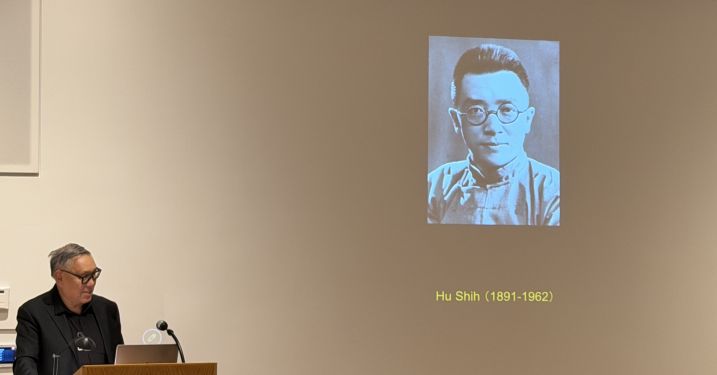
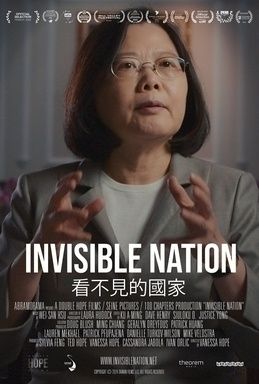
Film Screening: Invisible Nation (2023)
April 7, 2026
6:00 pm
Ives Hall, 115
Please join us a for a screening of the documentary Invisible Nation (2023), hosted by the East Asia Program. The film tells the story of Taiwan's first female president, Tsai Ing-Wen.
Film synopsis: Unprecedented access to Taiwan’s first female president, Tsai Ing-wen, centers this portrait of the constantly colonized island, as it struggles to preserve its hard-won democracy, autonomy, and freedom from fear of authoritarian aggression. Thorough, incisive, and bristling with tension, Invisible Nation is a living account of Tsai’s tightrope walk as she balances the hopes and dreams of her nation between the colossal geopolitical forces of the U.S. and China. Invisible Nation captures Tsai at work in her country’s vibrant democracy, while seeking full international recognition of Taiwan’s right to exist. At a time when Russia’s invasion of Ukraine has demonstrated the ever-present threat of authoritarian aggression around the world, Invisible Nation brings a punctual focus to the struggles of Taiwan.
Free and open to the public! Courtesy of Together Films.
Additional Information
Program
Einaudi Center for International Studies
East Asia Program
How WWII Changed Ideas of Racial Purity in Japan
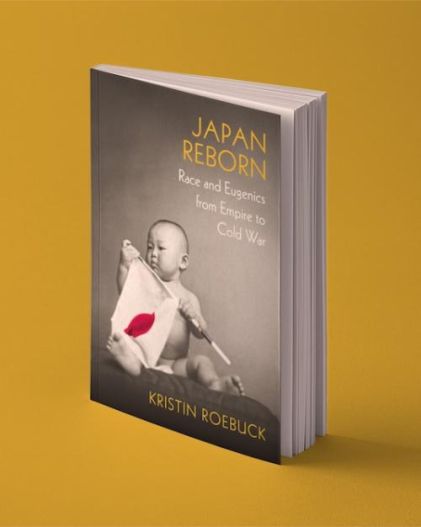
Kristin Roebuck, EAP
A new book from Kristin Roebuck explores what happened to “mixed blood” children born to Japanese women and foreign soldiers.
Additional Information
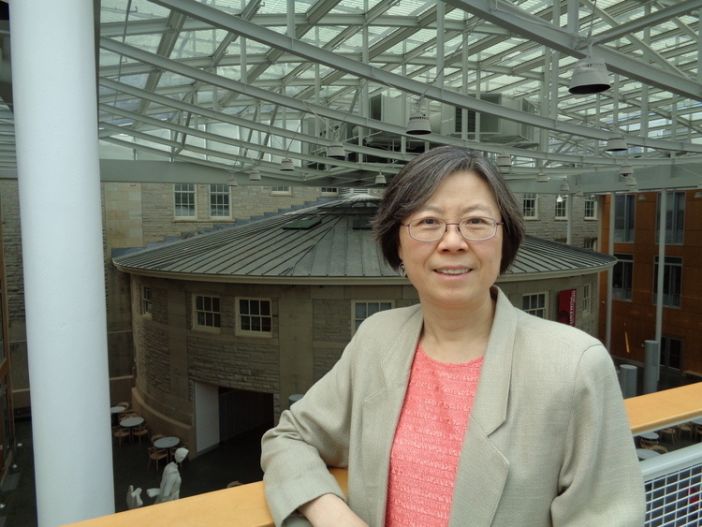
From War Waste to Cultural Legacy: The Role of Chinese Poetry in WWI Trench Art
March 17, 2026
4:30 pm
Rockefeller Hall, 374, Asian Studies Lounge
Speaker: Ding Xiang Warner, Professor of Chinese Literature, Cornell University
Abstract: The usual procedures of the scholar of Chinese poetry, when asking the question “What is the meaning of this Chinese poem?,” are familiar and generally reliable. Whether we ask the question about a poem’s “original meaning,” a meaning intended by its author, or about the meanings that accrued to the poem in its reception by readers over time, the meanings for which the poem earned a “place” in Chinese literary tradition, there are rich scholarly resources and time-tested methodological tools that help us to work out answers, even if tentatively. How, though, is the task of the literary historian complicated, how are the meanings of a Chinese poem affected, when it and its Chinese readers are “uprooted” from their native land, transported out of their cultural milieu into another? This presentation takes up these questions by way of examining engraved Chinese poems found on WWI trench art made by Chinese volunteer workers on the Western Front in Europe as opportunities for expanding study of classical Chinese poetry outside its expected contexts.
About East Asia Program
As Cornell’s hub for research, teaching, and engagement with East Asia, the East Asia Program (EAP) serves as a forum for the interdisciplinary study of historical and contemporary East Asia. The program draws its membership of over 45 core faculty and numerous affiliated faculty, graduate, and undergraduate students from eight of Cornell’s 12 schools and colleges.
Additional Information
Program
Einaudi Center for International Studies
East Asia Program
Travel Grants Send Grad Students Abroad
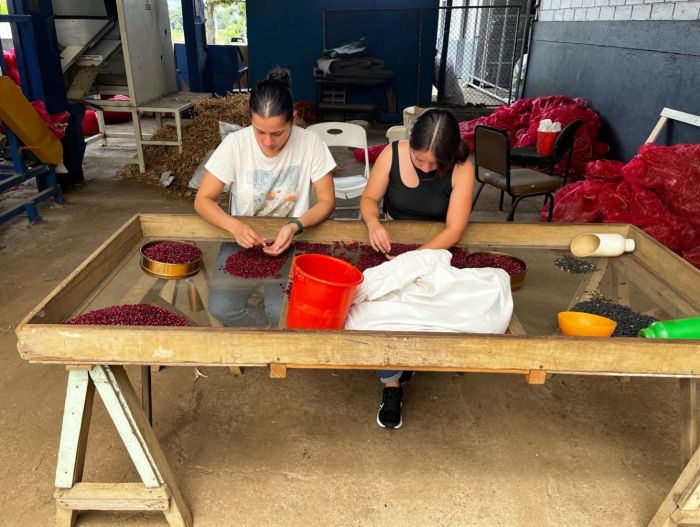
Eighty-three graduate students traveled internationally for fieldwork last summer with Einaudi Center support.
Additional Information
Europe and the Return of History
October 8, 2026
5:00 pm
Physical Sciences Building, 120
Russia's invasion of Ukraine, political radicalization, the crisis of the U.S., the rise of China—these are global shocks that define our current moment.
But in Europe, it is commonly said, they have a particular meaning. Not only are they close at hand. They signify a particular type of shock, a "pivot in time" as Germany's Chancellor Scholz put it. They signify an awakening. They signify the "return of history."
Looking back to the 20th century, Adam Tooze will explore the recurring theme in European public debate of the "end" and "return" of history.
***
About the Speaker
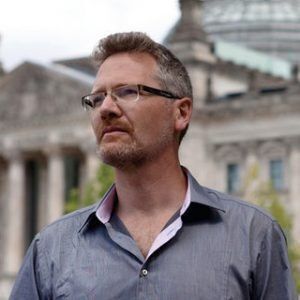
Professor Adam Tooze (Columbia University) teaches and researches widely in the fields of 20th-century and contemporary history, and is interested in a range of themes in political, intellectual, and military history, across a canvas stretching from Europe across the Atlantic. He is the author of prize-winning books such as The Wages of Destruction (2006), The Deluge (2014), Crashed (2018), and Shutdown (2021). His latest book, Carbon: Climate Crisis and the Decline of the West, is forthcoming in February 2027.
About the Event
This event is hosted by the Institute for European Studies (IES), part of the Mario Einaudi Center for International Studies. The IES Luigi Einaudi Distinguished Lecture is an annual event.
Additional Information
Program
Einaudi Center for International Studies
Institute for European Studies
East Asia Program
Southeast Asia Program
Latin American and Caribbean Studies
Institute for African Development
Migrations Program
Information Session: Fulbright U.S. Student Program
May 18, 2026
5:00 pm
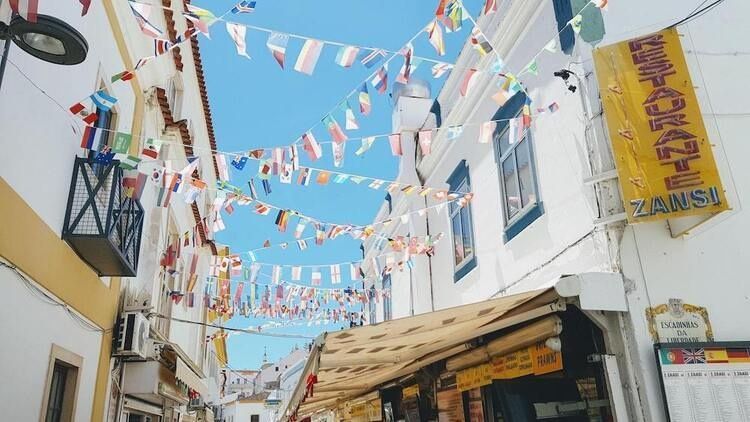
The Fulbright U.S. Student Program supports U.S. citizens to study, conduct research in any field, or teach English in more than 150 countries. The program is open to graduate students, recent graduates, and young professionals. Undergraduate students who wish to begin the program immediately after graduation are encouraged to start the process in their junior year. Recent graduates are welcome to apply through Cornell.
The Fulbright program at Cornell is administered by the Mario Einaudi Center for International studies. Applicants are supported through all stages of the application and are encouraged to start early by contacting fulbright@einaudi.cornell.edu.
Register for the virtual session.
Can’t attend? Contact fulbright@einaudi.cornell.edu.
Additional Information
Program
Einaudi Center for International Studies
Reppy Institute for Peace and Conflict Studies
East Asia Program
Southeast Asia Program
Latin American and Caribbean Studies
Institute for African Development
Institute for European Studies
South Asia Program
Migrations Program
Cornell Classical Chinese Colloquium with Wu Hung
April 24, 2026
3:30 pm
Rockefeller Hall, 374
Speaker: Wu Hung, Harrie A. Vanderstappen Distinguished Service Professor of Art History and the College Chinese Art, University of Chicago
Title: How to Read Chinese Handscroll Paintings
About Cornell Classical Chinese Colloquium
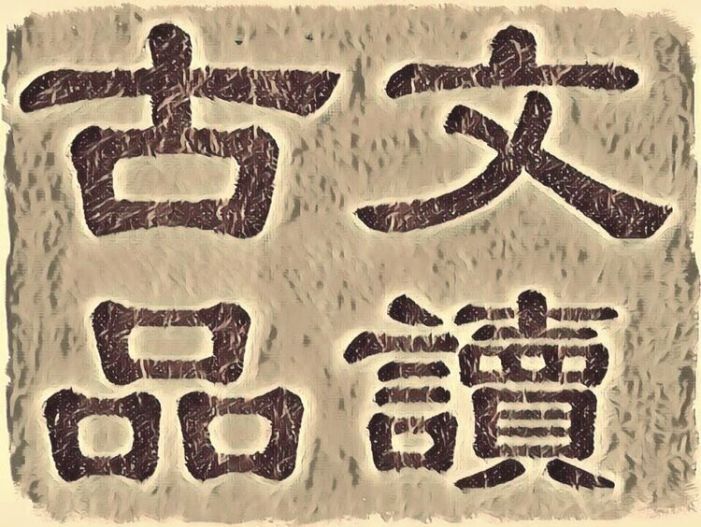
The group meets monthly during the semester to explore a variety of classical Chinese texts and styles. Other premodern texts linked to classical Chinese in Japanese, Korean, and Vietnamese have also been explored. Presentations include works from the earliest times to the 20th century. Workshop sessions are led by local, national, and international scholars. Participants with any level of classical Chinese experience are welcome to attend.
o At each session, a presenter guides the group in a reading of a classical Chinese text. Attendees discuss historical, literary, linguistic, and other aspects of the text, working together to resolve difficulties in comprehension and translation.
o No preparation is required; all texts will be distributed at the meeting.
o Refreshments will be served.
Additional Information
Program
Einaudi Center for International Studies
East Asia Program
Information Session: Fulbright U.S. Student Program
April 13, 2026
4:45 pm
The Fulbright U.S. Student Program supports U.S. citizens to study, conduct research in any field, or teach English in more than 150 countries. The program is open to graduate students, recent graduates, and young professionals. Undergraduate students who wish to begin the program immediately after graduation are encouraged to start the process in their junior year. Recent graduates are welcome to apply through Cornell.
The Fulbright program at Cornell is administered by the Mario Einaudi Center for International studies. Applicants are supported through all stages of the application and are encouraged to start early by contacting fulbright@einaudi.cornell.edu.
Register for the virtual session.
Can’t attend? Contact fulbright@einaudi.cornell.edu.
Additional Information
Program
Einaudi Center for International Studies
Reppy Institute for Peace and Conflict Studies
East Asia Program
Southeast Asia Program
Latin American and Caribbean Studies
Institute for African Development
Institute for European Studies
South Asia Program
Migrations Program
Cornell Classical Chinese Colloquium with Quan Gan
April 10, 2026
3:30 pm
Rockefeller Hall, 374
Speaker: Quan Gan, Lecturer of History, Rice University
Title: Invest the Gods, Praise the Lord: Royal Speeches on Temple Steles in Wuyue
Abstract: Throughout his political career, Qian Liu 錢鏐 (d. 932 CE) repeatedly petitioned the emperors in the north to grant honorific titles to powerful figures—both living and deceased, human and divine—within Wuyue. In this colloquium, I will examine two temple inscriptions commissioned by Qian Liu to commemorate the imperial bestowal of honorific titles upon two local deities: Pang Yu 龐玉, the patron god of Yuezhou 越州 (908), and the Dragon God of Hangzhou 杭州 (916).
These two steles offer valuable insight into practices of commemoration and political communication in post-Tang China. Both inscriptions are highly stylized, composed in the parallel prose form (pianwen 駢文), also known as “Four-Six Prose.” Written in Qian Liu’s first-person voice, they celebrate the political achievements of the ruler of Wuyue while foregrounding his ritual relationship with the northern emperor. Most intriguingly, both the textual content and the material form of the steles emphasize this connection. The imperial edict authorizing the bestowal of titles is not only incorporated into the inscription’s text but also visually reproduced on the stone itself.
I welcome discussion on how best to preserve the distinct registers, literary conventions, and layered voices of such inscriptions in English translation.
About Cornell Classical Chinese Colloquium
The group meets monthly during the semester to explore a variety of classical Chinese texts and styles. Other premodern texts linked to classical Chinese in Japanese, Korean, and Vietnamese have also been explored. Presentations include works from the earliest times to the 20th century. Workshop sessions are led by local, national, and international scholars. Participants with any level of classical Chinese experience are welcome to attend.
o At each session, a presenter guides the group in a reading of a classical Chinese text. Attendees discuss historical, literary, linguistic, and other aspects of the text, working together to resolve difficulties in comprehension and translation.
o No preparation is required; all texts will be distributed at the meeting.
o Refreshments will be served.
Additional Information
Program
Einaudi Center for International Studies
East Asia Program