
East Asia Program
Conference: Research Frontiers in Democratic Threats and Resilience

March 23, 2024
9:00 am
Africana Studies and Research Center
This conference brings together scholars undertaking new research on questions of democratic resistance and sources of resilience in response to global evidence of democratic backsliding.
We will work together to analyze domestic and international factors, including institutions, civil society, political parties, voters, media, and foreign policy. In an era marked by threats to democracy from within nominally democratic institutions, by elected officials, and with varying degrees of support from the voting public, we seek to understand the interactive nature of democratic threats and resistance strategies.
As democracy can be conceived of as a continued contestation over rights, responsibilities, and rules, we aim to use this critical historical moment of contestation to expand our comparative conceptions of democratic practice, strategies of endurance and deepening or weakening of democratic regimes, and the social, economic, technological, and institutional factors that contribute to varied outcomes worldwide.
Hosted by the Mario Einaudi Center for International Studies, the conference is part of Einaudi's work on democratic threats and resilience.
Register to attend the conference
***
March 22 Panels
Panel 1: Concepts and Measurement: Democracy 2.0
This panel will push beyond the measurement debates to address conceptual and ontological questions about how to measure democracy, and definitional questions at the heart of democracy’s weaknesses and promise in contemporary practice. Does the practice of a minimal definition of democracy contribute to public disenchantment, and is such practice durable?
Panel 2: Resilience Factors, Resistance Strategies, and Opposition Tactics
This panel will examine the social and economic bases of democratic resiliency, as well as various strategies, actors, and institutions that can fortify and even enhance democratic practice.
Panel 3: Stabilizing Forces? Historical Patterns and Contemporary Challenges
This panel will dissect the factors that have historically stabilized advanced industrial democracies—including party systems, modes of political representation, and patterns of capitalist development-- and their potential applicability to contemporary patterns of democratic backsliding and resistance.
March 23 Panel
Panel 4: International Actors and Regional Organizations
This panel will explore the ways in which authoritarian or democratic leaders and regimes exert influence on the regime types of other countries and the influence of regional organizations on participating countries’ regime trajectories.
Additional Information
Program
Einaudi Center for International Studies
Reppy Institute for Peace and Conflict Studies
East Asia Program
Southeast Asia Program
Latin American and Caribbean Studies
Institute for African Development
Institute for European Studies
South Asia Program
Poet-Monks: The Invention of Buddhist Poetry in Late Medieval China

Poet-Monks focuses on the literary and religious practices of Buddhist poet-monks in Tang-dynasty China to propose an alternative historical arc of medieval Chinese poetry. Combining large-scale quantitative analysis with close readings of important literary texts, Thomas J. Mazanec describes how Buddhist poet-monks, who first appeared in the latter half of Tang-dynasty China, asserted a bold new vision of poetry that proclaimed the union of classical verse with Buddhist practices of repetition, incantation, and meditation.
Book
64.95
Additional Information
Program
Type
- Book
- Cornell East Asia Series
Publication Details
Publication Year: 2024
Publication Number: 217
ISBN: 9781501773839
The Minjian Avant-Garde: Art of the Crowd in Contemporary China

Book
46.95
Additional Information
Program
Type
- Book
- Cornell East Asia Series
Publication Details
Publication Year: 2024
Publication Number: 216
ISBN: 9781501773181
Eight Dogs, or "Hakkenden": Part Two—His Master's Blade

Book
36.95
Additional Information
Program
Type
- Book
- Cornell East Asia Series
Publication Details
Publication Year: 2024
Publication Number: 218
ISBN: 9781501773907
Faculty Info Session: Global Grand Challenge Call for Proposals

February 12, 2024
12:00 pm
Learn about Cornell's new Global Grand Challenge: The Future and how you can propose a research or curricular project.
Global Cornell is opening what will be The Future’s only call for proposals. Interdisciplinary teams of faculty and researchers from all Cornell colleges, schools, and departments are encouraged to identify a research issue of global importance and plan a path to a successful alternative future.
Teams may apply for research project support up to $150,000 per year for two years. Stand-alone curricular projects are eligible for up to $20,000 per year for two years.
Deadline for letters of intent to apply (1 page): February 26, 2024Deadline for full proposals (5–7 pages): May 6, 2024Register here to join the virtual info session. The session will include an opportunity to ask questions and network with others interested in finding collaborators.
The information session slides and Q&A will be posted online after the event.
Additional Information
Program
Reppy Institute for Peace and Conflict Studies
East Asia Program
Southeast Asia Program
Latin American and Caribbean Studies
Institute for African Development
Institute for European Studies
South Asia Program
Einaudi Center for International Studies
FLIP Teacher Orientation

February 5, 2024
3:00 pm
Uris Hall, G02
The Einaudi Center’s Foreign Language Introduction Program (FLIP) is heading into local communities to teach children about world cultures and languages. FLIP aims to connect our diverse Cornell community to K-12 students at local schools, libraries and community centers in Upstate New York. Cornell volunteer teachers will have the opportunity to share short introductory lessons on the foreign languages and cultures they are passionate about. Volunteer teachers should have at least an intermediate knowledge of their chosen language.
Register to attend either the Feb. 1 orientation in person or the Feb. 5 orientation over Zoom.
Additional Information
Program
Einaudi Center for International Studies
East Asia Program
Southeast Asia Program
Latin American and Caribbean Studies
Institute for African Development
Institute for European Studies
South Asia Program
Information Session: Global Internships in Africa

January 30, 2024
4:45 pm
Uris Hall, G08
The Institute for African Development (IAD) offers 6-8 week summer internships that let you undertake challenging practical fieldwork in Ghana, Zambia, or Liberia. If you're a sophomore or junior, join this info session to find out how you can apply. Applications for Global Internships are due February 1.
Register for the information session.
***
The Mario Einaudi Center for International Studies hosts info sessions for graduate and for undergraduate students. To learn more about funding opportunities, international travel, research, and internships, view the full calendar for spring semester sessions.
Additional Information
Program
Einaudi Center for International Studies
Reppy Institute for Peace and Conflict Studies
East Asia Program
Southeast Asia Program
Latin American and Caribbean Studies
Institute for African Development
Institute for European Studies
South Asia Program
Indigenous (Austronesian) Language Endangerment and Revitalization in Taiwan
February 9, 2024
1:00 pm
White Hall, 110
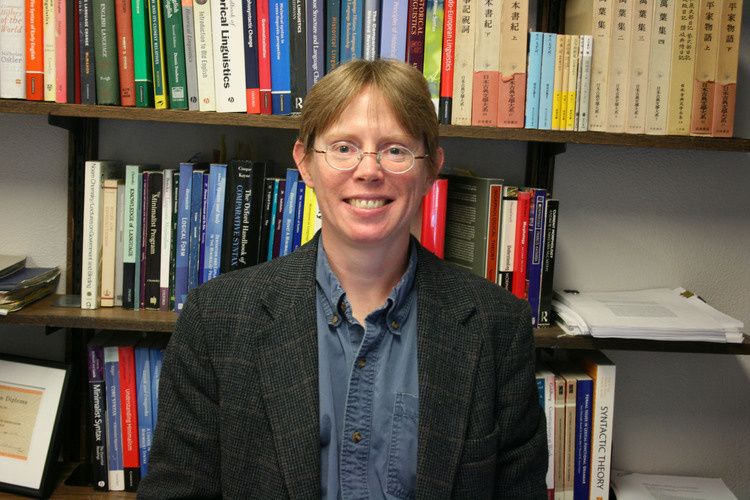
Speaker: Edith Aldridge, Linguistics, Academia Sinica
Taiwan is the homeland of the Austronesian language family, speakers of Proto-Austronesian having migrated there from southeastern China roughly 6,000 years ago before proceeding to populate the Philippines, Indonesia/Malaysia, Madagascar, and the Pacific islands. As many as twenty distinct languages were spoken in Taiwan at the beginning of foreign contact in the 17th century. Now a third of these are extinct, and the rest are endangered. The first of these to decline were languages spoken in lowland areas in contact first with the small Dutch presence in southern Taiwan in the mid-17th century and subsequently with waves of Chinese migration in the 18th and 19th centuries. Intensive contact with highland Austronesians began with Japanese colonization during the first half the 20th century and continued under the Nationalist government from 1945 until the lifting of martial law in 1987. In 2001, the government inaugurated a revitalization program with the hope of invigorating the by then already endangered Austronesian languages, for example by introducing ethnic language education into local school curriculums. This presentation sketches the history of foreign contact, government language policies (particularly in the 20th century), revitalization efforts, and some outcomes of these policies and programs.
Introduced by John Whitman, Linguistics, Cornell University.
Co-sponsored by the Linguistics Department.
Additional Information
Program
Einaudi Center for International Studies
East Asia Program
Past Events

Korean Media, Democracy, and Pandemic Archives
This past spring EAP held a series of stimulating talks, conversations, and workshops.
February
2/2 The Emergence of the Yuan non-Han Ancestry in Late Qing North China
Tomoyasu Iiyama, Waseda University
3:30 p.m. | virtual | Cornell Classical Chinese Colloquium
2/9 Indigenous (Austronesian) Language Endangerment and Revitalization in Taiwan
Edith Aldridge, Linguistics, Academia Sinica
1:00 p.m. | 110 White Hall
2/17 Cornell Concert Series: DoosTrio with Kayhan Kalhor, Wu Man, and Sandeep Das
7:30 p.m. | Bailey Hall
March
3/4 The Dangerous Politics of State-Business Relations in Contemporary China
Meg Rithmire, Harvard Business School | Cornell Contemporary China Initiative
3/7 Transmedia Ecologies of Korean “New Retro”
Michelle Cho, East Asian Studies, University of Toronto
5:00 p.m. | A.D. White House, Guerlac Room | EastAsia+ Initiative
3/8 Animating Forces: Late-Ming and Early-Qing Conceptions of “Plucking Life” (caisheng 採生)
Andrew Schonebaum, Chinese Studies, University of Maryland
3:30 p.m. | Rockefeller Hall 374 | Cornell Classical Chinese Colloquium
3/11 Hideo Kojima and Progressive Game Design
Bryan Hikari Harzheim, Waseda University
EAP Graduate Student Steering Committee
4:45 p.m. | Goldwin Smith Hall 64
3/22 Epitaphs Made Widely Available in the Northern Song (960-1127)
Man Xu, History, Tufts University
3:30 p.m. | Rockefeller Hall 374 | Cornell Classical Chinese Colloquium
3/25 Book Talk: Sustainable Peace in Northeast Asia
Y.S. Lee, Cornell Law School
Noon to 1:30 p.m. | Uris Hall 204 | RSVP requested
April
4/8 Negotiating Legality: Chinese Companies in the U.S. Legal Systems
Ji Li, University of California, Irvine School of Law
4:45 p.m. | Myron Taylor Hall Room 182 Cornell Law School
4/12 Su-Yeon Seo, Asian Studies, Cornell
3:30 p.m. | Rockefeller Hall 374 | Cornell Classical Chinese Colloquium
4/15 President by Day, President by Night: Media and Democracy in Contemporary South Korea
Youngju Ryu, Asian Languages and Cultures, University of Michigan
4:45 p.m. | Goldwin Smith Hall 64
4/29 Stormy Seas: Taiwan’s Democracy under the Shadow of China
Thung-Hong Lin, Sociology, Academia Sinica
4:45 p.m. | Goldwin Smith Hall 64
May
5/3 Pandemic Archives: Media, Geopolitics, and Temporalities of Crisis (Day 1)
Book Talk: SARS Stories: Affect and Archive of the 2003 Pandemic
Belinda Kong, Asian Studies and English, Bowdoin College
5/4 Pandemic Archives: Media, Geopolitics, and Temporalities of Crisis (Day 2)
10:00 a.m. to 5:30 p.m. | hybrid workshop | Physical Sciences Building 401
Additional Information
Program
Cornell Classical Chinese Colloquium: Su-yeon Seo
April 12, 2024
3:30 pm
Rockefeller, 374 Asian Studies Lounge
Su-yeon Seo, (Cornell grad student, Asian Studies) will lead final Classical Chinese text-reading for this semester titled Naming and Knowledge in the East Asian Sea.
The group meets monthly during the semester to explore a variety of classical Chinese texts and styles. Other premodern texts linked to classical Chinese in Japanese, Korean, and Vietnamese have been explored. Presentations include works from the earliest times to the 20th century. Workshop sessions are led by local, national, and international scholars. Participants with any level of classical Chinese experience are welcome to attend.
At each session, a presenter guides the group in a reading of a classical Chinese text. Attendees discuss historical, literary, linguistic, and other aspects of the text, working together to resolve difficulties in comprehension and translation.
No preparation is required; all texts will be distributed at the meeting.
Additional Information
Program
Einaudi Center for International Studies
East Asia Program