
East Asia Program
Cornell Classical Chinese Colloquium: Man Xu
March 22, 2024
3:30 pm
Rockefeller Hall, 374 Asian Studies Lounge
Epitaphs Made Widely Available by Man Xu, History, Tufts University
The Cornell Classical Chinese Colloquium (CCCC) 古文品讀 , a reading group for scholars interested in premodern Sinographic text (古文), is welcomes Man Xu, History, Tufts University to lead this month's Classical Chinese text-reading.
Man writes: The style and content of epitaphs not surprisingly changed over time. Epitaphs preserved in Song collected works differ from Tang examples in emphasizing their subjects’ education, character, and career achievements. The individualized Song style set the tone for epitaph writing in late imperial China. In recent years, more than one hundred newly discovered epitaphs from Luzhou, Shanxi, a peripheral region in north China, are changing our understanding of this Tang-Song shift in epitaph writing. For more than a century after the beginning of the Song, Luzhou epitaphs remained anonymously authored and lacking in detail. They record subjects’ prestigious distant ancestors, employ archaic language, and adopt flamboyant metaphors and rhetoric. All these stylized features point to a surprising Tang-Song cultural continuity that historians had not detected earlier. The typical “Song-style” epitaphs did not appear in Luzhou until the second half of the eleventh century, when the local elite had better educational opportunities and became participants in the national elite culture.
The group meets monthly during the semester to explore a variety of classical Chinese texts and styles. Other premodern texts linked to classical Chinese in Japanese, Korean, and Vietnamese have been explored. Presentations include works from the earliest times to the 20th century. Workshop sessions are led by local, national, and international scholars. Participants with any level of classical Chinese experience are welcome to attend.
At each session, a presenter guides the group in a reading of a classical Chinese text. Attendees discuss historical, literary, linguistic, and other aspects of the text, working together to resolve difficulties in comprehension and translation.
No preparation is required; all texts will be distributed at the meeting.
Additional Information
Program
East Asia Program
Hideo Kojima and Progressive Game Design
March 11, 2024
4:45 pm
Goldwin Smith Hall, 64
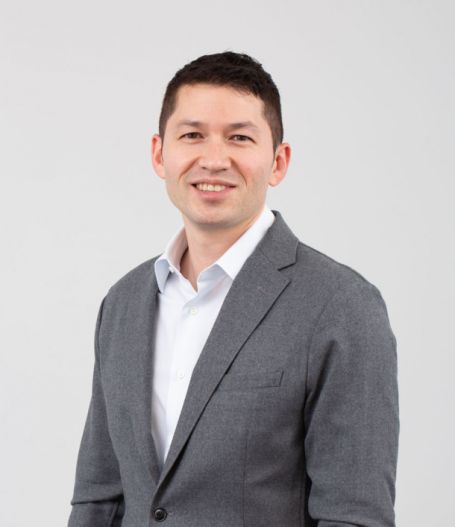
Bryan Hikari Hartzheim, Waseda University.
As the architect of the Metal Gear Solid franchise, video game director Hideo Kojima is synonymous with the “stealth game” genre, where tension and excitement is created from players avoiding enemies rather than confronting them. Through the franchise, Kojima also helped to bridge the gap between video games and other forms of media. In this talk, Bryan Hikari Hartzheim draws from his recently published book to explain the core tenets of Kojima’s game design. Despite working for a commercial game studio for most of his career, Kojima designed and directed games that were both industrially disruptive and socially relevant. Focusing on developer disclosures from Japanese game periodicals, Hartzheim argues that Kojima advocates for a “progressive game design” that expands the boundaries of both game industry conventions and sociocultural discourses in Japan.
Bryan Hikari Hartzheim is Associate Professor of New Media at Waseda University in Tokyo, Japan. He teaches and researches on game studies, media industries, and Japanese popular culture in the School of International Liberal Studies and Graduate School of International Culture and Communication Studies. He is the author of Hideo Kojima: Progressive Game Design from Metal Gear to Death Stranding (2023) and co-editor of The Franchise Era: Managing Media in the Digital Economy (2019).
Introduced by Andrea Mariucci, graduate student, Asian Studies. This event is created by the EAP Graduate Student Steering Committee.
Watch an interview with Bryan Hikari Hartzheim and Andrea Mariucci here! (2 min.)
Additional Information
Program
Einaudi Center for International Studies
East Asia Program
Information Session: Fulbright U.S. Student Program for Undergraduates
March 13, 2024
4:45 pm
The Fulbright U.S. Student Program supports U.S. citizens to study, conduct research in any field, or teach English in more than 150 countries. Students who wish to begin the program immediately after graduation are encouraged to start the process in their junior year. Recent graduates are welcome to apply through Cornell.
The Fulbright program at Cornell is administered by the Mario Einaudi Center for International studies. Applicants are supported through all stages of the application and are encouraged to start early by contacting fulbright@einaudi.cornell.edu.
Register for the information session. Can’t attend? Contact fulbright@einaudi.cornell.edu.
***
The Mario Einaudi Center for International Studies hosts info sessions for graduate and for undergraduate students. To learn more about funding opportunities, international travel, research, and internships, view the full calendar for spring semester sessions.
Additional Information
Program
Einaudi Center for International Studies
Reppy Institute for Peace and Conflict Studies
East Asia Program
Southeast Asia Program
Latin American and Caribbean Studies
Institute for African Development
Institute for European Studies
South Asia Program
Information Session: Fulbright U.S. Student Program for Undergraduates

February 12, 2024
4:45 pm
The Fulbright U.S. Student Program supports U.S. citizens to study, conduct research in any field, or teach English in more than 150 countries. Students who wish to begin the program immediately after graduation are encouraged to start the process in their junior year. Recent graduates are welcome to apply through Cornell.
The Fulbright program at Cornell is administered by the Mario Einaudi Center for International studies. Applicants are supported through all stages of the application and are encouraged to start early by contacting fulbright@einaudi.cornell.edu.
Register for the information session. Can’t attend? Contact fulbright@einaudi.cornell.edu.
***
The Mario Einaudi Center for International Studies hosts info sessions for graduate and for undergraduate students. To learn more about funding opportunities, international travel, research, and internships, view the full calendar for spring semester sessions.
Additional Information
Program
Einaudi Center for International Studies
Reppy Institute for Peace and Conflict Studies
East Asia Program
Southeast Asia Program
Latin American and Caribbean Studies
Institute for African Development
Institute for European Studies
South Asia Program
Information Session: Fulbright Opportunities for Graduate Students

February 5, 2024
4:45 pm
The Fulbright U.S. Student Program provides full funding for graduate and professional students conducting research in any field or teaching in more than 150 countries. Open to U.S. citizens only.
The Fulbright-Hays Doctoral Dissertation Research Abroad Program supports doctoral students conducting research in modern languages or area studies for six to 12 months. Open to U.S. citizens and permanent residents of the United States. Travel to Western European countries is not eligible.
Register for the information session. Can’t attend? Contact fulbright@einaudi.cornell.edu.
***
The Mario Einaudi Center for International Studies hosts info sessions for graduate and for undergraduate students. To learn more about funding opportunities, international travel, research, and internships, view the full calendar for spring semester sessions.
Additional Information
Program
Einaudi Center for International Studies
Reppy Institute for Peace and Conflict Studies
East Asia Program
Southeast Asia Program
Latin American and Caribbean Studies
Institute for African Development
Institute for European Studies
South Asia Program
Who Has the Right to Free Speech? Immigration, Civil Liberty, and Freedom of Expression

March 5, 2024
3:00 pm
Biotechnology Building, G10
Free expression is a human right and cornerstone of a democratic society.
The U.S. Constitution enshrines the right to free expression, but not all those who reside within the country’s borders have equal protection. Some migrants to the U.S. are leaving situations where their rights were threatened, and they embrace the principle of free expression. Those same migrants may find their rights circumscribed when they arrive in the United States.
What can be done to counter threats to free expression for immigrants? How can we protect civil liberties and the law while also protecting human rights and building a diverse, inclusive, and safe society? When is it appropriate to deny visa applications because of a person’s political views?
Our panel of experts will explore these questions in a discussion moderated by Stephen Yale-Loehr (Cornell Law School). This event is hosted by Global Cornell and its Migrations initiative. Learn more about how Global Cornell supports global freedom of expression and Scholars Under Threat.
Panelists
Cecillia Wang, Deputy Legal Director, American Civil Liberties Union (ACLU) Austin Kocher, Research Assistant Professor, Syracuse UniversityBeth Lyon, Associate Dean for Experiential Education, Clinical Professor of Law, and Clinical Program Director, Cornell Law School Gautam Hans, Associate Clinical Professor of Law, Cornell Law School
Additional Information
Program
East Asia Program
Southeast Asia Program
Latin American and Caribbean Studies
South Asia Program
Einaudi Center for International Studies
Reppy Institute for Peace and Conflict Studies
Institute for African Development
Institute for European Studies
Transmedia Ecologies of Korean "New Retro"
March 7, 2024
5:00 pm
A.D. White House, Guerlac Room
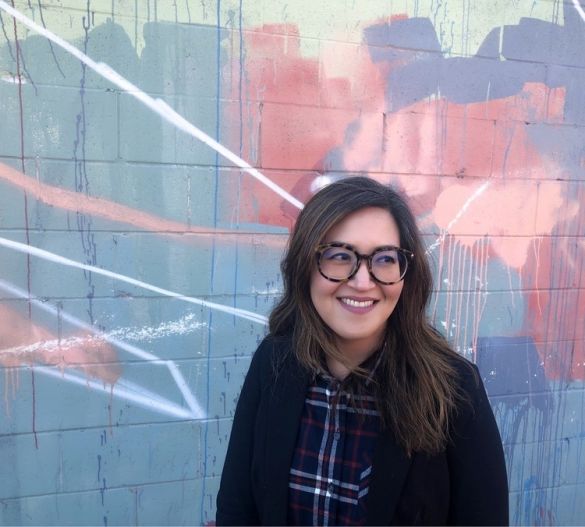
Michelle Cho, University of Toronto.
Retro trends in popular media are a common feature of contemporary cultures across the globe. Nowhere is the nostalgia for 20th century vibes more prominent than South Korea. This talk will discuss “new retro”(aka “newtro/뉴트로)” aesthetics in South Korea, focusing on the television drama Reply 1988 and the recent revival of City Pop on digital platforms like YouTube and Spotify. My presentation probes newtro’s multiple genealogies, to situate nostalgia-tinged portrayals of late ‘80s and ‘90s youth culture as Korean media’s self-reflexive portrayal of the impact of commercial popular media on the social transformations of the post-authoritarian period. Connecting newtro to the transmedia domains of City Pop and related genres of music and media production driven by digital distribution and platform engagement, I’ll argue that the aesthetics and sensoria of new retro illuminate the social impacts and ideological effects of contemporary parasocial engagement, to suggest that the trendiness of retro aesthetics today serves as a visible trace of global media entanglements of human and algorithmic agency.
Michelle Cho is Assistant Professor of East Asian Popular Cultures and Cinema Studies at the University of Toronto. Her published work explores contemporary South Korean genre cinemas, Korean television, K-Pop's politicization on digital platforms, and histories of race and racialization in K-Pop and its fandoms. She is co-editor of two forthcoming volumes: Mediating Gender in Post-Authoritarian South Korea with Jesook Song (University of Michigan, April 2024, Perspectives on Contemporary Korea series) and Bangtan Remixed: A Critical BTS Reader (Duke UP, August 2024) and author of the forthcoming monograph Genre Worlds: Global Forms and Millennial South Korean Cinema (Duke UP, 2025). Her public-facing writing appears in such venues as The Los Angeles Review of Books, and she's a frequent commentator on Asian media in outlets ranging from NPR to the CBC, CNN, Al Jazeera, and the Washington Post. She once hosted a public conversation between hallyu stars and BFFs Lee Jung Jae and Jung Woo Sung at the Toronto International Film Festival.
Introduced by Andrea Bachner, Comparative Literature, Cornell University. This event is part of the East Asia+ Initiative.
The lecture is followed by a reception.
Additional Information
Program
Einaudi Center for International Studies
East Asia Program
Rethinking Colonial Legacies across Southeast Asia: Through the Lens of Japan’s Wartime Empire
April 16, 2024
12:20 pm
Kahin Center
Gatty Lecture Series
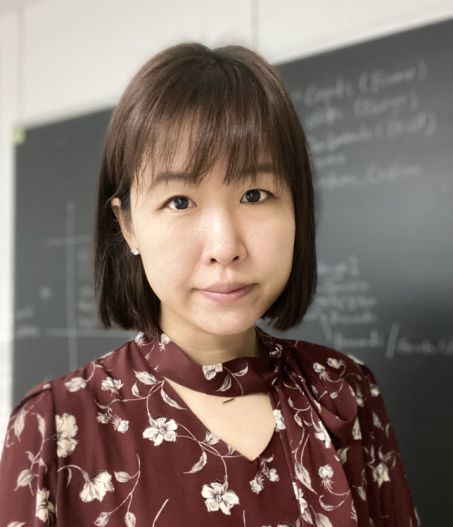
Join us for a talk by Diana Kim, (Assistant Professor, Georgetown University School of Foreign Service), who will discuss Japanese colonial legacies in Southeast Asia.
This Gatty Lecture will take place at the The Kahin Center, 640 Stewart Ave. Lunch will be served. For questions, contact seapgatty@cornell.edu.
About the Talk
For over a century, Southeast Asia was ruled by multiple European powers. Then, between 1940 and 1945 during World War Two, there was a temporary changing of the colonial guard as the Japanese empire occupied the region. The ideological bases and discourses for arrogating political authority changed, with a self-avowed Asian empire professing to liberate fellow Asians from the old yoke of Western imperialism and build a so-called Greater East Asia Co-Prosperity Sphere. It was also a time of heightened emotions, both great material losses and gains, as well as extraordinary physical, sexual, and symbolic violence. And in retrospect, it is an era that people remember in different ways, from a time of war, material deprivation and acute hardship, and the indignities of a “double occupation,” to a turning point towards independence and the birth of new nations.
This talk explores the significance of the Japanese occupation (1940-1945) for understanding the legacies of European colonial institutions across Southeast Asia today. It examines how agents of wartime empires stationed across Southeast Asia implemented varieties of formal arrangements for governing territories under Japanese military control that variably destroyed, kept, or altered extant institutions, while sometimes introducing new ones altogether. The Japanese occupation as such, I argue, generated different pathways for transmitting pre-war European colonial institutions into independent Southeast Asia. By exploring these varieties of wartime institution-building processes, this talk grapples more generally with what constitutes a meaningful rupture to historical continuity when studying the long-term effects of colonial institutions upon contemporary outcomes.
About the Speaker
Diana S. Kim is Assistant Professor at Georgetown University in the Edmund A. Walsh School of Foreign Service, and a core faculty member of the Asian Studies Program. She is the award-winning author of Empires of Vice: The Rise of Opium Prohibition across Southeast Asia (Princeton University Press 2020), and is currently writing a new book on global untouchability. Her scholarship is animated by concerns with how modern states develop capacity to define people at the edges of respectable society, constructing what it means to be illicit, marginal, and deviant, and crosses disciplinary boundaries between political science and history, with area focus on Southeast and East Asia.
Additional Information
Program
Einaudi Center for International Studies
Southeast Asia Program
East Asia Program
Stormy Seas: Taiwan's Democracy under the Shadow of China

April 29, 2024
4:45 pm
Goldwin Smith Hall, 64
Speaker: Thunghong Lin, Institute of Sociology, Academia Sinica. Introduced by Eli Friedman (ILR).
In an era where democratic nations globally face the risk of regression, the question arises: How can a small democratic country survive the political and economic pressures imposed by authoritarian great powers? The concept of "democratic resilience" has recently emerged in political science circles. Lin's new book, "Stormy Seas: Taiwan's Democracy under the Shadow of China in the 21st Century," uses Taiwan as a case study to analyze China's authoritarian influence. This influence is sometimes referred to as "Sharp power," an international relations strategy that impacts Taiwan's election outcomes. In this lecture, Lin explores China's strategies of authoritarian expansion toward Taiwan, including United Front tactics, economic interests, propaganda, and the influence of military intimidation. These strategies interact with three major political cleavages in Taiwan: ethnic and national identity, economic disparities, and generational differences. The dynamics of Taiwan's elections are shaped by the interplay between these strategies and political cleavages.
Lin is a research fellow at the Institute of Sociology, Academia Sinica, and the former director of the Center for Contemporary China at Tsinghua University (Taiwan). His research interests include social stratification, political sociology, and sociology of disasters. He received the Golden Tripod Award (National Book Award in Taiwan 2012), the Wu Ta-You Memorial Award (National Young Scholar Award in Taiwan 2015), and the Fulbright Scholarship for 2023-24. He is the Stanford-Taiwan Social Science fellow for 2023-24.
Additional Information
Program
Einaudi Center for International Studies
East Asia Program
President by Day, President by Night: Media and Democracy in Contemporary South Korea
April 15, 2024
4:45 pm
Goldwin Smith Hall, 64
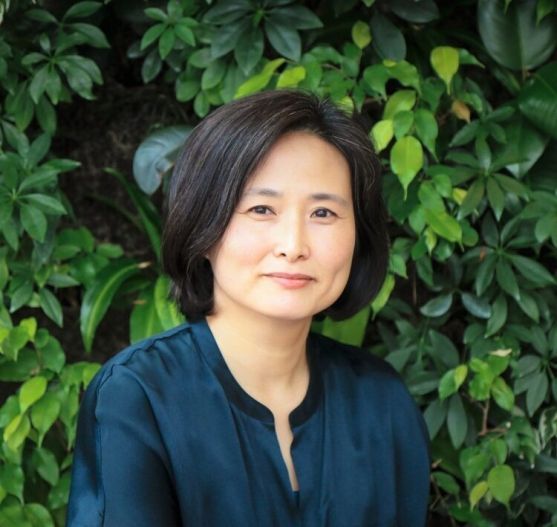
Youngju Ryu, Department of Asian Languages and Cultures
University of Michigan
“President by Night” is the infamous nickname Park Chung Hee once gave to Pang Il-yŏng, the head of Chosun ilbo, South Korea’s largest daily newspaper. The nickname reveals the symbiotic nature of the relationship between the press and political regimes in authoritarian South Korea, which continued well past the transition to procedural democracy in 1987. Transforming itself from a watchdog to a lapdog to an attack dog, mainstream news media has continued to serve as a powerful stakeholder in the maintenance of conservative political regimes and agendas in twenty-first-century South Korea. Against this backdrop, the rise of new media as news media in the “post-broadcast” age, which took off with the internet, exploded with the podcast, and achieved dominance with YouTube, has been led by an irreverent and iconoclastic maverick named Kim Ou-joon. Tracing Kim's career over three decades from the founding of an internet newspaper to the launch of the wildly popular political podcast Nakkomsu, and to the recent establishment of a YouTube news channel that reached a million subscribers in the first three days of its livecast, this talk will map Kim’s sustained search for what he has termed an “alternate messaging system” onto the political and media terrains of his times to interrogate the relationship between media and democracy in twenty-first century South Korea.
Introduced and moderated by: Ivanna Yi, (Korean Studies)
Discussant: Shiqi Lin, a current Klarman Postdoc in Asian Studies
This is the inaugural lecture in the East Asia Program's Korean Studies speaker series fostered by faculty members, Ivanna Yi (Asian Studies) and Suyoung Son (Asian Studies.) Co-sponsored by the Department of Asian Studies and the Department of Comparative Literature.
Bio: Youngju Ryu is a specialist in modern Korean literature with research interests in politics and aesthetics of protest, cultures of authoritarianism, and mediatized publics in modern Korea. Introduced by professors Ivanna Yi (Asian Studies) and Suyoung Son (Asian Studies).
Additional Information
Program
East Asia Program
Reppy Institute for Peace and Conflict Studies