
East Asia Program
Monday, 11/20 Ainu as an Indigenous Language of Japan

Anna Bugaeva, Institute of Arts and Sciences, Tokyo University of Science Monday, November 20 at 4:45 p.m. Goldwin Smith Hall 64 in person.
Introduced by John Whitman, Linguistics, Cornell. In historical times, Ainu, the only non-Japonic language of Japan and a lone witness of earlier cultures in Japan, was spoken by the people inhabiting the northernmost Japanese island of Hokkaido, the southern part of Sakhalin Island, and the Kuril Islands. Traditionally, the Ainu were hunter-gatherers who eventually faced the modern colonial expansion of Japan and Russia. This expansion ultimately led to the loss of their language in the early 21st century. In 2008, the Japanese government finally recognized the Ainu people as an indigenous ethnic group. This talk will discuss the significance, within a Japanese context, of the legal recognition of Ainu as an indigenous language.
Wednesday, 11/15 CCCI: The Qing Conquest as "Just War"

"The Qing Conquest as 'Just War': Manchu Arguments and European Reception" is the title of this Cornell Contemporary China Initiative lecture by guest speaker Nicola Di Cosmo, East Asian Studies, Institute for Advanced Study. Wednesday, November 15 at 4:45 p.m. Goldwin Smith Hall 64 in person.
Di Cosmo examines the early justification of the anti-Ming war articulated by the Manchu ruler Nurhaci (Qing Taizu, 1559-1626) and its reception in Europe, in particular in the work of Martino Martini, De Bello Tartarico. Introduced by Yue (Mara) Du, Department of History, Cornell.
For complete information, read more.
The View from Dharamshala: Tibet, China, and the World (a chat with Lobsang Sangay)

November 14, 2023
4:45 pm
King-Shaw Hall, 525
Lobsang Sangay is a lecturer at Harvard Law School. He was a democratically elected Sikyong (President) of the Tibetan Government in Exile and served two terms (2011-2021).
Light refreshments will be served
Additional Information
Program
East Asia Program
Apply by Jan. 10: Undergraduate Global Scholars

Speak Up for Global Free Speech
Make your voice heard as a student leader in Cornell's freedom of expression theme year. We welcome applications from writers, scholars, activists and artists, poets and podcasters, hands-on practitioners, and more.
Additional Information
Berger International Speaker Series with Marco Wan – Exploring World Literature and Law
November 14, 2023
12:15 pm
Cornell Law, MTH G85
As Law and Literature takes root around the world, from the United States to Germany, from Israel to Hong Kong, scholars working in the interdiscipline have been exploring what it might mean to study legal-literary relations in a more global frame. In this seminar, Marco Wan posits one answer to this question by drawing on the notion of ‘circulation’ as it has been considered in debates about world literature. He will begin with a survey of recent developments in Law and Literature, and then examine questions of reception, interpretation, and translation raised by the ways in which literary texts circulate into new legal-cultural environments. He will anchor his analysis in a close reading of Dai Sijie’s Balzac and the Little Chinese Seamstress (2000), a Franco-Chinese novel about two young men who are sent to the mountains for re-education during the Cultural Revolution in China, and who discover a suitcase of forbidden Western classics.
Additional Information
Program
East Asia Program
The Qing Conquest as "Just War": Manchu Arguments and European Reception
November 15, 2023
4:45 pm
Goldwin Smith Hall, 64
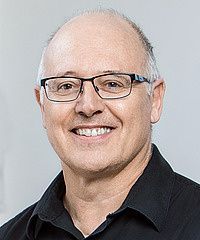
Nicola Di Cosmo, East Asian Studies, Institute for Advanced Study
Among the many facets of the Manchu conquest of China, a relatively unexplored one is that of Manchu ideology and propaganda. This talk examines the early justification of the anti-Ming war articulated by the Manchu ruler Nurhaci (Qing Taizu, 1559-1626) and its reception in Europe, in particular in the work of Martino Martini, De Bello Tartarico. While there have been a few studies on Nurhaci's manifesto, known as the “Seven Great Grievances,” this talk draws special attention to his reasons to justify the war against the Ming, and to explicitly stake his claim to rule All Under Heaven in light of the “just war theory”. Nurhaci's unprecedented pronouncement, moreover, not only underpinned the Manchu war effort for the following decades but also influenced the reception of the Qing conquest in Europe and the arguments made by Jesuits in favor of transferring their loyalty to the new dynasty.
Additional Information
Program
Einaudi Center for International Studies
East Asia Program
Boren Awards Info Session

November 13, 2023
4:45 pm
276 Caldwell Hall
Learn about the prestigious Boren Scholarships that fund study abroad outside Western Europe, Canada, Australia, or New Zealand. Boren Awards focus on developing linguistic and cultural knowledge among aspiring federal government employees. Boren Awards are funded by the federal government and are open to U.S. citizens who are currently matriculated students. Maximum undergraduate awards are determined by duration of study: up to $25,000 for 25-22 weeks and up to $8,000 for 8-11 weeks (STEM majors only).
Additional Information
Program
Einaudi Center for International Studies
East Asia Program
Southeast Asia Program
Latin American and Caribbean Studies
Institute for African Development
Institute for European Studies
South Asia Program
CANCELED: Andrew Schonebaum: Animating Forces: Late-Ming and Early-Qing Conceptions of "Plucking Life" (caisheng 採生).
November 3, 2023
3:30 pm
Rockefeller Hall, 375 Asian Studies Lounge
Unfortunately, this 4C's text reading with Andrew Schonebaum is canceled. For more information, please contact: eap-guwen@cornell.edu.
The Cornell Classical Chinese Colloquium (CCCC) 古文品讀 is a reading group for scholars interested in premodern Sinographic text (古文). The group meets monthly during the semester to explore a variety of classical Chinese texts and styles. Other premodern texts linked to classical Chinese in Japanese, Korean, and Vietnamese have been explored. Presentations include works from the earliest times to the 20th century. Workshop sessions are led by local, national, and international scholars.
Participants with any level of classical Chinese experience are welcome to attend.
At each session, a presenter guides the group in a reading of a classical Chinese text. Attendees discuss historical, literary, linguistic, and other aspects of the text, working together to resolve difficulties in comprehension and translation.
No preparation is required; all texts will be distributed at the meeting.Contact eap-guwen@cornell.edu for more information and subscribe to CCCC news for updates about events. Please make sure to send your subscription request from the email address at which you wish to receive CCCC updates.
Cornell faculty hosts are TJ Hinrichs, History, and Suyoung Son, Asian Studies.
Additional Information
Program
Einaudi Center for International Studies
East Asia Program
Support for Times of Crisis

Campus Resources for Cornell's Global Community
On this new page, Global Cornell gathers campus services to help students, faculty, and staff cope with international conflict and turbulent times.
Additional Information
Laidlaw Scholars Symposium

November 8, 2023
5:00 pm
Klarman Hall Auditorium & Atrium
Laidlaw Scholars at Cornell will share their summer research and leadership-in-action experiences at this annual symposium.
Beginning in the Klarman Hall Auditorium, a panel of scholars will share their work and experiences. The presentation will be followed by poster presentations throughout the Groos Family Atrium.
The Laidlaw Undergraduate Leadership and Research Scholarship Program provides generous funding to first- and second-year undergraduates over two years as they pursue internationally focused research, engage in leadership training and a leadership-in-action experience, and join a global network of like-minded peers.
Learn more about the program, which is administered by the Mario Einaudi Center for International Studies with leadership training support from the David M. Einhorn Center for Community Engagement.
Additional Information
Program
Einaudi Center for International Studies
Reppy Institute for Peace and Conflict Studies
East Asia Program
Southeast Asia Program
Latin American and Caribbean Studies
Institute for African Development
Institute for European Studies
South Asia Program