
East Asia Program
Information Session: Global Internships

November 29, 2023
5:00 pm
Uris Hall, G88
Go global in summer 2024! Global Internships give you valuable international work experience in fields spanning global development, climate and sustainability, international relations, communication, business, governance, and more.
All Global Interns receive an award totaling at least $3,000. Apply by February 1.
Additional Information
Program
Einaudi Center for International Studies
Reppy Institute for Peace and Conflict Studies
East Asia Program
Southeast Asia Program
Latin American and Caribbean Studies
Institute for African Development
Institute for European Studies
South Asia Program
Information Session: Global Internships

January 10, 2024
1:00 pm
Go global in summer 2024!
Global Internships give you valuable international work experience in fields spanning global development, climate and sustainability, international relations, communication, business, governance, and more.
All Global Interns receive an award totaling at least $3,000. Apply by February 1.
Register in advance
Additional Information
Program
Einaudi Center for International Studies
Reppy Institute for Peace and Conflict Studies
East Asia Program
Southeast Asia Program
Latin American and Caribbean Studies
Institute for African Development
Institute for European Studies
South Asia Program
Information Session: Laidlaw Scholars Program
December 7, 2023
3:00 pm
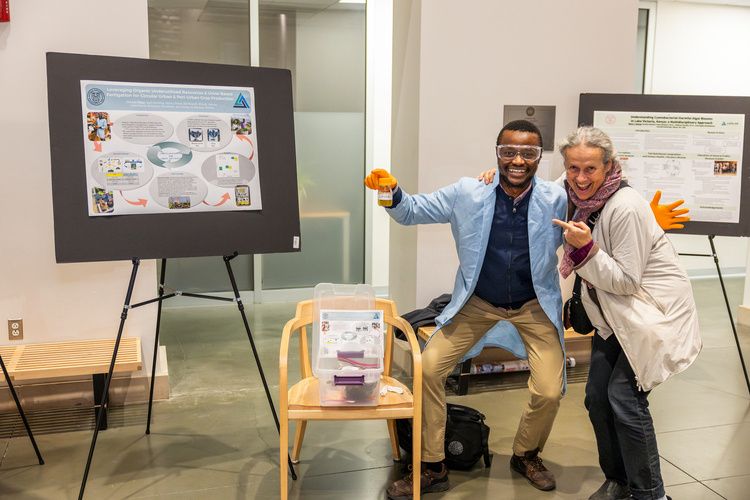
Learn more about the Laidlaw Leadership and Research Program for undergraduates, tips for connecting with faculty research mentors, and advice for writing a successful application.
Laidlaw promotes ethical leadership and international research around the world—starting with the passionate leaders and learners found on campuses like Cornell.
Open to first- and second-year students, the two-year program provides generous support to carry out internationally focused research, develop leadership skills, engage with community projects overseas, and become part of a global network of like-minded scholars from more than a dozen universities.
Register for the information session.
***
The Mario Einaudi Center for International Studies hosts info sessions for graduate and for undergraduate students to learn more about funding opportunities, international travel, research, and internships. View the full calendar of fall semester sessions.
Additional Information
Program
Einaudi Center for International Studies
Reppy Institute for Peace and Conflict Studies
East Asia Program
Southeast Asia Program
Latin American and Caribbean Studies
Institute for African Development
Institute for European Studies
South Asia Program
Information Session: Laidlaw Scholars Program

January 24, 2024
5:00 pm
Uris Hall, G08
Join us for a student information session on the Laidlaw Undergraduate Research and Leadership Program. Open to first- and second-year Cornellians, the program provides generous support for you to carry out internationally-focused research of your choice, develop leadership skills that you put into action, and join a global network of like-minded scholars.
Learn more about the programmatic and financial benefits of the Laidlaw Scholars Program, how research and leadership are intertwined, how to approach potential faculty research mentors, and the criteria by which applications will be evaluated. Don't miss this opportunity to get all of your questions answered!
***
The Mario Einaudi Center for International Studies hosts info sessions for graduate and for undergraduate students. To learn more about funding opportunities, international travel, research, and internships, view the full calendar of spring semester sessions.
Additional Information
Program
Einaudi Center for International Studies
Reppy Institute for Peace and Conflict Studies
East Asia Program
Southeast Asia Program
Latin American and Caribbean Studies
Institute for African Development
Institute for European Studies
South Asia Program
Information Session: Global Internships

January 23, 2024
5:00 pm
Uris Hall, G08
Go global in summer 2024!
Global Internships give you valuable international work experience in fields spanning global development, climate and sustainability, international relations, communication, business, governance, and more.
All Global Interns receive an award totaling at least $3,000. Apply by February 1.
Additional Information
Program
Einaudi Center for International Studies
Reppy Institute for Peace and Conflict Studies
East Asia Program
Southeast Asia Program
Latin American and Caribbean Studies
Institute for African Development
Institute for European Studies
South Asia Program
Information Session: Global Internships

December 20, 2023
1:00 pm
Go global in summer 2024!
Global Internships give you valuable international work experience in fields spanning global development, climate and sustainability, international relations, communication, business, governance, and more.
All Global Interns receive an award totaling at least $3,000. Apply by February 1.
Register in advance
Additional Information
Program
Einaudi Center for International Studies
Reppy Institute for Peace and Conflict Studies
East Asia Program
Southeast Asia Program
Latin American and Caribbean Studies
Institute for African Development
Institute for European Studies
South Asia Program
2023 Korean Noraebang Contest
December 5, 2023
7:30 pm
Goldwin Smith Hall, HEC auditorium (132)
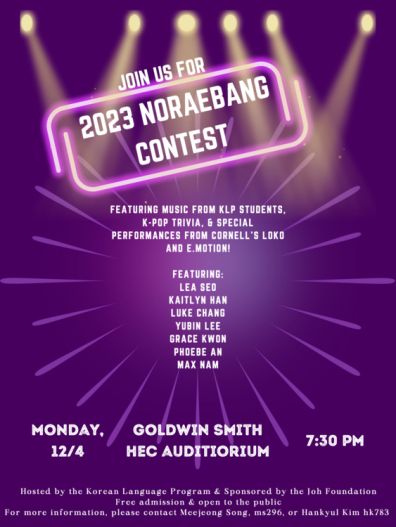
Are you interested in Korean Music, Dance, and Snacks? Come join the Noraebang (singing) Contest and enjoy all of these things! The Contest stars the Korean Language Program students that you can vote for, performances by Korean dance groups LOKO and E.Motion, trivia prizes for the audience, and bakery goods from Paris Baguette for all. You won't want to miss this!! Grab your friends and family, and come enjoy this wonderful celebration! Open to the public and kids friendly. This event is hosted by the Korean Language Program and sponsored by the Joh Foundation.
Additional Information
Program
East Asia Program
Fall 2023 Lecture series schedule: All Under Heaven
China: The Central State and All Under Heaven
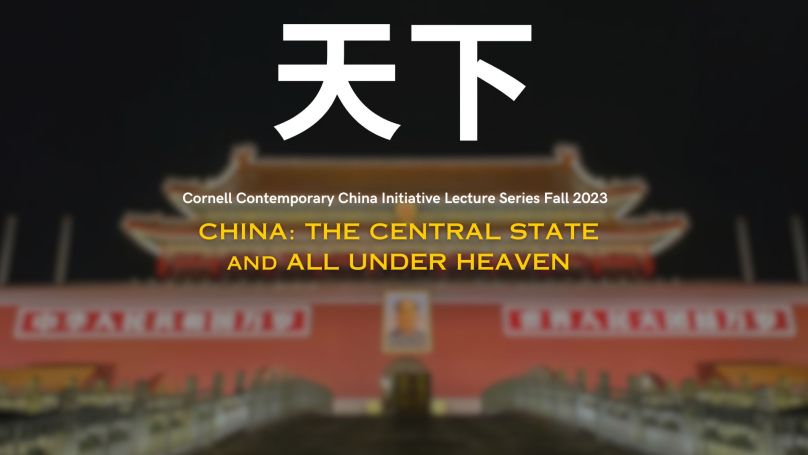
The Fall 2023 lecture series featured the theme of China: The Central State and All Under Heaven. At the core of the “China Dream” and China’s rise in power at the global stage is the Chinese Communist Party’s proclaimed role in the “great rejuvenation of the Chinese Nation”—a restoration of China’s historical glory and its rightful place as a “Central State” of “All under Heaven.” To achieve this goal, China’s current leader Xi Jinping requires the party “not to forget the original intention,” which could be interpreted as either a return to Marxist-Leninist fundamentalism, to Mao’s integration of “Marx” and Legalism of China's first imperial dynasty, to Republican ethno-nationalism, or to state Confucianism combined with territorial expansion in imperial China. As China’s past looms large in its present, understanding the historical relationship between the "Central State" and "All Under Heaven" is critical for our analysis of China’s economy, society, politics, and international engagement at the present and in the future.
To view the lecture videos, please see the links below.
Directed by Yue Du (History)
Cosponsored by Levinson China and Asia-Pacific Studies Program, Department of History, and the Society for the Humanities at Cornell
9/25 Guiding the People: Chinese Statecraft from Confucian Literati to Communist Cadres
Timothy Cheek, History, University of British Columbia
10/16 Whose Tianxia? Imagining the Great Qing in Post-Imperial China
Fei-Hsien Wang, History, Indiana University Bloomington - at the request of the speaker, this lecture video was not published.
11/15 The Qing Conquest as "Just War": Manchu Arguments and European Reception
Nicola Di Cosmo, East Asian Studies, Institute for Advanced Study
12/4 Geopolitics, Mobilization, and the Communist Monetary System in Manchuria, 1945-1949 Virtual Event
Yanjie Huang, Chinese Studies, National University of Singapore
Additional Information
Program
New CEAS Publication: Textual Cacophony

Textual Cacophony: Online Video and Anonymity in Japan explores the behaviors and routines of communication within anonymous internet culture in Japan.
Laidlaw Scholars Build Global Communities

Undergraduate Research and Leadership
Laidlaw "allowed me to be intensely involved with my professor’s research," says Eli Newell ’24. Meet the scholars and find out how to apply.