
East Asia Program
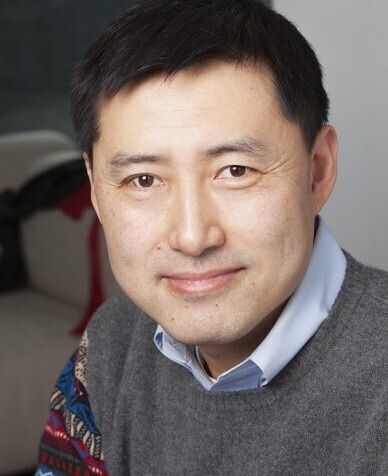
Pu Wang, Brandeis University: How Long is a Contemporary Chinese Poem?
October 30, 2023
4:45 pm
Goldwin Smith Hall, 64 Kaufman Auditorium
Pu Wang, Professor of Chinese, Russian and Asian Languages and Literature, at Brandeis University, traces the outburst of the writing of long poems by mainland Chinese poets since the turn of the century. These longer experimental texts, together with the debates revolving around them, have formed a key yet controversial intervention into contemporary cultural-political changes in China and beyond.
Pu Wang is an Associate Professor of Chinese and Chair of the Comparative Literature Program at Brandeis University. He is the author of The Translatability of Revolution: Guo Moruo and Twentieth-Century Chinese Culture (2018). He is also an acclaimed poet writing in Chinese, having published two books of verse. He translated Walter Benjamin: A Critical Life into Chinese.
Introduced by Kevin Dong, PhD Asian Studies graduate student; co-hosted by the EAP Graduate Student Steering Committee
Please note: this event will not be recorded and is solely in-person unless special access is required due to accessibility needs.
Additional Information
Program
Einaudi Center for International Studies
East Asia Program
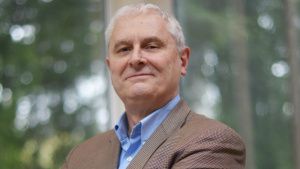
Timothy Cheek “Guiding the People: Chinese Statecraft from Confucian Literati to Communist Cadres”
September 25, 2023
4:45 pm
Goldwin Smith Hall, GSH64 Kaufman Auditorium
Timothy Cheek, History, University of British Columbia kicks off this semester's CCCI lecture series with the theme of "China, the Central State and All Under Heaven."
How is China governed? It is a question on our minds today as the rule of Xi Jinping in China challenges American hopes and stokes our fears. Is it Communist? Capitalist? Confucian? Making sense of Chinese statecraft, or of how any state is governed, requires not only political analysis but also some sense of the context, inherited problems, sense of self, that is, of its history.
This is a fundamental historiographical challenge: how and in what ways can knowledge of past practice inform our understanding of later or current practice? How can specific knowledge of history inform, deepen, challenge, and open up new questions about what we think we know of our present rather than simply reinforcing our current assumptions and prejudices?
This lecture explores that challenge to the practice of history through the example of one sort of governance—state-sponsored, village-based local public education in civic virtues. This state attempt to create ideal subjects began with the Confucians of the early 11th century, continued in rural education programs in Republican China in the 1930s, re-emerged in Communist ideological remolding campaigns under Mao, and appeared once again in political study sessions in Xi Jinping’s China today.
China: The Central State and All Under Heaven is the theme of this semester's CCCI lecture series directed by Professor Yue (Mara) Du, History, Cornell. At the core of the “China Dream” and China’s rise in power on the global stage is the Chinese Communist Party’s proclaimed role in the “great rejuvenation of the Chinese Nation”—a restoration of China’s historical glory and its rightful place as a “Central State” of “All under Heaven.” To achieve this goal, China’s current leader Xi Jinping requires the party “not to forget the original intention,” which could be interpreted as either a return to Marxist-Leninist fundamentalism, to Mao’s integration of “Marx” and Legalism of China's first imperial dynasty, to Republican ethnonationalism, or to state Confucianism combined with territorial expansion in imperial China. As China’s past looms large in its present, understanding the historical relationship between the "Central State" and "All under Heaven" is critical for our analysis of China’s economy, society, politics, and international engagement at the present and in the future.
The Cornell Contemporary China Initiative lecture series is co-sponsored by The Levinson China and Asia-Pacific Studies Program, Cornell Society for the Humanities, and the Department of History.
Additional Information
Program
Einaudi Center for International Studies
East Asia Program
Earth Just Had Its Hottest Month Ever. How Six Cities Are Coping.

Jeremy Wallace, EAP
“There is a real irony of climate extremes here because the principal fear in Beijing has always been not enough water and desertification, but the images that we’re seeing have been absolutely terrifying flooding in the city,” says Jeremy Wallace, professor of government.
Additional Information
Whose Tianxia? Imagining the Great Qing in Post-Imperial China
October 16, 2023
4:45 pm
Goldwin Smith Hall, GSH64 Kaufman Auditorium
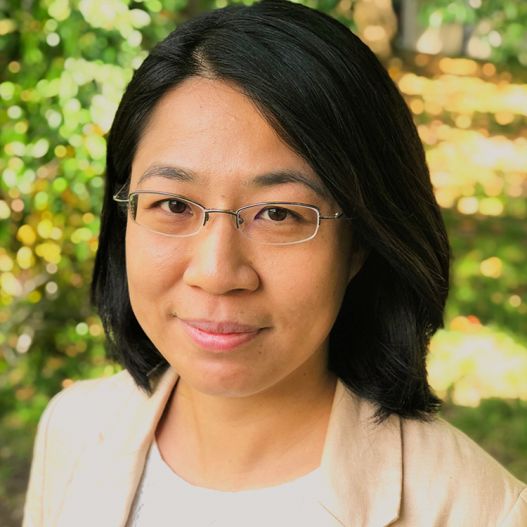
Whose Tianxia? Imagining the Great Qing in Post-Imperial China
Fei-Hsien Wang, History, Indiana University Bloomington
Cornell Contemporary China Initiative (CCCI) lecture series
How should the geographical and ethnic boundary of “China” be defined after the fall of the Qing Empire? Did China become just a nation among nations, or should it retain the vision of being the overseer of “all under Heaven”? How should the modern (Han) Chinese states and society come to terms with the Manchu imperial glory? Wang explores cases ranging from the popular history in the early Republic period, martial art novels and cinema from the Cold War Hong Kong, and twenty-first-century internet novels and TV drama, to demonstrate how (Han) Chinese authors, audiences, and the state confront, negotiate, and reconcile with the tension between their uncomfortable longing for greatness, the modern Han-centered Chinese nationalism, and the imperial legacy of a Manchu/non-Han “prosperous age.”
China: The Central State and All Under Heaven is the theme of this semester's CCCI lecture series directed by Professor Yue (Mara) Du, History, Cornell. At the core of the “China Dream” and China’s rise in power on the global stage is the Chinese Communist Party’s proclaimed role in the “great rejuvenation of the Chinese Nation”—a restoration of China’s historical glory and its rightful place as a “Central State” of “All under Heaven.” To achieve this goal, China’s current leader Xi Jinping requires the party “not to forget the original intention,” which could be interpreted as either a return to Marxist-Leninist fundamentalism, to Mao’s integration of “Marx” and Legalism of China's first imperial dynasty, to Republican ethnonationalism, or to state Confucianism combined with territorial expansion in imperial China. As China’s past looms large in its present, understanding the historical relationship between the "Central State" and "All under Heaven" is critical for our analysis of China’s economy, society, politics, and international engagement at the present and in the future.
The Cornell Contemporary China Initiative lecture series is co-sponsored by The Levinson China and Asia-Pacific Studies Program, Cornell Society for the Humanities, and the Department of History.
Additional Information
Program
East Asia Program
Einaudi Center for International Studies
Megan Bryson: Cosmic Correlations in Dali-Kingdom Buddhism
September 22, 2023
3:30 pm
Rockefeller Hall, 375 Asian Studies Lounge
Our semester's first Cornell Classical Chinese Colloquium text-reading will be led by Megan Bryson, Department of Religious Studies, University of Tennessee.
The Dali kingdom (937–1253), centered in what is now southwest China’s Yunnan province, left behind several ritual texts that have not been found elsewhere. This short section on “Inviting the White Vajra Being” thus resonated far beyond the spatial and temporal confines of the Dali kingdom.
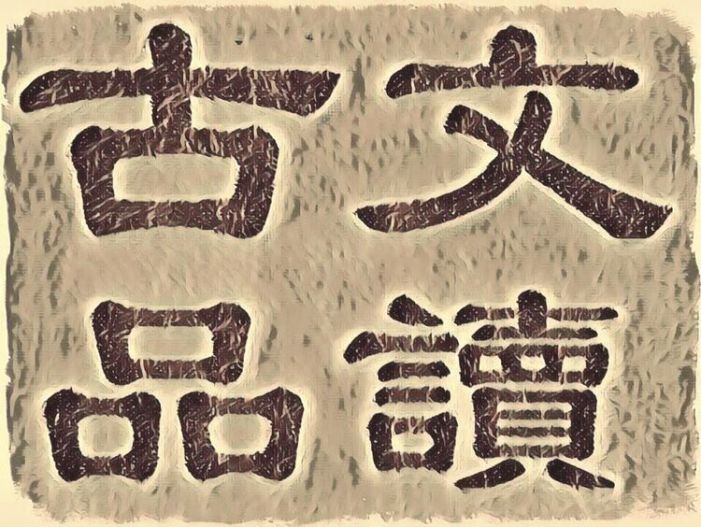
The Cornell Classical Chinese Colloquium (CCCC) 古文品讀 is a reading group for scholars interested in premodern Sinographic text (古文). The group meets monthly during the semester to explore a variety of classical Chinese texts and styles. Other premodern texts linked to classical Chinese in Japanese, Korean, and Vietnamese have been explored. Presentations include works from the earliest times to the 20th century. Workshop sessions are led by local, national, and international scholars.
Additional Information
Program
Einaudi Center for International Studies
East Asia Program
40 New York State Teachers Attend ISSI

Testimonies of Migration in the Classroom
Forty elementary, middle, and high school educators from across New York State participated in the 2023 International Studies Summer Institute (ISSI), hosted annually by the Mario Einaudi Center for International Studies.
This year’s theme, “Testimonies of Migration,” explored personal narratives from migrants and offered resources for teachers to engage with migrant stories and students in a culturally responsive way.
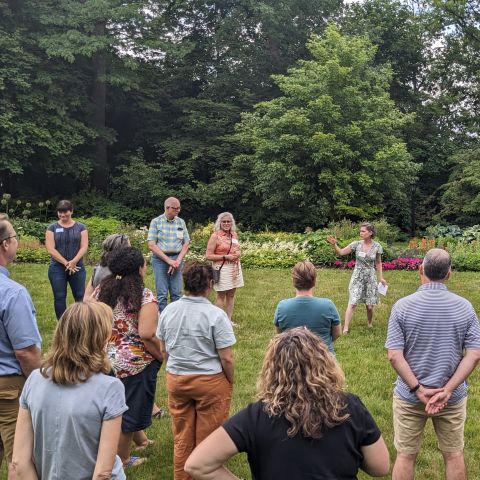
Teachers learned from scholars and experts in panel discussions, networked with each other in breakout groups, and engaged in hands-on activities around the Cornell campus.
Panels and workshops included scholars and experts from the Migrations initiative, who cosponsored the event, and community partners who work with migrant populations in the state.
A morning panel discussion on ethical and culturally responsive engagement preceded a conversation with Mary Jo Dudley of the Cornell Farmworker Program on supporting immigrant families in schools.
"I personally felt this was the best workshop I have attended. The material was so tangible and relatable regardless of population taught."
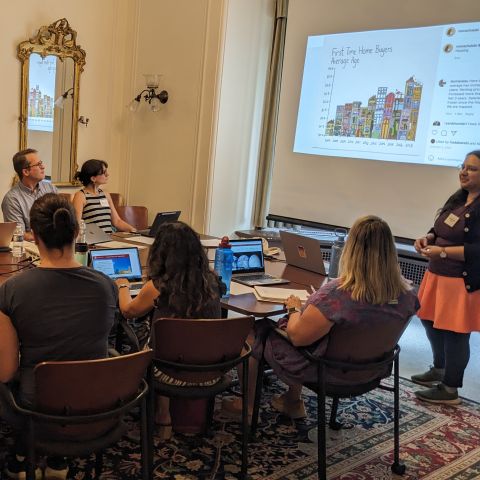
Afternoon sessions brought teachers together in small groups to explore migrant narratives using hands-on, project-based learning. A session led by Nausheen Husain, a journalist and assistant professor in the Newhouse School of Public Communications at Syracuse University, shared tools for exploring data sets with students to better understand people’s experience of migration.
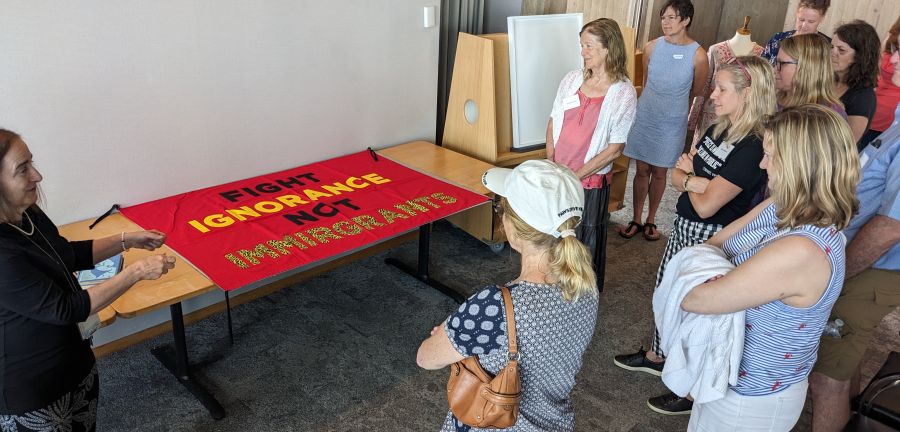
The final session of the day took place at the Herbert F. Johnson Museum of Art. Inspired by a past museum exhibit called "how the light gets in," museum staff displayed artwork on migration ranging from a collaborative handmade dress to that might influence curriculum in teachers' classrooms.
Among artworks from Ai Weiwei, Mohamad Hafez, and Meschac Gaba, participants were especially struck by the collaborative fabric piece “DAS KLEID / THE DRESS” by Elisabeth Masé. A group of immigrant women created this piece, embroidering their hopes for the future with red thread on tan cloth, which was then sewn into a dress.
"I am excited to incorporate what I have learned into my lessons. I also feel more at ease teaching about other cultures. I realize I don't have to know everything and can learn with my students about new cultures."
View more photos from the institute on Facebook.
ISSI was sponsored by the Einaudi Center, East Asia Program, Institute for African Development, Institute for European Studies, Latin American and Caribbean Studies, South Asia Program, Southeast Asia Program, Migrations: A Global Grand Challenge, the South Asia Center at Syracuse University, TST-BOCES, and the U.S. Department of Education Title VI Program.
Additional Information
Untamed Shrews: Negotiating New Womanhood in Modern China
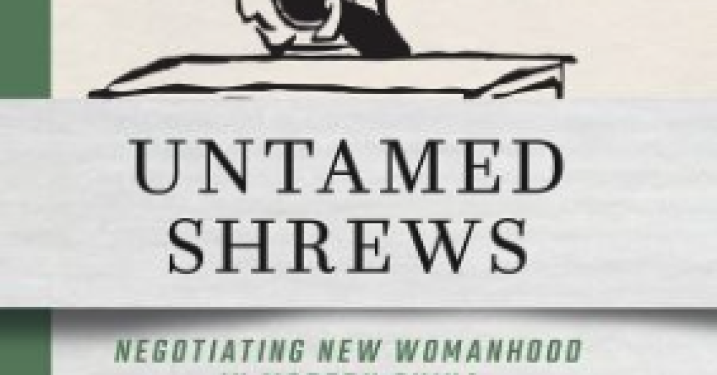
Untamed Shrews traces the evolution of unruly women in Chinese literature, from the reviled "shrew" to the celebrated "new woman." Notorious for her violence, jealousy, and promiscuity, the character of the shrew personified the threat of unruly femininity to the Confucian social order and served as a justification for punishing any woman exhibiting these qualities. In this book, Shu Yang connects these shrewish qualities to symbols of female empowerment in modern China.
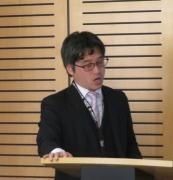
Masahiko Kinoshita: The Stealth Activist Japanese Supreme Court
October 2, 2023
4:45 pm
Myron Taylor Hall, 390 Moot Court
The Supreme Court of Japan (SCJ) has been described as the most conservative and passive constitutional court in the world. The small number of times the Japanese Supreme Court has struck down statutes as unconstitutional is an argument for such a statement. However, the SCJ has provided important decisions to control legislative and executive power in fields related to the democratic political process, such as the right to vote and freedom of expression.
Masahiko Kinoshita, Graduate School of Law, University of Kobe, Japan gives this talk.
In Japan, the Liberal Democratic Party (LDP) has been in power for a long time. Nevertheless, the fact that Japan has been able to maintain democracy without falling into authoritarianism is largely dependent on the SCJ's accumulation of precedents. This talk will discuss the active aspects of the SCJ in the democratic political process, which have not received much attention so far.
Faculty host and moderator: Yun-chien Chang, the Cornell Law School Jack G. Clarke Professor in East Asian Law
Discussant: Mitchell Lasser, Jack G. Clarke Professor of Law
This event is co-sponsored by the East Asia program and the Cornell Law School Clarke East Asia Law Program.
Additional Information
Program
Einaudi Center for International Studies
East Asia Program
Unending Capitalism: How Consumerism Negated China’s Communist Revolution
September 12, 2023
4:45 pm
Goldwin Smith Hall, GSH64 Kaufman Auditorium
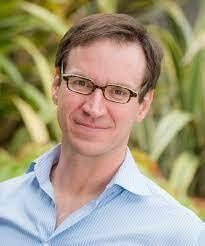
Karl Gerth, History, UC San Diego
What forces shaped the twentieth-century world? Capitalism and communism are usually seen as engaged in a fight-to-the-death during the Cold War. With the establishment of the People’s Republic of China in 1949, the Chinese Communist Party aimed to end capitalism.
Gerth argues that despite the socialist rhetoric of class warfare and egalitarianism, Communist Party policies developed a variety of capitalism and expanded consumerism. This negated the goals of the Communist Revolution across the Mao era (1949-1976) down to the present.
Through topics related to state attempts to manage what people began to desire – wristwatches and bicycles, films and fashion, leisure travel and Mao badges – Gerth challenges fundamental assumptions about capitalism, communism, and countries conventionally labeled as socialist. In so doing, his provocative history of China suggests how larger forces related to the desire for mass-produced consumer goods reshaped the twentieth-century world and remade people’s lives.
Additional Information
Program
Einaudi Center for International Studies
East Asia Program
Yun-chien Chang
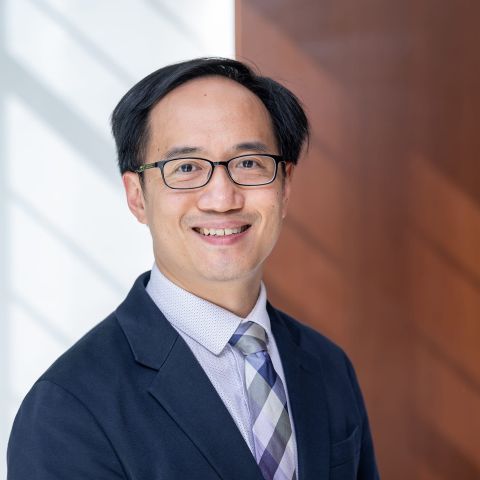
Jack G. Clarke Professor in East Asia Law & Director of Clarke Program in East Asian Law & Culture, Cornell Law School
Yun-chien Chang is Jack G. Clarke Professor in East Asian Law at Cornell Law School and also directs the Clarke Program in East Asian Law & Culture. Before moving to Cornell, he was a Research Professor at Institutum Iurisprudentiae, Academia Sinica, Taiwan and serves as the Director of its Empirical Legal Studies Center. He has also served a visiting professor at New York University, the University of Chicago, St. Gallen University, Hebrew University of Jerusalem, Haifa University, and Rotterdam Institute of Law and Economics.