
East Asia Program
Rumours of China’s Economic Demise May Be Greatly Exaggerated
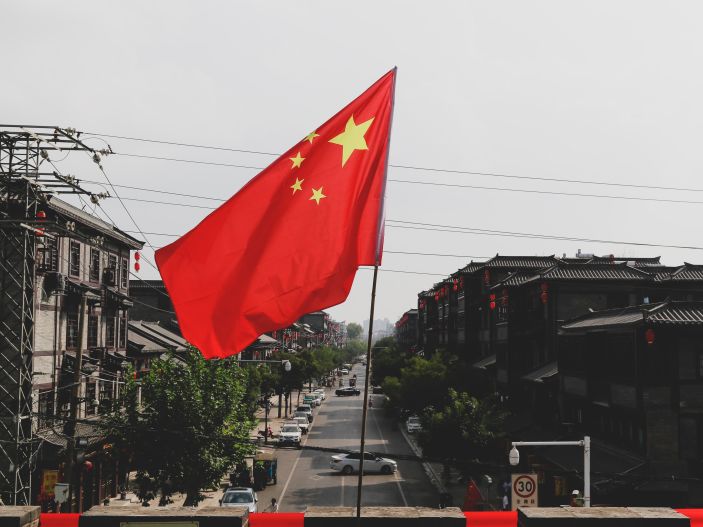
Eswar Prasad, SAP
Coverage of a new paper written by Eswar Prasad, professor of trade policy, on China's economy.
Additional Information
Working in the Traces of Area Studies Panel Three: Japanese Studies and Area Studies
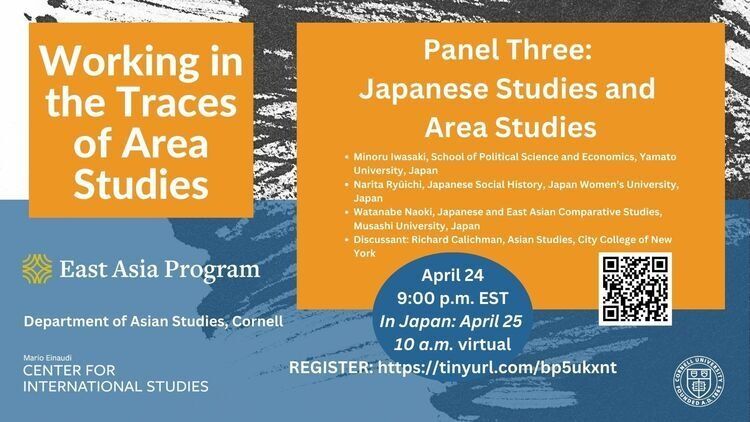
April 25, 2023
9:00 pm
It has long been recognized that the legacies of Japanese imperialism have continued to impact the production of an East Asian regional imaginary throughout the postwar years, and it has primarily been the U.S.-Japan alliance under Anpo that has exerted pressure to make the Japanese nation and the region coheres. Successively, however, the end of the Cold War, the collapse of the bubble economy, and the emergence of testimony and demands from former “comfort women” have destabilized Japan’s prewar claims to symbolic status of being the sole “modern subject” among “non-modern” East Asian others. The more recent reconfiguration of power relationships in East Asia have only intensified this destabilization. What impact has this had on “Japan,” taken as an object of studies within Japanese Studies in Japan, as well as the object of area studies abroad? What are the generative possibilities offered by such destabilizations?
PANELISTS:
Minoru Iwasaki, School of Political Science and Economics, Yamato University, JapanNarita Ryūichi, Japanese Social History, Japan Women’s University, JapanWatanabe Naoki, Japanese and East Asian Comparative Studies, Musashi University, JapanDiscussant: Richard Calichman, Asian Studies, City College of New York
The event is from 9:00-11:00 p.m. EST on April 24 and from 10:00-12:00 a.m. on April 25 in Japan's time zone.
Additional Information
Program
Einaudi Center for International Studies
East Asia Program
2023 Korean Language Program Showcase
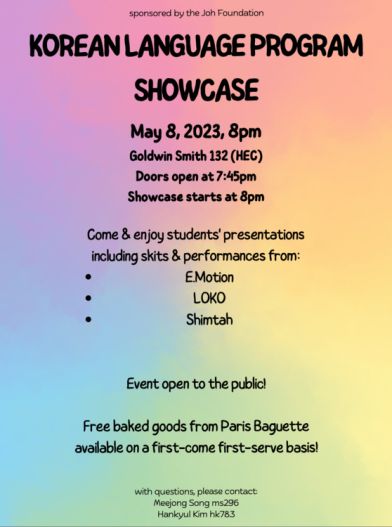
May 9, 2023
8:00 pm
Goldwin Smith Hall, HEC auditorium
The Korean Language Program is proud to present its 14th annual Korean showcase. The representatives from each Korean class will present their respective final projects of the semester. For the general audience, their presentation will be in English, but through their various demonstrations, you will be able to get a glimpse of the level of Korean proficiency taught at each class level. Korean hip hop dance, K-pop dance, and percussion groups will perform too. Come and learn about Korean language and culture! Doors will open at 7:45pm and free baked goods from Paris Baguette will be available on a first come first served basis.
Additional Information
Program
East Asia Program
P’ansori, Gayageum, and Dance: Korean Traditional Performance
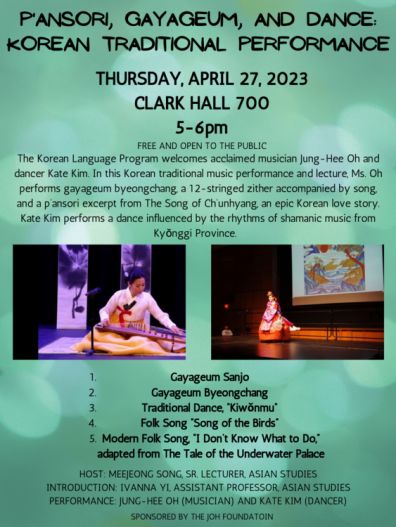
April 27, 2023
5:00 pm
Clark Hall, 700
The Korean Language Program welcomes acclaimed musician Jung-Hee Oh and dancer Kate Kim. In this Korean traditional music performance and lecture, Ms. Oh performs gayageum byeongchang, a 12-stringed zither accompanied by song, and a p’ansori excerpt from The Song of Ch’unhyang, an epic Korean love story. Kate Kim performs a dance influenced by the rhythms of shamanic music from Kyŏnggi Province. The performances will be introduced by Ivanna Yi, Assistant Professor of Korea Studies at Cornell University.
Jung-Hee Oh is a Korean traditional music artist of gayageum byeongchang and p'ansori. She is recognized under the Korean Government’s Ministry Of Culture as a “holder” (isuja) of Intangible Cultural Property No. 23 and studied with An Suksun, Living National Treasure of p'ansori and gayageum. Ms. Oh received her master’s degree in music from Chung-Ang University in Seoul. Currently, she serves as the music director of the music band G-Hwaja and teaches and performs in the New York and New Jersey metropolitan areas.
Kate Kim is a Korean traditional dancer. She is recognized under the Korean Government’s Ministry Of Culture as a “successor” (chŏnsuja) of the Seungmu dance, Intangible Cultural Property No. 27. She is a recipient of a Folk and Traditional Arts Grant from the Pennsylvania Council on the Arts and currently teaches in the New Jersey and Philadelphia areas.
Program:
Gayageum Sanjo
Gayageum Byeongchang
Traditional Dance, “Kiwŏnmu”
Folk Song “Song of the Birds”
Modern Folk Song, “I Don’t Know What to Do,” adapted from The Tale of the Underwater Palace
Hosted by Meejeong Song, Sr. Lecturer, Asian Studies
Sponsored by the Joh Foundation
Additional Information
Program
East Asia Program
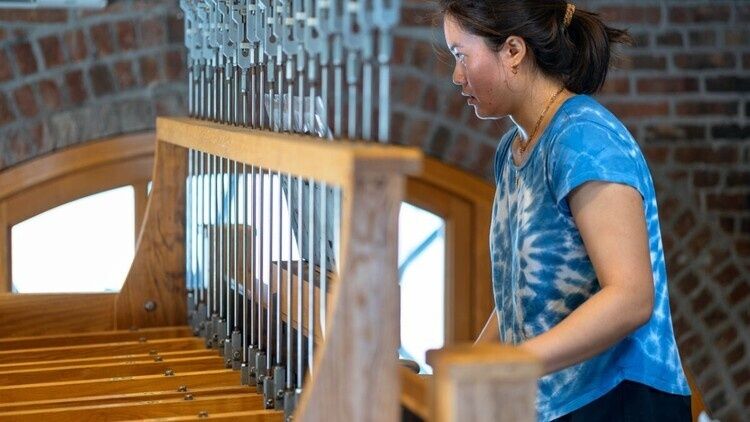
Tour of Cornell Clock Tower and Cornell Chimes: Music of China
May 5, 2023
12:30 pm
You're invited to this tour of McGraw Tower organized by the Cornell China Center, followed by a public concert of Chinese tunes played on the Cornell chimes by student Chenchen Lu '23, whose TikTok chimes concert postings have gone viral over the past two years (learn more in this Cornell Chronicle article). Participants must climb 161 steps (there is no elevator), and your climbing efforts will be rewarded with panoramic views and a unique Chinese musical performance. Open to all, and limited to 25 participants.
Join the waitlist here.
Additional Information
Program
East Asia Program
How to Avoid a War with China

Jessica Chen Weiss, EAP
Jessica Chen Weiss, professor of government, is quoted in this opinion piece.
Additional Information
Fmr. US State Dept. Advisor: Militarized Action over Taiwan 'Not a Foregone Conclusion'
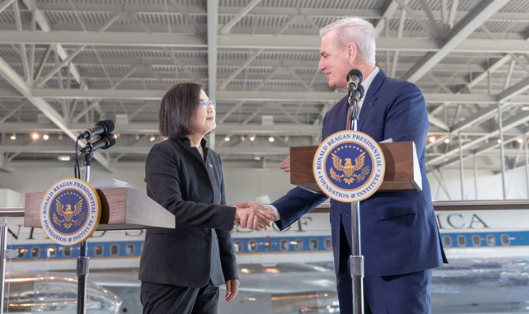
Jessica Chen Weiss, EAP
Jessica Chen Weiss, professor of government, discusses Taiwan president Tsai's visit to the US and the geopolitics of Taiwain-China tensions.
Additional Information
Alumni Panel: Sustainability Careers in Academia

April 27, 2023
6:30 pm
This virtual career panel hosted by the Cornell China Center features three accomplished Cornell alumni pursuing academic paths in sustainability research. Chinese panelists will share how they have built their academic paths in sustainability, with insights from their international and multicultural backgrounds. They will discuss their interdisciplinary approaches and methodologies as well as their personal stories and takeaways from their academic journeys, offering valuable guidance and inspiration to students, postdocs, and alumni who are interested in sustainability. We welcome you to join this conversation to gain a deeper understanding of how to build a sustainability-related career in academia.
Panelists:
Chuan Liao, MS'12, PhD'15: Assistant Professor, Department Global Development, Cornell UniversityYue Li, PhD'17: Assistant Professor, School of Education, University of Wisconsin-Stevens PointsZhenli Richard Chen, ESS'20, MPS'21 : Current PhD student, Doerr School of Sustainability, Stanford UniversityModerators:
Yingyun Zhang '23 (Information Science and Government)Ying Hua, Director of the Cornell China Center and Associate Professor at Cornell UniversityRegister here.
Additional Information
Program
Einaudi Center for International Studies
East Asia Program
Onward, Upward?
Tristan Ivory on Immigrants' Outcomes
Einaudi faculty member and past Global Public Voices fellow is tracking the long-term effects of migration.
Additional Information
Taiwan's President Visits the U.S. Amid Fraught China Relations

Jessica Chen Weiss, EAP
Jessica Chen Weiss, professor of China and Asia-Pacific studies, discusses a recent visit to the United States by Taiwanese President Tsai Ing-wen.