
East Asia Program
You Can Dig a Well in China: State-Constructed Housing in Singapore and the Production of High- Rise Asianness
March 28, 2023
4:45 pm
Uris Hall, G08
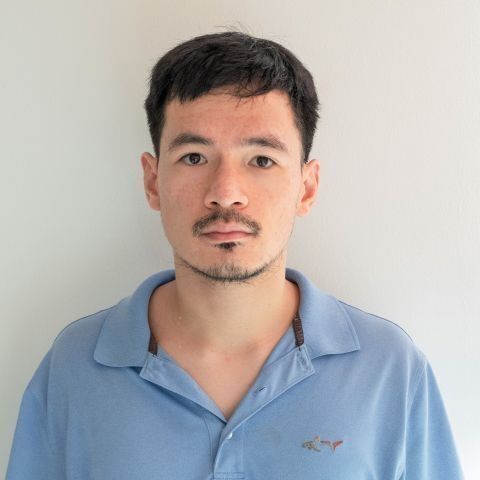
Xinyu Guan (Ph.D. Candidate, Anthropology, Cornell University) leads this workshop.
Eighty percent of Singapore’s population lives in apartment blocks constructed by the Housing Development Board (HDB). Guan's talk examines how state-constructed housing estates in Singapore function as a site for the production of Asianness.
First, Guan examines how HDB neighborhoods are cast as quintessentially Asian, as opposed to Western, spaces, amidst the turn to neoliberalism and the debates over culture in 1990s Singapore arguing that the casting of HDB neighborhoods as Asian spaces recruit HDB inhabitants as everyday enforcers of the moralized boundaries between citizens and non-citizens, and between good and bad Asians.
Second, Guan explores ethnographically how HDB neighborhoods function as a site for the production of a Sinocentric form of Asianness. He considers how migrant and nonmigrant bodies are racialized and interpellated in these spaces, in accordance with their embodied linguistic performance of Chinese languages. Further, Guan discusses how Singaporean HDB inhabitants construct new meanings of Asianness vis-à-vis these migrants, whose labor keeps the HDB neighborhood running.
Finally, Guan's talk illustrates how his ethnographic and historical perspectives enrich theorizations of Asian urban modernities and neoliberal authoritarianism in the wider region.
Introduction by Chencong Zhu (Co-chair of EAP-GSSC and Ph.D. student, Anthropology, Cornell University)
Biography: Xinyu Guan is a sixth-year PhD candidate in the Department of Anthropology. His research examines state-constructed housing and the everyday micropolitics of migration and sexuality in Singapore. A Fall 2020 EAP Hu Shih Fellow, Xinyu works at the intersections of Southeast Asian, Indian Ocean and East Asian worlds, and engages questions of postcoloniality, urbanity and citizenship from critical trans-Asian perspectives.
This workshop is organized by East Asia Program's Graduate Student Steering Committee (EAP-GSSC). The GSSC workshop is open to the public but RSVPs are encouraged. Please contact eap-gssc@cornell.edu for RSVPs and questions.
Additional Information
Program
Einaudi Center for International Studies
East Asia Program
Southeast Asia Program
Global Hubs Provide Benefits

Einaudi Directors Defend Hubs, Academic Freedom
Rachel Beatty Riedl and program directors: "Global Hubs seek to build partnerships and create spaces that advance knowledge and understanding.”
Additional Information
‘China Is Not Our Enemy’: US House Protesters Reflect Rising Impatience with Bipartisan Rhetoric
Jessica Chen Weiss, EAP
Conflict in Taiwan “would devastate the global economy and probably lead to the deaths of many on the island," says A&S and Brooks School Professor Jessica Chen Weiss.
Additional Information
State and Family in China with Mara Yue Du
April 13, 2023
4:00 pm
Olin Library, 107
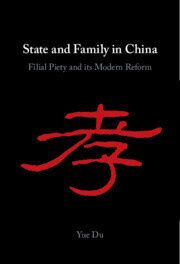
Intergenerational family relations played a central role in the Chinese transition from empire to nation-state, according to Mara Yue Du, assistant professor in history. In a live, hybrid Chats in the Stacks book talk, Du will discuss her latest book, State and Family in China: Filial Piety and its Modern Reform (Cambridge University Press, 2022). This book focuses on family law, parent-child relationships, and the evolution of the Chinese state, tracing how the state-sponsored parent-child hierarchy of the Qing dynasty gave way to the reforms of filial piety law that became the basis of state-directed family reform in the Republic of China.
This book talk is sponsored by the Kroch Asia Library. Light refreshments will be served.
Additional Information
Program
Einaudi Center for International Studies
East Asia Program
Engendering China Series and Women's History Month
Series Talk Highlights Victims of Japanese Exploitation of Women During World War II
The “Engendering China” series explores the paradoxical gender relations of Chinese society, particularly the power dynamics from ancient times to the present.
Additional Information
Is America’s China Policy Too Hawkish?
Jessica Chen Weiss, EAP
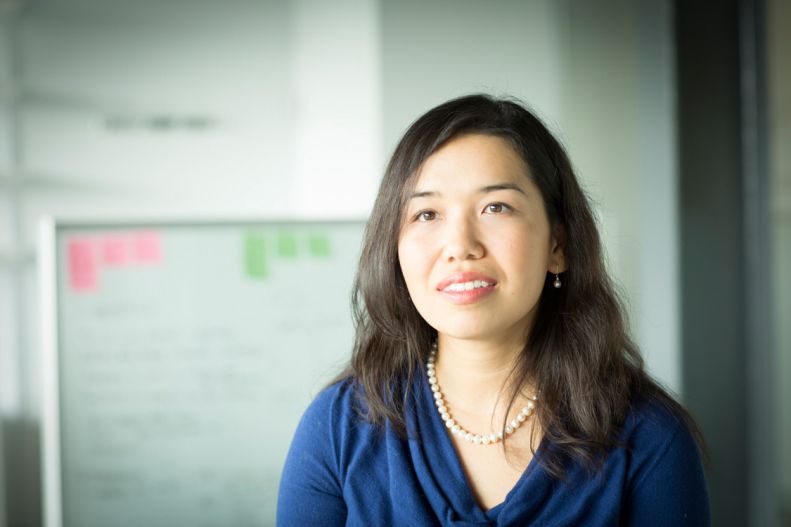
A&S and Brooks School Professor Jessica Chen Weiss discusses America's China policy in this interview in Foreign Policy.
Additional Information
Biophobia Symposium: Roundtable
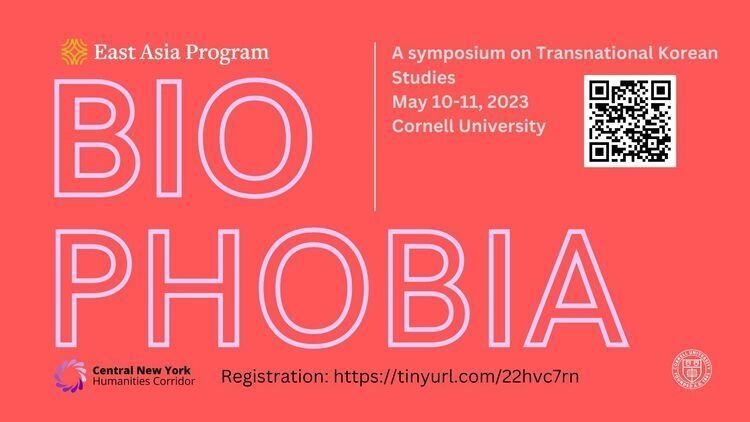
May 11, 2023
10:30 am
Savage Hall, 200
The keynote of the day:
"Biophilia Now: Time for Imagining Alternatives to Techno- and Bio-Orientalism" by Rachel Lee, Professor of English, Gender Studies, and the Institute of Society and Genetics, UCLA.
Are you attending in person? If so, you must rsvp here. Space is limited.
We encourage in-person participation but for those who are unable to make it, please see virtual registration below.
The title of this lecture draws inspiration from what feminist historians call the Wages for Housework movement. Despite their express slogan around “wages,” the utopian desire carried forward by Selma James and Maria dalla Costa involves less the free-market payment for raising kids, caring for the elderly, tending to the sick, preparing food, etcetera, and more an almost unimaginable “time for what we will.” This “time for what we will” is not already blocked out for usefulness—e.g., to serve one’s side hustle--or even for rest and recovery from the depletions of neoliberal capital. Rather, it bespeaks an unassigned time to fritter away, to dally and daydream, and to fantasize about what might happen in the idyll of becoming (non-pejoratively) idle. Significantly, Wages for Housework construed this “time for what we will” as what is owed to—rather than simply granted to or contractually specified as compensation for—reproducers (aka reproductive laborers). The danger for the status quo in this demand—this “time for what we will”--lies in its holding space to proliferate plural and counterfactual (i.e., postwork) imaginings of present society.
Humanities scholar Rachel Lee points to artwork choreographed around smelling, singing, and sensorily dwelling in and around loss, grief, and toxic landscapes as, counterintuitively, positive sketches for types of actions that might be indulged in--and which might save lives--if we could entertain and flex our daydreaming (rather than doom-scrolling) muscles. Rather than ask how do we heal from resurgent biophobia and its catalyzing of anti-Asian violence, this talk proposes the plural and oftentimes conflicting imaginings of Chang Rae Lee, Anicka Yi [and possibly also “the Daniels”—aka Kwan & Scheinert) as hopeful alternatives to the toggle between techno-orientalism and bio-orientalism characterizing our post-/still- Covid-19 moment.
Bio: Rachel C. Lee, Professor of English, Gender Studies, and the Institute of Society and Genetics, UCLA, is the author of The Exquisite Corpse of Asian America: Biopolitics, Biosociality and Posthuman Ecologies (2014), editor of The Routledge Companion to Asian and Pacific Islander Literature (2014), and a founding editor of Catalyst: Feminism, Theory, Technoscience. Currently, Lee is PI on Oral Histories of Environmental Illness: a collection of 80+ interviews of individuals who have, treat, or advocate on behalf of those with “contested illnesses” (e.g. multiple chemical sensitivity, chronic Lyme, mold-related fibromyalgia, heavy-metal intoxication, chronic fatigue and the like).
Thursday, May 11, 10:30 a.m.
Keynote: "Biophilia Now: Time for Imagining Alternatives to Techno- and Bio-Orientalism" by Rachel Lee, Professor of English, Gender Studies, and the Institute of Society and Genetics, UCLA.
Session 1 “Sensoria” 1:00-2:30 p.m.
Katie Yook (Curator, NY): “Sensoria: Evoking the Intangible”Se Young Au (Artist, CA):“Olfaction, Embodiment, and Perception”KimSu Theiler (Artist, NY):“Orientally Challenged”Skye Jin (or Jette Hye Jin Mortensen) (Artist, Writer, Curator, Copenhagen): “Hidden Epigenetic Trauma & Art as Site for Healing and Ritual"Jung Joon Lee (Rhode Island School of Design, Society for the Humanities fellow at Cornell University): discussant Session 2 “Transnational and Transmedial Approach to the Body Issues” 3:00-4:30 p.m.
Walter Byongsok Chon (Ithaca College): “Theatricalized Bodies on the Post-Dramatic Stage”Bonnie Chung (Cornell University): “The Songs of Two Islands of East Asia: Collaborative Listening and Counterarchival Impulses in Green Island (2016) and The Mermaid from Jeju (2019)”Abel Song Han (Cornell University): “Healing with Poison and Metaphor: On Bio-mimesis Horror”Paul McQuade (Cornell University): "A Dreamed Biology: Soni Kum’s ‘Morning Dew’ and Jayro Bustamante’s ‘La Llorona’”Jomy Abraham (Visiting Scholar, Cornell University): “Walking with their Dead: Biophobia and Public Protests of Farmers in India”Jun Matsuda (Visiting Scholar, Cornell University): “Police/Military Violence and Biophobia: The Intersectionality of "Asian Bodies" and Colonialism”About the Biophobia Symposium
Aversion to certain groups or statuses of the body is not just an emotion but a richly social, cultural, and political phenomenon, as it, by invoking bodily responses, functions to patrol social boundaries and norms, such as righteousness and cleanliness. The feeling’s immediacy to the body is the basis of its social power. In The Cultural Politics of Emotion(2014), Sara Ahmed situates disgust (“bad taste”) in the colonial context where the colonized bodies were subject to the imperialist politics of “what gets eaten,” and are, at the same time, regarded to stoke the “fear of contamination” to the European white bodies. Ahmed’s politicizing of negative emotions still holds strong relevance, especially regarding the recently exacerbating hate crimes based on gender, race, ethnicity, religion, health condition, and political orientation, which often tag along a profound sense of disgust and essentialist rhetoric on body types. Notably, the #IAmNotAVirus campaigns against the anti-Asian hate crimes entailed by the recent pandemic exemplify how the feelings of terror and disgust effectively turned Asian bodies into a composite of a submicroscopic agent, the “origin” of the disease, and the repugnant bodies.
This symposium proposes biophobia (aversion to bodily matter) as a critical framework to unravel the complex relationship between negative emotions and post/colonial body politics in Asian and transnational contexts. Biophobia, as a composite word, embodies an acute connectivity between body issues and the public anxiety that is often symptomatic of a given society’s constraints over the notions of the healthy and the normal, which has proved to be a global phenomenon. Accordingly, while the symposium’s case studies and materials come from Korean and diasporic Korean cultural situations, biophobia helps recognize the inter-disciplinary, inter-regional, and inter-medial facets of disability studies that identify and questions the notion of healthiness as a product of the dynamics between political, institutional, medical, and cultural entities.
Additional Information
Program
East Asia Program
Einaudi Center for International Studies
South Asia Program
BIOPHOBIA Symposium: Plenary
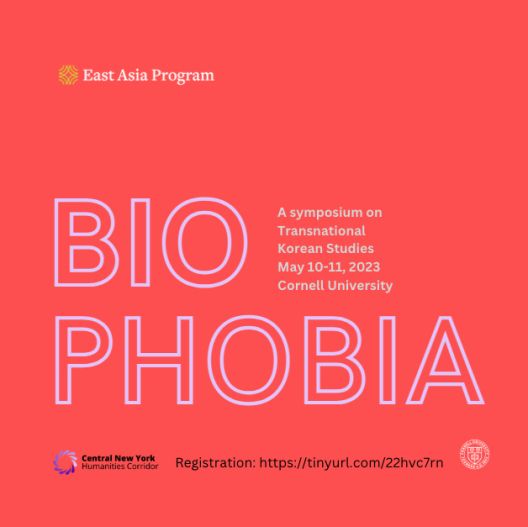
May 10, 2023
7:00 pm
Savage Hall, 200
May 10: Plenary from 7:00-9:00 p.m. Savage Hall Rm. 200 Hybrid
May 11: Roundtable from 10:30 a.m. to 4:30 p.m. Savage Hall Rm. 200 Hybrid
Are you attending in person? If so, you must rsvp here by Tuesday, May 9 end of the business day. Space is limited.
We encourage in-person participation. For those who are unable to make it, please see virtual participation registration below. This is a fragrance-free event. Please be considerate.
First Keynote
May 10, Wed. 7pm: Jinhee Chohan
Voices against the Hatred and Discrimination against Sick Bodies: The Civic Theater Project, We Are Not Sorry for Being Sick
Neoliberalism turned “good health” into something to beef up one’s resume and a booty that one should work hard to attain. In South Korean society, the conditions of teeth and skin have long worked to stratify people into different social classes. The bodies that don’t meet the criteria for the “standard body” or “normal, healthy body” have often been subject to hatred, reproach, and shaming. On the other hand, the lived experiences of people with diseases and disabilities are often not told anywhere but subsumed to the discourse of “cure,” which is circumscribed by the power dynamic of medical institutions; the cure discourse doesn’t really engage with the issues of the social discriminations and hatred against the sick bodies.
Jinhee Chohan started the civic theater project We Are Not Sorry for Being Sick, first, to tackle the problems in how medical personnel and experts interpellate, control, and substitute the lives of disabled people and, second, to divert the leading framework from “the colonized bodies” to “the bodies that speak for themselves.” Moreover, this project seeks to create “the language within the world of disease” as a language of resistance against the society that hates, discriminates against, and excludes the bodies with diseases, and to secure “the right to be sick justly.” In this presentation, Chohan will explain the theater project’s production process, effects, and potential to challenge the discriminatory social structures against people with diseases and disabilities.
Bio:
Jinhee Chohan is a Korean peace and feminist activist and a founder of Damom Action, a nonprofit organization to work for the “right to be sick justly.” Chohan has worked for and with numerous activist groups, such as Palestine Peace & Solidarity in South Korea, Solidarity against Disability Discrimination, and Korean WomenLink. Chohan also has published multiple books and op-eds. Recently she published The World That Care Work Maintains as an edited volume. Finally, Chohan directed and produced 2020 theater project We Are Not Sorry for Being Sick and many documentary films, such as From Parent to Parent (2013) and Disability Discrimination Act. It’s Time to Start Over (2011).
About the Biophobia symposium:
This symposium proposes biophobia (aversion to bodily matter) as a critical framework to unravel the complex relation between negative emotions and post/colonial body politics in Korean and transnational contexts. Aversion to certain groups or statuses of body is not just an emotion but a richly social, cultural, and political phenomenon, as it, by invoking bodily responses, functions to patrol social boundaries and norms, such as righteousness and cleanliness. The feeling’s immediacy to the body is a basis of its social power.
In The Cultural Politics of Emotion (2014), Sara Ahmed situates disgust (“bad taste”) in the colonial context where the colonized bodies were subject to the imperialist politics of “what gets eaten,” and are, at the same time, regarded to stoke the “fear of contamination” to the European white bodies. Ahmed’s politicizing of negative emotions still holds strong relevance, especially regarding the recently exacerbating hate crimes based on gender, race, ethnicity, religion, health condition, and political orientation, which often tag along a profound sense of disgust and essentialist rhetoric on body types. Notably, the #IAmNotVirus campaigns against the anti-Asian hate crimes since the recent pandemic exemplifies how the feelings of terror and disgust effectively turned Asian bodies into a composite of a submicroscopic agent, the “origin” of the disease, and the repugnant bodies.
Biophobia, as a composite word, embodies an acute connectivity between body issues and the public anxiety that is often symptomatic of a given society’s constraints over the notions of the healthy and the normal, which has proved to be a global phenomenon.
Additional Information
Program
East Asia Program
Einaudi Center for International Studies
Democracy and Its Opposites: Challenges in a Global World

April 24, 2023
5:00 pm
Alice Statler Auditorium
Lund Critical Debate
Democracies worldwide—even many wealthy democracies long considered safely consolidated—are at risk today. Governments, policymakers, and voters face new conflicts over democratic institutions, checks and balances, which citizens can compete for office or deserve representation, and what rules of accountability apply.
This year's Lund debate from the Mario Einaudi Center for International Studies examines the threats democracies around the world are confronting, both from external forces and from within—and what governments and citizens can do to fight back.
Join Thomas Garrett of the Community of Democracies and Damon Wilson of the National Endowment for Democracy for a conversation on democratic backsliding, strategies for resilience, and the conditions and practices that undermine democracy: democracy ... and its opposites.
A reception with refreshments will follow the conversation.
Lund Debate: 5:00–6:30 p.m. | Alice Statler AuditoriumFree ticket required for in-person attendance. Reserve your ticket today! Join the lecture virtually by registering at Cornell.
Reception to follow.
***
Panelists
Thomas E. Garrett is secretary general of the Community of Democracies, a global intergovernmental coalition comprised of the Governing Council member states that support adherence to the Warsaw Declaration's common democratic values and standards. Garrett previously worked for the International Republican Institute for 12 years overseas in Ukraine, Mongolia, and Indonesia, returning to Washington, DC, in 2005 as director of Middle East programs and then as vice president for global programs.
Damon Wilson is president and CEO of the National Endowment for Democracy (NED), a nonprofit grant-making foundation supporting freedom around the world. Prior to joining NED, he helped transform the Atlantic Council into a leading global think tank as its executive vice president. He previously served as special assistant to the president and senior director for European affairs at the National Security Council. Wilson also served at the U.S. Embassy in Baghdad as the executive secretary and chief of staff, where he helped manage one of the largest U.S. embassies during a time of conflict.
Moderator
Rachel Beatty Riedl has served as the Einaudi Center's director since 2019. She is the Einaudi Center's John S. Knight Professor of International Studies and professor in the Department of Government and Cornell Jeb E. Brooks School of Public Policy. Her research interests include institutional development in new democracies, local governance and decentralization, and authoritarian regime legacies in Africa.
***
About the Debate
The Lund Critical Debate is a signature event of the Mario Einaudi Center for International Studies. This year's dialogue is part of Einaudi's work on democratic threats and resilience. Established in 2008, Einaudi's Lund Critical Debate series is made possible by the generosity of Judith Lund Biggs '57.
Additional Information
Program
Einaudi Center for International Studies
Reppy Institute for Peace and Conflict Studies
East Asia Program
Southeast Asia Program
Latin American and Caribbean Studies
Institute for African Development
Institute for European Studies
South Asia Program
How to Prevent a Cold War with China

Jessica Chen Weiss, EAP
Jessica Chen Weiss, professor of government and public policy, discusses U.S.-China relations on PBS News Amanpour & Company.