
East Asia Program
Some Democrats Worry about Heated Rhetoric on China
Jessica Chen Weiss, EAP
This newsletter on some Democrats’ concerns about how China is being discussed in political circles notes that Rep. Ro Khanna wants to bring in critics of how the committee is speaking about China, including Jessica Chen Weiss, professor of government and public policy.
Additional Information
"Morning Dew" Symposium: Borders, Visibility, and Invisibility
March 25, 2023
2:00 pm
Johnson Museum of Art, Wing lecture room
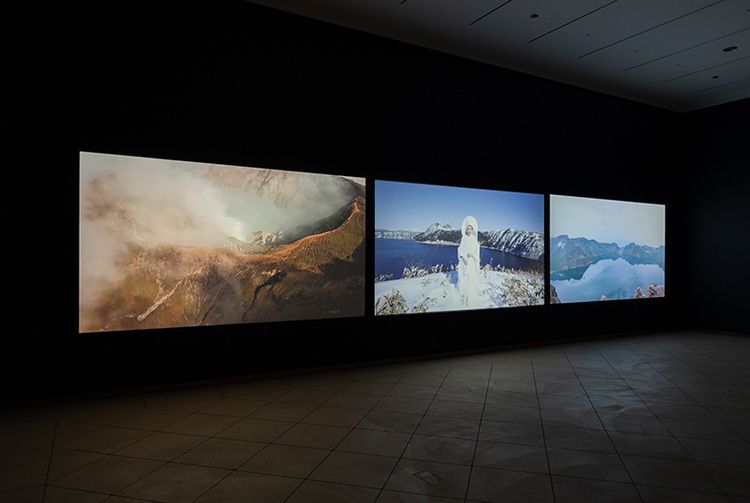
Featuring performance and video artist Soni Kum and her collaborators Hiroki Yamamoto and Kazuya Takagawa, this symposium will address themes of borders, visibility, and invisibility in relation to the Johnson Museum’s current exhibition Morning Dew: The Stigma of Being “Brainwashed,” Kum’s inaugural installation in the United States.
The artists’ video works, based on interviews with Zainichi Koreans who were repatriated to North Korea but later defected, bring visibility to the entangled borders they have crossed and recrossed, and their hidden lives in Japan today. Having returned to Japan, they are now compelled to hide the fact that they left, or fled from, North Korea, threatened with discrimination and other troubling consequences. Facing these fears of her interviewees, Kum’s installation weaves together archival images, text, and silences to artistically evoke their hidden stories. In their video work, Yamamoto and Takagawa delve into the dream of one “ex-returnee.” The first part of the symposium will feature the artists discussing their own work in conversation with symposium moderator Brett de Bary.
In the second part, panelists Iftikhar Dadi (Cornell), Rebecca Jennison (Seika University, Kyoto), Soyi Kim (LB Korean Studies Research Scholar, Cornell) and discussant Naoki Sakai (Cornell) will consider the way modern borders, underlain by layered histories of violence, forcefully produce both the visibility, but also the invisibility, of social groups. How have contemporary artists engaged this dialectic of visibility and invisibility in their own work? Drawing on a broad and varied range of materials, how do such “material” media evoke silence and invisibility?
Seating at this symposium is free but limited. Please use this link to register for the symposium.
Cosponsored by the Johnson Museum of Art; the POLA Art Foundation, Japan; the East Asia Program and the Mario Einaudi Center for International Studies; Cornell Migrations Initiative; and the Cornell Council for the Arts.
Additional Information
Program
East Asia Program
Einaudi Center for International Studies
Global Hubs Town Hall

March 13, 2023
11:30 am
G10 Biotech
Faculty and staff are invited to join for an overview and open discussion of the Global Hubs initiative.
Vice Provost Wendy Wolford will explain the purpose of the Global Hubs, and faculty leads for several of the Hubs locations will discuss their experiences with institutional partners and ways for faculty and staff to be involved.
Please bring your questions about the Hubs and join us in person on March 13 at 11:30 a.m. in G10 Biotech.
Moderator:
Wendy Wolford, Vice Provost for International Affairs
Faculty Presenters:
Gustavo Flores-Macias, faculty lead for Tecnológico de Monterrey, MexicoNate Foster, faculty lead for University of Edinburgh, United KingdomYing Hua, director of Cornell China Center, BeijingLee Humphreys, faculty lead for DenmarkTom Pepinsky, faculty lead for National University of Singapore, SingaporeMark Milstein, representative for the Faculty Senate CAPP on the faculty advisory committeeRachel Beatty Riedl, director of the Mario Einaudi Center for International StudiesKen Roberts, faculty lead for Universidad San Francisco de Quito, Ecuador
Additional Information
Program
Einaudi Center for International Studies
East Asia Program
Southeast Asia Program
South Asia Program
Reppy Institute for Peace and Conflict Studies
Latin American and Caribbean Studies
Institute for African Development
Institute for European Studies
CHINA IN PLACE: Locale and China Studies after 2020
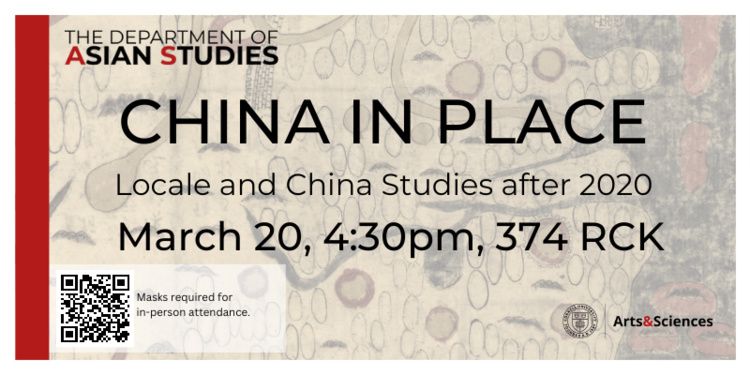
March 20, 2023
4:30 pm
Rockefeller Hall, 374
China researchers from many fields have adapted their inquiry due to the effects of the ongoing polycrisis — border exclusions, restrictions on movement, illness, and economic decoupling. This symposium will think through the challenges and obstacles that recent disruptions have presented to transregional China studies as a ‘new normal’ that will be reinforced as the climate crisis worsens. The practical challenges we have faced in the last two years provoke new relationships to area studies, as transregional researchers will be called upon to more radically situate their study in their home region. Our present challenges also propose elemental intellectual challenges to area studies: in a situation where physical and cultural connectivity to the People’s Republic, Hong Kong and Taiwan is low or intermittent, what is the meaning of China studies in the locations where they take place? When the global atmospheric crisis causes highly disparate local impacts, how will local needs affect globalized epistemologies and transregionally distributed knowledge networks? And how can the study of China contribute to survivance in a highly unpredictable future?
Participants:
Carles Prado-Fonts, associate professor of Arts and Humanities, Universitat Oberta de Catalunya
Jack Zinda, assistant professor of Global Development, Cornell University
Ding Fei, senior research associate and lecturer in Global Development, Cornell University
Nick Admussen, associate professor of Asian Studies, Cornell University
Hosted by the Department of Asian Studies, with generous co-sponsorship from the East Asia Program.
Additional Information
Program
East Asia Program
Tour of 2023 Preston H. Thomas Memorial Symposium Exhibition
March 16, 2023
10:30 am
Abby and Howard Milstein Auditorium, Milstein Hall
NOTE: The tour will take place from 10:30-11:00 am. (The second tour formerly listed from 11:15-11:45 am is canceled.)
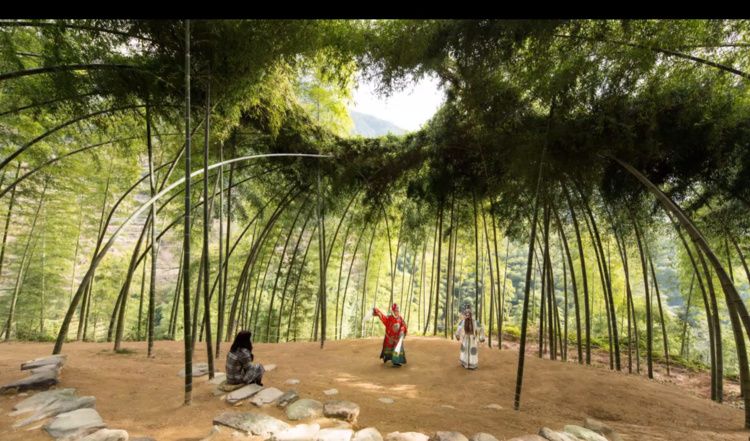
You're invited to join a guided tour of the 2023 Preston H. Thomas Memorial Symposium Exhibition on the theme of "FRINGE: New Centers for Architecture and Urbanism," which highlights the work of leading creative experts around the world. The exhibition at Cornell (February 28-March 23) explores and integrates regional cultural, material, technological, and spatial practices in the rural-urban territories of East and Southeast Asia.
Through a collection of visual materials and augmented reality (AR) experiences, the exhibition provides an immersive and interactive experience of works that challenge preconceived notions of the rural-urban binary and propose exciting potentials for rethinking construction technologies, sustainability, and citizen agency in the built environment.
The exhibition features the work of 1+1>2 Architects, Amateur Architecture Studio, ArchiUnion, Bangkok Project Studio, DnA Design and Architecture, Drawing Architecture Studio, Future Cities Laboratory, Rural-Urban Building Innovation Laboratory, Rural Urban Framework, Studio Anna Heringer, SUP Atelier. Meeting location: Abby and Howard Milstein Auditorium, Milstein Hall. Led by Hanxi Wang, Architecture Design Teaching Fellow. This tour is co-hosted by the Cornell China Center, Cornell Rural-Urban Building Innovation Lab, East Asia Program, and Southeast Asia Program.
Register here.
Additional Information
Program
Einaudi Center for International Studies
Southeast Asia Program
East Asia Program
The Pregnant Tree and the Goblin film screening
March 22, 2023
7:00 pm
Cornell Cinema
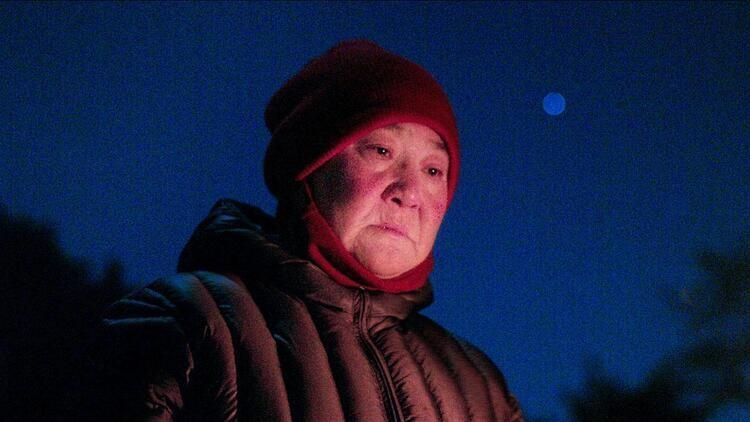
The Pregnant Tree and the Goblin (2019, 115 minutes) by Kim Dongryung, Park Kyoungtae
In a shanty village located next to the US military base in Uijungbu, lives a former US military comfort woman named Park Insun. Living in the village for more than 40 years, Insun feels uneasy after the news announcement of the demolition plan of the military base.
One winter night, Insun discovers the death of her colleague and follows her silent funeral. She is soon spotted by the Death Messengers who came to investigate the wandering ghosts and take them to the afterlife. While the Death Messengers try to make up stories for the ghosts, Insun decides to make her own story to fight back her extinction.
Filmmakers Kim Dongryung and Park Kyoungtae will participate in a post-screening conversation with Shinjae Kim, film curator and critic.
Part of the series Power of Seeing 보는 이의 권력 hosted by the East Asia Program at the Mario Einaudi Center for International Studies.
About the Filmmakers
Kim Dongryung, born in 1977, majored in English literature and film making at KAFA & Paris 8. She started photography and then made shorts and documentaries on the daily lives of the US Military Camp Town since 2004.
Park Kyoungtae, born in 1975. After studying sociology and visual anthropology, he made documentaries on women and children of US military camp town in Korea since 2000. His debut documentary starred Park Insun, a former US comfort woman, and since then he collaborated with her in various films.
In Korean with English subtitles.
Film website: www.koreanfilm.or.kr/eng/films/index/filmsView.jsp?movieCd=20190665
We thank the following for their generous co-sponsorship:
The Reppy Institute for Peace and Conflict Studies
The Cornell Society for the Humanities
Additional Information
Program
Einaudi Center for International Studies
East Asia Program
Reppy Institute for Peace and Conflict Studies
U.S.-China Relations Keep Getting Worse. Do They Have To?

Jessica Chen Weiss, EAP
This opinion piece references a piece written by Jessica Chen Weiss, professor of government and public policy, in Foreign Affairs.
Additional Information
The U.S. Should Deter — Not Provoke — Beijing over Taiwan. Here’s How.
Jessica Chen Weiss, EAP
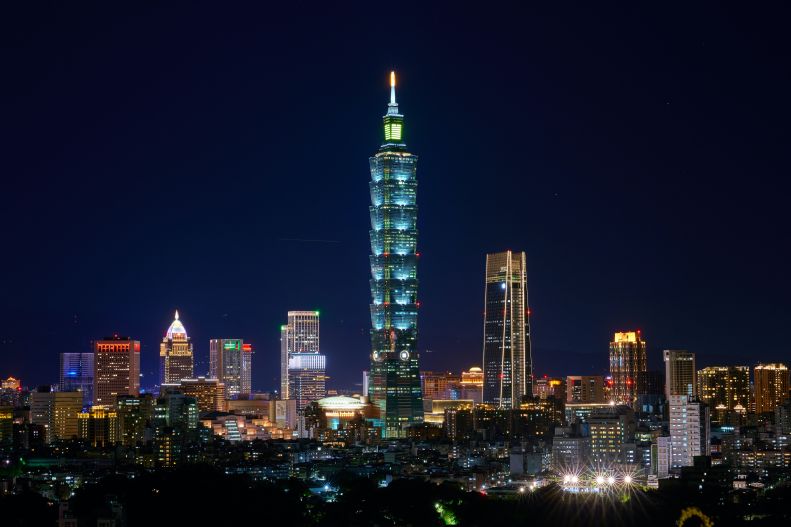
Jessica Chen Weiss, professor of government and public policy, writes this opinion piece about how the U.S. should handle its relationship with China regarding Taiwan.
Additional Information
Global PhD Research Awards
Open now! Apply by March 10
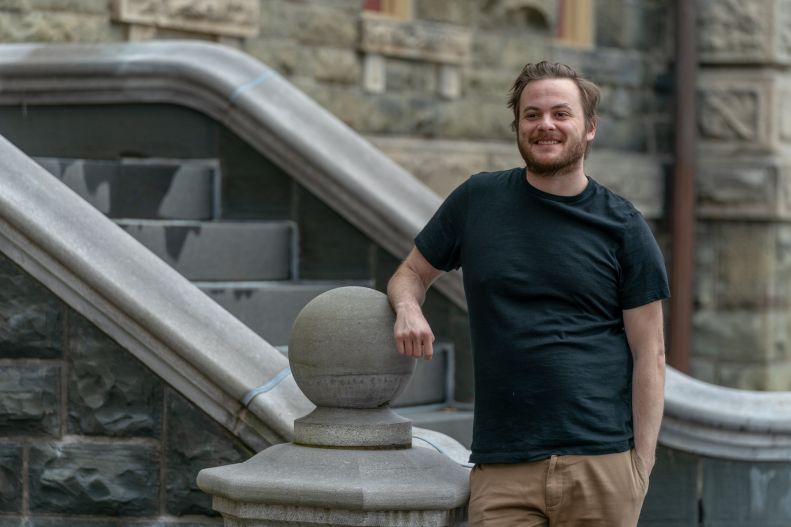
PhD students: Conduct your international field research with a $10,000 award. Read about Vincent Mauro’s 2021–22 award and find out how to apply.
Additional Information
Is the University Still a Site of Critical Thinking: Critical Thinking in the Ruins
March 10, 2023
1:00 pm
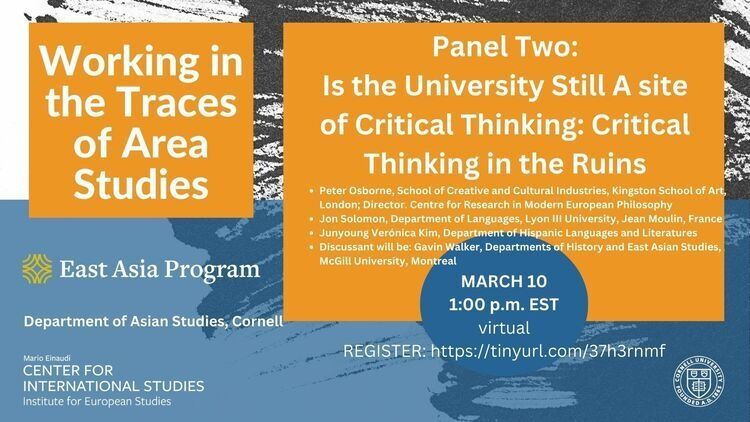
Is the University Still a Site of Critical Thinking: Critical Thinking in the Ruins is Panel Two of a 4-panel series which is part of Working in the Traces of Area Studies hosted by faculty emeriti Brett DeBary (Asian Studies, Cornell) and Naoki Sakai (Asian Studies, Cornell).
One legacy of the discourse of the West and the Rest can be found in the fetishized idiom “Western theory,” as if theory were a capacity exclusive only to European or Western humanity. Above all else, we have to acknowledge that at present we do not know who and what is indexed by the West; we are not certain of who the Westerners are or where the West and its polar opposite being the Rest can be mapped. What is at stake is what kind of critical and transformative capacity we designate by “theory.” What should we pursue? What do we mean by “theory,” seeking the general patterns in empirical and positive knowledge, attending to the operations of power in knowledge production, or a critical assessment of the disciplinary formation in knowledge production?
The panelists are:
Jon Solomon, Department of Languages, Lyon III University, Jean Moulin, France Junyoung Verónica Kim, Department of Hispanic Languages and Literatures, University of PittsburghAndrea Bachner, Comparative Literature, Cornell University is stepping in for Peter Osborne, School of Creative and Cultural Industries, Kingston School of Art, London; Director, Centre for Research in Modern European Philosophy due to a sudden inability to attend.Discussant will be: Gavin Walker, Departments of History and East Asian Studies, McGill University, MontrealThis symposium is co-sponsored by the Department of Asian Studies.
Additional Information
Program
Einaudi Center for International Studies
East Asia Program