
East Asia Program
Is America’s China Policy Too Hawkish?
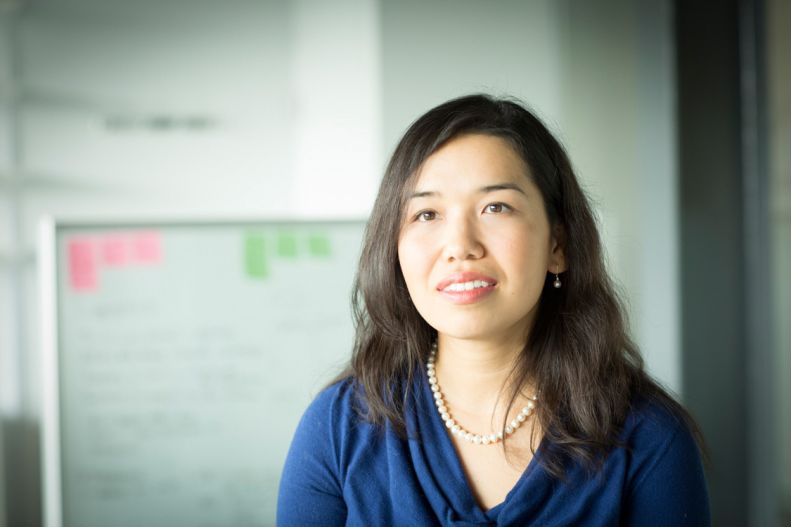
Jessica Chen Weiss, EAP
A&S and Brooks School Professor Jessica Chen Weiss discusses America's China policy in this interview in Foreign Policy.
Additional Information
Biophobia Symposium: Roundtable
May 11, 2023
10:30 am
Savage Hall, 200
The keynote of the day:
"Biophilia Now: Time for Imagining Alternatives to Techno- and Bio-Orientalism" by Rachel Lee, Professor of English, Gender Studies, and the Institute of Society and Genetics, UCLA.
Are you attending in person? If so, you must rsvp here. Space is limited.
We encourage in-person participation but for those who are unable to make it, please see virtual registration below.
The title of this lecture draws inspiration from what feminist historians call the Wages for Housework movement. Despite their express slogan around “wages,” the utopian desire carried forward by Selma James and Maria dalla Costa involves less the free-market payment for raising kids, caring for the elderly, tending to the sick, preparing food, etcetera, and more an almost unimaginable “time for what we will.” This “time for what we will” is not already blocked out for usefulness—e.g., to serve one’s side hustle--or even for rest and recovery from the depletions of neoliberal capital. Rather, it bespeaks an unassigned time to fritter away, to dally and daydream, and to fantasize about what might happen in the idyll of becoming (non-pejoratively) idle. Significantly, Wages for Housework construed this “time for what we will” as what is owed to—rather than simply granted to or contractually specified as compensation for—reproducers (aka reproductive laborers). The danger for the status quo in this demand—this “time for what we will”--lies in its holding space to proliferate plural and counterfactual (i.e., postwork) imaginings of present society.
Humanities scholar Rachel Lee points to artwork choreographed around smelling, singing, and sensorily dwelling in and around loss, grief, and toxic landscapes as, counterintuitively, positive sketches for types of actions that might be indulged in--and which might save lives--if we could entertain and flex our daydreaming (rather than doom-scrolling) muscles. Rather than ask how do we heal from resurgent biophobia and its catalyzing of anti-Asian violence, this talk proposes the plural and oftentimes conflicting imaginings of Chang Rae Lee, Anicka Yi [and possibly also “the Daniels”—aka Kwan & Scheinert) as hopeful alternatives to the toggle between techno-orientalism and bio-orientalism characterizing our post-/still- Covid-19 moment.
Bio: Rachel C. Lee, Professor of English, Gender Studies, and the Institute of Society and Genetics, UCLA, is the author of The Exquisite Corpse of Asian America: Biopolitics, Biosociality and Posthuman Ecologies (2014), editor of The Routledge Companion to Asian and Pacific Islander Literature (2014), and a founding editor of Catalyst: Feminism, Theory, Technoscience. Currently, Lee is PI on Oral Histories of Environmental Illness: a collection of 80+ interviews of individuals who have, treat, or advocate on behalf of those with “contested illnesses” (e.g. multiple chemical sensitivity, chronic Lyme, mold-related fibromyalgia, heavy-metal intoxication, chronic fatigue and the like).
Thursday, May 11, 10:30 a.m.
Keynote: "Biophilia Now: Time for Imagining Alternatives to Techno- and Bio-Orientalism" by Rachel Lee, Professor of English, Gender Studies, and the Institute of Society and Genetics, UCLA.
Session 1 “Sensoria” 1:00-2:30 p.m.
Katie Yook (Curator, NY): “Sensoria: Evoking the Intangible”Se Young Au (Artist, CA):“Olfaction, Embodiment, and Perception”KimSu Theiler (Artist, NY):“Orientally Challenged”Skye Jin (or Jette Hye Jin Mortensen) (Artist, Writer, Curator, Copenhagen): “Hidden Epigenetic Trauma & Art as Site for Healing and Ritual"Jung Joon Lee (Rhode Island School of Design, Society for the Humanities fellow at Cornell University): discussant Session 2 “Transnational and Transmedial Approach to the Body Issues” 3:00-4:30 p.m.
Walter Byongsok Chon (Ithaca College): “Theatricalized Bodies on the Post-Dramatic Stage”Bonnie Chung (Cornell University): “The Songs of Two Islands of East Asia: Collaborative Listening and Counterarchival Impulses in Green Island (2016) and The Mermaid from Jeju (2019)”Abel Song Han (Cornell University): “Healing with Poison and Metaphor: On Bio-mimesis Horror”Paul McQuade (Cornell University): "A Dreamed Biology: Soni Kum’s ‘Morning Dew’ and Jayro Bustamante’s ‘La Llorona’”Jomy Abraham (Visiting Scholar, Cornell University): “Walking with their Dead: Biophobia and Public Protests of Farmers in India”Jun Matsuda (Visiting Scholar, Cornell University): “Police/Military Violence and Biophobia: The Intersectionality of "Asian Bodies" and Colonialism”About the Biophobia Symposium
Aversion to certain groups or statuses of the body is not just an emotion but a richly social, cultural, and political phenomenon, as it, by invoking bodily responses, functions to patrol social boundaries and norms, such as righteousness and cleanliness. The feeling’s immediacy to the body is the basis of its social power. In The Cultural Politics of Emotion(2014), Sara Ahmed situates disgust (“bad taste”) in the colonial context where the colonized bodies were subject to the imperialist politics of “what gets eaten,” and are, at the same time, regarded to stoke the “fear of contamination” to the European white bodies. Ahmed’s politicizing of negative emotions still holds strong relevance, especially regarding the recently exacerbating hate crimes based on gender, race, ethnicity, religion, health condition, and political orientation, which often tag along a profound sense of disgust and essentialist rhetoric on body types. Notably, the #IAmNotAVirus campaigns against the anti-Asian hate crimes entailed by the recent pandemic exemplify how the feelings of terror and disgust effectively turned Asian bodies into a composite of a submicroscopic agent, the “origin” of the disease, and the repugnant bodies.
This symposium proposes biophobia (aversion to bodily matter) as a critical framework to unravel the complex relationship between negative emotions and post/colonial body politics in Asian and transnational contexts. Biophobia, as a composite word, embodies an acute connectivity between body issues and the public anxiety that is often symptomatic of a given society’s constraints over the notions of the healthy and the normal, which has proved to be a global phenomenon. Accordingly, while the symposium’s case studies and materials come from Korean and diasporic Korean cultural situations, biophobia helps recognize the inter-disciplinary, inter-regional, and inter-medial facets of disability studies that identify and questions the notion of healthiness as a product of the dynamics between political, institutional, medical, and cultural entities.
Additional Information
Program
East Asia Program
Einaudi Center for International Studies
South Asia Program
BIOPHOBIA Symposium: Plenary
May 10, 2023
7:00 pm
Savage Hall, 200
May 10: Plenary from 7:00-9:00 p.m. Savage Hall Rm. 200 Hybrid
May 11: Roundtable from 10:30 a.m. to 4:30 p.m. Savage Hall Rm. 200 Hybrid
Are you attending in person? If so, you must rsvp here by Tuesday, May 9 end of the business day. Space is limited.
We encourage in-person participation. For those who are unable to make it, please see virtual participation registration below. This is a fragrance-free event. Please be considerate.
First Keynote
May 10, Wed. 7pm: Jinhee Chohan
Voices against the Hatred and Discrimination against Sick Bodies: The Civic Theater Project, We Are Not Sorry for Being Sick
Neoliberalism turned “good health” into something to beef up one’s resume and a booty that one should work hard to attain. In South Korean society, the conditions of teeth and skin have long worked to stratify people into different social classes. The bodies that don’t meet the criteria for the “standard body” or “normal, healthy body” have often been subject to hatred, reproach, and shaming. On the other hand, the lived experiences of people with diseases and disabilities are often not told anywhere but subsumed to the discourse of “cure,” which is circumscribed by the power dynamic of medical institutions; the cure discourse doesn’t really engage with the issues of the social discriminations and hatred against the sick bodies.
Jinhee Chohan started the civic theater project We Are Not Sorry for Being Sick, first, to tackle the problems in how medical personnel and experts interpellate, control, and substitute the lives of disabled people and, second, to divert the leading framework from “the colonized bodies” to “the bodies that speak for themselves.” Moreover, this project seeks to create “the language within the world of disease” as a language of resistance against the society that hates, discriminates against, and excludes the bodies with diseases, and to secure “the right to be sick justly.” In this presentation, Chohan will explain the theater project’s production process, effects, and potential to challenge the discriminatory social structures against people with diseases and disabilities.
Bio:
Jinhee Chohan is a Korean peace and feminist activist and a founder of Damom Action, a nonprofit organization to work for the “right to be sick justly.” Chohan has worked for and with numerous activist groups, such as Palestine Peace & Solidarity in South Korea, Solidarity against Disability Discrimination, and Korean WomenLink. Chohan also has published multiple books and op-eds. Recently she published The World That Care Work Maintains as an edited volume. Finally, Chohan directed and produced 2020 theater project We Are Not Sorry for Being Sick and many documentary films, such as From Parent to Parent (2013) and Disability Discrimination Act. It’s Time to Start Over (2011).
About the Biophobia symposium:
This symposium proposes biophobia (aversion to bodily matter) as a critical framework to unravel the complex relation between negative emotions and post/colonial body politics in Korean and transnational contexts. Aversion to certain groups or statuses of body is not just an emotion but a richly social, cultural, and political phenomenon, as it, by invoking bodily responses, functions to patrol social boundaries and norms, such as righteousness and cleanliness. The feeling’s immediacy to the body is a basis of its social power.
In The Cultural Politics of Emotion (2014), Sara Ahmed situates disgust (“bad taste”) in the colonial context where the colonized bodies were subject to the imperialist politics of “what gets eaten,” and are, at the same time, regarded to stoke the “fear of contamination” to the European white bodies. Ahmed’s politicizing of negative emotions still holds strong relevance, especially regarding the recently exacerbating hate crimes based on gender, race, ethnicity, religion, health condition, and political orientation, which often tag along a profound sense of disgust and essentialist rhetoric on body types. Notably, the #IAmNotVirus campaigns against the anti-Asian hate crimes since the recent pandemic exemplifies how the feelings of terror and disgust effectively turned Asian bodies into a composite of a submicroscopic agent, the “origin” of the disease, and the repugnant bodies.
Biophobia, as a composite word, embodies an acute connectivity between body issues and the public anxiety that is often symptomatic of a given society’s constraints over the notions of the healthy and the normal, which has proved to be a global phenomenon.
Additional Information
Program
East Asia Program
Einaudi Center for International Studies
Democracy and Its Opposites: Challenges in a Global World

April 24, 2023
5:00 pm
Alice Statler Auditorium
Lund Critical Debate
Democracies worldwide—even many wealthy democracies long considered safely consolidated—are at risk today. Governments, policymakers, and voters face new conflicts over democratic institutions, checks and balances, which citizens can compete for office or deserve representation, and what rules of accountability apply.
This year's Lund debate from the Mario Einaudi Center for International Studies examines the threats democracies around the world are confronting, both from external forces and from within—and what governments and citizens can do to fight back.
Join Thomas Garrett of the Community of Democracies and Damon Wilson of the National Endowment for Democracy for a conversation on democratic backsliding, strategies for resilience, and the conditions and practices that undermine democracy: democracy ... and its opposites.
A reception with refreshments will follow the conversation.
Lund Debate: 5:00–6:30 p.m. | Alice Statler AuditoriumFree ticket required for in-person attendance. Reserve your ticket today! Join the lecture virtually by registering at Cornell.
Reception to follow.
***
Panelists
Thomas E. Garrett is secretary general of the Community of Democracies, a global intergovernmental coalition comprised of the Governing Council member states that support adherence to the Warsaw Declaration's common democratic values and standards. Garrett previously worked for the International Republican Institute for 12 years overseas in Ukraine, Mongolia, and Indonesia, returning to Washington, DC, in 2005 as director of Middle East programs and then as vice president for global programs.
Damon Wilson is president and CEO of the National Endowment for Democracy (NED), a nonprofit grant-making foundation supporting freedom around the world. Prior to joining NED, he helped transform the Atlantic Council into a leading global think tank as its executive vice president. He previously served as special assistant to the president and senior director for European affairs at the National Security Council. Wilson also served at the U.S. Embassy in Baghdad as the executive secretary and chief of staff, where he helped manage one of the largest U.S. embassies during a time of conflict.
Moderator
Rachel Beatty Riedl has served as the Einaudi Center's director since 2019. She is the Einaudi Center's John S. Knight Professor of International Studies and professor in the Department of Government and Cornell Jeb E. Brooks School of Public Policy. Her research interests include institutional development in new democracies, local governance and decentralization, and authoritarian regime legacies in Africa.
***
About the Debate
The Lund Critical Debate is a signature event of the Mario Einaudi Center for International Studies. This year's dialogue is part of Einaudi's work on democratic threats and resilience. Established in 2008, Einaudi's Lund Critical Debate series is made possible by the generosity of Judith Lund Biggs '57.
Additional Information
Program
Einaudi Center for International Studies
Reppy Institute for Peace and Conflict Studies
East Asia Program
Southeast Asia Program
Latin American and Caribbean Studies
Institute for African Development
Institute for European Studies
South Asia Program
How to Prevent a Cold War with China

Jessica Chen Weiss, EAP
Jessica Chen Weiss, professor of government and public policy, discusses U.S.-China relations on PBS News Amanpour & Company.
Additional Information
Some Democrats Worry about Heated Rhetoric on China

Jessica Chen Weiss, EAP
This newsletter on some Democrats’ concerns about how China is being discussed in political circles notes that Rep. Ro Khanna wants to bring in critics of how the committee is speaking about China, including Jessica Chen Weiss, professor of government and public policy.
Additional Information
"Morning Dew" Symposium: Borders, Visibility, and Invisibility
March 25, 2023
2:00 pm
Johnson Museum of Art, Wing lecture room
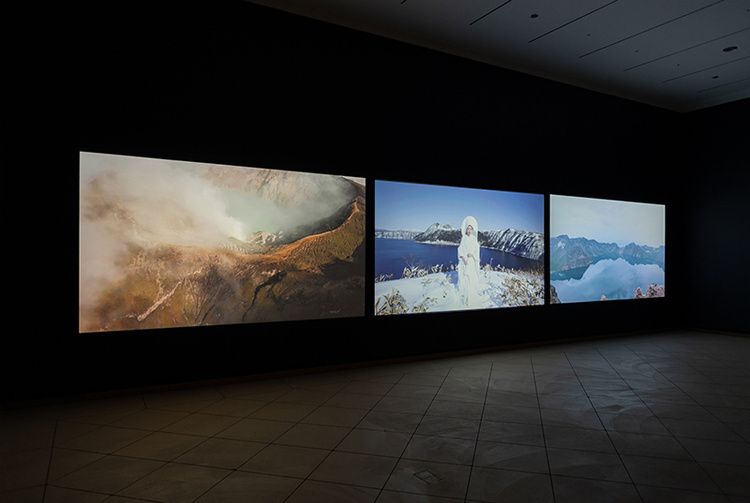
Featuring performance and video artist Soni Kum and her collaborators Hiroki Yamamoto and Kazuya Takagawa, this symposium will address themes of borders, visibility, and invisibility in relation to the Johnson Museum’s current exhibition Morning Dew: The Stigma of Being “Brainwashed,” Kum’s inaugural installation in the United States.
The artists’ video works, based on interviews with Zainichi Koreans who were repatriated to North Korea but later defected, bring visibility to the entangled borders they have crossed and recrossed, and their hidden lives in Japan today. Having returned to Japan, they are now compelled to hide the fact that they left, or fled from, North Korea, threatened with discrimination and other troubling consequences. Facing these fears of her interviewees, Kum’s installation weaves together archival images, text, and silences to artistically evoke their hidden stories. In their video work, Yamamoto and Takagawa delve into the dream of one “ex-returnee.” The first part of the symposium will feature the artists discussing their own work in conversation with symposium moderator Brett de Bary.
In the second part, panelists Iftikhar Dadi (Cornell), Rebecca Jennison (Seika University, Kyoto), Soyi Kim (LB Korean Studies Research Scholar, Cornell) and discussant Naoki Sakai (Cornell) will consider the way modern borders, underlain by layered histories of violence, forcefully produce both the visibility, but also the invisibility, of social groups. How have contemporary artists engaged this dialectic of visibility and invisibility in their own work? Drawing on a broad and varied range of materials, how do such “material” media evoke silence and invisibility?
Seating at this symposium is free but limited. Please use this link to register for the symposium.
Cosponsored by the Johnson Museum of Art; the POLA Art Foundation, Japan; the East Asia Program and the Mario Einaudi Center for International Studies; Cornell Migrations Initiative; and the Cornell Council for the Arts.
Additional Information
Program
East Asia Program
Einaudi Center for International Studies
Global Hubs Town Hall

March 13, 2023
11:30 am
G10 Biotech
Faculty and staff are invited to join for an overview and open discussion of the Global Hubs initiative.
Vice Provost Wendy Wolford will explain the purpose of the Global Hubs, and faculty leads for several of the Hubs locations will discuss their experiences with institutional partners and ways for faculty and staff to be involved.
Please bring your questions about the Hubs and join us in person on March 13 at 11:30 a.m. in G10 Biotech.
Moderator:
Wendy Wolford, Vice Provost for International Affairs
Faculty Presenters:
Gustavo Flores-Macias, faculty lead for Tecnológico de Monterrey, MexicoNate Foster, faculty lead for University of Edinburgh, United KingdomYing Hua, director of Cornell China Center, BeijingLee Humphreys, faculty lead for DenmarkTom Pepinsky, faculty lead for National University of Singapore, SingaporeMark Milstein, representative for the Faculty Senate CAPP on the faculty advisory committeeRachel Beatty Riedl, director of the Mario Einaudi Center for International StudiesKen Roberts, faculty lead for Universidad San Francisco de Quito, Ecuador
Additional Information
Program
Einaudi Center for International Studies
East Asia Program
Southeast Asia Program
South Asia Program
Reppy Institute for Peace and Conflict Studies
Latin American and Caribbean Studies
Institute for African Development
Institute for European Studies
CHINA IN PLACE: Locale and China Studies after 2020
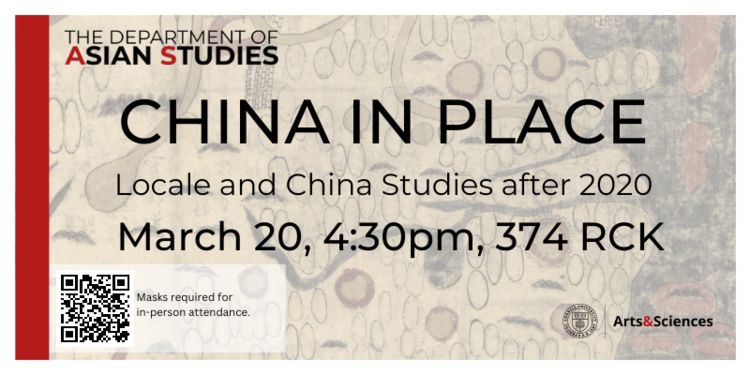
March 20, 2023
4:30 pm
Rockefeller Hall, 374
China researchers from many fields have adapted their inquiry due to the effects of the ongoing polycrisis — border exclusions, restrictions on movement, illness, and economic decoupling. This symposium will think through the challenges and obstacles that recent disruptions have presented to transregional China studies as a ‘new normal’ that will be reinforced as the climate crisis worsens. The practical challenges we have faced in the last two years provoke new relationships to area studies, as transregional researchers will be called upon to more radically situate their study in their home region. Our present challenges also propose elemental intellectual challenges to area studies: in a situation where physical and cultural connectivity to the People’s Republic, Hong Kong and Taiwan is low or intermittent, what is the meaning of China studies in the locations where they take place? When the global atmospheric crisis causes highly disparate local impacts, how will local needs affect globalized epistemologies and transregionally distributed knowledge networks? And how can the study of China contribute to survivance in a highly unpredictable future?
Participants:
Carles Prado-Fonts, associate professor of Arts and Humanities, Universitat Oberta de Catalunya
Jack Zinda, assistant professor of Global Development, Cornell University
Ding Fei, senior research associate and lecturer in Global Development, Cornell University
Nick Admussen, associate professor of Asian Studies, Cornell University
Hosted by the Department of Asian Studies, with generous co-sponsorship from the East Asia Program.
Additional Information
Program
East Asia Program
Tour of 2023 Preston H. Thomas Memorial Symposium Exhibition

March 16, 2023
10:30 am
Abby and Howard Milstein Auditorium, Milstein Hall
NOTE: The tour will take place from 10:30-11:00 am. (The second tour formerly listed from 11:15-11:45 am is canceled.)
You're invited to join a guided tour of the 2023 Preston H. Thomas Memorial Symposium Exhibition on the theme of "FRINGE: New Centers for Architecture and Urbanism," which highlights the work of leading creative experts around the world. The exhibition at Cornell (February 28-March 23) explores and integrates regional cultural, material, technological, and spatial practices in the rural-urban territories of East and Southeast Asia.
Through a collection of visual materials and augmented reality (AR) experiences, the exhibition provides an immersive and interactive experience of works that challenge preconceived notions of the rural-urban binary and propose exciting potentials for rethinking construction technologies, sustainability, and citizen agency in the built environment.
The exhibition features the work of 1+1>2 Architects, Amateur Architecture Studio, ArchiUnion, Bangkok Project Studio, DnA Design and Architecture, Drawing Architecture Studio, Future Cities Laboratory, Rural-Urban Building Innovation Laboratory, Rural Urban Framework, Studio Anna Heringer, SUP Atelier. Meeting location: Abby and Howard Milstein Auditorium, Milstein Hall. Led by Hanxi Wang, Architecture Design Teaching Fellow. This tour is co-hosted by the Cornell China Center, Cornell Rural-Urban Building Innovation Lab, East Asia Program, and Southeast Asia Program.
Register here.
Additional Information
Program
Einaudi Center for International Studies
Southeast Asia Program
East Asia Program