
East Asia Program
From Zero COVID to No Plan: Behind China’s Pandemic U-turn

Jeremy Wallace, EAP
“The whipsaw speed of this shift is partially the extent to which this is the decision of one man. But also it’s officials trying to please that one man and trying to run where you think he’s headed — sprint, in fact,” says Jeremy L. Wallace, associate professor of government.
Additional Information
Info Session: Fulbright U.S. Student Program for Undergraduates

March 29, 2023
4:45 pm
Over 500 Cornellians have crossed the globe with the Fulbright U.S. Student Program since the 1940s. You could be the next!
The program, administered by the Mario Einaudi Center for International Studies, supports college graduates conducting research or teaching English in more than 150 countries. The Einaudi Center's Fulbright advisor helps you get started early to submit a successful application.
Learn more about student information sessions from the Einaudi Center on minors, funding opportunities, Fulbright, summer language programs, and much more.
Additional Information
Program
Einaudi Center for International Studies
Reppy Institute for Peace and Conflict Studies
East Asia Program
Southeast Asia Program
Latin American and Caribbean Studies
Institute for African Development
Institute for European Studies
South Asia Program
Info Session: Fulbright U.S. Student Program for Undergraduates
February 20, 2023
4:45 pm
Over 500 Cornellians have crossed the globe with the Fulbright U.S. Student Program since the 1940s. You could be the next!
The program, administered by the Mario Einaudi Center for International Studies, supports college graduates conducting research or teaching English in more than 150 countries. The Einaudi Center's Fulbright advisor helps you get started early to submit a successful application.
Learn more about student information sessions from the Einaudi Center on minors, funding opportunities, Fulbright, summer language programs, and much more.
Additional Information
Program
Einaudi Center for International Studies
Reppy Institute for Peace and Conflict Studies
East Asia Program
Southeast Asia Program
Latin American and Caribbean Studies
Institute for African Development
Institute for European Studies
South Asia Program
Info Session: Graduate Fulbright Opportunities

February 7, 2023
4:45 pm
Learn more about Fulbright opportunities for graduate students that fund your international research or teaching from a Fulbright advisor at Cornell.
Fulbright at Cornell is administered by the Mario Einaudi Center for International Studies. The Einaudi Center's Fulbright advisor works with you to create and submit a competitive application for the Fulbright U.S. Student Program or the Fulbright-Hays Doctoral Dissertation Research Abroad program.
Learn more about student information sessions from the Einaudi Center on minors, funding opportunities, Fulbright, summer language programs, and much more.
Additional Information
Program
Einaudi Center for International Studies
Reppy Institute for Peace and Conflict Studies
East Asia Program
Southeast Asia Program
Latin American and Caribbean Studies
Institute for African Development
Institute for European Studies
South Asia Program
Info Session: Einaudi Center Minors Open House

February 1, 2023
4:30 pm
Mario Einaudi Center for International Studies, 163 Uris Hall
Stop by the Mario Einaudi Center for International Studies' Minors Open House to learn about adding an international minor to your degree.
The Einaudi Center offers minors in migration studies, international relations, European studies, and Latin American and Caribbean studies. The Department of Asian Studies will join us to share information about minors in East Asian studies, South Asian studies, Southeast Asian studies, Sanskrit studies, and global Asia studies.
Snacks will be provided!
Learn more about student information sessions from the Einaudi Center on minors, funding opportunities, Fulbright, summer language programs, and much more.
Additional Information
Program
Einaudi Center for International Studies
Reppy Institute for Peace and Conflict Studies
East Asia Program
Southeast Asia Program
Latin American and Caribbean Studies
Institute for African Development
Institute for European Studies
South Asia Program
Apple Made China the Backbone of Its iPhone Assembly. Shifting Away Could Take Years

Eli Friedman, EAP
“Apple would not be the company that it is today without China as a manufacturing base,” says Eli Friedman, associate professor in the ILR School. “It’s not going to entail a decoupling from China – there’s going to be Apple products that are made in China for a very long time.”
Additional Information
Chinese Global Infrastructure
February 23, 2023
11:25 am
Infrastructure is at the heart of China’s growing, controversial presence in global development. In addition to economic considerations, observers see infrastructure projects as important cogs in China’s pursuit of international influence. However, debates on Chinese global infrastructure are remarkably devoid of historical and comparative context, and China’s infrastructure-influence nexus remains conceptually and empirically unclear. Dr. Austin Strange provides a comprehensive account of Chinese global infrastructure since 1949, showing that high-profile infrastructure has been a tenacious feature of China’s development cooperation. It then discusses how high-profile infrastructure creates both intended and incidental sources of influence by serving as a unique form of political capital as well as a distinct source of political risk for China’s government and host country governments. Contemporary Chinese global infrastructure, both traditional and digital, has important historical and comparative contexts that help illuminate how China’s global infrastructure drive has injected major risk into its pursuit of international influence.
Please join us for this virtual conversation. Register here.
About the speaker
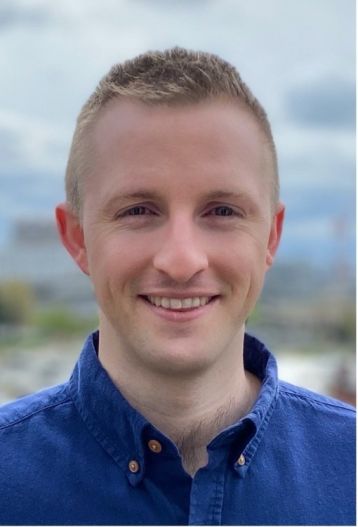
Austin Strange is an Assistant Professor of International Relations in the Department of Politics and Public Administration at the University of Hong Kong. His research examines China’s contemporary and historical roles in the world economy and global development. He is co-author of Banking on Beijing: The Aims and Impacts of China’s Overseas Development Program (Cambridge University Press, 2022). Austin earned a Ph.D. from Harvard University, M.A. from Zhejiang University, and a B.A. from William & Mary.
Presented by the Reppy Institute for Peace and Conflict Studies. Co-sponsored by the East Asia Program and the Gender and Security Sector Lab.
Additional Information
Program
Einaudi Center for International Studies
Reppy Institute for Peace and Conflict Studies
East Asia Program
New Yorker Person of Interest

EAP's Jessica Weiss Chen
The New Yorker profiles Jessica Weiss Chen (East Asia Program) as a "professor who challenges the Washington consensus on China."
Additional Information
Cornell-China 2022 Online Forum / 康奈尔-中国线上论坛
December 16, 2022
7:00 pm
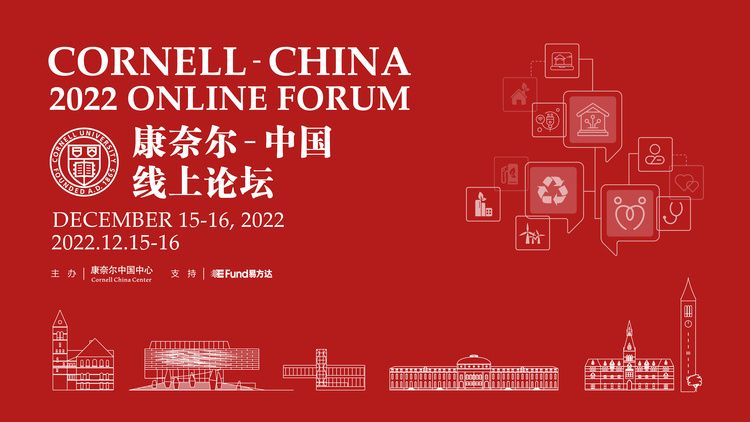
Cornell University and the Cornell China Center invite you to the Cornell-China 2022 Online Forum featuring 30 speakers highlighting collaboration, research, and innovation!
Wednesday, Dec. 14, 2022, 7:00 p.m.–2:00 a.m. EST (Thursday, Dec. 15, 2022, 8:00 a.m.–2:00 p.m. in Beijing)
Welcome by Cornell China Center Director Ying HuaOpening remarks by Vice Provost for International Affairs Wendy WolfordPanel 1: Cross-cultural understanding and communicationPanel 2: Energy transition for a sustainable futurePanel 3: Alumni panel on innovation and entrepreneurshipPanel 4: Select legal topics from 2022 (co-organized with Cornell Law School alumni)Thursday, Dec. 15, 2022, 7:00–11:35 p.m. EST (Friday, Dec. 16, 2022, 8:00–11:35 a.m. in Beijing)
Panel 5: Aging society: from research to adaptive design and service innovationPanel 6: Cornell Chinese faculty panel: Research frontiers, collaboration, and education of young talentPanel 7: Narratives and special experience creation in multi-media settingsSinging Cornell University's alma materThe forum will be conducted in English and Chinese, with simultaneous interpretation available for the first two panels each day and later panels in Chinese.
Additional Information
Program
East Asia Program
Einaudi Center for International Studies
Faculty Seed Grants

Open now! Apply by March 1
Einaudi’s seed grants support the work of internationally engaged Cornell faculty, including research and events. Apply today!