East Asia Program

The 2022 Kyoko Selden Memorial Translation Prize in Japanese Literature, Thought, and Society

Photo of Kyoko Selden
March 8, 2022

the eighth and final competition. The deadline for submissions for this year’s competition is August 1, 2022.

Deadline for submissions: August 1, 2022. The Department of Asian Studies at Cornell University wishes to announce the eighth and final Kyoko Selden Memorial Prize in Japanese Literature, Thought, and Society.

The 2022 Kyoko Selden Memorial Translation Prize in Japanese Literature, Thought, and Society

With gratitude to our many generous donors and all previous participants, The Department of Asian Studies at Cornell University wishes to announce the eighth and final Kyoko Selden Memorial Prize in Japanese Literature, Thought, and Society. The deadline for submissions for this year’s competition is August 1, 2022.

The prize, established in 2014 with contributions from former students, colleagues, and friends, honors the scholarly legacy of Cornell University’s Kyoko Selden (1936-2013). A scholar whose work as critic, editor, and translator ranged from engagement with courtly and medieval texts through contemporary Japanese writings addressing urgent social issues, Kyoko Selden was a beloved teacher of broad-ranging scope. By offering the award to translations still at the unpublished stage, the Kyoko Selden Translation Prize has been committed to supporting and encouraging translation and publication  of Japanese language materials across a similarly broad range. Winning submissions have been made available online, when feasible, with the support of the Asia-Pacific Journal: Japan Focus.

The 2022 competition will offer one award in each of two categories noted below for unpublished translations:  

  1. Translators who are previously unpublished (excluding work for commercial or professional translation services), $2,500.   
  2. Translators of previously published work, $2,500.

Prize selections will take into account both the quality of the translation and the significance of the original work. In cases where a text already published in English is deemed worthy of retranslation, new translations of significant texts are accepted (please provide date and place of earlier publication).

Applicants are encouraged to submit translations electronically to seldenprize@cornell.edu. If you wish to submit hard copies, please send them to the Kyoko Selden Memorial Translation Prize, Department of Asian Studies, 350 Rockefeller Hall, Cornell University, Ithaca, NY 14853. The required documents are:   

  • One copy of the unpublished translation
  • One copy of a statement of up to 1,000 words explaining the significance of the text. Please identify the category of award for which you are applying in this statement. Although we do not require that the translator has already obtained permission to publish the translation from the copyright holder, please include in the statement information about whether preliminary inquiries have been made or whether or not the work is in the public domain.
  • One copy of the original Japanese text (if you are otherwise submitting electronically, but find it more convenient  to submit this portion of the material in hard copy, please indicate that in your statement).
  • A brief c.v. of the translator

The maximum length of a submission is 20,000 words. In case of translation of longer works, submit an excerpt of up to 20,000 words. Repeat submissions are welcomed. Please note again that the closing date for the prize competition this year will be August 1, 2022. The winners will be informed by November 1, 2022.

Please send questions to seldenprize@cornell.edu.

Additional Information

U.S. Response to Ukraine Invasion Sows Further Doubts about Defending Taiwan

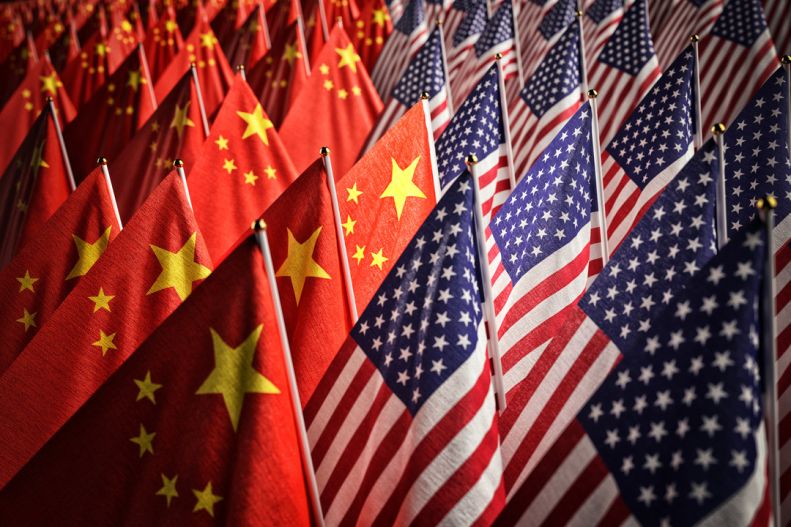
Flags of Taiwan flying
March 8, 2022

Allen Carlson, EAP/SAP/CMSP

“America’s abrupt and chaotic withdrawal from Afghanistan underscored worries as it raised questions about Washington’s commitment to its allies,” says Allen Carlson, associate professor of government. “Now, Vladimir Putin’s invasion of Ukraine has exacerbated all this anxiety as it is a direct challenge to Washington, and America’s deterrent capabilities.” 

Additional Information

Cultural Imprints: War and Memory in the Samurai Age

Book cover. A photograph of samurai armor with the title "Cultural Imprints: War and Memory in the Samurai Age" and editors "Elizabeth Oyler and Katherine Saltzman-Li" superimposed over it.

Author: Elizabeth Oyler and Katherine Saltzman-Li, eds.

Cultural Imprints draws on literary works, artifacts, performing arts, and documents that were created by or about the samurai to examine individual "imprints," traces holding specifically grounded historical meanings that persist through time. The contributors to this interdisciplinary volume assess those imprints for what they can suggest about how thinkers, writers, artists, performers, and samurai themselves viewed warfare and its lingering impact at various points during the "samurai age," the long period f

Book

49.95

Additional Information

Program

Type

  • Book

  • Cornell East Asia Series

Publication Details

Publication Year: 2022

Publication Number: 211

ISBN: 9781501761621

The Ends of Meter in Modern Japanese Poetry

Book cover. Banner across the middle reads "The Ends of Meter in Modern Japanese Poetry: Translation and Form" over "Scott Mehl". Above the title is an art print of a woman surrounded by flowers. Below the title is the woman's blurry reflection.

Author: Scott Mehl

In The Ends of Meter in Modern Japanese Poetry, Scott Mehl analyzes the complex response of Meiji-era Japanese poets and readers to the challenge introduced by European verse and the resulting crisis in Japanese poetry. Amidst fierce competition for literary prestige on the national and international stage, poets and critics at the time recognized that the character of Japanese poetic culture was undergoing a fundamental transformation, and the stakes were high: the future of modern Japanese verse.

Book

49.95

Additional Information

Program

Type

  • Book

  • Cornell East Asia Series

Publication Details

Publication Year: 2022

Publication Number: 210

ISBN: 9781501761171

Naoki Sakai's new book on the decline of Pax Americana and the dislocation of "the West"

Naoki Sakai headshot
March 2, 2022

“The End of Pax Americana: The Loss of Empire and Hikikomori Nationalism,” by Naoki Sakai, the Distinguished Professor of Asian Studies Emeritus in the College of Arts and Sciences

“The End of Pax Americana: The Loss of Empire and Hikikomori Nationalism,” examines Pax Americana and its lasting effects on Japan, as well as other countries and universities in the phenomenon of “area studies.” In an era when Pax Americana, as a colonial order, is in decline, Sakai sees a new order taking place that dislocates America and Europe (“the West”) from the center of world power. 

“The End of Pax Americana: The Loss of Empire and Hikikomori Nationalism,” examines Pax Americana and its lasting effects on Japan, as well as other countries and universities in the phenomenon of “area studies.” In an era when Pax Americana, as a colonial order, is in decline, Sakai sees a new order taking place that dislocates America and Europe (“the West”) from the center of world power. 

Today, Sakai observes Americans perceive a loss of empire in their everyday lives. The order of Pax Americana is extremely important to Americans, he said, even though most Americans are not aware of its presence in the world. “Americans take it for granted.” As a historian, Sakai is pessimistic about repercussions of the twilight of Pax Americana, which he calls “the most sophisticated form of modern colonialism.”

Sakai is at work on another book, tentatively entitled “Dislocation of the West,” that will provide a large theoretical framework for the issues raised in “The End of Pax Americana.”

Additional Information

Genealogies of Anti-Asian/Asia Violences Symposium

March 25, 2022

9:00 am

220 Eggers Hall, Syracuse University

The Cornell-Syracuse South Asia Consortium presents a symposium interrogating the histories and trajectories of anti-Asian violences.

The recent surge of racially motivated attacks on Asians in the United States brought renewed attention to the issue of anti-Asian violence. It is necessary to situate this rising tide of violence in the broader histories that have produced it. By taking up “Asia” as a fraught geopolitical category that is formed through imperialist projects, this symposium attends to the underlying logics of violence that are crucial to rendering these histories legible. Building connections that are enabled by transnational, relational, and critical lenses not only will deepen insights into the discourse of anti-Asian violence, but also will allow a meaningful consideration of the implications of this moment for solidarity and movement- building. This symposium will convene a cohort of scholars, students, and activists whose work can collectively help trace the genealogies and geographies of anti-Asian violence.

The South Asia Program is coordinating efforts for current Cornell students, faculty and staff to travel to and from Syracuse for this event on Friday March 25. Please fill out this form by March 18 if you are interested in a ride (or are able to offer others a ride) to and from Syracuse for the symposium. Space is limited.

220 Eggers Hall (Strasser Legacy Room), Syracuse University

Roundtable: Queering Solidarities: Race, Caste, and Gender

Chris Eng (Associate Professor, Department of English, University of Washington in St. Louis)
Sangeeta Kamat (Professor, Comparative and International Education, University of Massachusetts, Amherst)
William Mosley (Assistant Professor, Program for Interdisciplinary Humanities, Wake Forest University)
Esther K. (Red Canary Song Collective)
Discussant: Viranjini Munasinghe (Associate Professor, Department of Anthropology, Cornell University)

Panel: Cripping Violence, Indigeneity and Pedagogy: Global Perspectives

Juliann Anesi (Assistant Professor, Gender Studies, University of California, Los Angeles)
Deepika Meena (Research Scholar, IIT Gandhinagar)
Edward Nadurata (Graduate Student, Department of Global and International Studies, UC Irvine)
Discussant: Michael Gill (Associate Professor, Cultural Foundations of Education, Syracuse University)

Panel: Transnational Asia: Feminist & Decolonial Critiques

Juliana Hu Pegues (Associate Professor, Literatures in English, Cornell)
Danika Medak-Saltzman (Assistant Professor, Women's and Gender Studies, Syracuse University)
Deepti Misri (Associate Professor, Women and Gender Studies, University of Colorado, Boulder)
Discussant: Mona Bhan (Associate Professor, Anthropology and Ford-Maxwell Professor of South Asian Studies, Syracuse University)

Closing Keynote

Iyko Day, Mount Holyoke College
“Nuclear Antipolitics and the Queer Art of Logistical Failure”

CO-SPONSORED BY:

At Cornell University: South Asia Program, Mario Einaudi Center for International Studies, East Asia Program, Southeast Asia Program, and Asian American Studies Program

At Syracuse University: Graduate School, Humanities Center, Hendricks Chapel, Department of Cultural Foundations of Education, Department of English, Department of Religion, Department of Women’s and Gender Studies, East Asia Program, Asian/Asian American Studies Program, Disability Studies; Disability Cultural Center, Intergroup Dialogue, and Democratizing Knowledge Collective

With funding from the Department of Education Title VI Program.

FACULTY CO-ORGANIZERS:

Susan Thomas, Cultural Foundations of Education, Syracuse University

Antonio Tiongson, Department of English, Syracuse University

Additional Information

Program

Einaudi Center for International Studies

East Asia Program

Southeast Asia Program

South Asia Program

Lingua Mater Student Competition Deadline

November 6, 2022

12:00 am

The Lingua Mater competition invites students to translate Cornell's Alma Mater into a different language and submit a video of the performed translation. The inaugural Lingua Mater student competition took place in 2018 as part of Cornell's Global Grand Challenges Symposium. The top three videos received cash prizes.

2022 competition details

Can you translate Cornell’s Alma Mater into your mother tongue (or a language you are learning/have learned at Cornell) and sing it? We invite you to translate “Far Above Cayuga’s Waters” and submit a video of you (and your friends!) performing it somewhere on any of Cornell’s campuses.

Translations do not need to be exact or perfectly in meter but should capture the feel and tune of our university’s Alma Mater. As is customary, include the first verse, refrain, second verse, and refrain in your video submission (for guidance, listen to a performance and read the lyrics).

Video submissions need to be MP4 files at 1920 x 1080 (1080p), in landscape mode with an aspect ratio of 16:9. Please ensure that you have copyright permission for any images/videos you use.

Entries will be reviewed by a panel of judges. Submissions will be judged equally on the translation, the musical quality, and the creativity in visual presentation.

The top three entries will win cash prizes.

Winners will be announced during International Education Week (November 14-18, 2022) and the top three videos will be posted online that week.

Entries may be submitted by any registered Cornell student or group of students.

Submission deadline: Sunday, November 6, 2022

SUBMIT YOUR VIDEO AND LYRICS HERE

Please contact Angelika Kraemer, Director of the Language Resource Center, if you have any questions.

The Lingua Mater competition is co-sponsored by the Language Resource Center and the Office of the Vice Provost for International Affairs.

Additional Information

Program

Einaudi Center for International Studies

East Asia Program

Southeast Asia Program

Latin American and Caribbean Studies

South Asia Program

Institute for European Studies

Lingua Mater Alumni Competition Deadline

October 30, 2022

12:00 am

The Lingua Mater competition invites alumni to translate Cornell's Alma Mater into a different language and submit a video of the performed translation. The inaugural Lingua Mater alumni competition took place in 2018 as part of Cornell's Global Grand Challenges Symposium. Winners included the Cornell Club of Thailand in 2018, Cornell Club of Gaeta, Italy in 2019, and alumni in Argentina in 2021. They received financial support for a local alumni event.

2022 competition details

Can you translate Cornell’s Alma Mater into your mother tongue (or a language you learned at Cornell) and sing it? We invite you to translate “Far Above Cayuga’s Waters” and submit a video of you (and your friends!) performing it, wherever you may be!

Translations do not need to be exact or perfectly in meter but should capture the feel and tune of our university’s Alma Mater. As is customary, include the first verse, refrain, second verse, and refrain in your video submission (for guidance, listen to a performance and read the lyrics).

Video submissions need to be MP4 files at 1920 x 1080 (1080p), in landscape mode with an aspect ratio of 16:9. Please ensure that you have copyright permission for any images/videos you use.

Entries will be reviewed by a panel of judges. Submissions will be judged equally on the translation, the musical quality, and the creativity in visual presentation.

The top entry will receive financial support and Cornell swag for a local alumni event.

Winners will be announced during International Education Week (November 14-18, 2022) via Noteworthy, and the top video will be posted online that week. Be sure to subscribe to our weekly newsletter to stay in the know of this competition and international alumni activities.

Entries may be submitted by any Cornell alumni groups outside of the United States and Canada.

Submission deadline: Sunday, October 30, 2022

SUBMIT YOUR VIDEO AND LYRICS HERE

Please contact the International Alumni Relations team if you have any questions.

The Lingua Mater competition is co-sponsored by the Office of International Alumni Relations, the Language Resource Center, and the Office of the Vice Provost for International Affairs.

Additional Information

Program

Einaudi Center for International Studies

East Asia Program

Southeast Asia Program

Latin American and Caribbean Studies

South Asia Program

Robo-Sexism:  Gendering AI and Robots

April 22, 2022

4:45 pm

Goldwin Smith Hall, 64

Robo-Sexism: Gendering AI and Robots in Japan and the United States (and Elsewhere) HYBRID event. The in-person location is Goldwin Smith Hall GS64.

Jennifer Robertson, Professor Emerita, Anthropology and History of Art, University of Michigan

In humans, gender constitutes an array of learned behaviors that are cosmetically enabled and enhanced. Gender(ed) behaviors are both socially and historically shaped and are also contingent upon many situational influences, including individual choices. How is gender assigned in actual (as opposed to fictional) robots? Robertson will explore the sex/gender stereotypes and operational functions informing the design and embodiment of artificial intelligence (AI) and robots, especially humanoids and androids.

Robots have been imagined, designed, and deployed in rhetorical and tangible forms alike to reinforce conservative models of sex/gender roles, ethnic nationalism, and "traditional" family structures. Robertson considers the ramifications of "retro-tech" and also nascent efforts to redress robo-sexism.

This is a University Lecture sponsored by the Cornell Department of History and the University Lectures Committee, co-sponsored by the East Asia Program at Cornell.

Additional Information

Program

Einaudi Center for International Studies

East Asia Program

Japanese Videogames as Cultural Artifacts

April 18, 2022

4:45 pm

What are we learning when we play video games from Japan? Rachael Hutchinson (University of Delaware) examines the cultural content of Japanese videogames through character design, background setting and environment, aesthetic style, thematic content, and game dynamics. We will consider how mid-1990s games converged around ideas of nuclear power and bioethics, making works like Final Fantasy VII and Metal Gear Solid valuable windows into social anxieties expressed in the Japanese arts.

Hosted by faculty member, Andrew Campana (Asian Studies) and the EastAsia+ collaborative. EastAsia+ is a new initiative at Cornell University that combines programming, mentorship, and digital publishing around East Asian media studies and digital humanities.

Additional Information

Program

Einaudi Center for International Studies

East Asia Program

Subscribe to East Asia Program