
East Asia Program
Info Session: Latin American and Caribbean Studies Opportunities for Undergraduates

September 14, 2022
4:45 pm
Uris Hall, G-08
The Latin American and Caribbean Studies Program (LACS) offers an interdisciplinary minor, summer internships, and other funding opportunities. Join this Einaudi Center Student Info Session to find out what LACS has in store for you!
The Latin American studies minor is an undergraduate minor across disciplines that allow you to explore the history, culture, government, politics, economy and languages of Latin America and the Caribbean. Qualifying courses can be found in almost every college.
Our summer internships sent several students to Ecuador in 2022!
***
Contact: lacs@cornell.edu
Additional Information
Program
Einaudi Center for International Studies
Latin American and Caribbean Studies
East Asia Program
Southeast Asia Program
Institute for African Development
Cornell Classical Chinese Colloquium with Lucas Bender
December 2, 2022
3:30 pm
Rockefeller Hall, Asian Studies Lounge third floor
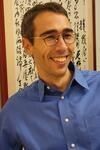
The Cornell Classical Chinese Colloquium (CCCC) 古文品讀 is pleased to have Lucas Bender (East Asian Languages, Yale) lead this text reading.
Bender's text-reading is on "What Troubles the World is Inequality": Politics Before Metaphysics in Guo Xiang's 郭象 (252-312) Zhuangzi 莊子 Commentary
Faculty hosts: TJ Hinrichs (History, Cornell) and Suyoung Son (Asian Studies, Cornell). Sponsored by the East Asia Program. The Cornell Classical Chinese Colloquium (CCCC) 古文品讀 is a reading group for scholars interested in premodern Sinographic (古文) text. The group typically meets monthly during the semester to explore a variety of classical Chinese texts and styles. Other premodern texts linked to classical Chinese in Japanese, Korean, and Vietnamese have been explored. Presentations include works from the earliest times to the 20th century. Workshop sessions are led by local, national, and international scholars.
All are welcome with any level of experience with classical Chinese. At each session, a participant presents a classical Chinese text. Attendees discuss historical, literary, linguistic, and other aspects of the text, working together to resolve difficulties in comprehension and translation. No preparation is required. All texts will be distributed at the meeting.
If you are unable to attend in person, you may register in advance here.
Additional Information
Program
Einaudi Center for International Studies
East Asia Program
Prostitutes, Hostesses, and Actresses at the Edge of the Japanese Empire
November 7, 2022
4:45 pm
Uris Hall
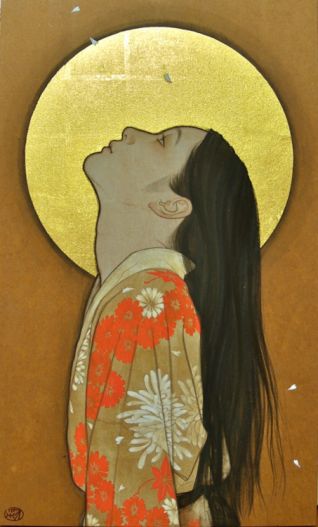
Nobuko Yamasaki, Assistant Professor, Department of Languages and Literatures, Program in Feminist, Gender, and Sexuality Studies, Lehigh University speaks about her book titled, Prostitutes, Hostesses, and Actresses at the Edge of the Japanese Empire.
Analyzing materials from literature and film, this book considers the fates of women who did not or could not buy into the Japanese imperial ideology of “good wives, wise mothers” in support of male-empire building. Although many feminist critics have articulated women’s active roles as dutiful collaborators in the project of empire, their attention has focused principally on male-dominated narratives of empire building. In contrast, the roles of marginalized women such as sex workers, women entertainers, and hibakusha have rarely been analyzed. This book addresses this intellectual lacuna by closely examining memories of, (semi-)autobiographical short stories, and newspaper articles, grounded in and inspired by lived experiences not only in Japan but also in Shanghai, Manchukuo, colonial Korea, and the Pacific.
Co-sponsored by the Feminist, Gender, and Sexuality Studies Program and the Department of Performing and Media Arts.
Additional Information
Program
Einaudi Center for International Studies
East Asia Program
Cornell Classical Chinese Colloquium with Jeffrey Moser
October 28, 2022
3:30 pm
Rockefeller Hall, Asian Studies Lounge third floor
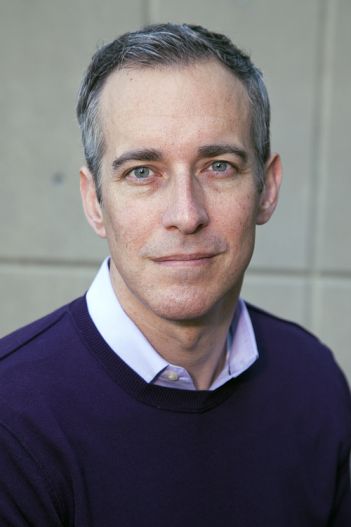
The Cornell Classical Chinese Colloqium (CCCC) 古文品讀 is pleased to have Jeffrey Moser (History of Art and Architecture, Brown University) to lead this text reading titled, "The Record of the Relocation of the Stone Classics to the Prefectural School of Jingzhao Prefecture." Composed by Lü Dazhong in 1090, the stele records the founding of what would eventually come to be known as the Forest of Steles (Beilin) in Xian.
Faculty hosts: TJ Hinrichs (History, Cornell) and Suyoung Son (Asian Studies, Cornell). Sponsored by the East Asia Program. The Cornell Classical Chinese Colloquium (CCCC) 古文品讀 is a reading group for scholars interested in premodern Sinographic (古文) text. The group typically meets monthly during the semester to explore a variety of classical Chinese texts and styles. Other premodern texts linked to classical Chinese in Japanese, Korean, and Vietnamese have been explored. Presentations include works from the earliest times to the 20th century. Workshop sessions are led by local, national, and international scholars.
All are welcome, with any level of experience with classical Chinese. At each session, a participant presents a classical Chinese text. Attendees discuss historical, literary, linguistic, and other aspects of the text, working together to resolve difficulties in comprehension and translation. No preparation is required, all texts will be distributed at the meeting.
This text reading is hybrid. If you are unable to attend in person, you may register in advance here.
Additional Information
Program
East Asia Program
Cornell Classical Chinese Colloquium with Mara Du
November 11, 2022
3:30 pm
Rockefeller Hall, Asian Studies Lounge third floor
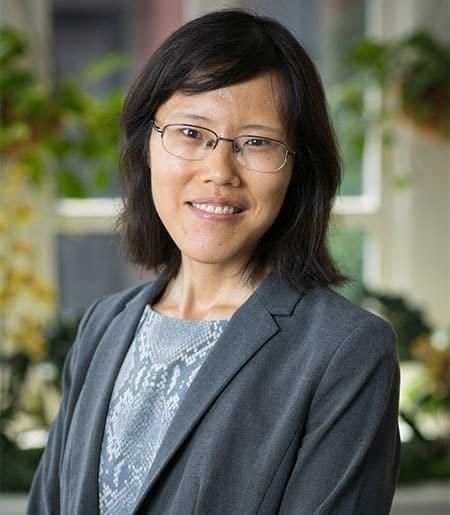
The Cornell Classical Chinese Colloqium (CCCC) 古文品讀 is pleased to have Yue (Mara) Du (History, Cornell University) lead the text reading titled, A Taiping General’s Poem in the Anti-Qing Revolution.
Faculty hosts: TJ Hinrichs (History, Cornell) and Suyoung Son (Asian Studies, Cornell). Sponsored by the East Asia Program. The Cornell Classical Chinese Colloquium (CCCC) 古文品讀 is a reading group for scholars interested in premodern Sinographic (古文) text. The group typically meets monthly during the semester to explore a variety of classical Chinese texts and styles. Other premodern texts linked to classical Chinese in Japanese, Korean, and Vietnamese have been explored. Presentations include works from the earliest times to the 20th century. Workshop sessions are led by local, national, and international scholars.
All are welcome, with any level of experience with classical Chinese. At each session, a participant presents a classical Chinese text. Attendees discuss historical, literary, linguistic, and other aspects of the text, working together to resolve difficulties in comprehension and translation. No preparation is required, all texts will be distributed at the meeting.
This text-reading is hybrid. If you are unable to attend in person, you may register in advance here.
Additional Information
Program
East Asia Program
Chinese Crip Poetry
October 19, 2022
4:45 pm
Uris Hall, G08
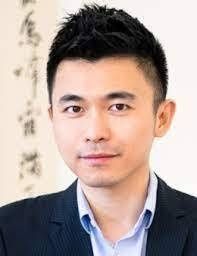
Crossing the World to Sleep with You: Chinese Crip Poetry and its Cross-Cultural Translatability is the title of this talk to be given by Hangping Xu, (East Asian Languages and Culture, UC, Santa Barbara).
Yu Xiuhua rose to her celebrity status when her poem “Crossing China to Sleep with You” went viral in 2014 on Chinese social media platforms, causing what can be called a cultural event, which director Fan Jian documents in his 2016 film Still Tomorrow. As a female poet who lives with cerebral palsy in rural China, Yu was often labeled by media representations as a “brain-paralyzed peasant poet.” Such a sensationalist labeling strategy exploits her various minority identities. Focusing on the rise of Yu as a “crip” trickster figure, the talk advances a critical account of Chinese internet poetry as transmedial performance.
Hangping Xu specializes in modern and contemporary Chinese literary, cultural, and visual studies, comparative literature, and Taiwan Studies. Situating China in the world and destabilizing the notion of “Chineseness,” his research also pays attention to the history of diaspora, dispersion, immigration, and globalization. His interdisciplinary research engages two significant turns in literary and cultural studies—namely, the affective and the ethical —by foregrounding disability as a mode of critique. It particularly examines “disability aesthetics,” that is, how the disabled body in our cultural imaginaries evokes affective responses, or what can be called “aesthetic nervousness.” It explores the ways in which disability opens up new ethical horizons because its excessively corporeal and often spectacularized embodiment conceptually and aesthetically challenges how a culture defines what it means to be human.
The East Asia Program's Graduate Student Steering Committee (GSSC) welcomes Professor Xu. We invite graduate students to contact us if you are interested in participating in a grad student workshop with him on October 20th at noon. email: eap-gssc@cornell.edu for details.
Additional Information
Program
Einaudi Center for International Studies
East Asia Program
EAP Fall 2022 Lecture series

Welcome back, in-person!
We're excited to have so many high-caliber speakers and look forward to the conversations and explorations that will take place. Feel free to email us for more information and accessibility provisions: eap@cornell.edu
9/23 at 3:30 p.m. Hybrid in Ives 219
A Century of Student Movements: The Making of Taiwan's Democracy
Ming-sho Ho (Sociology, National Taiwan University)
9/26 at 3:00 p.m. Hybrid in Uris Hall G08
CCCI: Clothing, Kinship, Slogans, and Songs in Chinese Protest Movements
Jeffery Wasserstrom (History, University of California, Irvine)
10/4 at 4:45 p.m. In-person in Goldwin Smith Hall G22
The Cyborgs Have Always Been Zombies: South Korean Body Politics and Lee Bul’s Body Art Pulse of Art History lecture
Soyi Kim (LB Korean Studies Research Fellow 2022-2023, Cornell University)
10/12 at 3:00 p.m. Hybrid in Uris Hall G08
CCCI: Patterns for the People in Communist China
Antonia Finnane (History, University of Melbourne)
10/14 at 3:30 p.m. This event is changed to VIRTUAL only. Please click on link to find registration info.
CCCC: Reading Artisanal Knowledge from 16th Century Korea
Hyeok Hweon Kang (East Asia Languages and Cultures, Washington University of St. Louis)
10/19 at 4:45 p.m. Hybrid in Uris Hall G08
Crossing the World to Sleep with You: Chinese Crip Poetry and its Cross-Cultural Translatability
Hangping Xu (East Asian Languages and Cultures, UC Santa Barbara) hosted by GSSC
10/26 at 3:00 p.m. Hybrid in Uris Hall G08
CCCI: Sexual Revolutions and the Future of the Institution of Marriage
Deborah Davis (Sociology, Yale)
10/28 at 3:30 p.m. In-person in Asian Studies Lounge, Rockefeller Hall
CCCC: Jeffrey Moser (History of Art and Architecture, Brown University)
11/7 at 4:45 p.m. Hybrid in Uris Hall G08
Prostitutes, Hostesses, and Actresses at the Edge of the Japanese Empire
Nobuko Yamasaki (Assistant Professor, Department of Languages and Literatures, Program in Feminist, Gender, and Sexuality Studies, Lehigh University)
11/9 at 3:00 p.m. Hybrid in Uris Hall G08
CCCI: Sino-Italian encounters in global fashion: 20 years of Sino-Italian Collaborations
Simona Segre-Reinach (Fashion Studies, University of Bologna)
11/11 at 3:30 p.m. In-person in Asian Studies Lounge, Rockefeller Hall
CCCC: A Taiping General’s Poem in the Anti-Qing Revolution
Yue (Mara) Due (History, Cornell University)
12/2 at 3:30 p.m. In-person in Asian Studies Lounge, Rockefeller Hall
CCCC: with Lucas Bender (East Asian Language, Yale University)
Events are subject to change so please check our events listing to keep up with the latest information. CCCI=Cornell Contemporary China Initiative and CCCC=Cornell Classical Chinese Colloquium. GSSC=Graduate Student Steering Committee.
Additional Information
Program
The Cyborgs Have Always Been Zombies with Soyi Kim
October 4, 2022
4:45 pm
Goldwin Smith Hall, G22
“The Cyborgs Have Always Been Zombies: South Korean Body Politics and Lee Bul’s Body Art” a Pulse of Art History lecture
This presentation revisits the early body art of Korean artist Lee Bul before she became internationally renowned for her Cyborg series (1991-present) and dystopia-themed sculpture series (2002-present). I read Lee’s early art as not only having a formative effect on her later works, but also a response to South Korean government’s control over women’s reproductive rights: its decades-long abortion bans and family planning campaigns to curb female fertility. I argue that zombie, a figure that often indicates the status of social death in critical theories, helps locate Lee’s artistic critique against the modernizing South Korea’s developmentalist and masculine visions.
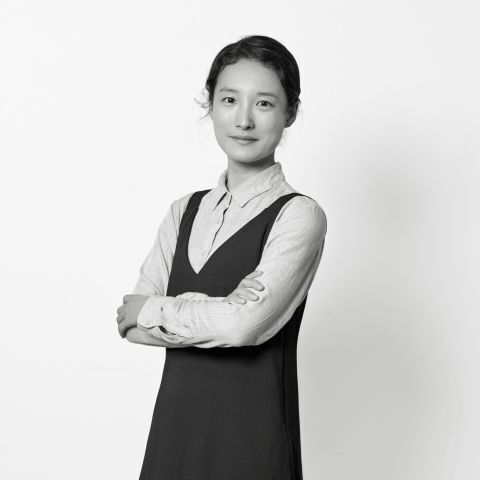
Soyi Kim is the inaugural LB Korean Studies Research Scholar for the East Asia Program, Mario Einaudi Center for International Studies
Dr. Kim's work creatively brings together urgent questions about the ethics and politics of epidemiology and a critical humanities approach to aesthetic problems in art and digital cultures. Dr. Kim’s work, while situated in visual studies, is truly interdisciplinary, and seeks to place Korean art and visual culture in historical and cultural context. While her work is not history of medicine per se, it engages with biopolitics as Koreans encountered first Japanese, and then American imperial occupation, and a diverse series of medical and bureaucratic interventions which have directly affected the bodies and health of Koreans.
Additional Information
Program
Einaudi Center for International Studies
East Asia Program
Aftershocks: Geopolitics since the Ukraine invasion

September 22, 2022
5:30 pm
Schwartz Center for Performing Arts, Kiplinger Theatre
As the war in Ukraine rages on, how is the ground shifting across Eurasia and beyond? Leading journalists and scholars covering Russia, Europe, China and the global political landscape will discuss how international relations, security, trade and economics are shifting in ways not seen since World War II.
This Arts Unplugged event will feature:
Ann Simmons, the Wall Street Journal's Moscow Bureau Chief
Mark Landler, the New York Times' London Bureau Chief
Peter Katzenstein, the Walter S. Carpenter, Jr. Professor of International Studies
Jessica Chen Weiss, associate professor of government in the College of Arts & Sciences
Ray Jayawardhana, the Harold Tanner Dean in the College of Arts and Sciences, will moderate the discussion.
Additional Information
Program
Institute for European Studies
Reppy Institute for Peace and Conflict Studies
Einaudi Center for International Studies
East Asia Program
Halal and/or Qingzhen: A Historical Process and Recent Policies of Sinicization of Islam in China”
October 4, 2022
12:00 pm
Talk by James D. Frankel
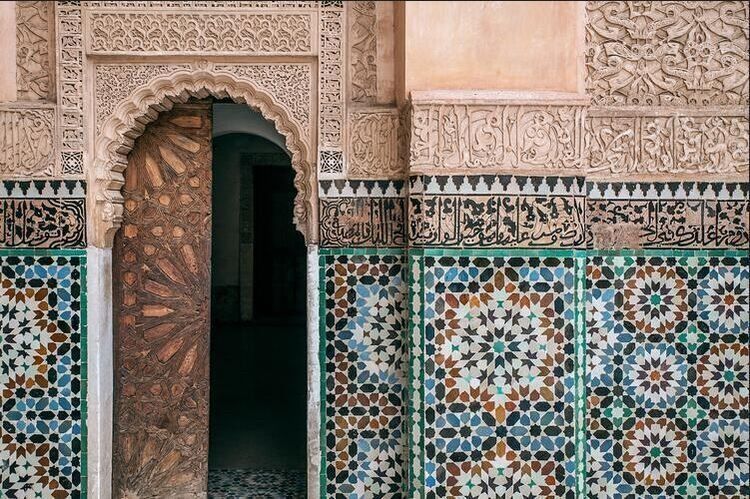
Islam arrived in China during the 7th century as a foreign religion. Yet, once the first Muslims settled permanently there, Islamic religious and cultural traditions were gradually influenced by the norms of Chinese culture and society. This process of naturalization and localization sometimes referred to as “Sinicization”, continued apace for nearly a millennium before historical circumstances accelerated it during the Ming (1368-1644) and Qing (1644-1911) dynasties. The vicissitudes of modern Chinese history have led to varying official governmental and societal attitudes towards Islam and Muslims and concomitant adaptations of identity and expressions of religiosity by Chinese Muslims. Most recently, the government of the People’s Republic of China is pursuing its own policies of decreasing foreign religious influences in the country in the name of combatting “extremism and separatism.” These have included official regulations aimed at “sinicizing” Islam in China, leading Muslims into a new wave of adaptation for their survival.
Additional Information
Program
Einaudi Center for International Studies
East Asia Program