
East Asia Program
Celebrating Sorrow: Medieval Tributes to "The Tale of Sagoromo"

Celebrating Sorrow explores the medieval Japanese fascination with grief in tributes to The Tale of Sagoromo, the classic story of a young man whose unrequited love for his foster sister leads him into a succession of romantic tragedies as he rises to the imperial throne. Charo B. D'Etcheverry translates a selection of Sagoromo-themed works, highlighting the diversity of medieval Japanese creative practice and the persistent and varied influence of a beloved court tale.
Book
39.95
Additional Information
Program
Type
- Book
- Cornell East Asia Series
Publication Details
Publication Year: 2022
Publication Number: 205
ISBN: 9781501764776
Pelosi’s Taiwan Trip Spurs New Military Activity in Pacific
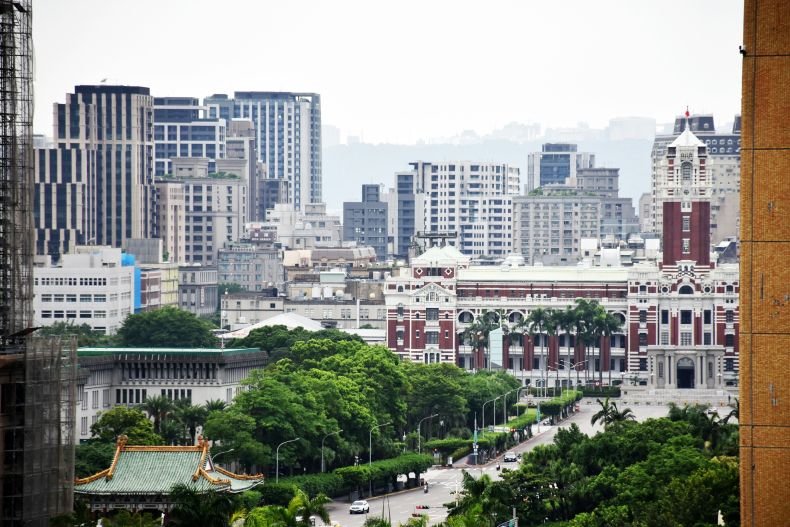
Allen Carlson, CMSP/EAP/SAP/SEAP
“In the end, one would hope that the Speaker has made her point and will be restrained in speaking directly about independence while in Taiwan… while China will not go beyond previous shows of force,” says Allen Carlson, associate professor of government.
Additional Information
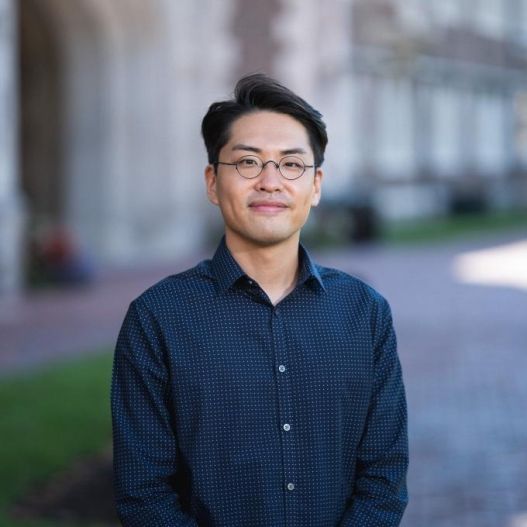
Cornell Classical Chinese Colloquium with Hyeok Hweon Kang
October 14, 2022
3:30 pm
THIS EVENT IS CHANGED TO VIRTUAL
The Cornell Classical Chinese Colloqium (CCCC) 古文品讀 is pleased to start the fall '22 semester series with Hyeok Hweon Kang (Assistant Professor at Washington University, St. Louis). The text title is: Reading Artisanal Knowledge from 16th Century Korea
Faculty hosts: TJ Hinrichs (History, Cornell) and Suyoung Son (Asian Studies, Cornell). Sponsored by the East Asia Program.
The Cornell Classical Chinese Colloquium (CCCC) 古文品讀 is a reading group for scholars interested in premodern Sinographic (古文) text. The group typically meets monthly during the semester to explore a variety of classical Chinese texts and styles. Other premodern texts linked to classical Chinese in Japanese, Korean, and Vietnamese have been explored. Presentations include works from the earliest times to the 20th century. Workshop sessions are led by local, national, and international scholars.
All are welcome, with any level of experience with classical Chinese.
At each session, a participant presents a classical Chinese text. Attendees discuss historical, literary, linguistic, and other aspects of the text, working together to resolve difficulties in comprehension and translation.
No preparation is required, all texts will be distributed at the meeting.
Additional Information
Program
East Asia Program
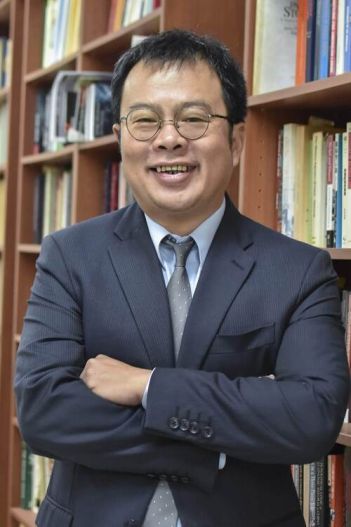
A Century of Student Movement: The Making of Taiwan's Democracy
September 23, 2022
3:30 pm
Ives Hall, 219
Ming-sho Ho (Sociology, National Taiwan University)
Taiwan's vibrant democracy nowadays defied the geopolitical challenges imposed by a century of Japanese colonialism, cold-war anti-communist dictatorship, and China's irredentism. This lecture will analyze the island nation's pursuit of autonomy and democracy, with special attention to the role of student mobilization. "Student" was a category created in the colonial modernization, as the Japanese modernized the educational structure and expanded the youthful population receptive to political radicalism. After the flourishing of anti-colonial struggles in the 1920s, the postwar Chinese Nationalist regime encountered student mobilization in the 1947 February 28 Incident and the subsequent clandestine insurgency. The early-1970s witnessed the rise of the nationalistic Diaoyutai movement and its spillover to prodemocracy and social service streams. The lifting of martial law in 1987 gave a mighty impetus to the student movement, culminating in the 1990 Wild Lily Movement. After a long hibernation, the student movement made a comeback in the 2008 Wild Strawberry Movement and the 2014 Sunflower Movement, with the protest target shifting to China. His lecture will review the century-long student movement history and examine its changing ideologies, strategies, and impacts.
Faculty host: Eli Friedman (Sociology, Department of Comparative International Labor Relations, Cornell)
Co-sponsored by The Levinson China & Asia-Pacific Studies Program
Additional Information
Program
Einaudi Center for International Studies
East Asia Program
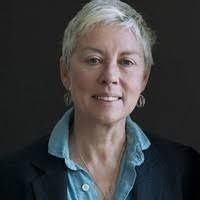
Sino-Italian Encounters in Global Fashion
November 9, 2022
3:00 pm
Uris Hall, G08
The Cornell Contemporary China Initiative (CCCI) of the East Asia Program welcomes Simona Segre-Reinach (Fashion Studies, University of Bologna, Italy) as part of our semester-long theme of Fashion and Politics in Twentieth-Century China with faculty host, Peidong Sun (History, Cornell)
Some of the questions that guest speakers will investigate include: How do we define politics from the dimension of fashion? What was a politicized fashion? How did fashion reflect the power structure? How did fashion become a way of obedience and resistance? And how do we define and interpret the human condition in China under Mao's rule (1949-1976)? What was human resilience in the face of absolute power?
Simona Segre-Reinach's talk is titled, "Sino-Italian Encounters in Global Fashion: 20 Years of Sino-Italian Collaborations."
The talk focuses on the evolution of fashion relations between Italy and China in a unique period - from the late nineties of the 20th century to the second decade of the 21st century – which signals a change in the concept and the practices of Italian fashion on the one hand and the emerging of Chinese fashion withing a global setting on the other.
The CCCI lecture series aims to expose the broad campus community to issues and scholarship of contemporary China.
We thank our co-sponsors:
Asian American Pacific Studies Program | Asian Studies | College of Human Ecology | Cornell Society for the Humanities | Feminist, Gender & Sexuality StudiesDepartment of History | Department of International & Comparative Labor Relations | Department of History | The Levinson China & Asia-Pacific Studies Program
Additional Information
Program
Einaudi Center for International Studies
East Asia Program
Institute for European Studies
Sexual Revolutions and the Future of the Institution of Marriage
October 26, 2022
3:00 pm
Uris Hall, G08
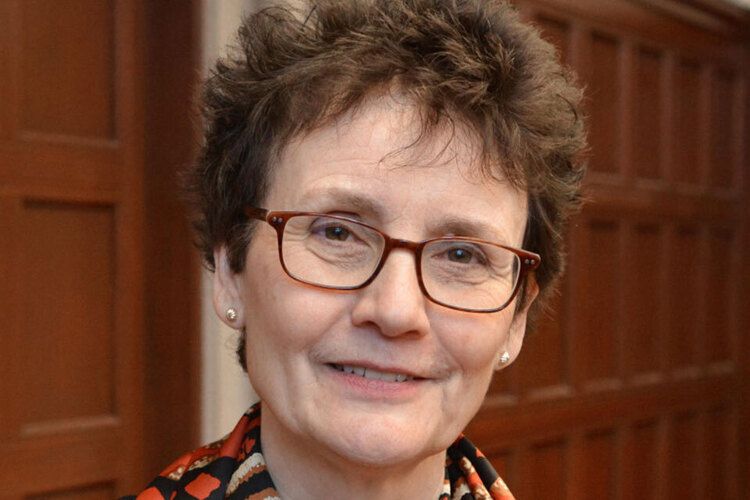
The Cornell Contemporary China Initiative (CCCI) of the East Asia Program welcomes Deborah Davis (Sociology, Yale University)
as part of our semester-long theme of Fashion and Politics in Twentieth-Century China with faculty host, Peidong Sun (History, Cornell)
Some of the questions that guest speakers will investigate include: How do we define politics from the dimension of fashion? What was a politicized fashion? How did fashion reflect the power structure? How did fashion become a way of obedience and resistance? And how do we define and interpret the human condition in China under Mao's rule (1949-1976)? What was human resilience in the face of absolute power?
Deborah Davis's talk is titled, "Sexual Revolutions and the Future of the Institution of Marriage."
Drawing on census data, documentaries, life histories, and a decade of fieldwork, the lecture considers the future of marriage and sexual intimacy in contemporary China where the one-child policy, massive migration out of villages, and multiplying connections to global youth cultures have transformed the legal, demographic, and cultural supports for marriage.
The CCCI lecture series aims to expose the broad campus community to issues and scholarship of contemporary China.
We thank our co-sponsors:
Asian American Pacific Studies Program | Asian Studies | College of Human Ecology | Cornell Society for the Humanities | Feminist, Gender & Sexuality StudiesDepartment of History | Department of International & Comparative Labor Relations | Department of History | The Levinson China & Asia-Pacific Studies Program
Additional Information
Program
Einaudi Center for International Studies
East Asia Program
Patterns for the People in Communist China
October 12, 2022
3:00 pm
Uris Hall, G08
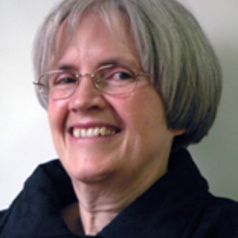
The Cornell Contemporary China Initiative (CCCI) of the East Asia Program welcomes Antonia Finnane (History, University of Melbourne) as part of our semester-long theme of Fashion and Politics in Twentieth-Century China with faculty host, Peidong Sun (History, Cornell)
Some of the questions that guest speakers will investigate include: How do we define politics from the dimension of fashion? What was a politicized fashion? How did fashion reflect the power structure? How did fashion become a way of obedience and resistance? And how do we define and interpret the human condition in China under Mao's rule (1949-1976)? What was human resilience in the face of absolute power?
Antonia Finnane's talk is titled, "Patterns for the People in Communist China."
When the People’s Republic of China was founded, new clothing protocols for state employees resulted in a general change in everyday dress. This was consistent with historical precedent: when the dynasty changed, the clothing was altered. But who made the new clothes and how were they made? Clothing in this period is often discussed in terms such as variety, agency, and consumption, contradicting assumptions of general conformity under communism; yet if we look at how clothes were made, we can see how conformity was instilled.
The CCCI lecture series aims to expose the broad campus community to issues and scholarship of contemporary China.
We thank our co-sponsors:
Asian American Studies Program | Asian Studies | College of Human Ecology | Cornell Society for the Humanities | Feminist, Gender & Sexuality Studies | Department of International & Comparative Labor Relations | Department of History | The Levinson China & Asia-Pacific Studies Program
Additional Information
Program
Einaudi Center for International Studies
East Asia Program
China’s Gen Z and Millennials Have a Word for Their Disaffection with the Economy and Life in General. Evolution is Dead, Meet ‘Involution’

Eli Friedman, EAP
The ideas of “giving up on fighting tooth and nail” for an increasingly elusive reward has grown in appeal for young Chinese citizens, says Eli Friedman, associate professor in the ILR School.
Additional Information
Fashion and Politics in Twentieth-Century China

Cornell Contemporary China Initiative's Fall Theme
The Cornell Contemporary China Initiative (CCCI) lecture series aims to expose the broad campus community to issues and scholarship of contemporary China and and the fall 2022 CCCI lecture series connected to two courses taught by Professor Peidong Sun, Fashion and Politics in Twentieth-Century China and Life and Death in China Under Mao. She also hosted and directed the series.
FALL ’22 Fashion and Politics in Twentieth-Century China * – Peidong Sun
Some of the questions that guest speakers investigated include: How do we define politics from the dimension of fashion? What was a politicized fashion? How did fashion reflect the power structure? How did fashion become a way of obedience and resistance? And how do we define and interpret the human condition in China under Mao's rule (1949-1976)? What was human resilience in the face of absolute power?
The Fall 2022 CCCI lecture videos linked in the titles and were recorded on the dates of the talk. If a title is not linked, the speaker did not permit recording.
Jeffrey Wasserstrom, (History, University of California, Irvine)
Clothing, Kinship, Slogans, and Songs in Chinese Protest Movements of the Past and Present
September 26, 2022.
Antonia Finnane, (History, University of Melbourne, Australia)
Patterns for the People in Communist China
October 12, 2022.
Deborah Davis, (Sociology, Yale University)
Sexual Revolutions and the Future of the Institution of Marriage
October 26, 2022.
Simona Segre-Reinach, (Fashion Studies, University of Bologna, Italy)
Sino-Italian Encounters in Global Fashion: 20 Years of Sino-Italian Collaborations
November 9, 2022.
We thank all of our co-sponsors for helping to make this series possible: Asian American Pacific Studies Program, Asian Studies, College of Human Ecology, Cornell Society for the Humanities, Feminist, Gender & Sexuality Studies, Department of History, Department of International & Comparative Labor Relations, The Levinson China & Asia-Pacific Studies Program.
*Professor Peidong Sun’s course listings: Fashion and Politics in the Twentieth Century China (HIST4075/HIST6075/CAPS 4075) and Life and Death in China Under Mao (HIST3525/CAPS3525)
Additional Information
Program
World’s Key Workers Threaten to Hit Economy Where It Will Hurt
Eli Friedman, EAP
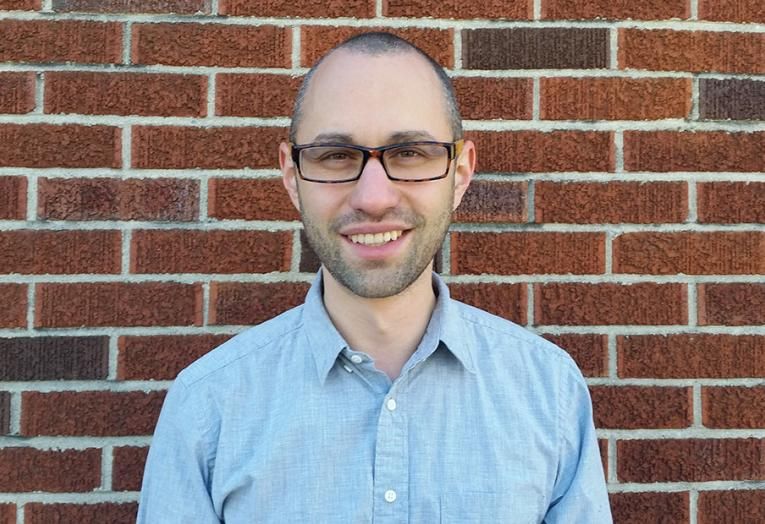
“There’s a very tight labor market, so that puts workers in a position where they have both an accumulation of lots of grievances and they feel empowered,” says Eli Friedman, associate professor and chair of International & Comparative Labor.