
East Asia Program
“Southern Effects: Kaiju, Cultural Intimacy, and the Production of Distribution” by Joshua Neves

April 29, 2021
4:30 pm
Joshua Neves, Associate Professor and Director of the Global Emergent Media (GEM) Lab at Concordia University (Montréal).
Dr. Neves writes: This talk examines the relationship between special effects and Asia or the South—what I am calling southern effects. It has two major lines of inquiry. The first focuses on cultural circulation. It begins with monstrous and magical cinematic histories before tracing the recent effects of these southern trajectories. Secondly, it explores the role of technological-economic distribution as a form of production. Special effects are now central to Asian media, shaping not only their relationship to global markets but emergent popular geographies. The link between these two global modalities—one obtaining from imperial legacies, the other, from the economic-cultural “rise” of Asia, focuses our attention on special effects as a key node of the global-popular. Tracing a particular genealogy of special effects in Asia, the talk will move from King Kong (1933) and Godzilla (1954) to the 2013 Chinese-Korean blockbuster Mr. Go (Kim Yong-hwa, 2013) and the 2021 release of King Kong vs. Godzilla, among others.
Bio: Joshua Nevesis Associate Professor and Director of the Global Emergent Media (GEM) Lab at Concordia University (Montréal). His research centers on digital media, cultural and political theory, and problems of development and legitimacy. He is the co-author of TechnoPharmacology(forthcoming), and author of Underglobalization: Beijing’s Media Urbanism and the Chimera of Legitimacy(Duke 2020), and co-editor of Asian Video Cultures: In the Penumbra of the Global (Duke 2017).
Presented by the Cornell EastAsia+ Initiative, a collective of scholars, publishing professionals, curators, and graduate students dedicated to exploring new possibilities for academic publishing, networking, and collaboration in East Asia media studies and digital humanities research.
EastAsia+ is generously supported by funding from Cornell University’s Society for the Humanities.
Additional Information
Program
Einaudi Center for International Studies
East Asia Program
Amartya Sen: Attacks on Democracy (Bartels World Affairs Lecture)
May 5, 2021
4:30 pm
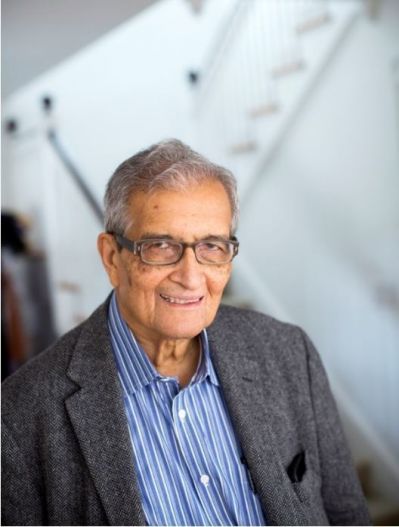
Nobel prize–winning economist Amartya Sen joins Cornell’s Kaushik Basu for the 2021 Bartels World Affairs Lecture, hosted by the Mario Einaudi Center for International Studies.
At the turn of the millennium, many would have said that understanding the need for democracy was the most important change in the world over the preceding century. Yet in the past 20 years, democracy has been treated with contempt and hostility in many parts of the world—including countries in the West (such as Hungary, Poland, and others), but also elsewhere.
It is important to ask why this is happening and how we should deal with it, Sen advises.
“Some countries seem to be undergoing a big transition in this respect, and my own country, India, may be a significant example—despite its being often described as the largest democracy in the world, which in some sense it still is,” Sen said. “As someone who is dismayed by recent developments, I would like to discuss the nature of the problems we may be facing and what can be done about them.”
Sen’s talk, “Attacks on Democracy,” will kick off a discussion with Cornell faculty and students moderated by Basu. Three faculty commentators and audience members, including several students, will join Sen for conversation and Q&A on democratic challenges—and ways forward. The event is part of the Einaudi Center’s democratic resilience global research theme.
Amartya Sen is Thomas W. Lamont University Professor and professor of economics and philosophy at Harvard University. He has served as president of the Econometric Society, American Economic Association, Indian Economic Association, and International Economic Association. Translated into more than 40 languages, Sen’s books include Collective Choice and Social Welfare (1970, 2017), Development as Freedom (1999), Identity and Violence (2006), and The Idea of Justice (2009). Sen’s awards include the Bharat Ratna (India); Commandeur de la Legion d'Honneur (France); National Humanities Medal, George Marshall Award, and Eisenhower Medal (USA); Bodley Medal and Edinburgh Medal (UK); Ordem do Merito Cientifico (Brazil); Aztec Eagle (Mexico); and the Nobel Prize in Economics.
Moderator:
Kaushik Basu is the Carl Marks Professor of International Studies, professor of economics in the College of Arts and Sciences, and former senior vice president and chief economist of the World Bank.
Faculty Commentators:
Robert Hockett, Edward Cornell Professor of Law, Cornell University
Marco Battaglini, Edward H. Meyer Professor of Economics, Cornell University
Rachana Kamtekar, Professor of Philosophy, Cornell University
The Bartels World Affairs Lecture was established in 1984 to foster a broadened worldview among Cornell students, especially undergraduates. The lecture and related events are made possible by the generosity of Henry E. Bartels ’48 and Nancy Horton Bartels ’48.
***
Our hearts are with Cornellians currently in India and South Asia, or with family or friends in the region, during the COVID-19 tragedy. Consider supporting this aid effort led by South Asian students, including Cornellians.
Additional Information
Program
Einaudi Center for International Studies
Southeast Asia Program
Reppy Institute for Peace and Conflict Studies
East Asia Program
Latin American and Caribbean Studies
Institute for African Development
Institute for European Studies
South Asia Program
Protecting China's Interests Overseas: Securitization and Foreign Policy
April 15, 2021
8:30 pm
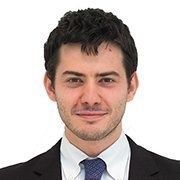
Guest Lecture and Discussion with Andrea Ghiselli
Based on his book Protecting China's Interests Overseas: Securitization and Foreign Policy, Dr. Andrea Ghiselli's talk will revolve around China's approach to protect its interests overseas with the goal of providing new insights into the dynamics of contemporary Chinese foreign policy making, and prompting new considerations regarding how we understand China's rise. Instead of looking at this issue through the lens of great power competition, the key argument is that the securitization of non-traditional security issues played a crucial role in the development of China’s strategy to defend its interests overseas, especially after 2011.
The first part of the talk will focus on how Chinese economic and human presence grew so much in unstable regions like the Middle East and North Africa. Dr. Ghiselli will discuss the tensions between the policies aimed at promoting Chinese businesses abroad and the government’s attempts to make Chinese companies responsible for the success and safety of their projects overseas. The second part of the talk will take into consideration how the civilian and military elites’ approach to the protection of Chinese nationals and assets overseas evolved over time. In particular, the focus of the analysis will be on the institutional developments and policy initiatives that were launched as a new consensus emerged clearly in the aftermath of the evacuation of 36,000 Chinese citizens from Libya in 2011. The third and final part of the talk will revolve around how we should understand China’s expanding security footprint abroad and its potential evolution in the future. https://global.oup.com/academic/product/protect-chinas-interests-overse…
A live Q&A will follow the talk. The audience is encouraged to write their questions into the Chat field for inclusion during this session.
Additional Information
Program
East Asia Program
Cornell Student China Research Symposium 2021
April 16, 2021
8:00 pm
All Cornell graduate students, undergraduates, and postdocs conducting research on China, in China, or with China collaborators are invited to register and join the virtual 2021 Cornell Student China Research Symposium on 15 April 2021 from 8:00-9:30 pm EDT via Zoom. This symposium is an opportunity to share a short summary of your work and to network with other attendees. Come give a lightning presentation on your China-related research on any topic, in any discipline, at any stage. This event is co-sponsored by the Cornell China Center, the Mario Einaudi Center for International Studies’ East Asia Program (EAP), and the Brittany and Adam J. Levinson China and Asia-Pacific Studies Program (CAPS).
student research lightning presentations (1 PPT slide and 2 min each)moderated small group discussions: research experiences and next stepsInterested participants are invited to sign up to participate and indicate their research topic by April 11, 2021: https://cornell.ca1.qualtrics.com/jfe/form/SV_ehBPA0i6LYstlrg
Registrants will be emailed the Zoom meeting link before the symposium date.
Please share this invitation with any Cornell undergraduates, graduate students, and postdocs who may be interested in participating.
Additional Information
Program
East Asia Program
Rough Work: A New Look at Chinese Paper-making Communities on April 7

Yiyun Peng, Ph.D. Candidate, Cornell, History
Beyond Workshops: Spatial Distribution of Paper-making Communities and Properties in Upland Southeast China, 1700-1950
April 7 11:30 AM-1:15 PM
Yiying Peng, a Ph.D. student in History discusses a new way of looking at the industry. This provides a new perspective on the interactions of production and environment and of different groups of producers. It further demonstrates the heterogeneity of utilizing the highlands and the ways in which people across space stretched their influence to the remote uplands to make the most of their living environment. (Please read her paper in advance - you will receive a link to it once you register.)
Register: https://cornell.zoom.us/meeting/register/tJAocuutrj0rGdBHLEjGKGJDP2PP_vksAKaA
Additional Information
Project HEAL: Student emotional support in Mandarin (and more)

by Amala Lane
“When the pandemic began and Cornell went into lock-down, I and my friends felt so isolated,” undergraduate psychology major Lin Lin explained. “We were anxious and our parents were so worried. Domestic students could leave and go home but many of us were stuck. Flights to China went from twice daily to once a week and the prices jacked up to over $5000 one way.” This was the impetus for project HEAL – a free emotional support service through peer chatting and texting for Mandarin speakers on WeChat that Lin helped to found last summer.
The approach is adapted from the Cornell EARS (Empathy Assistance & Referral Service) model, with a focus on problem-solving and the method is finely attuned to the issues experienced by Chinese international students and responsive to the nuances of Chinese culture. With only four trained peer counselors, all Chinese international students, they still have managed to provide 80 students with over 100 30-minute emotional support sessions. They plan to recruit another 15 counseling volunteers and train them over the summer.
Combining Mandarin Chinese with the practical problem-solving approach on WeChat hit the sweet spot for Chinese international students. There’s stigmatization connected with mental health issues in the community and therefore, many tended to shy away from Cornell’s traditional counseling services. But another reason was language. “We learned English for academics and rational thinking – but our mother tongue, Mandarin was how we spoke about things of the heart,” Lin explained.
Project HEAL publishes a weekly mental health education article as well as hosts ‘Emotional Dumpster’ sessions throughout the week for group WeChat emotional support. Lin states, “We started HEAL with Mandarin and Chinese international students in mind, but we do not want to exclude other international students who speak different languages. In fact, there is a group of Korean international students who heard about us, and are involved in EARS, who reached out to us, expressing the interest of having a subsection of HEAL doing Korean student emotional support.” They’re working with them currently to determine the needs of the Korean student community. Please feel free to visit their website and check out their video to learn more.
Additional Information
Program
Digital Enclosure and Unfreedom in Northwest China

May 6, 2021
11:25 am
Darren Byler, University of Washington, discusses the working paper "Digital Enclosure and Unfreedom in Northwest China."
The author will join for a conversation about their work. No formal presentation will be given; please read in advance. A link to the reading will be sent with the registration confirmation.
Part of the Reppy Institute for Peace and Conflict Studies (PACS) seminar series.
Co-sponsored by the Departments of Anthropology and Science & Technology Studies (STS).
About the author
Darren Byler is a postdoctoral researcher in the ChinaMade project at the University of Colorado, Boulder. He received his PhD from the Department of Anthropology at the University of Washington in 2018. His research focuses on Uyghur dispossession, infrastructural power and "terror capitalism" in the city of Ürümchi, the capital of Chinese Central Asia (Xinjiang). He has published research articles in the Asia-Pacific Journal, Contemporary Islam, Central Asian Survey, the Journal of Chinese Contemporary Art and contributed essays to volumes on ethnography of Islam in China, transnational Chinese cinema and travel and representation. He has provided expert testimony on Uyghur human rights issues before the Canadian House of Commons and writes a regular column on these issues for SupChina. In addition, he has published Uyghur-English literary translations (with Mutellip Enwer) in Guernica and Paper Republic. He also writes and curates the digital humanities art and politics repository The Art of Life in Chinese Central Asia, which is hosted at livingotherwise.com.
About the working paper
The author explains: "In my work I use the conceptual framing of a digital enclosure to consider the way Uyghur and Kazakh societies in Northwest China have been enveloped by a surveillance system over the past decade. I show how novel enclosures are produced and, in turn, construct new frontiers in capital accumulation and state power. The Turkic Muslim digital enclosure system gives technology companies and state authorities abilities to watch and control the movements and behavior of Muslims in increasingly intimate ways, turning them into an unfree proletariat--a docile yet productive permanent underclass."
Artwork by the artist Badiucao. Used with permission.
Additional Information
Program
Einaudi Center for International Studies
Reppy Institute for Peace and Conflict Studies
East Asia Program
Race and Racism Across Borders
April 12, 2021
11:00 am
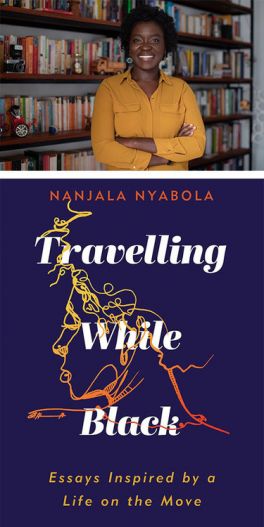
Keynote Speaker: Nanjala Nyabola
Cornell Students: Critical Reflections
Nanjala Nyabola, author of Travelling While Black-Essays Inspired by a Life on the Move, will be in conversation with professors Rachel Beatty Riedl, Kim Yi Dionne, and postdoc Eleanor Paynter.
Nanjala Nyabola is a writer, political analyst, and activist based in Nairobi, Kenya. Nyabola writes extensively about African society and politics, technology, international law, and feminism for academic and non-academic publications. Her first book, Digital Democracy, Analogue Politics: How the Internet Era is Transforming Politics in Kenya (Zed Books, 2018), was described as "a must-read for all researchers and journalists writing about Kenya today." Nyabola's ground-breaking work opens up new ways of understanding the current global online era, reframing digital democracy from the African perspective.
Nyabola’s latest book, the critically acclaimed Travelling While Black; Essays Inspired by a Life on the Move, (available electronically from the Cornell Library) is a stark reminder that the world needs to be seen through the lens of others. Her work has featured in publications including African Arguments, Al Jazeera, Financial Times, Foreign Affairs, Foreign Policy (magazine), The Guardian, New African, The New Humanitarian, The New Inquiry, New Internationalist, and World Policy Journal.
Nyabola holds a BA in African studies and political science from the University of Birmingham, an MSc in forced migration and an MSc in African studies from the University of Oxford, which she attended as a Rhodes Scholar, and a JD from Harvard Law School.
Following the dialogue, students will present select prose, poems, and visual art published as part of Global Cornell's Race and Racism Across Borders, a call that asked students and alumni to reflect on the new knowledge gained about racial dynamics when they crossed a literal or figurative border.
Register Now
Additional Information
Program
Einaudi Center for International Studies
Reppy Institute for Peace and Conflict Studies
East Asia Program
Southeast Asia Program
Latin American and Caribbean Studies
Institute for African Development
Institute for European Studies
South Asia Program
Still Hear the Wound: Toward an Asia, Politics, and Art to Come

By Our Faculty
EDITED BY CHONGHWA LEE, TRANSLATED BY REBECCA JENNISON AND BRETT DE BARY
Book
25.00
Additional Information
Program
Type
- Book
- Cornell East Asia Series
Publication Details
Publication Year: 2016
ISBN: 9781939161819
Artist Soni Kum to Share North Korean Defectors' Stories

Register Now to Attend April 2
Kum joins the East Asia Program on April 2 at 10:00 to discuss her latest installation work, Morning Dew: The Stigma of Being “Brainwashed.”