
East Asia Program
Mitzi Sutton Russekoff '54 Lecture 2021
March 16, 2021
7:00 pm
Mitzi Sutton Russekoff '54 Lecture 2021 featuring Jessica Chen Weiss, Associate Professor in the Department of Government
"How does China’s domestic governance shape its foreign policy? What role do nationalism and ideology play in Beijing’s regional and global ambitions?"
The Chinese leadership has been at once a revisionist, defender, reformer, and free-rider in the international system—insisting rigidly on issues that are central to its domestic survival, while showing flexibility on issues that are more peripheral. To illuminate this variation and what might lie ahead for US-China relations and the international order, Weiss will discuss her new book project, which theorizes and illustrates the domestic-international linkages in Beijing’s approach to issues ranging from sovereignty and homeland disputes to climate change and COVID-19.
Additional Information
Program
East Asia Program
Rough Work: Loopholes for Lawmakers: Symbolic Prohibition of Bribery

March 30, 2021
11:30 am
Rough Work: Adoree Kim, Ph.D. student, Government
Loopholes for Lawmakers: Symbolic Prohibition of Bribery
Adoree Kim writes: This chapter process-traces the enactment of the 2016 Improper Solicitation and Graft Act in the wake of the Sewol Ferry tragedy. The Improper Solicitation Act, as introduced by the Anti-Corruption and Civil Rights Commission (ACRC), was intended to reduce public official corruption. National Assembly lawmakers revised provisions they believed would restrict their access to political resources or increase their likelihood of becoming targets of enforcement. Stripped of restrictions on third-party petitioning, the law became a “cheap signal” with limited ability to constrain politician corruption. Indeed, the majority of those investigated and prosecuted for violating the Improper Solicitation Act are low-level public officials. This chapter uses legislative records and in-depth interviews with South Korean National Assembly members and ACRC officials to demonstrate how lawmakers discreetly shape institutions to reflect status-quo preferences.
ROUGH WORK: Discussing research in progress, hence the term, rough work. This rough work session is hosted by the East Asia Program's Graduate Student Steering Committee (GSSC).
Additional Information
Program
Einaudi Center for International Studies
East Asia Program
Virtual Science on Tap presents: Dr. Yangyang Chen
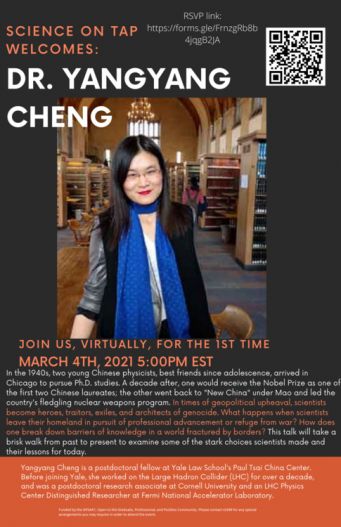
March 4, 2021
5:00 pm
Please join us March 4, 2021 at 5 pm EST for the first virtual Science on Tap! This month, we welcome Dr. Yangyang Cheng and her talk, "When Scientists Cross Water," about the ethics and governance of science, focusing on China and China-US relations.
RSVP at https://docs.google.com/forms/d/e/1FAIpQLSdYb_Cw8-bGQ_JLH3FkK58tlRFCa0M…
Additional Information
Program
Einaudi Center for International Studies
East Asia Program
Cornell Policy Review Speaker Series
March 3, 2021
12:00 pm
Speaker: Dr. Yangyang Cheng (Postdoctoral Fellow, Yale Law School's Paul Tsai China Center).
Topic: Pushing the Frontier: When Science Becomes Transnational.
Description:
Scientific collaboration has become one of the most contentious issues in U.S. - China relations. In a world fractured by nations, races, and governing systems, can science transcend political borders?
Particle physicist and postdoctoral fellow at Yale Law School, Dr. Yangyang Cheng, will discuss this urgent and complex subject.
Additional Information
Program
Einaudi Center for International Studies
East Asia Program
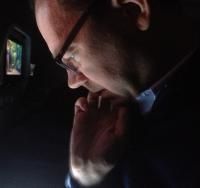
Rough Work: The Floating World, Chris Bush, Northwestern University
March 24, 2021
11:30 am
The Floating World: History, Haiku, Global Modernism
The East Asia Program invites you to join our guest, Chris Bush, (Ph.D. in Comparative Literature, UCLA) Associate Professor of French and Comparative Literary Studies in this Rough Work session.
This “rough work” session shares an account of the genesis and current state of my current book project, The Floating World, along with a narrative outline of the book as a whole and some suggested points of departure for our discussion.
The first half of the book analyzes the impact of Japanese modernization on theories of history and universal civilization in a variety of places around the world. Its three chapters cover triumphalist end-of-history discourses; hopes for anti-Western and anti-colonial solidarity; and yellow-peril apocalypticism. The second half of the book explores, in this context, the rapid spread of the haiku as a literary form in the early part of the twentieth century. Its three chapters focus on World War One-era French-language haiku as a form of anti-epic historical writing; the tensions between cosmopolitanism and nationalism in the Mexican haiku movement of the 1920s; and the place of Japan in Ezra Pound’s cosmopolitan fascism.
Participants will receive a link to access texts by Chris Bush for prereading upon registration.
Bio
Christopher Bush is Associate Professor of French at Northwestern University, where he codirects the Global Avant-garde and Modernist Studies graduate cluster and coedits Modernism/modernity and its Print Plus platform His first book, Ideographic Modernism: China, Writing, Media, was published by Oxford University Press in 2010 and he is currently completing The Floating World for Columbia University Press.
These sessions are small allowing for informal discussion and exploration as well as feedback.
ROUGH WORK: Discussing research in progress, hence the term, rough work.
Additional Information
Program
Einaudi Center for International Studies
East Asia Program
Rough Work: Why is English the Lingua Franca in Chinese Academia?
March 22, 2021
11:30 am
Rough Work session with Xuewen Yan, Ph.D. student, sociology
The popularity and prestige of the English language in Chinese academia: A missing link in the hegemony of English as lingua franca?
Xuewen Yan writes: With the rise of English as the global language, scholars across the social sciences have long queried the hegemonic power of the English language in the academic world. Most often, sociologists and critical linguists have examined the active dominance or relative privileges of native speakers of English, vis-à-vis the subordination and disadvantage of those from non-English speaking countries. In this study, I theorize a potentially different mechanism in the maintenance of the hegemony of English: actors in non-English speaking countries attach prestige and value to the use of English within their own country, whereby the dominance of English over their native language is perpetuated. I plan to test my theory with the empirical example of China's sociological academia. Currently working on data from a flagship Chinese-language sociology journal, shehuixue yanjiu, I expect to find higher valence associated with English as opposed to Chinese-related indicators. At the level of individual papers, my preliminary analysis shows that publications with more English-language references receive more citations themselves, an effect that one does not observe for Chinese-language references. At the author level, I hypothesize that having professional connections to English will be a strong predictor of higher influence within China's sociology community.
ROUGH WORK: Discussing research in progress, hence the term, rough work. This rough work session is hosted by the East Asia Program's Graduate Student Steering Committee (GSSC).
Additional Information
Program
Einaudi Center for International Studies
East Asia Program
From Upstate New York to Foggy Bottom: Lessons from a Career in the U.S. Foreign Service, by Laura Stone

March 10, 2021
4:30 pm
Laura Stone '90 is Deputy Assistant Secretary for South Asia, overseeing U.S. policy towards and relations with India, Nepal, Sri Lanka, Bangladesh, Maldives, and Bhutan. She will discuss her wide-ranging career in the U.S. Foreign Service, as well as her perspective on diplomatic statecraft in the 21st century.
Previously, Ms. Stone served as Director of the India, Nepal, Sri Lanka, Bangladesh, Maldives, and Bhutan Affairs Office, Special Advisor to the Undersecretary of State for Economic Growth, and was Acting Deputy Assistant Secretary for China and Mongolia from 2017 to 2019. She has worked as the Director of the Office of Chinese and Mongolian Affairs; Director of the Economic Policy Office in the Bureau of East Asia and Pacific Affairs; and Economic Counselor in Hanoi, Vietnam. She served three tours in Beijing as well as tours in Bangkok, Tokyo, the Public Affairs Bureau, the Pentagon Office of the Secretary of Defense, and the Bureau of Intelligence and Research. Ms. Stone joined the Department of State in 1991 and is a career member of the Senior Foreign Service with the rank of Minister Counselor.
Ms. Stone has an M.Phil. in International Relations from Oxford University, and a B.A. from Cornell University.
This event is co-sponsored by the South Asia Center at Syracuse University.
Additional Information
Program
Einaudi Center for International Studies
South Asia Program
East Asia Program
Southeast Asia Program
"'We Were Always Buddhist:' Dalit Historiography and the Temporality of Caste." A talk by Lucinda E.G. Ramberg
March 16, 2021
4:00 pm
Please join us for an invited talk by Prof. Lucinda Ramberg, generously co-sponsored by the Departments of Asian Studies, History and Philosophy; the South Asia, Southeast Asia, East Asia and Religious Studies Programs; and the Graduate and Professional Student Assembly. The event is open to all interested, and special accommodations can be made for access upon request.
In 1956 anti-caste philosopher and statesman Dr. B.R. Ambedkar called upon his followers to convert to Buddhism as the equalitarian religion of the original inhabitants of the subcontinent. Drawing on ethnographic research, Prof. Ramberg reflects on the relationship present day Ambedkarites have to the history of ancient Buddhism. She elaborates the implications of statements by Ambedkarite Buddhists such as “we are remembering who we are” and reclaiming “our forbidden history” for the temporality of caste in relation to the politics of archaeology, gender, and history.
Lucinda Ramberg is Associate Professor of Anthropology and Feminist, Gender, & Sexuality Studies at Cornell University. Her research projects in South India have roots in longstanding engagements with the politics of sexuality, gender and religion. Her first book, Given to the Goddess: South Indian Devadasis and the Sexuality of Religion (Duke University Press 2014) explores the possibilities of vernacular religion as gendered world making and caste critique. Her current book project turns to the revival of Buddhism in South India and questions of religious conversion in relation to projects of caste radicalism, social transformation, and sexual politics. She is a 2020 Research Fellow, The ACLS/ Robert H.N. Ho Family Foundation in Buddhist Studies.
Due to COVID-era regulations, all attendees are required to register for this event here: http://cglink.me/2ee/r992603
Upon registration you should receive an automated email with the Zoom link. If for any reason you do not receive this email, please contact Bruno at bms297@cornell.edu.
Additional Information
Program
East Asia Program
Southeast Asia Program
South Asia Program
How Humans Reshape the World
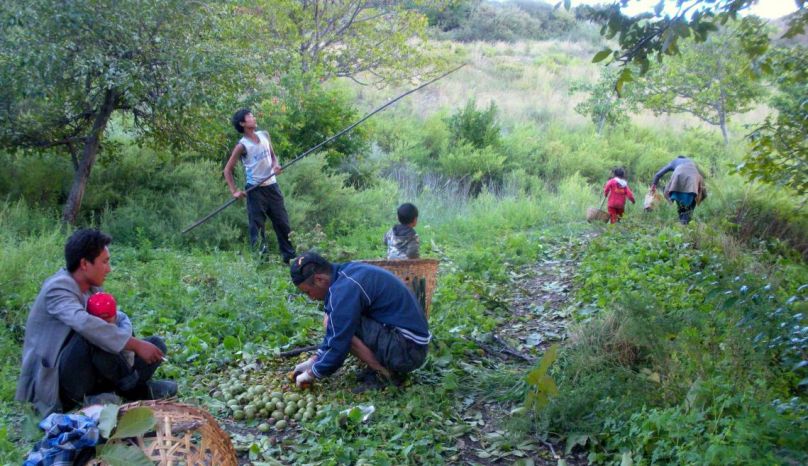
EAP's Jack Zinda Works with Communities
Environmental sociologist examines how human decisions influence environmental outcomes in communities—from China to New York State.
Additional Information
"The Dukkha of Racism: Racial Justice Work in American Convert Buddhism." A talk by Ann Gleig (University of Central Florida)

March 5, 2021
4:00 pm
Please join us for an invited talk by Prof. Ann Gleig, generously co-sponsored by the Departments of Asian Studies, History and Philosophy; the South Asia, Southeast Asia, East Asia and Religious Studies Programs; the Society for the Humanities; and the Graduate and Professional Student Assembly. The event is open to all interested, and special accommodations can be made for access upon request.
In May 2015, 125 Buddhists gathered for the first “White House-U.S. Buddhist Leadership Conference,” during which they delivered a letter titled “Buddhist Statement on Racial Justice.” Inspired by “the courage and leadership of the people of Ferguson,” the letter is part of efforts to challenge racism in American Buddhist convert communities spanning over two decades. For much of this time, such efforts have been marginalized. Due to the combination of a network of Buddhist Teachers of Color and the impact of the Black Lives Matter movement, however, such work is being increasingly centered. This paper will highlight the pragmatic and doctrinal strategies employed to integrate racial justice into American convert Buddhism and reflect on the significance of such work for Buddhist modernism in the United States.
Ann Gleig is associate professor of religious studies at the University of Central Florida. She is co-editor of Homegrown Gurus: From Hinduism in America to American Hinduism and has published widely on contemporary Buddhism. She is the author of “American Dharma: Buddhism Beyond Modernity,” from Yale University Press, which has been called "a book that will permanently change the way that we teach and research American Buddhism and Buddhism in the West" (McNicholl 2020). Prof. Gleig received her doctorate in religious studies from Rice University, her master’s in religious studies from Lancaster University, and her bachelor’s in theology and religious studies from Bristol University.
Due to COVID-era regulations, all attendees are required to register for this event here: http://cglink.me/2ee/r987809
Upon registration you should receive an automated email with the Zoom link. If for any reason you do not receive this email, please contact Bruno at bms297@cornell.edu.
Additional Information
Program
East Asia Program
Southeast Asia Program
South Asia Program