
East Asia Program
Distrust of China Jumps to New Highs in Democratic Nations
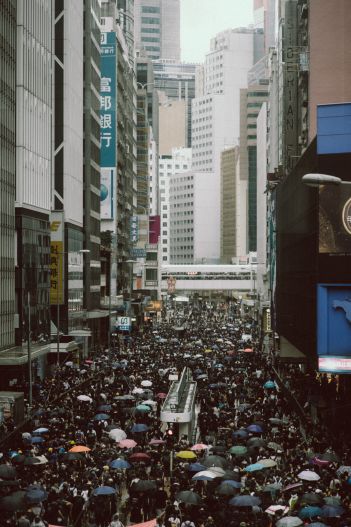
Jessica Chen Weiss, EAP
“I think this sentiment is likely to persist because of longer-term trends in China toward growing repression,” says Jessica Chen Weiss.
Additional Information
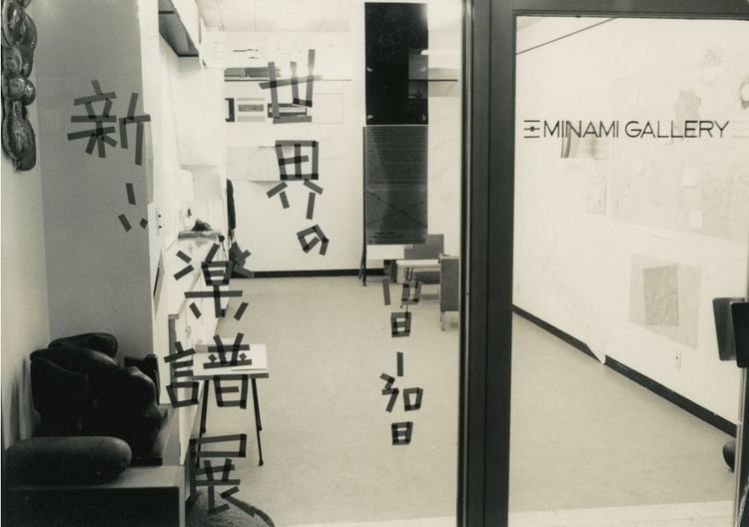
World Graphic Scores: Between the Notes of a Transpacific Avant-Garde
December 8, 2020
4:30 pm
Speaker: Miki Kaneda, Music, Musicology, Boston University
What can graphic musical scores tell us about sounds yet to be heard, as well as the stories that may be told about their creators and their worlds? This talk examines two exhibitions of graphic scores, both held in Tokyo in 1962. Miki Kaneda offers a historical perspective on the role of graphic scores in locating Japan as a meeting place for a transnational avant-garde.
Faculty host: Andrew Campana, Asian Studies
Additional Information
Program
Einaudi Center for International Studies
East Asia Program
Reading Adultery in the Criminal Records of Late Chosŏn Korea
December 4, 2020
3:30 pm
Reading Adultery in the Criminal Records of Late Chosŏn Korea
Jisoo Kim, George Washington University
This presentation introduces the records of criminal cases in the Simnirok (Records of Royal Reviews), a collection compiled during the reign of Chŏngjo (r. 1776-1800). This collection includes 1,112 judicial precedents related to homicide, economic crimes such as counterfeit and theft, and social crimes such as arson and gravesite dispute. The majority of 1,004 crimes are related to homicide (964 cases) and suicide (40 cases). This presentation will first explain the source and translate the few selected homicide cases related to adultery. While translating the cases, it will also discuss sex crime in the context of eighteenth-century Korea.
CCCC is a reading group for students and scholars with an interest in premodern Sinographic text.
All are welcome, at any level of experience with classical Chinese. Please email us to register and receive the log-in credentials.
At each session, one participant presents a text in classical Chinese. Attendees discuss historical, literary, linguistic, and other aspects of the text, and work together to resolve difficulties in comprehension and translation.
Presentations include works of all sorts, from the earliest times to the twentieth century.
No preparation required: all texts will be distributed at the meeting.
Additional Information
Program
Einaudi Center for International Studies
East Asia Program
ROUGH WORK In Search for a Cure: Trust and Social Inequality in Contemporary China
November 18, 2020
12:00 pm
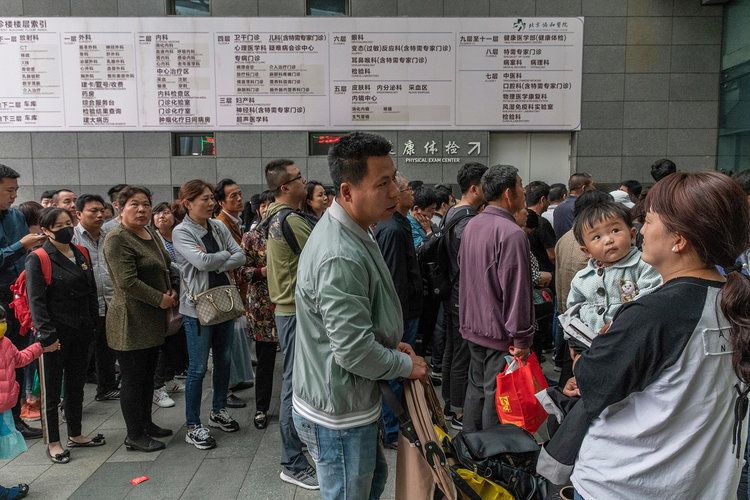
In Search for a Cure: Trust and Social Inequality in Contemporary China
Presenter: Xisai Song, Ph.D. candidate, Anthropology
This paper unpacks how social inequality shapes patients’ trust in medicine in contemporary China. In particular, I examine how rural low-income patients struggle with chronic kidney disease (CKD).
ROUGH WORK: Discussing research in progress, hence the term, rough work. This rough work session is hosted by the East Asia Program's Graduate Student Steering Committee (GSSC).
Additional Information
Program
Einaudi Center for International Studies
East Asia Program
Cornell Classical Chinese Colloquium with Lan Li
November 13, 2020
3:30 pm
"Bones, Brains, and Meridians: Animated Anatomy and Image-Text Analysis"is the title of this Classical Chinese text-reading with Lan Li of Rice University.
"Bones, Brains, and Meridians: Animated Anatomy and Image-Text Analysis"
This discussion interrogates the representation of the brain in a 1956 reproduction of the early modern print Zang Fu Mingtang Tu 臟腑明堂圖. Despite its vague genealogy, this 20th century version of Zang Fu Mingtang Tu 臟腑明堂圖 was often associated with either a set of meridian maps from the early fourteenth century, or with an even earlier set of Inner Canon (neijing 內經) or Inner Vision (neijing 內景) treatises. What is curious about this image are the inscriptions in the head, which read: “The ocean of Yin bone marrow penetrates all the way down” 髄海至隂之在通尾骶. This suggests that inside the head/brain through the spine/back was bone marrow, not the brain--that inside the skull was not a wet, chunky lump of grey matter, but suihai 髓海 or “bone marrow sea,” which was one of the “four seas” listed in the Yellow Emperor’s Inner Cannon. By bringing together approaches in the history of medicine, art history, and science studies, this discussion opens a visual and philological study to understand the ontological implications of the brain in 臟腑明堂圖. What kinds of things were solid? What kinds of things were fluid? Was the distinction between solid and fluid a matter of scale? A matter of relative movements? How does this elaborate on the history of anatomy in classical Chinese texts?
All are welcome, with any level of experience with classical Chinese.
At each session, a participant presents a classical Chinese text. Attendees discuss historical, literary, linguistic, and other aspects of the text, working together to resolve difficulties in comprehension and translation.
No preparation is required, all texts will be distributed at the meeting.
Additional Information
Program
Einaudi Center for International Studies
East Asia Program
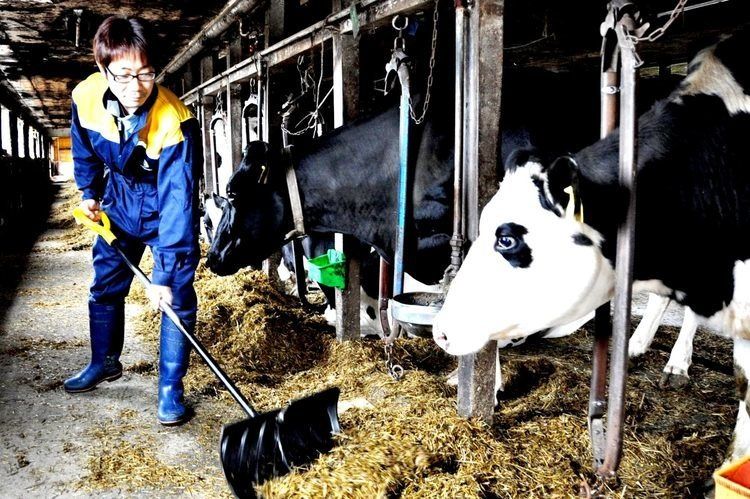
ROUGH WORK: Sown in Grasses and Grains: Remaking Hokkaido for Livestock
November 4, 2020
12:00 pm
Presenter: Tinakrit Sireerat, Ph.D. candidate, Asian Studies, Cornell
This paper is a reassessment of the claim that the natural environment of Hokkaido is ideal for livestock production.
ROUGH WORK: Discussing research in progress, hence the term, rough work. This rough work session is hosted by the East Asia Program's Graduate Student Steering Committee (GSSC).
Additional Information
Program
Einaudi Center for International Studies
East Asia Program
Fueling US-China Clash, Years of Disconnects

“Nationalism is really at the root of the rhetorical spiral which is driving the tit for tat in policies that are accelerating the confrontation,” says Professor Jessica Chen Weiss of the East Asia Program. “Both governments have calculated it is politically advantageous to sound and act tough, which makes it difficult to walk back.”
Additional Information
Outright Bans can Sometimes Be a Good Way to Fight Climate Change

Shanjun Li is noted to have been among those who “estimate that a 10% rise in the availability of charging stations boosts sales of electric vehicles by 8%, and a 10% increase in the number of electric cars on the roads raises the construction of new charging points by 6%.”
Additional Information
Laidlaw Leadership and Research Program
Details
The Laidlaw Undergraduate Leadership and Research Program promotes ethical leadership and international research around the world—starting with the passionate leaders and learners found on campuses like Cornell.
With generous support for your leadership development, a summer abroad putting your skills into action, and research, this two-year cohort program for emerging leaders lays out a path for you to invest your skills, knowledge, and experience to make global change. Learn more about the program and its global reach on the Laidlaw Foundation website.
The Program
Research
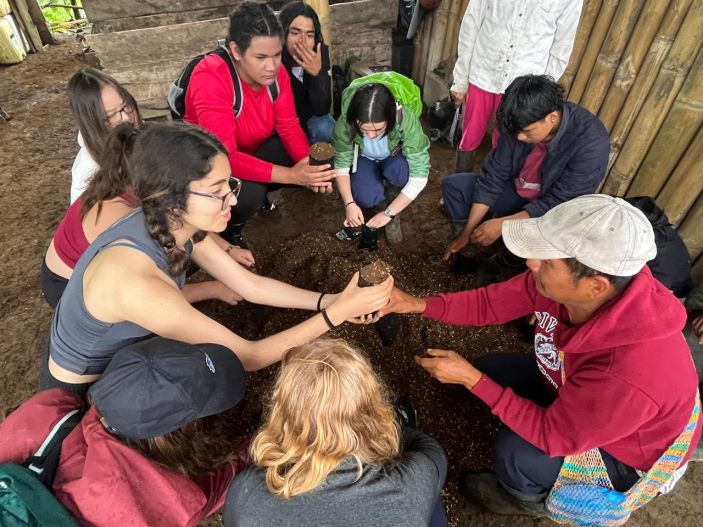
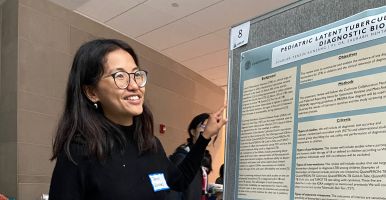
Work on an internationally focused research project with the support of a faculty mentor and/or an experienced research team during your first summer. We'll help you find a project and a faculty mentor or you may propose your own!

Leadership Training
Learn about your unique leadership strengths, further develop your skills through critical reflection, and explore how good character influences leadership.
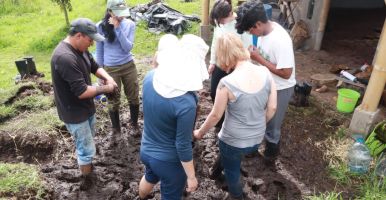
Leadership-in-Action
Work internationally on a hands-on, community-based project. You can develop your own leadership-in-action project, or we'll help you identify an international organization to work with. You'll learn from real-world leaders enacting change in their communities.
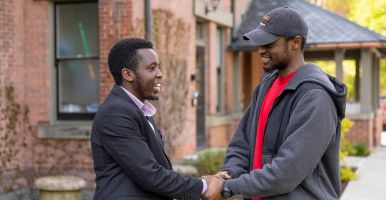
Networking
Meet like-minded scholars who are passionate about Laidlaw's shared values—ethical leadership, global perspective, and research with a real-world impact. The international network of Laidlaw scholars extends beyond Cornell.
Award
Summer 1: Up to $3,900 stipend while you conduct full-time research in Ithaca.
Summer 2: Up to $3,900 stipend for living expenses during your leadership-in-action experience, plus up to $1,950 stipend for international travel expenses.
Eligibility
First- and second-year students from any college or major may apply. You should have a strong academic background and must be able to commit to full participation in the program. U.S. citizenship is not required.
In order to be eligible for program funding, scholars must commit to all components of the program. Expectations are outlined below. If you have any questions about what full commitment to the program entails, please contact us at laidlaw.scholars@cornell.edu
Scholar Stories
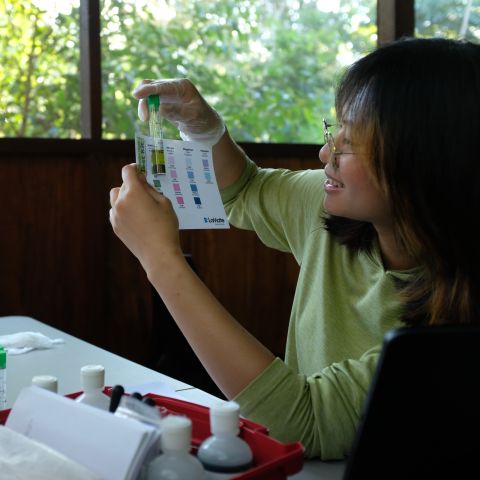
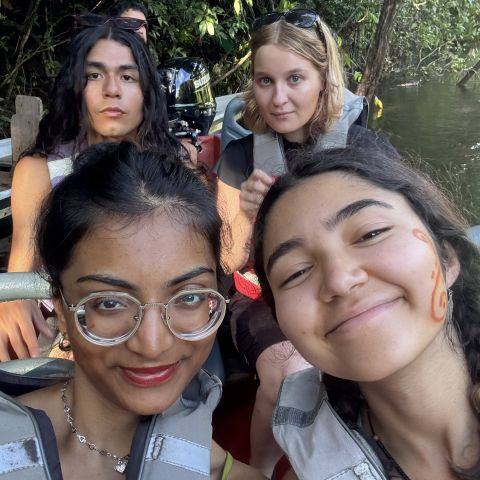
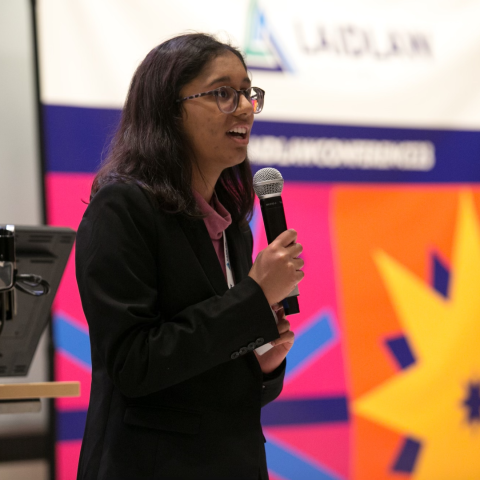
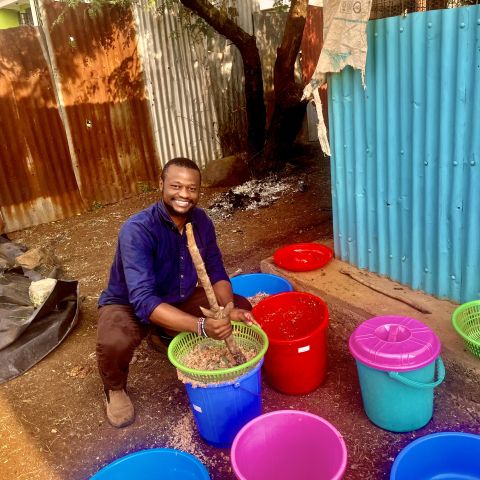
Meet Our Current Laidlaw Scholars
How to Apply
Apply by January 6, 2027 using the link below. Students who are selected to become Laidlaw scholars are notified by March 1.
Documents to Submit with Your Application
- Statement of Interest (2 page maximum, upload as PDF)
- Research Application (apply to 3 faculty-proposed projects or submit an independent proposal)
- Resume/CV (2 page maximum, upload as PDF)
- At least one reference who can submit a letter of recommendation
Important Dates
- October: Applications open
- January: Applications due
- February: Applicant interviews
- March: Decisions announced
As a part of the next cohort of Laidlaw scholars, you'll be active in the program from March 2027 to March 2029.
Questions? Join us for an upcoming information session or contact our Laidlaw coordinator.
Additional Information
Funding Type
- Scholarship
Role
- Student
Program
Exclusive: China Sharply Expands Mass Labor Program in Tibet
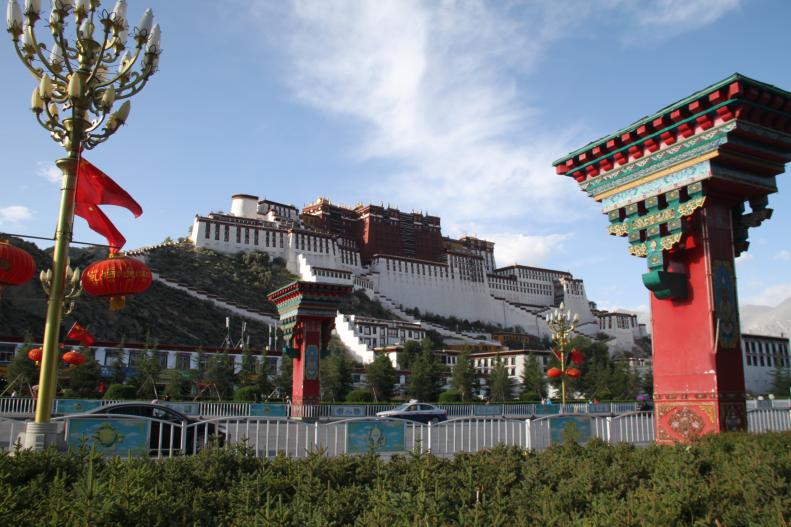
“In Tibet, he was doing a slightly lower level, under the radar, version of what was implemented in Xinjiang,” says Allen Carlson, associate professor of government, about Chen Quanguo, Tibet Communist Party Secretary.