
Einaudi Center for International Studies
‘Czar’ or Not, Kamala Harris Bungled Immigration

Stephen Yale-Loehr, Migrations
Law professor Stephen Yale-Loehr still commends Harris's diplomatic successes, “it's difficult to figure out what can be accomplished in a short period of time. I think she started the groundwork."
Additional Information
The "Knowledge Curse"

New Research from Kaushik Basu (CRADLE)
Can an increase in knowledge ever be bad? A Royal Society Open Science paper from Kaushik Basu (CRADLE) theorizes that it can be—when people use it to act in their own self-interest.
Additional Information
Cornell Classical Chinese Colloquium: Yi-Li Wu
November 2, 2024
10:00 am
Rockefeller, 374 Asian Studies Lounge
Yi-Li Wu, Women's and Gender Studies and History, University of Michigan, will lead this month's Classical Chinese text-reading.
The group meets monthly during the semester to explore a variety of classical Chinese texts and styles. Other premodern texts linked to classical Chinese in Japanese, Korean, and Vietnamese have been explored. Presentations include works from the earliest times to the 20th century. Workshop sessions are led by local, national, and international scholars. Participants with any level of classical Chinese experience are welcome to attend.
At each session, a presenter guides the group in a reading of a classical Chinese text. Attendees discuss historical, literary, linguistic, and other aspects of the text, working together to resolve difficulties in comprehension and translation.
No preparation is required; all texts will be distributed at the meeting.A light lunch will be served after.
Additional Information
Program
Einaudi Center for International Studies
East Asia Program
Cornell Classical Chinese Colloquium: Xiangjun Feng
November 15, 2024
3:30 pm
Rockefeller, 374 Asian Studies Lounge
Xiangjun Feng, University of Toronto will bring us to the close of this semester's Classical Chinese text-reading series.
Classical Chinese in Mexico, in 1923, on Mesmerism: Two Examples
Feng writes:
In what contexts do we usually encounter Classical Chinese? In the “Sinosphere,” in the premodern times, and on non-Western topics. These, however, do not make the full picture. The two texts we will read together were written by Chinese immigrants in Mexico in the modern days, and they talked about a topic that was explicitly from the Western tradition: mesmerism. We will together feel how Classical Chinese might (or might not) become different because of this unique context. We will also get a quick glance at the transnational history of mesmerism in the early twentieth century.
The group meets monthly during the semester to explore a variety of classical Chinese texts and styles. Other premodern texts linked to classical Chinese in Japanese, Korean, and Vietnamese have been explored. Presentations include works from the earliest times to the 20th century. Workshop sessions are led by local, national, and international scholars. Participants with any level of classical Chinese experience are welcome to attend.
At each session, a presenter guides the group in a reading of a classical Chinese text. Attendees discuss historical, literary, linguistic, and other aspects of the text, working together to resolve difficulties in comprehension and translation.
No preparation is required; all texts will be distributed at the meeting.A light dinner will be served.
Additional Information
Program
Einaudi Center for International Studies
East Asia Program
Cornell Classical Chinese Colloquium: Chen Kaijun
October 25, 2024
3:30 pm
Rockefeller, 374 Asian Studies Lounge
Chen Kaijun, East Asian Studies, Brown University will lead this month's Classical Chinese text-reading.
The group meets monthly during the semester to explore a variety of classical Chinese texts and styles. Other premodern texts linked to classical Chinese in Japanese, Korean, and Vietnamese have been explored. Presentations include works from the earliest times to the 20th century. Workshop sessions are led by local, national, and international scholars. Participants with any level of classical Chinese experience are welcome to attend.
At each session, a presenter guides the group in a reading of a classical Chinese text. Attendees discuss historical, literary, linguistic, and other aspects of the text, working together to resolve difficulties in comprehension and translation.
No preparation is required; all texts will be distributed at the meeting.A light dinner will be served.
Additional Information
Program
Einaudi Center for International Studies
East Asia Program
Cornell Classical Chinese Colloquium: Patricia Buckley Ebrey
September 27, 2024
3:30 pm
Rockefeller, 374 Asian Studies Lounge
Our special guest speaker, Patricia Buckley Ebrey, History, University of Washington will kick off the first Classical Chinese text-reading for this semester.
The group meets monthly during the semester to explore a variety of classical Chinese texts and styles. Other premodern texts linked to classical Chinese in Japanese, Korean, and Vietnamese have been explored. Presentations include works from the earliest times to the 20th century. Workshop sessions are led by local, national, and international scholars. Participants with any level of classical Chinese experience are welcome to attend.
At each session, a presenter guides the group in a reading of a classical Chinese text. Attendees discuss historical, literary, linguistic, and other aspects of the text, working together to resolve difficulties in comprehension and translation.
No preparation is required; all texts will be distributed at the meeting.A light dinner will be served.
Additional Information
Program
Einaudi Center for International Studies
East Asia Program
Thinking about the Russia-Ukraine War
September 19, 2024
12:00 pm
Uris Hall, G08
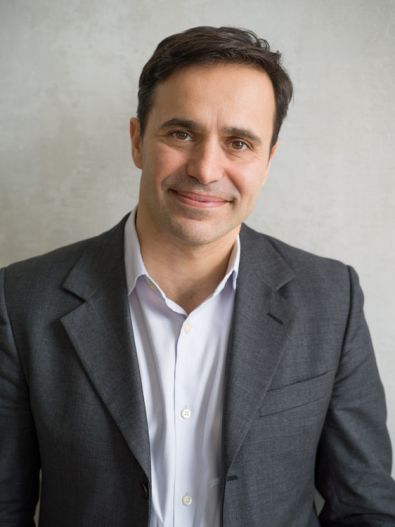
This talk will describe the articles Gessen has written since the start of the war and try to summarize some of what he's learned. The articles cover the effects of the war in Western Ukraine; the political science debates over "war termination"; the political science and historical debates over regime change; the fierce debates over whether negotiations with the Kremlin are possible; the arguments over military analysis and its failures or successes in thinking about this war; and debates about public opinion in Russia during the war. Gessen will also describe his work on "Russia hands"--the people who study Russia for a living, inside or in proximity to the U.S. Government--and what their relative contributions are to U.S. policy. The hope is to generate discussion and further thinking on war and peace in Russia and Ukraine.
About the Speaker
Keith Gessen was born in Moscow, in the U.S.S.R., and grew up in Massachusetts. He has been writing about Russia for the last twenty-five years. He is a founding editor of the literary magazine n+1, the translator of Kirill Medvedev, and the author of the novel A Terrible Country. He now serves as George T. Delacorte Assistant Professor of Magazine Journalism at the Columbia Graduate School of Journalism and is a contributing writer at The New Yorker.
Host
Reppy Institute For Peace and Conflict Studies
Co-Sponsors
Department of Comparative Literature
Institute for European Studies
Additional Information
Program
Einaudi Center for International Studies
Reppy Institute for Peace and Conflict Studies
Institute for European Studies
Information Session: Global Internships

December 13, 2024
12:00 pm
Uris Hall, G08
Go global in summer 2025! Global Internships give you valuable international work experience in fields spanning global development, climate and sustainability, international relations, communication, business, governance, and more.
***
The Mario Einaudi Center for International Studies hosts info sessions for graduate and for undergraduate students to learn more about funding opportunities, international travel, research, and internships. View the full calendar of fall semester sessions.
Additional Information
Program
Einaudi Center for International Studies
Reppy Institute for Peace and Conflict Studies
East Asia Program
Southeast Asia Program
Latin American and Caribbean Studies
Institute for African Development
Institute for European Studies
South Asia Program
Migrations Program
Information Session: Global Internships
November 27, 2024
1:00 pm
Go global in summer 2025! Global Internships give you valuable international work experience in fields spanning global development, climate and sustainability, international relations, communication, business, governance, and more.
Register for this virtual session.
***
The Mario Einaudi Center for International Studies hosts info sessions for graduate and for undergraduate students to learn more about funding opportunities, international travel, research, and internships. View the full calendar of fall semester sessions.
Additional Information
Program
Einaudi Center for International Studies
Reppy Institute for Peace and Conflict Studies
East Asia Program
Southeast Asia Program
Latin American and Caribbean Studies
Institute for African Development
Institute for European Studies
South Asia Program
Migrations Program
Information Session: International Relations & Migration Studies Minors

October 30, 2024
4:30 pm
Uris Hall, G08
The Migration Studies Minor is a university-wide, interdisciplinary undergraduate minor that prepares students to understand the historical and contemporary contexts and factors that drive international migration and shape migrant experiences around the globe. This minor draws on the rich course offerings found across the humanities and social sciences at Cornell and is designed to draw students outside of their major fields and to extend their knowledge beyond a single country.
Is the Einaudi Center's International Relations minor for you? Here's a chance to find out. In the international relations minor, you study the politics, economics, history, languages, and cultures of the world and gain a fresh perspective on your major field of study. Graduates go on to successful careers in fields like international law, economics, agriculture, trade, finance, journalism, education, government service, and more.
Can’t attend? Contact migration-minor@einaudi.cornell.edu (Migrations) or irm@einaudi.cornell.edu (International Relations).
***
The Mario Einaudi Center for International Studies hosts info sessions for graduate and for undergraduate students to learn more about funding opportunities, international travel, research, and internships. View the full calendar of fall semester sessions.
Additional Information
Program
Einaudi Center for International Studies
Reppy Institute for Peace and Conflict Studies
East Asia Program
Southeast Asia Program
Latin American and Caribbean Studies
Institute for African Development
Institute for European Studies
South Asia Program
Migrations Program