
Einaudi Center for International Studies
Information Session: Undergraduate Global Scholars Program

September 4, 2024
5:00 pm
Uris Hall, G08
Undergraduate Global Scholars are student leaders in the campus community. This competitive fellowship program is open to students from all colleges and majors with a passion for big global questions and speaking across differences. The Global Scholars program provides a toolkit of resources for weighing challenging questions and builds your practical skills in public debates. For the 2024-2025 school year, Scholars will bring their skills as writers, scholars, activists and artists, poets, hands-on practitioners, and more to study and promote democracy building. By the end of the program, you'll be an active global citizen and champion for social impact.
Applications are due Friday, September 20.
Can’t attend? Contact programs@einaudi.cornell.edu.
***
The Mario Einaudi Center for International Studies hosts info sessions for graduate and for undergraduate students to learn more about funding opportunities, international travel, research, and internships. View the full calendar of fall semester sessions.
Additional Information
Program
Einaudi Center for International Studies
Reppy Institute for Peace and Conflict Studies
East Asia Program
Southeast Asia Program
Latin American and Caribbean Studies
Institute for African Development
Institute for European Studies
South Asia Program
Migrations Program
Food as You Know It Is About to Change

Chris Barrett, IAD/SEAP
Chris Barrett, professor of agricultural and development economics, and research by Ariel Ortiz-Bobea, associate professor in the Dyson School and Atkinson faculty fellow, are quoted.
Additional Information
Where Docs Beat AI: Showing Their Work

Gunisha Kaur, Migrations
Gunisha Kaur, director of the Human Rights Impact Lab at Weill Cornell Medicine, discusses the use of AI in a program that gives refugee women access to providers.
Additional Information
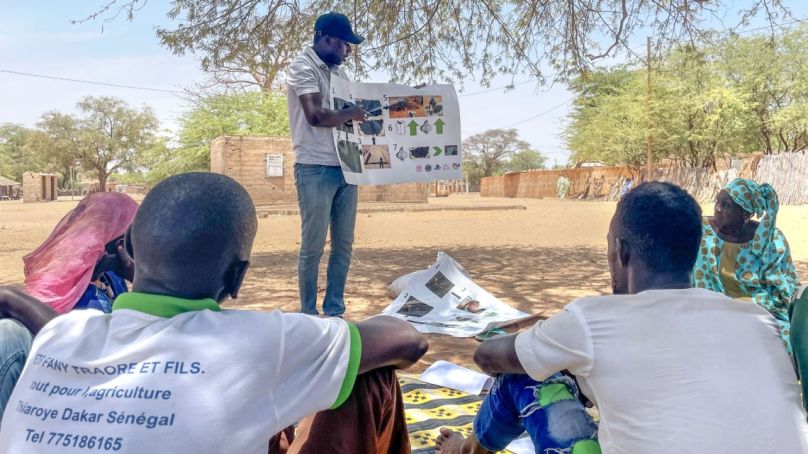
Ag Solution Can Boost Senegal’s Economy While Battling Parasite
Chris Barrett, IAD/SEAP
“We’ve demonstrated in small-scale, researcher-managed trials that we can reduce disease vectors, get people healthy and boost agricultural productivity,” said Chris Barrett, the Stephen B. and Janice G. Ashley Professor of Applied Economics and Management in the Cornell SC Johnson College of Business and professor in the Jeb E. Brooks School of Public Policy.
Additional Information
Narco Activities in Central America Threaten Bird Species

Amanda Rodewald, LACS
Amanda Rodewald (LACS) describes how cocaine trafficking threatens two-thirds of the most important bird habitats in Central America. Her team's research appeared in the journal Nature Sustainability in June.
Amanda Rodewald, professor of natural resources and the environment, details how activities associated with cocaine trafficking threaten two-thirds of the most important landscapes in Central America for 196 forest bird species.
Additional Information
China Cuts Interest Rates in Bid to Prop Up Lagging Economic Growth

Eswar Prasad, SAP
“This quantitatively modest but symbolically significant set of actions signals the government’s willingness, finally, to use macroeconomic stimulus to support faltering economic activity,” says Eswar Prasad, professor of economics.
Additional Information
Despite Musk’s Trump Endorsement, X Remains a Go-to Platform for Democrats

Sarah Kreps, PACS
Sarah Kreps, professor of government and tech policy, explains that although other platforms have emerged, X remains a place where people go to make fast and consequential impact.
Additional Information
Jessica Cullen

Office Manager
Jessica Cullen is the office manager of the Einaudi Center and supports front office services and operations.
Additional Information
The Assurance Dilemma in International Coercion
September 26, 2024
12:00 pm
Uris Hall, G08
Why do some coercive demands succeed while others fail?
A dominant paradigm in the study of international relations explains coercive outcomes by pointing to the credibility and severity of threats. This lecture advances another paradigm called the Assurance Dilemma. Even highly credible and severe threats can fail when assurance is not credible. Coercers must assure their target that their threats are conditional on the target’s behavior. Yet, the actions that coercers take to bolster the credibility of their threats can undermine the credibility of their assurances not to punish the target. Cases of coercive bargaining over the nuclear programs of South Africa, Iraq, Libya, and Iran demonstrate the logic and effectiveness of strategies of assurance.
About the Speaker
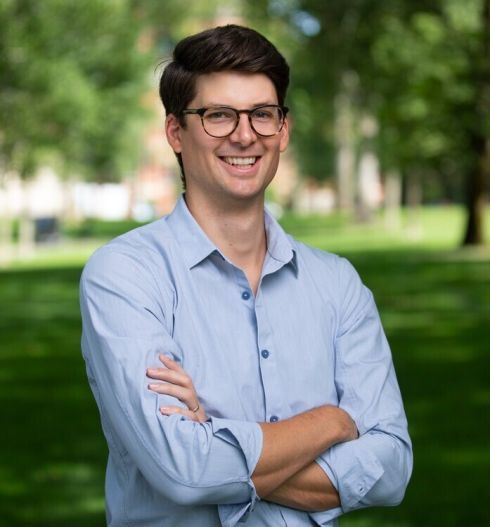
Reid Pauly is an Assistant Professor of Political Science at Brown University and the Dean’s Assistant Professor of Nuclear Security and Policy at the Watson Institute for International and Public Affairs. He studies nuclear proliferation and nuclear strategy, coercion, and secrecy in international politics. His scholarship has been published in International Security, International Studies Quarterly, the European Journal of International Relations, and Foreign Affairs. Pauly earned his Ph.D. from MIT and has held fellowships at the Belfer Center (Harvard Kennedy School) and the Center for International Security and Cooperation (Stanford University). He is also a fellow with the Schmidt Futures International Strategy Forum.
Host
Reppy Institute for Peace and Conflicts Studies
Additional Information
Program
Einaudi Center for International Studies
Reppy Institute for Peace and Conflict Studies
Indebted Life, Gothic Mothers: A New Puerto Rican Genealogy in the Short Stories of Yolanda Arroyo Pizarro

November 19, 2024
12:20 pm
Uris Hall, G08
Co-sponsored by Romance Studies
The archipelago of Puerto Rico is a colony in debt. Debt, according to Lucí Cavallero and Verónica Gago, goes hand in hand with the disciplining of bodies, especially female, queer, and dissident bodies. Therefore, colony and debt possess certain characteristics—confinement, violence and subjugation—that coincide with the definition of the Gothic mode in that both involve control, stalking and murder, like in horror and terror fiction. With this in mind, I propose a Gothic interpretation of three short stories by Afro Puerto Rican writer Yolanda Arroyo Pizarro, published between 2007 and 2015, in times of debt and austerity. They are stories about Black, Indigenous and/or poor women who are under attack, forced to serve as labor, spoils of war and scapegoats of all social ills. Furthermore, they are Gothic stories firstly because they are tales about violence against women–more specifically, mothers–and secondly because the protagonists themselves perpetrate violence against others, including infanticide and kidnapping. My analysis suggests that this series of Gothic tales establishes a new genealogy that dismantles the official discourse on Puerto Rican identity, which is rooted in the idea of the White, Hispanic, heteronormative family. This Gothic genealogy helps us elucidate the true colonial debt: the invisibilization of the bodies and the silencing of the voices of the most vulnerable throughout the history of the archipelago from its colonization in 1493 to the present day marked by debt and crisis.
Sandra M. Casanova-Vizcaíno is Associate Professor of Spanish at Binghamton University-State University of New York, where she teaches Latin American and Caribbean literature, film, and culture. Her research interests include contemporary Gothic and horror fiction, and representations of violence in Latin American and Caribbean literature and film. Her first book, El gótico transmigrado: narrativa puertorriqueña de horror, terror y misterio en el siglo XXI (Corregidor 2021), studies monstrosity, violence, and dystopia in 21st-century Puerto Rican fiction. She co-edited the volumes Latin American Gothic in Literature and Culture (Routledge 2018), and Aquelarre de cuentos: antología de terror insólito escrito por mujeres (Huso 2021), and she is the author of multiple articles and book chapters on contemporary Puerto Rican narrative.
Additional Information
Program
Einaudi Center for International Studies
Latin American and Caribbean Studies