
Einaudi Center for International Studies
Cornell Sun: Reflection on Freedom of Expression
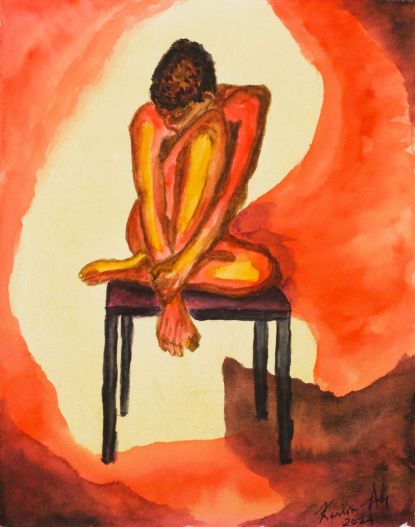
Karim-Aly Kassam, Global Public Voices
Kassam's guest column reflects on the Cornell student protests that ended on May 13. He writes, "The peaceful protests at Cornell University have been about speaking truth to power with grace and humility."
Additional Information
North America’s Biggest City Is Running Out of Water

Victoria Beard, SEAP/GPV
“There is an element of climate change that’s contributing to these conditions that we find ourselves in, but there’s also a very strong human-built environment element — a governance element, a politics element, and a mismanagement element of both the natural and the human environment,” says Victoria Beard, professor of city and regional planning.
Additional Information
Americans Are Critical of Today's Immigrants

María Cristina García, LACS
María Cristina García, professor of history, notes that Americans had the same complaints about immigrants 50 years ago.
Additional Information
Global Scholars Amplify Free Expression
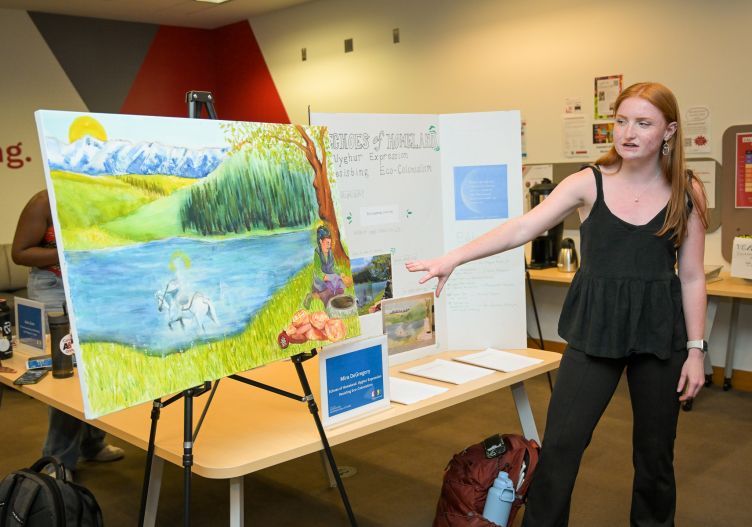
Ten Undergrads Write, Paint, and Research for Final Projects
Our first-ever Undergraduate Global Scholars are writers, artists, and researchers with a common goal – to speak up for global free speech.
Additional Information
Book Celebrates Cornell's Global Past and Future

Beyond Borders: Exploring the History of Cornell's Global Dimensions features chapters on the Einaudi Center and several regional and thematic programs.
Additional Information
Seed Grants Grow International Collaborations
Announcing 2024 Faculty Seed Awards
Read about results from last year's awards and new awards supporting internationally engaged faculty from six colleges and schools.
Additional Information
The "Socialization of Investment" (Law and Economics Papers)
Robert Hockett in World in Focus
Robert Hockett recently published a paper, The "Socialization of Investment," in CRADLE's new open-access Law and Economics Papers series.
"This has been all about reclaiming public capital for ... investment that grows the Republic’s wealth. And the Republic’s wealth is just the Citizens’ wealth—our 'Commonwealth.' This is, of course, what we owe and are owed by one another. It’s literally what we owe to ourselves."
The paper aims to demystify economist John Maynard Keynes' General Theory by interpreting some "intriguing asides" he introduced when writing about investment and capital. Hockett analyzes "three provocative phrases seemingly alluding to a common contemporary prospect": public investment financed by public finance-capital.
In Hockett's view, these "throwaway lines" offer clues toward constructing "both a plausible model and a powerful brief that Keynes might have composed—and would surely have approved—for reforming contemporary finance in certain materially productive, hence socially salutary ways."
The paper ultimately outlines a Capital Commons model that suggests a pathway to socialize investment while being attentive to private sector and public sector advantages.
Hockett's paper is one of four working papers launching CRADLE's new open-access series. Read the Law and Economics Papers and find out how to submit your paper for consideration.
Robert Hockett is cofounder of Cornell Research Academy of Development, Law, and Economics (CRADLE), an interdisciplinary research initiative based at Einaudi.
Featured in World in Focus Briefs
Additional Information
Topic
- Development, Law, and Economics
- World in Focus
Cornell Helps Displaced Scholars Rebuild Careers
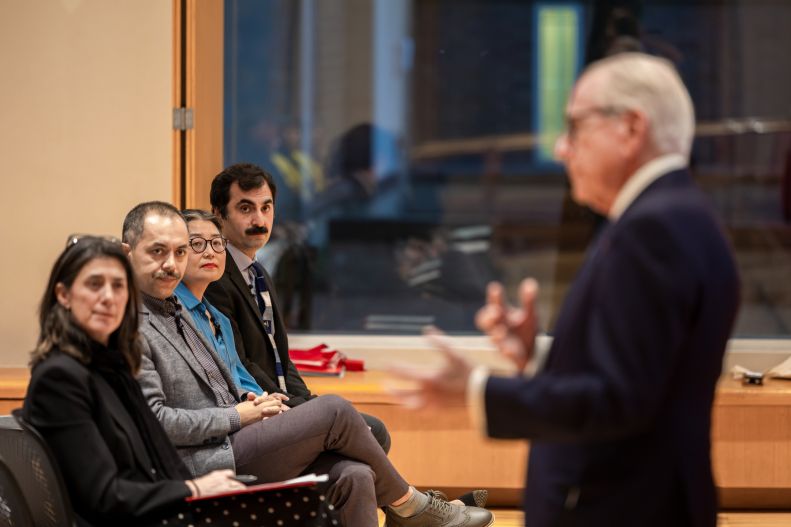
Series Honors Einaudi's Past Visiting Scholars
Read about Turkish sociologist Azat Gündoğan (IES), Nicaraguan cartoonist Pedro X. Molina (LACS), and Afghan artist Elja Sharifi (Johnson Museum).
Additional Information
International Studies Summer Institute: Plant and Animal Migration

July 9, 2024
9:00 am
Stocking Hall
Join the Cornell University Mario Einaudi Center for International Studies and the South Asia Center at Syracuse University for the 2024 International Studies Summer Institute (ISSI)! This year, we will explore plant and animal migration around the world and at home. ISSI is a professional development workshop for practicing and pre-service K–12 educators.
Participants will explore the patterns and causes of plant and animal migration in a global context, as well as how they affect and are affected by human society. Scholars from Cornell University and Syracuse University will share their research and expertise from across different regions of the world, including Africa, East Asia, Europe, Latin America and the Caribbean, South Asia, and Southeast Asia.
Object-based learning will be a specific focus. Sessions will include an introduction to the Einaudi Center’s culture kits and how they can support hands-on learning about plant and animal migration in different countries. Culture kits are a collection of cultural artifacts from around the world, tailored for use in K-12 classrooms. We will also feature an overview of Latin American and East Asian artwork on these topics at the Johnson Museum of Art and an introduction to the Cornell Lab of Ornithology’s eBird kits.
Who Can Participate
We welcome practicing and pre-service K–12 educators of all subjects and grade levels who work in New York State. While this year's institute will have more of a scientific focus than in past years, we believe this year’s theme will benefit educators of all subject areas, especially in developing cross-disciplinary, project-based activities with a global focus.
Benefits
As a participant, you will...
gain tools and knowledge to apply in your classroom around issues of plant and animal migration internationally and in our backyards.
connect issues affecting yourself and your students here in the U.S. with other parts of the world.
“recharge” intellectual batteries and deepen your own understanding and appreciation for plant and animal migration.
have the option to complete a lesson plan for additional CTLE hours that incorporates content from the workshop, with the support of our outreach staff.
receive a free eBird kit from the Lab of Ornithology, targeted for the grade band of choice ($70-$110 value).
Schedule
9:00-9:15, Introductory remarks with Sarah Plotkin, Mario Einaudi Center for International Studies
9:15-10:05, Seeds of Survival and Celebration: Plants and the Black Experience, with Sarah Fiorello, Jakara Zellner, and Lauren Salzman, Cornell Botanic Gardens
10:10-11:05, Breakout sessions:
Art and Climate Struggle: Visual Interpretations of Plant and Animal Migration, with Carol Inge Hockett and Carina D’Urso, Johnson Museum of Art
eBird and Migration: Empowering Students with Participatory Science and Birds, with Kelly Schaeffer, Cornell Lab of Ornithology
11:10-12:00, Breakout sessions repeated
12:00-12:30, Networking and reflection exercise with Sarah Plotkin, Mario Einaudi Center for International Studies
12:30-1:30, Lunch (Thai food from Tamarind!)
1:30-2:15, Plant and Animal Migration Shaping European Societies and Diets, Dr. Daniel Mason D’Croz, Department of Global Development
2:20-3:05, How Global Fisheries Connect Us All – Environmental Change Impacts on Health and Well-being, Dr. Kathryn Fiorella, Department of Public and Ecosystem Health
3:15-4:00, Linking the Power of Bioacoustics to Locally Led Research Initiative: Monitoring Migratory Birds at a Regional Scale, Ashakur Rahaman, Cornell Lab of Ornithology
4:00-4:20, Introduction to Einaudi Culture Kits, Dr. Thamora Fishel, Mario Einaudi Center for International Studies
4:20-4:30, Closing Remarks, Dr. Daniel Bass, Mario Einaudi Center for International Studies
Questions? Contact outreach coordinator Sarah Plotkin.
Additional Information
Program
Einaudi Center for International Studies
East Asia Program
Southeast Asia Program
Latin American and Caribbean Studies
Institute for African Development
Institute for European Studies
South Asia Program
New: Law and Economics Papers

CRADLE Launches Paper Series
Read the first four papers and find out how to submit your paper to CRADLE's new open-access series.