
Einaudi Center for International Studies
Silicon Valley Money Drives AI's Growing Role in 2026 US Elections

Sarah Kreps, PACS
“If you think about AI, everything feels like it’s out of peoples’ control, it’s in the hands of these tech titans,” said Sarah Kreps, a professor focused on tech and politics at Cornell University. “That’s creating backlash.”
Additional Information
Why an Iran Deal Needs Economic Statecraft
David Cortright, PACS
According to PACS visiting scholar David Cortright, sanctions removal and coercion alone are not likely to induce Iran to abandon or curtail its nuclear program.
Additional Information
As the U.S. Economy Expands, the Eurozone Shows Signs of Weakness

Eswar Prasad, SAP
Eswar Prasad, professor of economics and trade policy, comments on the relative strength of the U.S. economy and global economic challenges.
Additional Information
Can the Global South Have a Say in Global Affairs?
Allen Carlson, EAP/SAP
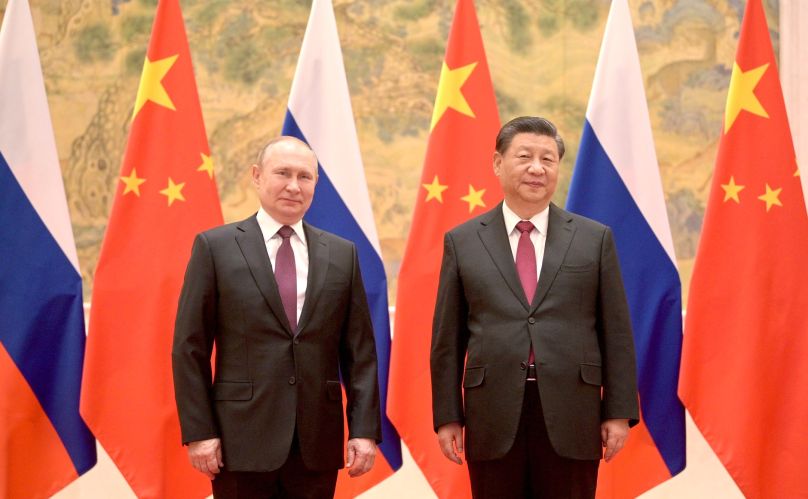
Allen Carlson, associate professor of government, contributes expert analysis on China's efforts and the role of the Global South in global governance.
Additional Information
We Are Home: TPS Workers Belong Here
June 30, 2026
11:00 am
ILR NYC Conference Center
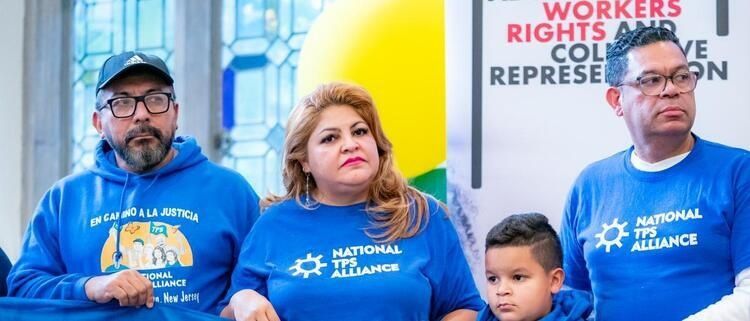
Join us for the public release of our latest report on immigrant workers, “We Are Home: TPS Workers Belong Here.”
Today, nearly 1.6 million immigrant workers hold Temporary Protected Status (TPS) or related temporary protections, including approximately 300,000 Central Americans who have maintained legal status for 25-30 years. Recent federal immigration enforcement policies and efforts to terminate the TPS legal status of countless immigrants of color, including 300,000 Haitians and 600,000 Venezuelans, threaten to further increase the exploitation of low-wage immigrant workers in key industries such as healthcare, construction and logistic services.
This report examines the experiences of Central American TPS workers in New York state, adding data to earlier findings by Campos-Medina (2019) that show TPS holders are critical participants in our economy. They have developed strong attachments to their local communities, are members of unions, and engage in social movement organizing, demonstrating their adherence to American values and society. Their stories make a powerful claim to belonging through long-term contributions, family ties, and participation in American ideals and values. As policymakers consider the future of TPS, the experiences of these workers highlight the need for durable immigration solutions that recognize the role of workers with TPS in the nation's economic and social fabric. “This is my home” is the recurring message shared by TPS workers across this research report and the Stories of Belonging project at the Worker Institute at Cornell ILR.
TPS workers will provide testimony. Elected officials and the press will be invited.
This event will be held in person and online.
Additional Information
Program
Einaudi Center for International Studies
Migrations Program
Adjudicatory Affects: On Gendered Citizenship and Near Time

September 14, 2026
12:15 pm
Uris Hall, G08
Talk by Uzma Zafar (Sexuality, Women's and Gender Studies, University of Rochester)
This talk explores nationalist temporalities of gender in Muslim transmasculine religiosity. Granted citizenship by the Transgender Persons (Protection of Rights) Act 2018, transgender people have become an affective community before the law. Challenges to the 2018 legislative act by the Federal Shariyat Court (2023) have popularized the belief that being transgender is not morally compatible with Islamic practices and society. How does emergent masculinity make its religious morality stable enough to access nationalist legitimacy? This talk thinks with affective religious and temporal planes through an ethnography of psychic states during prayer to imagine a lived theory of nationalist religious temporality.
Uzma Zafar is an Assistant Professor in the Department of Anthropology and the Susan B. Anthony Institute at the University of Rochester, and an attorney of the High Court of Lahore, Pakistan. His writing, teaching, and legal practice draw from an interdisciplinary approach to law and medical anthropology, concentrating on areas of public health, gender, citizenship, and human rights in South Asia.
Additional Information
Program
Einaudi Center for International Studies
South Asia Program
Unmaking Toxic Supply Chains: On the Trans-local Movement of War Metals in Iraq
September 24, 2026
4:45 pm
Uris Hall, G08
Talk by Kali Rubaii (Anthropology, Purdue University)
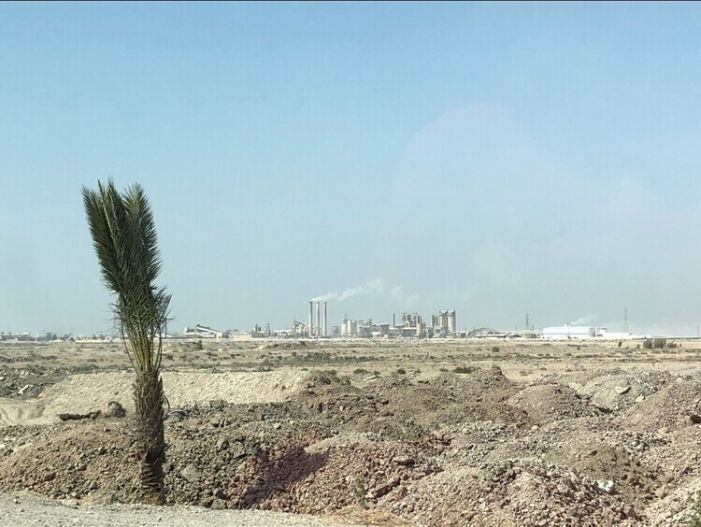
Taking war as a toxic structure, this talk begins at the belly of war, in Fallujah, Iraq. Rubaii's forensic ethnography between 2014 and 2024 traces weaponized metals from the sand and bodies of people in Fallujah back to their origins at war's jaws: mineral mines in the Democratic Republic of Congo, where such metals are extracted by artisanal miners for use by tech and weapons companies, and to the smelters of Rwanda and the US, where such minerals are refined and distributed. The talk also follows the post-battle life of weaponized metals to its tail, where these metals are recycled by Indian laborers in steel factories in Iraqi Kurdistan as a central part of the concrete industry; or to Colfax, Louisiana where they are destroyed in burn pits; and to Guam’s coral reef, where they are detonated. At each site, people are trapped in biochemically and socially toxic relations with components of weaponized earth. By tracing the toxic exposures people face at multiple sites of metal extraction, weaponization, reuse, and disposal, Rubaii’s talk identifies two key points about war's long chain of supply: 1) the many bodies and people whose lives are ravaged by warfare far from the site and dates of documented battles, and 2) locations for antiwar intervention in an increasingly diffuse network of corporate and contracted war-making.
Kali Rubaii is a cultural anthropologist at Purdue University whose scholarship focuses on displacement, health justice, and the environmental impacts of war. She is the author of Resurgency: Outlasting the War on Terror in Iraq and co-editor of The Social Properties of Concrete. She leads the Parts Per Million Project , an interdisciplinary, international team of researchers concerned with multi-generational health effects of environmental exposures from the war industry. She also co-leads the War and Geos project on military supply chains and the environmental legacies of warfare.
Additional Information
Program
Einaudi Center for International Studies
Southwest Asia and North Africa Program
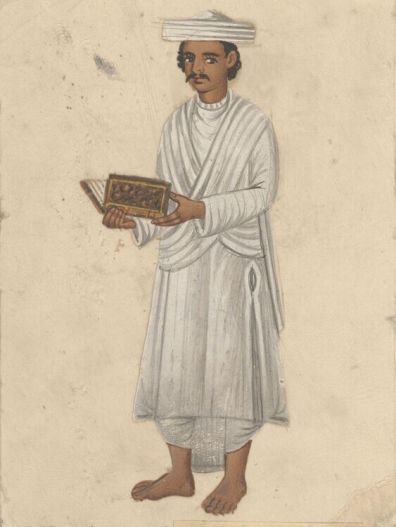
Sex, Lies and the Company State: An Indo-Persian Counter-History of the Early British Empire in India
August 31, 2026
12:15 pm
Uris Hall, G08
Talk by Robert Travers (History, Cornell University)
In around 1818 in Allahabad, an ageing munshi, Sadasukh ‘Niyazi’ Dihlawi, formerly in the employ of the British East India Company, wrote an unusual and salacious Persian history of the age of Mughal decline and British expansionism. This talk reads Munshi Sadasukh’s little-known text, Muntakhab-ut-tawarikh, as a ‘counter-history’ of early British India from the perspective of a middle-ranking, Persian-educated munshi. It shows how Sadasukh’s creative reconstruction of the era of British conquests inserted the figure of the late Mughal munshi as a put-upon steward of imperial virtue facing down escalating threats of financial and sexual corruption. Situating Sadasukh’s fabulous history in the Persianate world of north Indian scribal elites, the talk asks how attending to the political thought of ‘middling’ scribes can offer an alternative perspective on the political culture of early colonial India.
Robert Travers is Professor of History and Director of the South Asia Program at Cornell. He is the author of two books about colonial state formation in eastern India in the late eighteenth century, Ideology and Empire in Eighteenth Century India: The British in Bengal (Cambridge, 2007), and Empires of Complaints. Mughal Law and the Making of British India, 1765-1793 (Cambridge, 2023). He is currently working on a new history of the parliamentary impeachment trial of the British Governor of Bengal, Warren Hastings.
Additional Information
Program
Einaudi Center for International Studies
South Asia Program
Weill Cornell Anesthesiologist Appointed to Commission on Religious Freedom
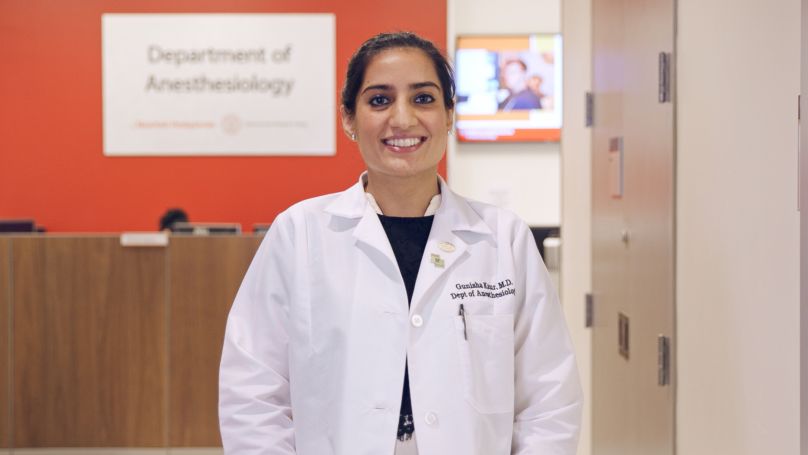
Gunisha Kaur, Migrations
Weill Cornell Medicine anesthesiologist Dr. Gunisha Kaur ’06, M.D. ’10, has been appointed to the U.S. Commission on International Religious Freedom (USCIRF), an independent, bipartisan legislative branch agency that globally monitors the universal right to freedom of religion or belief.
Additional Information
The Persistence Question: Why Climate Tech Solutions Persist Despite Failing on Their Own Terms
October 26, 2026
12:15 pm
Uris Hall, G08
Talk by Nikhit Agrawal
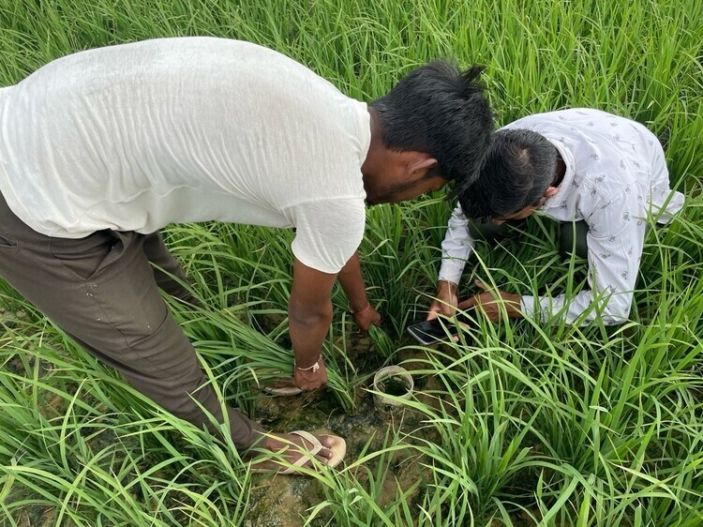
Since 2015, when the Paris Agreement was adopted, agriculture has gained prominence in global climate negotiations, both as a source of greenhouse gas emissions and as a potential contributor to reducing them through carbon storage and sequestration. In the past decade, hundreds of agriculture technology (agtech) start-ups have emerged, promising to design and scale technologically mediated sustainability solutions. India has become a significant destination for investments in these start-ups, offering a unique vantage point to examine their impacts. This talk traces how aspirations to address the ecological crisis urgently and at scale intersect with the complex environmental, social, economic, political, and cultural relationships that shape agriculture. Alternate Wetting and Drying (AWD) of rice fields, a technique aimed at mitigating emissions by killing methanogenic soil bacteria, has gained traction among tech entrepreneurs as a key sustainability program for reducing emissions. Based on institutional ethnography at an Indian agtech start-up, this talk examines why and how technological interventions like AWD consistently face challenges, often fail, and yet continue to reappear. What drives their persistence despite repeated failures on the ground? How are these tied to the financing and scaling models of climate-smart technologies? By addressing these questions, the talk highlights the tensions and contradictions at the heart of scaling tech-entrepreneurial sustainability and their implications for addressing the intertwined crises of climate change and agriculture.
Nikhit Agrawal is a postdoctoral associate working on carbon and data governance in the Natural Resources and the Environment program at Cornell University. He completed his PhD in sociocultural anthropology at UCLA in March 2026. His research examines tech-entrepreneurial promises of scaling sustainability in contemporary agriculture. Agrawal’s work has been published or forthcoming in Economic Anthropology, Critique of Anthropology, Journal of Agrarian Change, Economic & Political Weekly, Scroll.in, The Wire, India in Transition, and The Indian Express. He has received grants from the Wenner-Gren Foundation, the UCLA International Institute and the Center for India and South Asia. His awards include the Robert B. Edgerton Endowed Award and the Eric R. Wolf Award from the Society for the Anthropology of Work, American Anthropological Association. He holds a BTech in Computer Science and Engineering from IIT Delhi and an MA in Sociology from the University of Delhi.
Additional Information
Program
Einaudi Center for International Studies
South Asia Program