
Einaudi Center for International Studies
COMMColloquium: Bruno Takahashi

November 17, 2023
1:00 pm
Mann Library, 102
COMMColloquium
Co-sponsored with the Latin American and Caribbean Studies Program
Context Matters: Insights From Environmental Communication Research in Latin America
Bruno Takahashi, Professor, Michigan State University
1pm in 102 Mann
Reception to follow in the Hub
The field of environmental communication has undergone substantial development in recent decades. Scholars from rich nations have predominantly spurred this growth, with a pronounced emphasis on climate change. The input from scholars situated in other global regions, such as those hailing from Latin American countries, continues to linger on the periphery of worldwide dialogues. This marginalization limits the potential of insights derived from research pertaining to and originating from southern regions that can enhance international discussions about environmental communication.
This talk examines the structural impediments alongside epistemological and ontological presumptions that obscure Latin American participation in the environmental communication field, drawing upon ideas, initiatives, and experiences in this region. It delves into factors such as historical background, worldview, the dynamics of colonialism and resistance, institutional frameworks, and cultural influences to emphasize the necessity of comprehending these intricate elements for advancing environmental communication research.
Dr. Bruno Takahashi is the Brandt Professor of Environmental Communication in the School of Journalism and AgBioResearch at Michigan State University. He is also research director of the Knight Center for Environmental Journalism. He studies the communication of environmental and science issues in Latin America and among marginalized US populations. Bruno is from Perú and received his BA in communication from the Universidad de Lima and MS and Ph.D. in environmental science from SUNY ESF.
Additional Information
Program
Einaudi Center for International Studies
Latin American and Caribbean Studies
"Kang Youwei's Roman Diaries (1904)"
November 10, 2023
3:30 pm
Rockefeller Hall, 375 Asian Studies Lounge
We are pleased to host Haun Saussy, East Asian Languages and Civilizations, University of Chicago to present the text-reading, "Kang Youwei's Roman Diaries (1904)" for this Classical Chinese Colloquium.
Professor Saussy's primary teaching and research interests include classical Chinese poetry and commentary, literary theory, comparative study of oral traditions, problems of translation, pre-twentieth-century media history, and ethnography and ethics of medical care.
To view Professor Saussy's CV, click here.
To view Professor Saussy's personal website, click here.
To see Professor Saussy's Google Scholar page, click here.
The Cornell Classical Chinese Colloquium (CCCC) 古文品讀 is a reading group for scholars interested in premodern Sinographic text (古文). The group meets monthly during the semester to explore a variety of classical Chinese texts and styles. Other premodern texts linked to classical Chinese in Japanese, Korean, and Vietnamese have been explored. Presentations include works from the earliest times to the 20th century. Workshop sessions are led by local, national, and international scholars.
Participants with any level of classical Chinese experience are welcome to attend.
At each session, a presenter guides the group in a reading of a classical Chinese text. Attendees discuss historical, literary, linguistic, and other aspects of the text, working together to resolve difficulties in comprehension and translation.
No preparation is required; all texts will be distributed at the meeting.Contact eap-guwen@cornell.edu for more information and subscribe to CCCC news for updates about events. Please make sure to send your subscription request from the email address at which you wish to receive CCCC updates.
Cornell faculty hosts are TJ Hinrichs, History, and Suyoung Son, Asian Studies.
Additional Information
Program
Einaudi Center for International Studies
East Asia Program
The Annual Hu Shih Distinguished Lecture, Haun Saussy: "Exile As Formative Experience in Classical Chinese Poetry"
November 9, 2023
4:45 pm
Clark Hall, 700
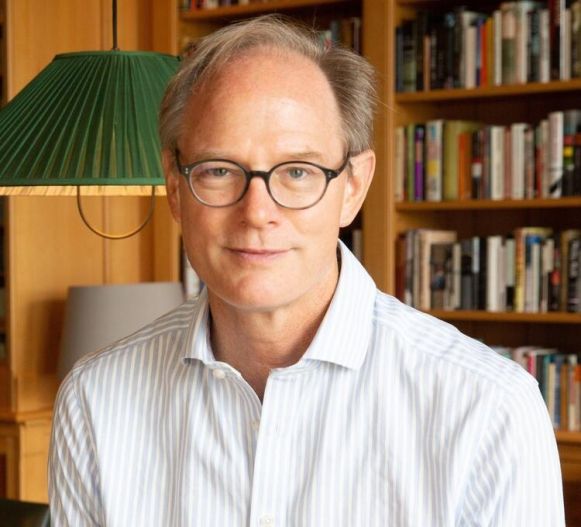
The East Asia Program is honored to have Haun Saussy, East Asian Languages and Civilizations, University of Chicago give this year's Hu Shih Distinguished Lecture: "Exile As Formative Experience in Classical Chinese Poetry."
The “myth of loyalty and dissent” (as Laurence Schneider put it) surrounding the figure of Qu Yuan has structured a great many self-representations by cast-off officials. But when poets banished to the margins of the empire adopt Qu Yuan as a source of style and allusion, the result is, often enough, a gain in descriptive and evocative power. By calling the experience of exile “formative” in the cases of Xie Lingyun 謝靈運, Shen Quanqi 沈全期, Song Zhiwen 宋之問, and Su Shi 蘇軾, I aim to put biography in second place. What occupies the foreground is rather the fashioning of transpersonal roles and attitudes that could be adopted by later poets— replicating the author-function that had made Qu Yuan such a powerful reference.
The East Asia Program's 2023-2024 Annual Hu Shih Distinguished Lecture is co-sponsored by the Departments of Asian Studies, History, and the Cornell Society for the Humanities.
***
Professor Saussy's primary teaching and research interests include classical Chinese poetry and commentary, literary theory, comparative study of oral traditions, problems of translation, pre-twentieth-century media history, and ethnography and ethics of medical care.
To view Professor Saussy's CV, click here.
To view Professor Saussy's personal website, click here.
To see Professor Saussy's Google Scholar page, click here.
In 2014 on the 100th anniversary of Hu Shih's graduation from Cornell, EAP initiated an annual distinguished lecture in honor of the philosopher and statesman, Hu Shih. Leading scholars of Chinese and East Asian studies are invited to speak on critical issues in their field of research. These lectures are archived as a resource for the Cornell community and beyond. Hu Shih Distinguished Lecture videos and programs are permanently archived in the Cornell eCommons archive.
Learn about Hu Shih here.
Additional Information
Program
Einaudi Center for International Studies
East Asia Program
Humans and the Environment in Suriname and the Coastal & Canal Zone of Panama

November 7, 2023
12:20 pm
Uris Hall, Go8
Latin American and Caribbean Studies Program (LACS) Seminar Series
Suriname is a country in the northern part of South America. Having a tropical humid climate, about 93% of the country is covered by rainforest. This is also the area where many of the indigenous and tribal communities (descendants from run away African slaves) live.
One of these tribal communities, the Saamaka, is situated in the Upper Suriname River Area and consists of over 70 villages that mainly lie along the Suriname river (one of Suriname’s most important rivers). This community has been practicing agriculture in the form of shifting cultivation for almost 300 years. This form of cultivation can be described as a piece of land (forest) that is first cleared and afterwards various crops such as cassava, banana, peanuts, rice and sweet potato are planted over a period of 2-3 years and afterwards the farmer clears a new plot to repeat the same steps due to a decline in soil fertility and reduced crop yield.
Just like the urban areas in Suriname, the Saamaka have noticed a change in the climate in the form of prolonged periods of draught and heavy rainfall which often results in flooding of the villages and farm land.
In an effort to adapt and mitigate these phenomena, this community with the help of Tropenbos Suriname (local NGO) has started to adapt climate smart agricultural practices in the form of agroforestry.
Humans and the Environment in the Coastal & Canal Zone of Panama:
Scientists are worried about the way several external factors are contributing to the deterioration along Panama’s central Caribbean rainforest and coastal-marine ecosystems and preventing recovery in areas affected by contamination because they are practically doomed by anthropogenic development. If unplanned development continues on the rise, the ecosystem could continue to survive in previously healthy areas, but without any sustainable and substantial recovery.
The University of Panama is trying to implement a permanent system of scientific interdisciplinary researches in order to conserve the natural resources in Colón province (mangrove forest, sandy beaches, sea grasses, coral reefs, rainforest). These researches have a great priority for the Country of Panama for three reasons: first, due to the proximity of the area to the Panama Canal watershed; second, because Colón is located on the Caribbean side of Panama, with the second largest commercial city of the country (urban and industrial area) and communities claimed for sustainable development alternatives; third, to provide a research site for Panamanian and international scientists to implement environmental education, international center for studies around the unique ecosystem that is protecting Colon City and surrounding communities of the frequent floods in wet season and also serve both as a natural break water and wildlife refuge.
Javier Hurtado Yow is an Environmental Biologist & Educator with expertise in environmental sciences related to human rights. He has a Master’s in Environmental Management of Tropical Ecosystems obtained at Paris Tech Institute, France. He’s Professor of the Practice at the University of Panama and Regional Manager at the Panama's Human Rights office (Defensoría del Pueblo). His goals revolve around enhancing capacities in natural resource and environmental management in the interoceanic zone of the Panama Canal. His aim is to create and develop initiatives and policies that improve the sustainability of socioeconomic and environmental conditions in provinces outside the capital of the country, including Colon, western Panama, and other regions.
Additional Information
Program
Einaudi Center for International Studies
Latin American and Caribbean Studies
Moroccan Francophone Literature, Sexualities and Islam

November 2, 2023
4:30 pm
Uris Hall, G08
Talk by Taieb Berrada
This talk will deal with the way Moroccan literature written in French creates a political space challenging the patriarchal establishment by reinterpreting foundational myths in Islam. We will discuss two political and symbolic forces at work in this type of literature: expressing one’s self in the language of the French colonial Other and narrating marginal sexual relationships in Morocco under the harsh dictatorship of Hassan II. It is the interplay of these two aspects that leads to the creation of a new narrative about sexual identities. By doing so, it reveals the instability of a model of identification subjected to a normalizing sexual apparatus controlling bodies and minds in a society where for example homosexual acts are still punishable by law. I will argue that writings by authors such as Abdellah Taïa, Nedjma and others create revised sexual identities, which become emancipated from the Western Oedipal complex while at the same time looking for alternative interpretations of Islamic traditions. Hence, those sexual identities call for a reevaluation of the normativity imposed by the king who is using his power based on a patriarchal interpretation of religious legitimacy in view of political gain.
Additional Information
Program
Einaudi Center for International Studies
The Far Right in Latin America

November 1, 2023
5:00 pm
Uris Hall G08, 109 Tower Road
Latin American and Caribbean Studies Program (LACS) Seminar Series.
Although the emergence of the far right is anything but a new phenomenon and has reached a global dimension, until recent times the Latin American region has not experienced a massive presence of far right parties or leaders. Things started to change in the last few years, in particular with the presidential elections of Jair Bolsonaro in Brazil in 2018 and Nayib Bukele in El Salvador in 2019. In addition, it seems that the far right has been gaining ground in other countries, such as Argentina (“Libertad Avanza”), Chile (“Partido Republicano”), Peru (“Renovación Popular”) and Uruguay (“Cabildo Abierto”). Despite this rapid appearance of the far right across the region, up to now there is almost no comparative research about this phenomenon. This means that we have very limited knowledge about the similarities and differences between the existing far right forces in Latin America. To address this research gap, in this presentation I we present the preliminary findings of a research project that looks at the ideas advanced by different far right forces across Latin America and examine its proximity with the frames employed by the far right in Europe and beyond.
Cristóbal Rovira Kaltwasser is professor at the Institute of Political Science at the Pontifical Catholic University of Chile and an associate researcher at the Centre for Social Conflict and Cohesion Studies (COES) and Director of the Laboratory for the Study of the Far Right (ultra-lab). His main area of research is comparative politics and he has a special interest in the ambivalent relationship between populism and democracy. Together with Cas Mudde (University of Georgia), he has published "Populism: A Very Short Introduction" (Oxford University Press, 2017), which has been translated into more than fifteen languages.
Additional Information
Program
Einaudi Center for International Studies
Latin American and Caribbean Studies
Uyghur Children in China’s Genocide: A Symposium

October 27, 2023
1:00 pm
Goldwin Smith Hall, 76
Hundreds of thousands of ethnic minority children have been seized by the Chinese government, detained, and beaten if they speak their native language, according to numerous human rights groups.
These reported violations of children’s rights will be explored in a symposium entitled “Uyghur Children in China’s Genocide” on Fri., Oct. 27, from 1-5 p.m. in Goldwin Smith Hall, room 76. The symposium will be hybrid; register in advance for the livestream.
As organizer Magnus Fiskesjö explains, the children’s parents and grandparents are Uyghur and Kazakh ethnic minority people who are detained separately, in “re-education” camps, forced labor, or prisons. Their children are put into a children's Gulag of "boarding schools" and "orphanages," currently estimated to hold up to 1 million children. Family separations and boarding schools are soon to expand to all ethnic children, he says.
“By way of brutal punishments and even sibling separation, children are forced to permanently forget their language and culture -- thus, the plan is clearly an intentional component of genocide as per the U.N. Convention -- in ways similar to the horrific 'Indian schools’ of the US and Canada’s past,” said Fiskesjö, associate professor of anthropology in the College of Arts and Sciences. “Meanwhile, the rest of society is held in terror; international media is barred, and a campaign to intimidate and silence witnesses around the world, is also ongoing.”
The symposium will explore:
what is happening to children victimized by family separation, who are forcibly cut off from family, siblings, language, and culturewhy is the Chinese government doing thiswhat is the nature of the deep traumas the children endurehow can these wounds be remedied, if the genocide is halted tomorrowExperts, activists, and witnesses, including Uyghurs, will give presentations on these issues, including the experiences of “Indian schools” in the US and Canada. The panelists include:
Rukiye Turdush, independent scholar from East TurkistanZumret Dawut, camp survivor from East Turkistan, with her familyAdrian Zenz, Victims of Communism Museum and Memorial FoundationMagnus Fiskesjö, associate professor of anthropology (A&S)Jeffrey Palmer (Kiowa), associate professor of performing and media arts (A&S)Amy Bombay (Anishinaabe from Rainy River First Nations), Department of Psychiatry, Dalhousie University, CanadaSymposium Schedule:
1:00-1:15 p.m. Opening Remarks: Uyghur Children in China’s Genocide–context and Urgency by Magnus Fiskesjö, Anthropology, Cornell
1:15-1:30 p.m. State of Our Knowledge on the Chinese Family Separation and Child Indoctrination Policies by Adrian Zenz, Victims of Communism Museum and Memorial Foundation (12-minute pre-recording)
1:30-1:45 p.m. Indoctrination of Uyghur Children as part of the Genocide by Rukiye Turdush, an independent scholar from East Turkistan
1:45-2:45 p.m. Uyghur Experiences of Chinese Schooling by Zumret Dawut and family
2:45-3:00 p.m. Q&A moderated by Ruslan Yusupov, Fellow, Society for the Humanities at Cornell
3:00 p.m. Coffee/tea break
3:30-4:00 p.m. The Experience of Indian Schools in the USA by Jeffrey Palmer, Kiowa First Nations, Performing and Media Arts, Cornell
4:00-4:30 p.m. Trauma and Resilience: The Intergenerational Effects of Government Policies of Forced Assimilation and Child Removal by Amy Bombay, Anishinaabe from Rainy River First Nations, Department of Psychiatry, Dalhousie University, Canada
4:30-5:00 p.m. Q&A moderated by Allen Carlson, Government, Cornell
The symposium is sponsored by the East Asia Program, part of the Mario Einaudi Center for International Studies. Cosponsors include the Reppy Program in Peace and Conflict Studies; Comparative Muslim Societies Program; American Indian and Indigenous Studies (CALS); Institute of Politics and Global Affairs (Brooks School); as well as the Institute for Comparative Modernities; Society for the Humanities; the Departments of Anthropology, Asian Studies, Sociology and Government; and the Program in Feminist, Gender & Sexuality Studies, in the College of Arts and Sciences.
Additional Information
Program
Einaudi Center for International Studies
Reppy Institute for Peace and Conflict Studies
East Asia Program
Second-Class Daughters: Black Brazilian Women and Informal Adoption as Modern Slavery--CANCELLED--

October 24, 2023
12:20 pm
Uris Hall, G08
-- EVENT CANCELLED --
CANCELLED--A legacy of the transatlantic slave trade, Brazil is home to the largest number of African descendants outside Africa and the greatest number of domestic workers in the world. Drawing on ten years of interviews and ethnographic research, Dr. Elizabeth Hordge-Freeman examines the lives of marginalized informal domestic workers who are called “adopted daughters” but who live in slave-like conditions in the homes of their adoptive families. She traces a nuanced and, at times, disturbing account of how adopted daughters, who are trapped in a system of racial, gender, and class oppression, live with the coexistence of extreme forms of exploitation and seemingly loving familial interactions and affective relationships. Highlighting the humanity of her respondents, Hordge-Freeman examines how filhas de criação (raised daughters) navigate the realities of their structural constraints in the context of pervasive norms of morality, gratitude, and kinship. In all, Professor Hordge-Freeman clarifies the link between contemporary and colonial forms of exploitation, while highlighting the resistance and agency of informal domestic workers.
Additional Information
Program
Einaudi Center for International Studies
Latin American and Caribbean Studies
Xin Wen: Old Ghosts in Tang Chang'an: Two Stories
October 20, 2023
3:30 pm
Rockefeller Hall, 375 Asian Studies Lounge
The Cornell Classical Chinese Colloquium welcomes Xin Wen, Department of East Asian Studies, Princeton to lead this month's text-reading.
For much of China’s early and medieval imperial history, including the Zhou, the Qin, the Han, the Sui, and the Tang dynasties, Chang’an and the surrounding area served as the capital of the Chinese empire. The study of Chang’an is often siloed along these dynastic lines, with scholars on medieval China focusing on the Sui-Tang city, while early China specialists worked on the Han city and pre-Han sites. But historically, these two clusters of constructions were not unrelated, but were physically adjacent to each other: The northern wall of the Sui-Tang city was only about 700 meters south of the southern wall of the Han city. As a result, many Han dynasty and pre-Han sites were close to, or even within, the walled city of Chang’an in the Tang. In this meeting of the Cornell Classical Chinese Colloquium, I share two stories where Tang people examined and interacted with old tombs in Chang’an. These encounters betray an attitude toward the past that was primarily not antiquarian, but exorcistic. The ways Tang people argued about, verified, and refuted the identities of the ghosts believed to haunt ancient tombs also reveal a unique epistemology where archaeological excavation and textual analysis—tools available to modern historians—were combined with necromantic knowledge produced by sorcerers or gained through nocturnal and dream encounters in order to acquire an accurate understanding of the past. This past was neither dead nor past, but often lethally alive in Tang Chang’an.
The Cornell Classical Chinese Colloquium (CCCC) 古文品讀 is a reading group for scholars interested in premodern Sinographic text (古文). The group meets monthly during the semester to explore a variety of classical Chinese texts and styles. Other premodern texts linked to classical Chinese in Japanese, Korean, and Vietnamese have been explored. Presentations include works from the earliest times to the 20th century. Workshop sessions are led by local, national, and international scholars.
Participants with any level of classical Chinese experience are welcome to attend.
At each session, a presenter guides the group in a reading of a classical Chinese text. Attendees discuss historical, literary, linguistic, and other aspects of the text, working together to resolve difficulties in comprehension and translation.
No preparation is required; all texts will be distributed at the meeting.Contact eap-guwen@cornell.edu for more information and subscribe to CCCC news for updates about events. Please make sure to send your subscription request from the email address at which you wish to receive CCCC updates.
Cornell faculty hosts are TJ Hinrichs, History, and Suyoung Son, Asian Studies.
Additional Information
Program
Einaudi Center for International Studies
East Asia Program
Coping with Defeat: Sunni Islam, Roman Catholicism and the Modern State
October 20, 2023
3:00 pm
Uris Hall, G08
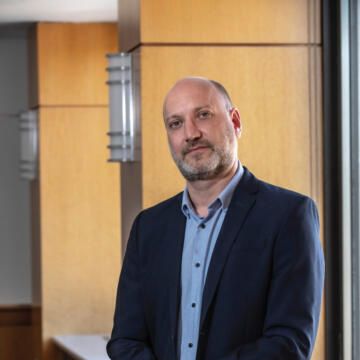
This lecture, based on the book with the same title, presents a historical panorama of the Islamic and Catholic political-religious empires and exposes striking parallels in their relationship with the modern state. Drawing on interviews, site visits, and archival research in Turkey, North Africa, and Western Europe, Jonathan Laurence demonstrates how, over hundreds of years, both Sunni and Catholic authorities experienced three major shocks and displacements—religious reformation, the rise of the nation-state, and mass migration. As a result, Catholic institutions eventually accepted the state’s political jurisdiction and embraced transnational spiritual leadership as their central mission. Laurence reveals an analogous process unfolding across the Sunni Muslim world in the twenty-first century.
Jonathan Laurence is Professor of Political Science and Director of the Clough Center for the Study of Constitutional Democracy at Boston College, and an affiliate of the Center for European Studies at Harvard. Prof. Laurence's latest book is Coping with Defeat: Sunni Islam, Roman Catholicism and the Modern State (Princeton University Press, 2021). Previously, The Emancipation of Europe's Muslims, was published by Princeton University Press in 2012, and received awards for Best Book in religion and politics and migration and citizenship from the American Political Science Association. Professor Laurence is a former fellow of the American Academy in Berlin, Wissenchaftszentrum Berlin, Transatlantic Academy at the German Marshall Fund, Fafo Institute/Norwegian Research Council, LUISS University-Rome, Sciences Po-Paris and the Brookings Institution (nonresident, 2003-2018).
Additional Information
Program
Einaudi Center for International Studies
Institute for European Studies