Einaudi Center for International Studies

Moroccan Francophone Literature, Sexualities and Islam

April 13, 2023

4:30 pm

Olin Library, 106G

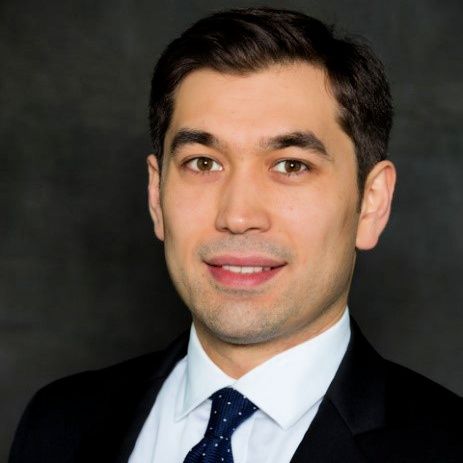
Talk by Taieb Berrada

This talk will deal with the way Moroccan literature written in French creates a political space challenging the patriarchal establishment by reinterpreting foundational myths in Islam. We will discuss two political and symbolic forces at work in this type of literature: expressing one’s self in the language of the French colonial Other and narrating marginal sexual relationships in Morocco under the harsh dictatorship of Hassan II. It is the interplay of these two aspects that leads to the creation of a new narrative about sexual identities. By doing so, it reveals the instability of a model of identification subjected to a normalizing sexual apparatus controlling bodies and minds in a society where for example homosexual acts are still punishable by law. I will argue that writings by authors such as Abdellah Taïa, Nedjma and others create revised sexual identities, which become emancipated from the Western Oedipal complex while at the same time looking for alternative interpretations of Islamic traditions. Hence, those sexual identities call for a reevaluation of the normativity imposed by the king who is using his power based on a patriarchal interpretation of religious legitimacy in view of political gain.

Additional Information

Program

Einaudi Center for International Studies

Institute for European Studies

Rare Islamic Books in the Olin Library Collection

March 30, 2023

3:00 pm

Kroch Library, Rare Manuscripts Collection Basement Floor

Talk by Ali Houissa and Laurent Ferri

Our CMS seminar today will be led by two curators (and friends of CMS!) in Olin Library, who will be hosting us to come and see precious objects in the library's collection about Islam. We have many world-class books, some of them centuries old, which show the history and evolution of Islam over a long period, and across many cultures. This is a wonderful opportunity to see some of the treasures of Cornell’s collection that are rarely seen, and which span centuries of time and thousands of miles of geography in Islamic lands from Morocco to Indonesia. This hour-long session is open and free to the public.

Additional Information

Program

Einaudi Center for International Studies

The Kurdish Nobility in the Ottoman Empire: Loyalty, Autonomy, and Privilege

March 20, 2023

4:30 pm

Olin Library, 106G

Talk by Nilay Ozok

Kurdish emirates came under Ottoman rule in the sixteenth century within the context of the Ottoman-Safavid imperial rivalry. Until the mid-nineteenth century, the Kurdish begs maintained a degree of “autonomy” recognized by successive Ottoman sultans. This autonomy entailed various hereditary administrative and fiscal privileges granted to the Kurdish nobility most important of which was their unhindered control over land and agricultural revenues. This talk discusses the making and the eventual dissolution of the Kurdish nobility in the Ottoman realm with a specific focus on land ownership and its transformation during the Ottoman reform era of Tanzimat in the nineteenth century.

Register for viewing on Zoom.

Additional Information

Program

Einaudi Center for International Studies

Institute for European Studies

Language Resource Center Speaker Series - Larisa Kasumagic- Kafedzic

February 15, 2023

5:00 pm

Stimson Hall, G25

"Language and Peace: Joining Peace Pedagogies and Peace Linguistics in Language Education"
Larisa Kasumagic- Kafedzic
Fulbright Visiting Scholar Fellow, Cornell University
Associate Professor, University of Sarajevo

Efforts toward peacebuilding in language education around the world have been gradual, diverse, and continuously growing despite a lack of systematic and comprehensive attempts to position the discipline of language pedagogy within the scope of peace education. This talk will explore the notions of peace linguistics within the field of (applied) linguistics and peace pedagogy within the general field of comparative education, their evolution, history, development, and diversification in connection to the fields of language teaching, language and culture pedagogy, and teacher education, where specific initiatives, frameworks, and practices for teaching about and for peace through languages will be illustrated. A particular emphasis will be placed on how and why of peace language teaching by revising some of the key contributions underpinning peace pedagogy that can be integrated into language education: critical pedagogy, intercultural pedagogy, inclusive pedagogy, reflective and democratic pedagogy, social justice pedagogy, nonviolence pedagogy, healing and reconciliation pedagogy, arts-based pedagogy, feminist/engaged pedagogy, participatory pedagogy, decolonial pedagogy, pedagogy of reconciliation and remembrance. A number of specific examples of peacebuilding strategies, activities, and didactic tools and materials from language classrooms, intercultural learning projects, and teacher education program from Bosnia and Herzegovina’s formal education setting will be presented. The talk will also discuss the interdisciplinary nature of several other projects implemented in the European context (ECML projects, Council of Europe), which focus on intercultural learning, critical cultural awareness, and diversity in language education, by creating linkages between language, culture, pedagogy, and relevant content on the one hand, and by integrating action research in language education as a methodological framework for critical reflection on the other.

Bio: Larisa Kasumagić- Kafedžić, a 2003-04 Cornell University Hubert Humphrey Fellow Alumni, is currently a Fulbright Visiting Scholar Fellow at Cornell University. She is a visiting associate professor and through her research project “Teachers as Agents of Change: Education for Peace and Social Responsibility” she will collaborate closely with schools, teachers, and teacher educators in Ithaca and the region, while also providing various lectures and seminars on her expertise, experience, and research to Cornell’s community of students and faculty. She holds an MPS in International Development and Education from Cornell University and a Ph.D. in English Language Pedagogy and Intercultural Education from Sarajevo University. Larisa Kasumagić- Kafedžić teaches at the University of Sarajevo’s Department of English Language and Literature in the Faculty of Philosophy. Her research interests are in the fields of intercultural education, peace pedagogy, language education, teacher training, reflective pedagogies, and action research in teacher development. She is also the founder and a president of the Peace Education Hub, which was established at the University of Sarajevo in early 2020.

This event will be held in person in G25 Stimson and will also be streamed live over Zoom. Join us at the LRC or on Zoom.

The event is free and open to the public. Campus visitors and members of the public must adhere to Cornell's public health requirements for events.

Additional Information

Program

Einaudi Center for International Studies

Latin American and Caribbean Studies

A Senegalese Conversation with Islam: Finding Harmony Between Religion and Gender”

February 23, 2023

4:30 pm

Olin Library, 106G

Talk by Seulgie Lim

From veiling to polygamy, Islam has been and remains connected to the oppression of women's rights across cultures and regions. What the media and superficial observations often miss however is that Islam, like any other religion, is not time-less or space-less, and especially for countries where religion forms a significant aspect of people's identity, Islam is embedded in the political and social fabrics of said society in various ways, including through gender dynamics. Islam as practiced in Senegal today, is therefore very different from Islam as practiced in Iran in the 1960s. With this in mind, this talk delves into how Islam shapes Senegalese activist women on their path to defining and redefining their role in society based on their gender identity. Whether it is through the passing of the gender parity law at the national assembly or young feminists defying their elders in the normalizing of the veil, Islam influences how women frame their arguments, activism, and place in Senegalese society.

Additional Information

Program

Einaudi Center for International Studies

Kristian Petersen: Interpreting Islam in China

February 9, 2023

4:30 pm

A distinctive Chinese Islamic intellectual tradition emerged during the Ming Dynasty (1368-1644) and Qing Dynasty (1644-1911). This talk by Kristian Petersen (Old Dominian University) traces the contours of this Sino-Islamic intellectual tradition and key Han Kitab authors.

Chinese Muslims established an educational system, scripture hall education (jingtang jiaoyu 經堂教育), which utilized an Islamic curriculum made up of Arabic, Persian, and Chinese works. The Han Kitab, a corpus of Chinese language Islamic texts developed within this system, reinterpreted Islam through the religio-philosophical lens of Buddhist, Daoist, and Confucian terminology. Several Han Kitab texts were produced by self-identified “Confucian Muslim” scholars (Huiru 回儒).

Additional Information

Program

Einaudi Center for International Studies

East Asia Program

The G20 and G Minor

G20 flags
January 5, 2023

Kaushik Basu, SAP

Kaushik Basu, professor of economics, writes about the pressing issues the G20 should address. In December, India began its yearlong G20 presidency.

Additional Information

13th Annual Tagore Lecture: History, Memory and the Fictions of 1988

April 14, 2023

4:45 pm

Kahin Center

Talk by Kamila Shamsie (Novelist)

Kamila Shamsie will read from her new novel Best of Friends. The novel required Shamsie to return in her imagination to her 15-year-old self who lived through a pivotal moment in Pakistan’s history (the death of the dictator, Zia-ul-Haq, followed by the election of a 35-year-old woman, Benazir Bhutto, as Prime Minister). She will discuss how writing fiction about history can lay bare some of the fictions built around history, while also casting surprising shadows on the present.

Kamila Shamsie is the author of eight novels, including Burnt Shadows, Best of Friends, and Home Fire, which won the Women’s Prize for Fiction and was longlisted for the Man Booker Prize, a Vice-President of the Royal Society of Literature in the UK, she was one of Granta’s Best of Young British Novelists, and her novels have been translated into more than 30 languages. She grew up in Karachi, lives in London, and is a Belknap Visiting Fellow at Princeton University for Spring 2023.

Books will be available for sale and signing from Buffalo Street Books after the reading.

The Rabindranath Tagore Lecture Series in Modern Indian Literature is made possible by a gift from the late Cornell Professor Emeritus Narahari Umanath Prabhu and his wife, Sumi Prabhu. Inspired by Rabindranath Tagore’s expansive imagination, unbounded by geopolitical boundaries, the series has regularly featured prominent writers from across South Asia and its diasporas.

Additional Information

Program

Einaudi Center for International Studies

South Asia Program

Feminist Urdu Poetry: Protest, Activism, and Radical Writing

April 17, 2023

11:00 am

Uris Hall, G08

Talk by Amina Yaqin (Associate Professor in World Literatures and Publishing, University of Exeter)

In this talk, I look back at the literary history of feminism in Urdu poetry through the voices of selected twentieth-century women poets. The aim is not to establish a canon of feminist poetry but to trace how voice and form were deployed by a range of poets, from Ada Jafri to Fahmida Riaz, to develop a new feminist aesthetic shaped by secular and sacred sensibilities. Their aesthetic is in dialogue with rekhti, the ghazal, the nazm, and a hybrid Islamicate culture across time and space, establishing agencies of protest, activism, and radical writing. Using an interdisciplinary methodology, I explore how the performative writings of Fahmida Riaz and Kishwar Naheed draw on their participation in community and civic life, shaping ideas of self and subjectivity beyond the personal.

Amina Yaqin is an Associate Professor of World Literatures and Publishing at the University of Exeter. Her major publications include Gender, Sexuality, and Feminism in Pakistani Urdu writing, Framing Muslims: stereotyping and representation after 9/11 (co-authored with Peter Morey), and the co-edited Contesting Islamophobia: Anti-Muslim Prejudice in Media, Culture and Politics. She has published widely in peer-reviewed journals. She has been a co-investigator on two externally funded research projects, Framing Muslims and Muslims, Trust and Cultural Dialogue, with multiple outputs, including edited books, special journal issues, policy briefings, and documentary films. Yaqin’s commentary and interviews have been aired by the BBC, SkyNews, EuroNews, TRT World, Indus News, and Pakistan Television Network. She has written for The National UAE, The Times Higher Education UK, the Daily Pioneer, the British Film Institute, and The Conversation.

Additional Information

Program

Einaudi Center for International Studies

South Asia Program

Subscribe to Einaudi Center for International Studies