
Einaudi Center for International Studies
CCCC: Content and Form: Dunhuang Anthologies of Tang Poetry by Casey Stevens
February 17, 2023
3:30 pm
Rockefeller Hall, 374 Asian Studies Lounge
Casey Stevens (Ph.d. student, Asian Studies, Cornell) will launch the Classical Chinese Colloquium Spring '23 with Content and Form: Dunhuang Anthologies of Tang Poetry.
The Cornell Classical Chinese Colloquium (CCCC) 古文品讀 is a reading group for scholars interested in premodern Sinographic (古文) text. The group typically meets monthly during the semester to explore a variety of classical Chinese texts and styles. Other premodern texts linked to classical Chinese in Japanese, Korean, and Vietnamese have been explored. Presentations include works from the earliest times to the 20th century. Workshop sessions are led by local, national, and international scholars.
All are welcome, with any level of experience with classical Chinese or Sinographic text.
Additional Information
Program
Einaudi Center for International Studies
East Asia Program
Majority Rule and Consortial Policymaking: The Evidence from Early China | The Annual Hu Shih Distinguished Lecture
March 30, 2023
4:45 pm
Physical Sciences Building, 120
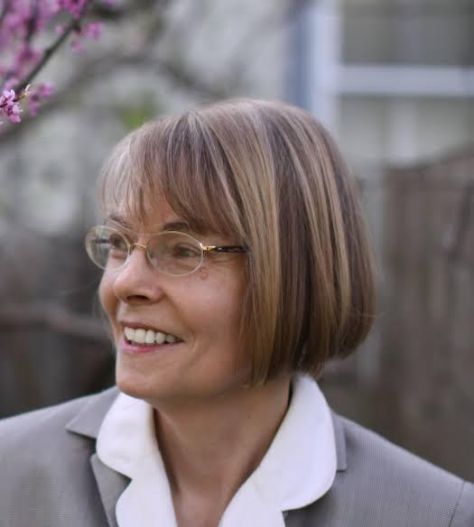
Michael Nylan (History, UC Berkeley) gives this year's Annual Hu Shih Distinguished Lecture on "Majority Rule and Consortial Policymaking: The Evidence from Early China."
Inspired by Hu Shih’s many contributions to the study of Chinese history — among them, his careful outline of “the logical method in ancient China” and his many writings on “freedom” — this talk intends to challenge a popular narrative equating “Asian values” or, more narrowly, “Chinese tradition,” with “one-man, top-down rule.” The talk will instead show first, that a range of theoretical writings in classical Chinese advocate consortial rule and wide consultation, for cogent reasons, and second, that not only the Han histories but also the built environment in the Western Han capital of Chang’an attest to the importance the court placed on facilitating frequent exchanges between members of the governing elites and those they governed, via well-established institutions, networks, and communication corridors. The newly excavated materials support this revisionist picture for all administrative levels during the early empires in China, suggesting that Hu Shih's optimistic vision of a brighter Chinese future was not entirely utopian. Please rsvp for the in-person event. Though we request an rsvp, no one will be turned away as long as we have capacity.
Michale Nylan bio:
Michael Nylan 戴梅可generally writes in three disciplines: the early empires in China, philosophy, and art and archaeology. Her current projects include a reconstruction of a Han-era Documents classic (submitted to press; under review); a general-interest study of the "Four Fathers of History" (Herodotus, Thucydides, Sima Qian, and Ban Gu), which is nearly done, and a study of the politics of the common good in early China tentatively entitled The Air We Breathe. Recent published books include Chang'an 26 BCE: an Augustan age in China, with substantive comparisons to Rome and the Roman empire; The Chinese Pleasure Book; and two translations, of Yang Xiong's Fayan and The Art of War.
Research Interests
Early China and its modern reception: Seven centuries of Warring States through Eastern Han (475 BC–AD 220), with an emphasis on sociopolitical context; aesthetic theories and material culture; and cosmological belief; gender history and the history of such emotions as "daring" and "salutary fear" (aka prudential caution).
New Research
My new research is on the Four Fathers of History (Herodotus, Thucydides, Sima Qian, and Ban Gu); on the distinctive sociopolitical and culture conditions for classical learning in the two Han dynasties; and on "the politics of the common good" in early China.
Two book-length translations for the University of Washington Press ("Classics of Chinese Thought") series: (1) The Documents (Shu ching), in collaboration with He Ruyue, Shaanxi Shifan daxue; and (2) Wang Ch'ung's Lun heng.
Education
PhD, Princeton University, 1976-81. East Asian Studies.
MA, State University of New York at Buffalo, 1970-73. History.
BA, University of California at Berkeley, 1968-70. History.
Additional Training:
Cambridge University (Oriental Studies) and the Institute of Archaeology (Beijing)
Additional Information
Program
Einaudi Center for International Studies
East Asia Program
Social and Political Impacts of Indigenous Peoples Uprisings in Ecuador

April 13, 2023
4:30 pm
Uris Hall, G08
Leonidas Iza, President of the Confederation of Indigenous Nationalities of Ecuador (CONAIE), will discuss the goals, consequences, shortcomings, and gains of the indigenous peoples' uprisings of 2019 and 2022 in Ecuador.
Since the '80s, CONAIE has been deemed one of the most influential social movements in Latin America. CONAIE influenced the last two Ecuadorian constitutions, and it bolstered regional debates on self-determination, pluri-nationality, rights of nature, and prior consent. However, the last two major collective actions have faced a different reality:
A new polarization in politics and new identities of the offspring of the first national uprisingMr. Iza will discuss these new obstacles and identities and the future of the indigenous movement in Ecuador.
About the Speaker
Segundo Leonidas Iza Salazar, is an Ecuadorian indigenous leader. He is a member of the Kichwa nationality, people Panzaleo. Mr. Iza is the current President of the Confederation of Indigenous Nationalities of Ecuador CONAIE). He studied Environmental Engineering at the Universidad Técnica de Cotopaxi. Mr. Iza started as a community leader as a teenager; before he was elected President of CONAIE, he was President of the Indigenous Movement of Cotopaxi (MICC). He became national and international notoriety after participating in the indigenous uprising of 2019.
He was a crucial part of the negotiation team of CONAIE with the government in a live broadcast conversation. He is a controversial actor in national politics with high support from the CONAIE's grassroots and the working class. Because of his participation in his movement's collective actions, Mr. Iza has been prosecuted for several crimes with no conviction. The New York Times included him as one of the "Guardians of the Future'' in 2022, a list of indigenous leaders advocating against climate change.
Publications
His book "El Estallido'' (The Outbreak, 2020) is a detailed chronicle of the 2019 indigenous uprising and a profound reflection on the current identity and future of the indigenous movements of Ecuador.
Additional Information
Program
Einaudi Center for International Studies
Latin American and Caribbean Studies
Donna Pinnisi

Program Manager, Scholar Services
Donna Pinnisi oversees the Einaudi Center's engagement with visiting scholars.
Additional Information
LACS Film Series: La Sirga
March 9, 2023
4:45 pm
Uris Hall, G08
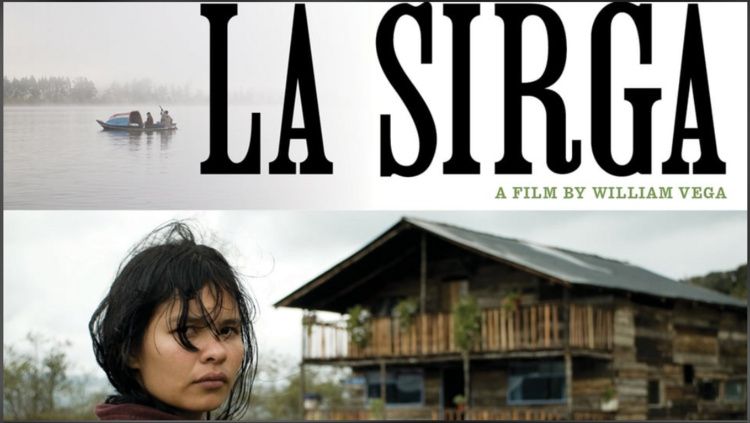
Alicia is helpless. War memories invade her mind like threatening thunder. Uprooted by the armed conflict, she tries to reshape her life in La Sirga, a dilapidated hostel on the shores of a great lake in the highlands of the Andes. There, on a swampy and murky beach, she will try to settle down until her fears and the threat of war resurface again.
A Cannes Film Festival (Directors' Fortnight).
About the Film Director
William Vega is a graduate of the Universidad del Valle's School of Communications and Journalism. He specialized in Film and Television Screenwriting at the School of Arts and Entertainment (TAI) in Madrid. Vega has worked as a director, screenwriter and assistant director on numerous film and television projects. His first film La Sirga earned him outstanding reviews and a reputation as one of the Colombian film industry's young, promising talents. The film had its world premiere at the 65th Cannes Festival Directors' Fortnight and has been selected for major festivals around the world including the Discovery section of the Toronto International Film Festival (TIFF) and the Latin Horizons section of the San Sebastian Festival.
********
Pizza will be served
Additional Information
Program
Einaudi Center for International Studies
Latin American and Caribbean Studies
The Lifeworld of Elizabeth Symons: Family biography and Atlantic geographies in a multigenerational letter collection
February 21, 2023
12:25 pm
Uris Hall, G08
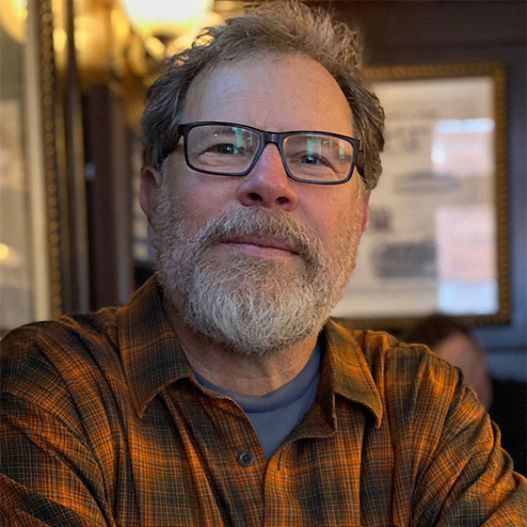
Karl Offen's presentation explores a multigenerational family letter collection to illustrate the relationship between family biography and Atlantic geographies from the mid-eighteenth to the early nineteenth centuries. Among the 300 documents in the letter collection that he and a colleague tracked down from a distant heir and are now held by Special Collections at the University of Bristol Library. In this presentation, Karl will focus on 40 letters written by an upper-middle-class homemaker from Bristol, England, Elizabeth Symons.
Most of Elizabeth’s letters were sent to her brother, Robert Hodgson, a trader and the British superintendent on the Mosquito Shore in eastern Central America (1768-1775). Elizabeth’s daughter and son-in-law gathered and preserved the documents to press property claims on the shore following the family’s demise in the early nineteenth century.
Combining a broad range of domestic and Atlantic themes from the period, the intimate letters provide a rare opportunity to describe how an ordinary Bristolian woman experienced and contributed to transatlantic trade and Atlantic geographies in her everyday life, and how these interacted with developments in Mosquitia, a British enclave in eastern Central America.
About the Speaker
Karl Offen is a historical geographer and political ecologist whose research explores Atlantic environmental history, the history of cartography, and Afro-Amerindian interactions in Central America, Colombia, and the Caribbean basin. He has an MA in Latin American Studies and a PhD in Geography. He is currently a Professor of Geography and the Environment at Syracuse University.
Additional Information
Program
Einaudi Center for International Studies
Latin American and Caribbean Studies
Institute for African Development Seminar Series: Role of Science and Policy Dissemination in Development
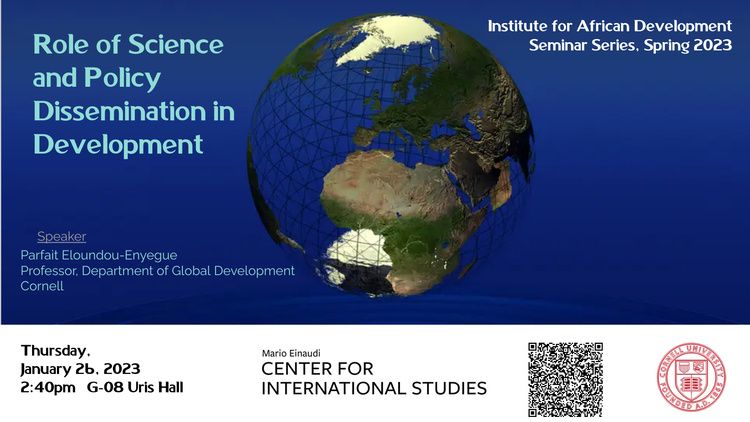
January 26, 2023
2:40 pm
Uris Hall, G-08
Registration link https://cornell.zoom.us/meeting/register/tJAvd-6hqz4iGNPIdRl_GB32lKdm8k…
In this seminar, we will explore promising avenues to improve the science policy interface in Africa. The seminar will cover multiple themes under this broad umbrella, including (a) reviews of productive modes of interfacing science and policy, (b) detailed explorations of the policy-making process in the region, including current obstacles to building strong S/P interfaces, (c) efforts to train the region’s scientists in policy communication, (d) the role of mass media, new media and civil society in the process, (e) the role of national and regional think-tanks, (f) advocacy efforts directed at policy-makers to promote an evidence-based culture.
Additional Information
Program
Einaudi Center for International Studies
Institute for African Development
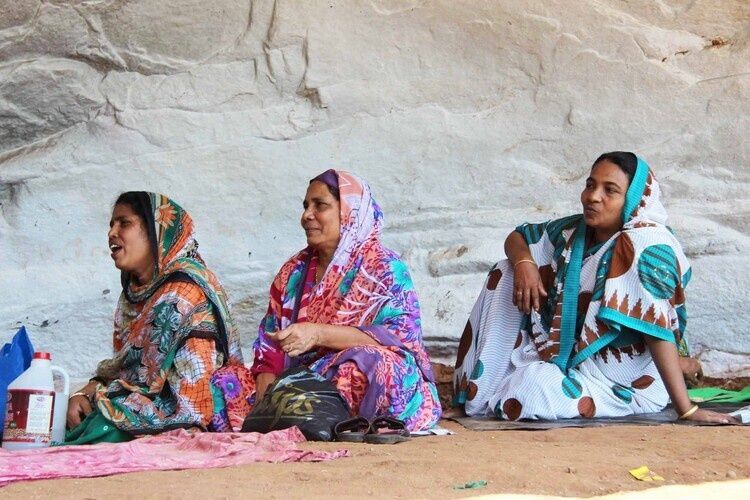
Community, Context, Critique: Sri Lanka Graduate Student Conference
April 22, 2023
9:00 am
Kahin Center
As in years prior, this conference provides an opportunity for graduate students to critically engage with the particularities of Sri Lanka and its diasporas; particularities often sacrificed to make our work speak clearly to non-specialist audiences. While we acknowledge the many benefits of such generalized engagement, we also recognize a keen need to build community around a shared sense of context. If there is something unique about the field of Sri Lankan Studies, then gathering in a common space to discuss the specificities of a local context offers opportunities to consider not only how this material contributes to the academic conversations in which it tends to be subsumed, but also how conventions of rigor, generosity, and accountability might best be achieved amongst scholars most intimately familiar with the conditions of producing this material. The conference will include students from within Sri Lanka; papers that engage with contemporary Sri Lankan scholarship, recognizing that the study of Sri Lanka within Sri Lanka often finds nuances lost in generalized or comparative disciplines around the globe; and reflections on the ways in which our institutional locations determine our approach to the study of Sri Lanka. The graduate conference aims to enhance intellectual exchange on Sri Lanka, emphasize the production of empirical and non-sectarian knowledge, build a new cohort of researchers across disciplines and institutions, and strengthen research and mentoring relationships across geographic, linguistic, and institutional borders.
CONFERENCE SCHEDULE
9:00-9:15 am Welcome
Iftikhar Dadi (History of Art & South Asia Program, Cornell University)
9:15-10:30 am Community and Context of the Nation
Theorising Internal Colonisation Through Resettlement Policy Pasan Jayasinghe (Political Science, University College London)
Making National Art Relationally in Postcolonial Sri Lanka: Case Study of Ediriweera Sarachchandra and Charles de Silva Gurunnanse Chamila Somirathna (Sinhala, University of Kelaniya)
Discussant: Anindita Banerjee (Comparative Literature, Cornell University)
10:45 am-12:00 pm Digital Archives of Sri Lanka
Crystal Baines (Programme Consultant, American Institute of Sri Lankan Studies)
Thamilini Jothilingam (Digital Asset Archivist, University of the Fraser Valley)
Kartik Amarnath (Archival Creators Fellow, South Asian American Digital Archive)
Chair: Anne M. Blackburn (Asian Studies, Cornell University)
1:30-2:00 pm Resources for Sri Lankan Studies
Bandara Herath (Asian Studies, Cornell University)
Daniel Bass (South Asia Program, Cornell University)
2:00-3:15 pm Eastern Communities and Contexts
The Tricky Work of Living: Everyday Life of Hill Country Tamils in Postwar Eastern Sri Lanka Shalini Mariyathas (Geography and Planning, University of Toronto)
Storytelling Brahmins: Migration, Marriage, and Caste in Sri Lanka’s East Senthujan Senkaiahliyan (Health Sciences, University of Toronto)
Discussant: Elizabeth Bittel (Sociology, SUNY-Cortland)
Additional Information
Program
Einaudi Center for International Studies
South Asia Program
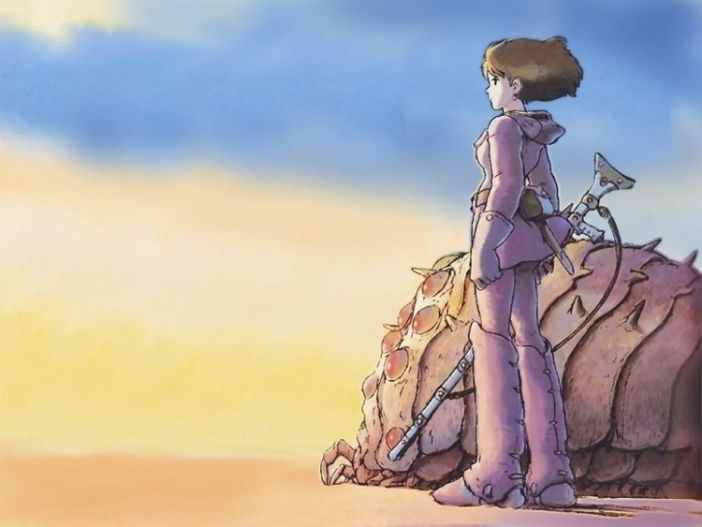
Nausicaä of the Valley of the Wind
January 29, 2023
2:30 pm
Willard Straight Theatre
1984 > Japan > Directed by Hayao Miyazaki
Featuring the voices of Alison Lohman, Uma Thurman, Patrick Stewart, Edward James Olmos and Shia LaBeouf
Princess Nausicaä, a fiercely independent young woman from the peaceful Valley of the Wind, fights to prevent two warring nations from destroying themselves and to restore balance to their dying planet. English dub.
1 hr 57 min
Additional Information
Program
Einaudi Center for International Studies
On Refugee Grief: An Intergenerational Remembrance

April 20, 2023
4:30 pm
Physical Sciences Building, 401
A Keynote Event for Displaced. Detained. Undeterred: A Critical/Creative Symposium
Thursday, April 20, 2023, Physical Sciences Building 401
4.30 Opening Remarks
Saida Hodžić (Cornell University)
4.45 KEYNOTE DIALOGUE
In this keynote, speakers Evyn Lê Espiritu Gandhi and Yến Lê Espiritu offer an intergenerational remembrance of Đại Tá [Colonel] HồNgọc Cẩn,our cậu hai [oldest maternal uncle] and ông hai[oldest granduncle] respectively, an Army of the Republic of Vietnam officer who was publicly executed by a Communist firing squad. This remembrance is a portal toa discussion on refugee grief, not as a private or depoliticized sentiment but as a resource forenacting a politics that confronts the conditions under which certain lives are considered moregrievable than others. Focusing on quotidian memory places, particularly Internet memorialsconstructed by the Vietnamese diasporic community, they will discuss how and why South Vietnam’swar dead have become so central to the refugees’ retellings of South Vietnamese losses in theUnited States. At the same time, they point out that these commemoration efforts can and dolead to harsh and unrelenting attacks against the living, especially those who harbor morecritical visions of the diasporic community.
The keynote will be followed by a reception.
To attend the keynote in person, register here. To attend the keynote virtually, register here.
Speakers
Evyn Lê Espiritu Gandhi is an assistant professor of Asian American Studies at the University of California, Los Angeles (Tovaangar). Author of Archipelago of Resettlement: Vietnamese Refugee Settlers and Decolonization across Guam and Israel-Palestine, Dr. Gandhi is the co-editor with Vinh Nguyen of The Routledge Handbook of Refugee Narratives.
Yến Lê Espiritu is Distinguished Professor of Ethnic Studies at the University of California, San Diego. Her books Body Counts: The Vietnam War and Militarized Refuge(es) and Departures: An Introduction to Critical Refugee Studies (co-editor) have charted an interdisciplinary field of critical refugee studies, which reconceptualizes “the refugee” not as an object of rescue but as a site of social and political critiques. Dr. Espiritu is also an inaugural member of The Critical Refugee Studies Collective.
Additional Information
Program
Southeast Asia Program
Einaudi Center for International Studies
Reppy Institute for Peace and Conflict Studies
Institute for European Studies
South Asia Program
Latin American and Caribbean Studies