
Einaudi Center for International Studies
After Hurricane Ian, Can Florida Residents Build Back Better?

Linda Shi, Global Public Voices
Linda Shi, assistant professor of city and regional planning, discusses rebuilding after Hurricane Ian.
Additional Information
‘Moving Backward’: In Xi’s China, Some See an Era of Total Control
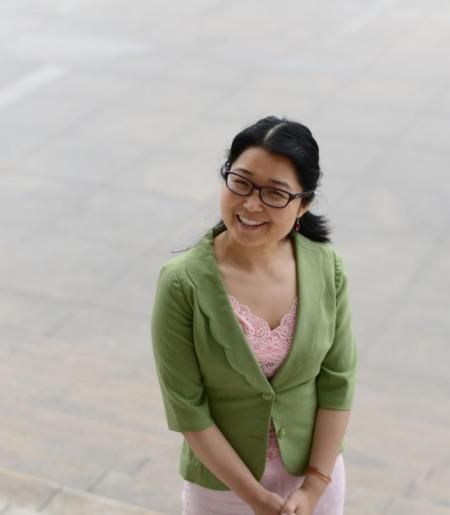
Peidong Sun, EAP
Peidong Sun, associate professor of arts and sciences in China and Asia-Pacific studies, says, “The teeth of totalitarianism were inching toward me. If I still wanted to do the kind of research I liked, I would have to leave China.”
Additional Information
In U.K. Fallout Lessons for a World Facing Harsh Economic Realities
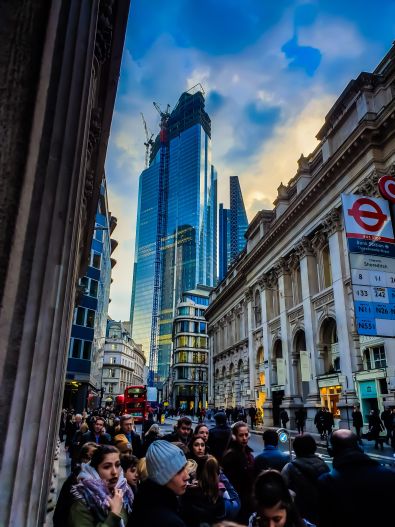
Eswar Prasad, SAP
Additional Information
With New Crackdown, Biden Wages Global Campaign on Chinese Technology
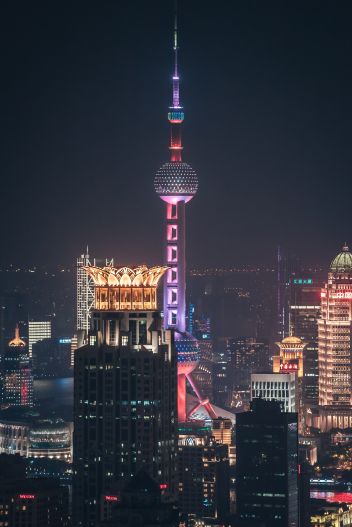
Jessica Chen Weiss, EAP
“Sanctions that put the United States at odds with its allies and partners today will both undercut their effectiveness and make it harder to enroll a broad coalition of states in U.S. deterrence efforts,” says Jessica Chen Weiss, professor of government and public policy.
Additional Information
“De Lo Mio,” film screening with Dominican director Diana Peralta for Q&A

October 20, 2022
7:00 pm
Schwartz Performing Arts Center, Film Forum
“De Lo Mio" --Two “ride or die” sisters raised in NYC reunite with their estranged brother in Dominican Republic to clean out their late father’s childhood home. The siblings laugh, brawl, and face their demons as they come to terms with letting go of their last connection to their motherland.
Schwartz Performing Arts Center, Film Forum
Additional Information
Program
Einaudi Center for International Studies
Latin American and Caribbean Studies
Writing the Future: Career Planning Series for Chinese Students - Financial Companies (书写未来: 留学生职业规划系列讨论Ⅳ - 金融企业篇)

October 26, 2022
10:00 pm
Event Language: Chinese
Event Time: Wednesday, October 26, 2022, 10:00 - 11:30 Beijing Time /
Tuesday, October 25, 2022 22:00 - 23:30 EDT
The number and percentage of overseas students returning to China for employment and entrepreneurship after graduation is increasing year by year. The Cornell China Center is hosting a career planning discussion series to provide current and recent graduates with an opportunity to learn about the current situation, needs and trends in China's job market, gain insight into the operational mechanisms of companies, workplace culture and key concerns in the hiring process, and have direct conversations with companies.
The first three events in the series focused on Tech and Financial firms and received enthusiastic discussions and participation from students, alumni, and friends. The fourth session of the series will focus on the financial sector, and we will invite senior HR experts from UBS China, HSBC, Huatai Securities, and Cyanhill Capital to discuss the job search and career development of young talent, as well as recent recruitment strategies and talent needs.
Topics
Cultural characteristics and opportunities in the workplaceSpecific advantages and challenges of different educational backgroundsTrends in talent demandOpportunities and challenges in today's worldRoundtable Panelists (additions pending)
Ruby Yushan CHEN, Head of Campus Recruitment Program, Human Resources Department, Huatai Securities. Master of Strategic Marketing, University of Warwick, joined Huatai Securities service through campusrecruitment in 2016 till now, mainly responsible for campus recruitment, employer branding and other dimensions.Hong YAN, China Talent Lead, Human Resources, UBS China. She joined UBS in 2021 and is responsible for talent management, learning development and corporate culture development in UBS China.Fiona Yang LIU, CEO Assistant/ Head of Human Resources Department, Cyanhill Capital. MBA from Cornell University and Tsinghua University, Master of Investment Management from Hong Kong Polytechnic University; former Director of Operations of Columbia University Beijing Center, joined Cyanhill Capital in 2022, mainly responsible for investment business synergy, talent development and organization building.Moderators & Discussants
Peter WEN, Manager, Cornell in ChinaDi LU, Corporate Relations Manager - Asia, Olin Business School, Washington University in St. LouisQiawen ZHANG, School of Arts and Sciences Alumni Class of 2020This event is co-hosted by the Cornell China Center (Beijing) and the China Office of Washington University (St. Louis).
海外留学生们毕业后归国就业创业人数和比例逐年增加。康奈尔中国中心推出职业规划讨论系列,为在校的和新近毕业的同学们提供一个了解国内就业市场现状、需求和趋势,深入了解企业的运营机制、职场文化和招聘过程主要关注点,和与企业直接对话的机会。
系列前两场关注科技企业,第三场聚焦金融企业,活动受到了同学、校友以及朋友们的热烈讨论与参与,系列进入第四场我们仍将聚焦备受关注的金融领域,本次活动邀请了来自华泰证券、瑞银中国、青山资本以及汇丰银行的资深人力资源专家们就青年人才的求职和职业发展,以及近期招聘战略和人才需求继续进行讨论。
Additional Information
Program
Einaudi Center for International Studies
Thinking Historically & Teaching Globally
November 8, 2022
2:00 pm
Historical thinking is one of the most critical skills a college student can acquire. Teaching globally is a vital approach to understanding our contemporary world.
How do we combine the resources available to us from archives, libraries, and online collections to inform our understanding of the past and the present? In this workshop we collaborate across the expertise of librarians and historians to further conversations about teaching, history, and library materials.
Are you a post-secondary educator seeking to build connections across the State of New York? Are you faculty looking for more primary source materials? Are you interested in learning more about how to access materials from libraries at a distance? Are you a graduate student in need of resources and source materials as you construct current and future syllabi? If you have answered "yes" to any of these questions, then please do join us!
This online workshop is sponsored by the Mario Einaudi Center for International Studies, with funding support from the U.S. Department of Education Title VI NRC Program.
Speakers:
Emily Zinger, Southeast Asia Digital Librarian, Cornell University
Dr. Joshua Kueh, Reference Librarian, Asian Division, Library of Congress
Dr. Michitake Aso, Associate Professor, Department of History, SUNY-Albany
Moderator: Dr. William Noseworthy
Additional Information
Program
Einaudi Center for International Studies
Southeast Asia Program
Latin American and Caribbean Studies
Institute for African Development
South Asia Program
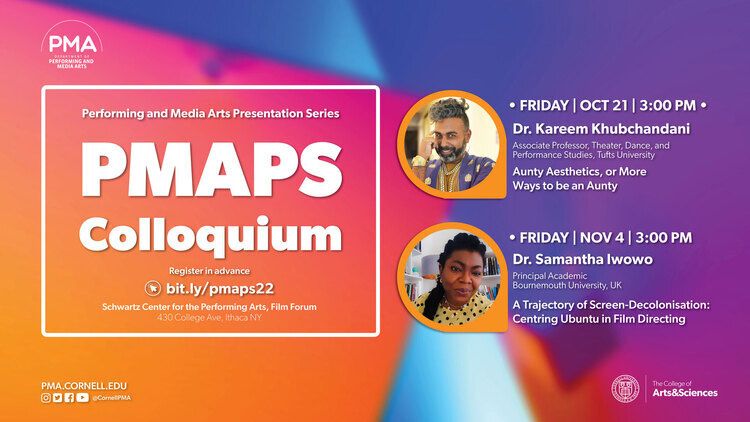
PMAPS Colloquium: Aunty Aesthetics, or More Ways to be an Aunty, a talk Dr. Kareem Khubchandani
October 21, 2022
3:00 pm
Schwartz Center for Performing Arts, Film Forum
Aunty Aesthetics, or More Ways to be an Aunty, a talk Dr. Kareem Khubchandani
Friday, October 21st, 3:00 p.m. - 4.30 p.m. , Film Forum and on Zoom
Description:
Aunties are known to be terrifying figures, domineering and difficult, overbearing to younger generations. They are especially known for managing and curtailing desire, whether shaming you for that extra piece of cake you are eyeing, or blabbing to your parents about your nighttime escapes. As such, they have become the butt of the joke, particularly in meme culture that critiques older generation's outmoded style and politics. This talk revisits the hegemonic figure of the South Asian aunty in performance, TV, literature, and visual culture to detail what paying attention to her aesthetics can teach us about the queer and trans futures she makes possible rather than forecloses.
Kareem Khubchandani is Associate Professor in theater, dance, and performance studies at Tufts University. He is the author of Ishtyle: Accenting Gay Indian Nightlife (University of Michigan Press, 2020), co-editor of Queer Nightlife (University of Michigan Press, 2021), and guest editor of the "Critical Aunty Studies" special issue of Text and Performance Quarterly.
Additional Information
Program
Einaudi Center for International Studies
South Asia Program
Migrations Info Session: Community College Faculty Professional Development

November 14, 2022
3:30 pm
Join us for an information session to learn more about the Cornell Migrations initiative’s Community College Faculty Professional Development Fellowships on racism, dispossession, and migration (RDM) for faculty of any discipline at two-year institutions in upstate New York.
With support from the Mellon Foundation Just Futures Initiative and Global Cornell, this opportunity is a year-long program that provides $1,000 for community college faculty to integrate issues of racism, dispossession, and migration into their curricula.
RDM projects may include a new course, a new unit for an existing course, or a service-learning component to an existing course that encourages discussion on issues of racism, dispossession, and migration. Understanding the historical and contemporary relationships between the displacement of people, including through the dispossession of Indigenous lands and rights, and racism, xenophobia, opposition to immigration, and anti-immigrant violence.
The Cornell Migrations co-directors will address any questions about priorities, selection criteria, budgets, and other guidance on how to prepare a successful application. Proposals due on January 13, 2023, by email to Mary Ball, Migrations initiative program manager, mjn3@cornell.edu. Consultation on proposal ideas is strongly encouraged and questions about this fellowship are wholly welcome.
Additional Information
Program
Einaudi Center for International Studies
Refugee Cities: How Afghans Transformed Pakistan

November 21, 2022
11:00 am
Talk by Sanaa Alimia in conversation with Aziz Hakimi
In this talk, Sanaa Alimia will discuss her new manuscript, Refugee Cities: How Afghans Transformed Pakistan (University of Pennsylvania Press, 2022). The book is a people's history of displacement across Afghanistan and Pakistan. Weaving together microhistories of neighbourhoods in Peshawar and Karachi, Alimia shows how Afghans have claimed and accessed rights and resources in these cities. Their struggles, which are a crucial, neglected dimension of Pakistan's urban history, reflect how Pakistan's longer-term Afghan population is not an alien cohort waiting to go home but rather an essential part of Pakistani society.
Sanaa Alimia is an Assistant Professor of Political Science at the Aga Khan University, Institute for the Study of Muslim Civilisations. She is a recipient of the British Academy/ Leverhulme Small Grants Award for her research project, 'Digital Borders, Bodies, and Mobility in South Asia.' Alimia’ s manuscript, Refugee Cities: How Afghans Transformed Pakistan, is out in 2022 (University of Pennsylvania Press). Alimia has previously held positions at the Leibniz Zentrum Moderner Orient, Berlin (2014-2019), Department of Political Science, University of Peshawar (2013-2017), and SOAS, London (2011-2014).
Aziz Hakimi holds a PhD in Development Studies from SOAS-University of London. His research and publications have addressed subjects including war and state formation, policing and local militias, and the intersections between gender, legal reform, marriage practices and migration in Afghanistan and among Afghan diaspora in Turkey.
Between 2016-2019, Dr. Hakimi was co-director of the New Afghan Men? Marriage, Masculinities and Gender Politics in Afghanistan research project. It was a collaborative initiative between Chr. Michelsen Institute (Norway), University of Sussex (UK) and Peace Training and Research Organization (Afghanistan). The project was funded by the Research Council of Norway (RCN) and explored the changing notions of masculinity and marriage practices in contemporary Afghanistan.
Additional Information
Program
Einaudi Center for International Studies
South Asia Program
Reppy Institute for Peace and Conflict Studies