
Einaudi Center for International Studies
Russia Gives China’s Yuan a Boost as Firms Cope with Sanctions

Eswar Prasad, SAP
Although the greenback’s dominance remains assured, the yuan will get a boost from countries looking to skirt the dollar, said Eswar Prasad, senior professor of trade policy.
Additional Information
This Might Not Be a Cold War, But It Feels Like One
Jessica Chen Weiss, EAP
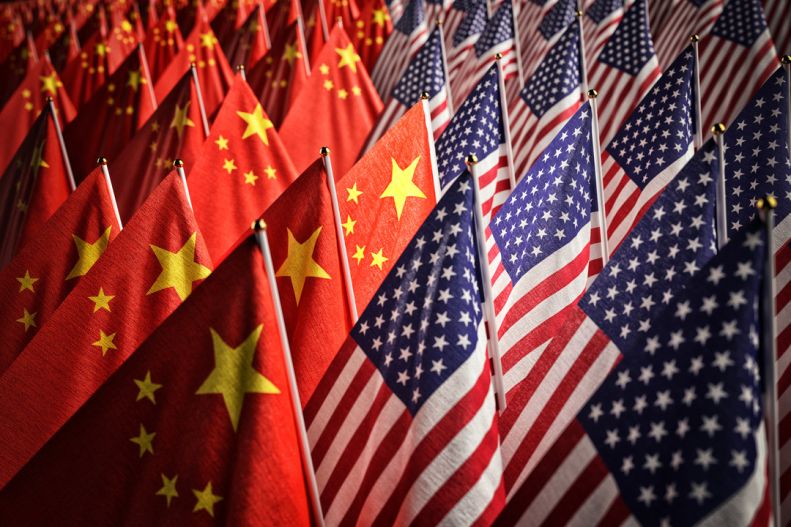
This article notes an op-ed Jessica Chen Weiss, professor of government and public policy, wrote in Foreign Affairs that suggested China and the U.S. were already engaged in a global struggle.
Additional Information
Bill Gates: Technological Innovation Would Help Solve Hunger

Rachel Bezner Kerr, Einaudi
Rachel Bezner Kerr, professor of global development, discusses approaches that can reduce the need for food aid and build more resilient farming systems.
Additional Information
Global Hubs Info Session: Joint Seed Grants with University of Edinburgh

September 30, 2022
10:30 am
Global Cornell is offering competitive faculty grants in collaboration with Global Hubs partners.
Apply for funding to explore potential research collaborations with colleagues at Hubs universities.
These Joint Research and Seed Grants have been established to bring faculty from partner institutions together to develop joint projects that will strengthen Cornell and Global Hubs partner universities' strategic priorities and develop multidisciplinary cutting-edge research and curriculum to create academic and societal impact.
Please join us on September 30 (10:30–11:30 a.m. ET/3:30–4:30 p.m. GMT) for a joint info session to learn more about the University of Edinburgh–Cornell University grant opportunity. Q&A and collaboration matchmaking will follow a short presentation.
Edinburgh–Cornell Seed Funds:
Up to five (5) proposals will be fundedEach successful proposal may receive up to $5,000/£4,000 from each university for a total of $10,000/£8,000Project duration: January 1–December 31, 2023Submission deadline: October 21 by 11:59 pm ET/October 22 by 4:59 a.m. GMTRegister today for the Edinburgh-Cornell Joint Info Session on Zoom.
Learn about additional seed grants available with other Global Hubs partners.
Additional Information
Program
Einaudi Center for International Studies
Institute for European Studies
Laidlaw Research Symposium

September 28, 2022
5:00 pm
Physical Sciences Building, South passageway and room 120
Laidlaw Scholars at Cornell will share their summer research and leadership-in-action experiences through posters, oral presentations, and photo essays.
First-year scholars conducted research with faculty mentors on topics ranging from xenophobia to menstrual health to colonialism and the East India Company. Second-year scholars engaged with communities around the world, including Vietnam, Zambia, Fiji, Mexico, the UK, and more, working on community health, resiliency, human rights, and representation in the media.
The Laidlaw Undergraduate Leadership and Research Scholarship Program provides generous funding to first- and second-year undergraduates over two years as they pursue internationally focused research, engage in leadership training and a leadership-in-action experience, and join a global network of like-minded peers.
Learn more about the program, which is administered by the Mario Einaudi Center for International Studies with leadership training support from the Einhorn Center for Community Engagement.
Additional Information
Program
Einaudi Center for International Studies
Al-An deSouza: Migrations Visiting Artist Talk

October 13, 2022
5:15 pm
Johnson Museum of Art, Wing lecture room
Al-An deSouza will present the third Migrations Visiting Artist Talk, “The Culture of Location,” in conjunction with their current exhibition at the Johnson Museum, Al-An deSouza: Elegies for Futures Past. The talk will be preceded by a curator-led walk-through of the exhibition at 4PM, open to all.
DeSouza will discuss the genre of landscape in relation to migration, settlement, and climate change. The title of their talk is a play on The Location of Culture by Homi Bhabha, now a classic of postcolonial theory. DeSouza’s transmedia practice explores the legacies of colonialism through strategies of humor, fabulation, and (mis)translation.
A conceptual photographer, performance artist, and writer, deSouza was born to South Asian parents in Nairobi, Kenya, and raised in England before settling in the United States. They are a professor in the Department of Art Practice at University of California, Berkeley, and hold an MFA from University of California, Los Angeles and a BFA from Bath Academy of Art, England. DeSouza is represented by Talwar Gallery, New York and New Delhi.
This is the third in a series of artist talks with the campus-wide Migrations Global Grand Challenge, part of Global Cornell, with support from the Mellon Foundation’s Just Futures Initiative.
Masks are suggested and social distancing will be encouraged in the Museum's wing lecture room. This event will also be available as a webinar. Please click this link to join (Passcode: 1234).
Additional Information
Program
Einaudi Center for International Studies
South Asia Program
FLIP Volunteer Orientation & 1st Organizational Meeting
September 23, 2022
11:30 am
Uris Hall, G08
Formerly known as the Afterschool Language and Culture Program (ALCP), The Einaudi Center’s Foreign Language Introduction Program (FLIP) has introduced thousands of children in Upstate New York to world languages and cultures. This event will gather potentially interested student volunteers to meet with each other, as well as the team members of FLIP.
Additional Information
Program
Einaudi Center for International Studies
Opportunities to Engage

Fall 2022 Einaudi Center News
Don't miss this fall's wealth of opportunities for Cornell faculty and students and our partners around the world.
Additional Information
CRADLE Hosts Global Economics Conference

100 Years of Economic Development
September 15–17: Kaushik Basu, Einaudi, and Cornell's Department of Economics welcome economists from around the world. Find out how to attend.
Additional Information
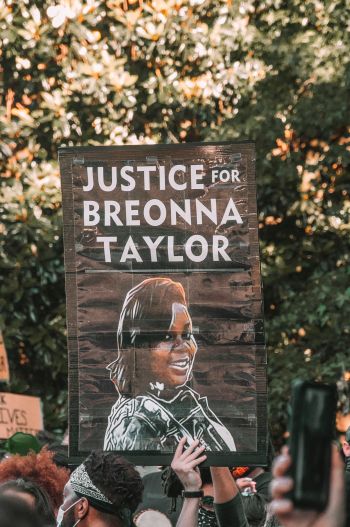
Officer’s Guilty Plea in Breonna Taylor Case Raises Questions about Possible Cooperation with Feds
Joseph Magulies, PACS
“The mere fact that the feds got involved as a separate prosecution is unusual. Most cases of police shootings, even with multiple co-defendants, do not lead to federal charges,” says Joe Margulies, professor of law.