
Einaudi Center for International Studies
Counterterrorism Between the Wars: An International History, 1919-1937

March 9, 2023
11:25 am
What happened to the tens of millions of guns left over from World War I? Mary Barton discusses how the Great Powers’ failure to secure these weapons contributed to the rise of state-sponsored terrorism during the 1920s and 1930s. Barton tells a global story of the demise of empires, the rise of communism, and the cooperation between the United Kingdom and United States that would evolve into the Five Eyes intelligence alliance.
The Five Eyes remains a vital intelligence alliance today. The Five Eyes justice chiefs recently strongly supported Ukraine's efforts to prosecute war crimes arising from Russia's invasion.
Please join us for this virtual conversation. Register here.
About the Speaker
Mary Barton is an analyst with the U.S. government. She received her Ph.D. from the University of Virginia in 2016. She completed postdoctoral fellowships at the Henry A. Kissinger Center for Global Affairs, SAIS, and Dartmouth College, and previously served as a historian and wargaming analyst supporting the Office of the Secretary of Defense, Department of Defense.
Presented by the Reppy Institute for Peace and Conflict Studies. Co-sponsored by the Institute for European Studies and the Gender and Security Sector Lab.
Additional Information
Program
Einaudi Center for International Studies
Reppy Institute for Peace and Conflict Studies
Institute for European Studies
A Cold War History of Religion and Education in Japan and the US
February 16, 2023
5:00 pm
A. D. White House, Guerlac Room
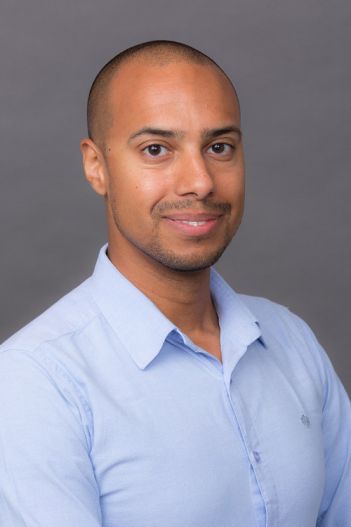
"Private Academies and the Public Good: A Cold War History of Religion and Education in Japan and the US" lecture with Jolyon Thomas, University of Pennsylvania, on Thursday, February 16, at 5:00 p.m. in A.D. White House.
Thomas researches religion in Japan and the United States at the University of Pennsylvania.
Sponsored by the Religious Studies Program with support from Department of Asian Studies, East Asian Program, Department of History, Mario Einaudi Center for International Studies, Society for the Humanities, and American Studies Program.
Additional Information
Program
Einaudi Center for International Studies
East Asia Program
Masculinities and Everyday Gendered Violences in Urban India
February 16, 2023
11:25 am
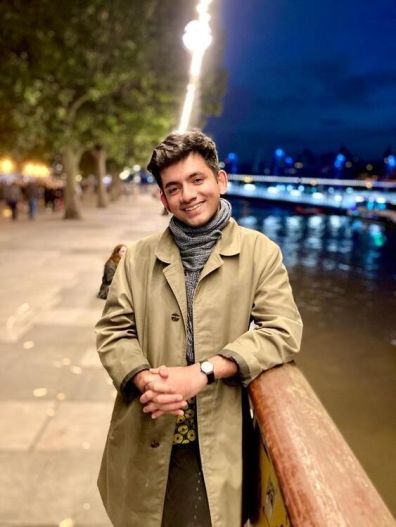
Shannon Philip explores the gendering of everyday urban spaces and the social production of gendered violence. Through ethnographic data collected by ‘hanging out’ with young Indian men in New Delhi, he discusses the ways masculinities are constructed and performed, and how these in turn produce hostility, fear, and violence for women and girls accessing the same urban spaces.
Through weaving together material from myriad urban sites like gyms, bars, trains, street corners, night clubs, gay cruising parks as well as shopping malls, Philip explores how there is an attempt to make the city a masculine space, with a hypersexualization of women in the same spaces. However, this process is not even or uniform, with several masculine anxieties and vulnerabilities also emerging in men’s claims on the city from queer and non-masculine bodies. In this way, the urban space becomes an interesting palimpsest to explore the politics of gender, class, sexualities, and violences on an everyday level.
Please join us for this virtual conversation. Register here.
About the Speaker
Dr Shannon Philip is an Assistant Professor of Sociology at the University of East Anglia, UK and a Research Associate at the University of Cambridge, UK, and the University of Johannesburg, South Africa. His first monograph has recently been published with Cambridge University Press (2022) titled Becoming Young Men in a New India: Masculinities, Gender Relations and Violence in the Postcolony. Shannon’s new research project comparatively explores youth, sexualities, urban transformations, and gender in South Africa and India.
Presented by the Reppy Institute for Peace and Conflict Studies. Co-sponsored by the South Asia Program, and the Gender and Security Sector Lab.
Additional Information
Program
Einaudi Center for International Studies
Reppy Institute for Peace and Conflict Studies
South Asia Program
Violence against Women in Multi-Violence Contexts: Militarization and Organized Criminal Groups’ Territorial Control
February 2, 2023
11:25 am
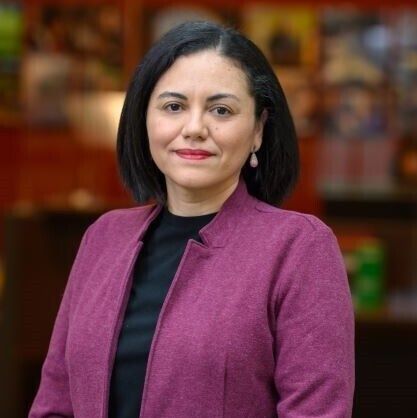
With a focus on gang violence in El Salvador, Dr. Córdova’s book examines how organized criminal groups’ operations in the territories they control, and the incursion of the police and military, threaten women’s safety. The main argument establishes that gangs’ territorial control increases women’s daily risk of gender-based violence in the streets of neighborhoods and in the privacy of homes, and that this risk is perpetuated by diminished reporting rates due to widespread distrust in the police, largely resulting from increased police abuse associated with the militarization of public security. The consequences of these dynamics for women’s resistance, particularly implications for international migration, are also explored.
Dr. Córdova’s book project, supported by a 2022 Harry Frank Guggenheim Foundation Distinguished Scholar Award and a grant from the Kellogg Institute at the University of Notre Dame, contributes to the growing literature in political science on criminal violence and militarization by identifying some of the mechanisms that explain women’s increased risk of gender-based violence in territories controlled by organized criminal groups in the midst of state repression.
Dr. Abby Córdova's project builds on and contributes to this research by examining the evidence on the effects of women’s police stations on citizens’ attitudes toward the police and gender-based violence as well as impacts on the incidence of violence against women and reporting rates in the context of Brazil.
Please join us for this virtual conversation. Register here.
About the Speaker
Dr. Abby Córdova is an associate professor of global affairs in the Keough School of Global Affairs at the University of Notre Dame. Córdova’s research examines the consequences of inequality and marginalization for democracy, integrating topics related to violence against women, organized crime, militarization, and international migration in the context of Central America, Mexico, and Brazil. She was awarded the Harry Frank Guggenheim Distinguished Scholar Award in 2022.
Presented by the Reppy Institute for Peace and Conflict Studies. Co-sponsored by the Feminist, Gender & Sexuality Studies Program, and the Gender and Security Sector Lab.
Additional Information
Program
Einaudi Center for International Studies
Reppy Institute for Peace and Conflict Studies
Latin American and Caribbean Studies
Immigration Reform: Might Past Be Prologue?
December 6, 2022
1:00 pm
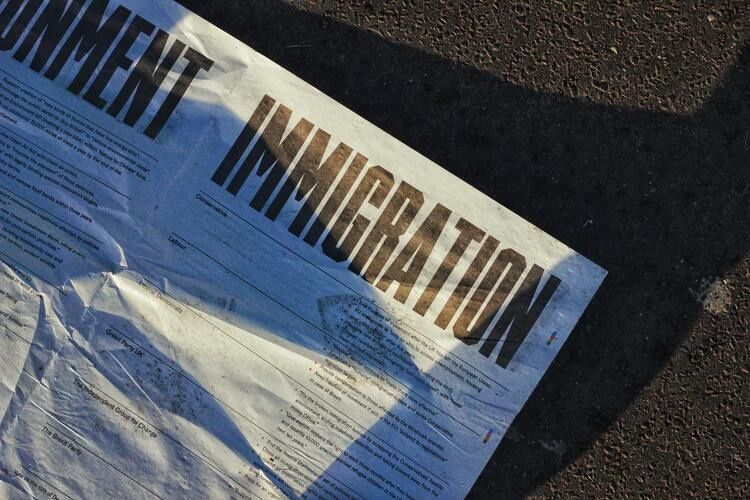
It’s been over 30 years since Congress enacted the most recent set of comprehensive immigration reforms: the Immigration Reform and Control Act of 1986 and the Immigration Act of 1990. These bipartisan yet hotly contested bills passed only after a debate spanning five presidential administrations, eight congressional sessions, and painful compromises by all parties. Even then, both bills died on the House floor before being resurrected at the 11th hour.
Can lessons learned during the last round of reform be applied to future debates? Charles Kamasaki, author of “Immigration Reform: The Corpse That Will Not Die” (Mandel Vilar Press, 2019), thinks so. The book provides a history of how the 1980s-era reforms were enacted along with a summary of developments since then. It concludes with seven lessons that advocates and lawmakers should consider in advancing future immigration reform.
Join us for this discussion with Mr. Kamasaki, Cornell Law School professor Steve Yale-Loehr, and Wall Street Journal immigration reporter Michelle Hackman.
Additional Information
Program
Einaudi Center for International Studies
Iceland President Visits Cornell
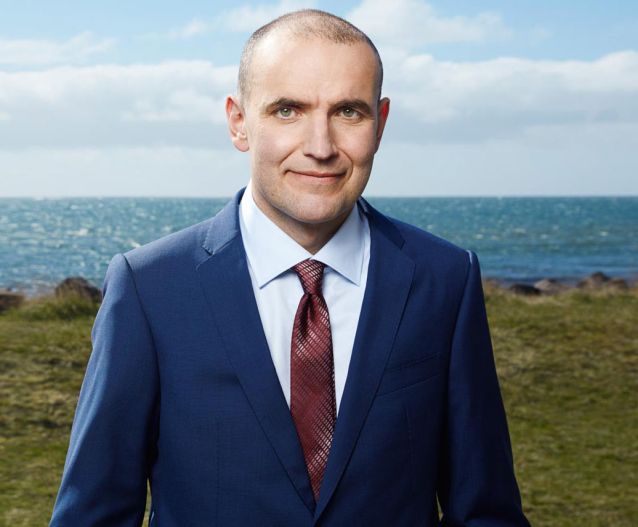
Einaudi Hosts Nov. 10 Lecture
Guðni Th. Jóhannesson shares his perspective as the leader of a small country that was a founding member of NATO. Watch the livestream at 4:30.
Additional Information
In Bali, an Indonesian Empire That Double-Crossed the Chinese Hides in Plain Sight

Eric Tagliacozzo, CMSP/SAP
Eric Tagliacozzo, professor of history, says, “So, for example, in the so-called ‘spice islands’ of eastern Indonesia, now called Maluku, Majapahit’s sway was felt through trade extractions.”
Additional Information
Will Sanctions against Russia End the War in Ukraine?

Nicholas Mulder, IES
“Sanctions are kind of like alchemy,” says Nicholas Mulder, assistant professor of history. “You apply all this pressure to this black box of a country’s economy and hope that, on the other side of that black box, political change comes out. But making sure that pain and pressure lead to the kind of change you want to see—that’s the real challenge, and often people underestimate how difficult that will be.”
Additional Information
Posts Misrepresent Border Encounters with People on Terror Watchlist
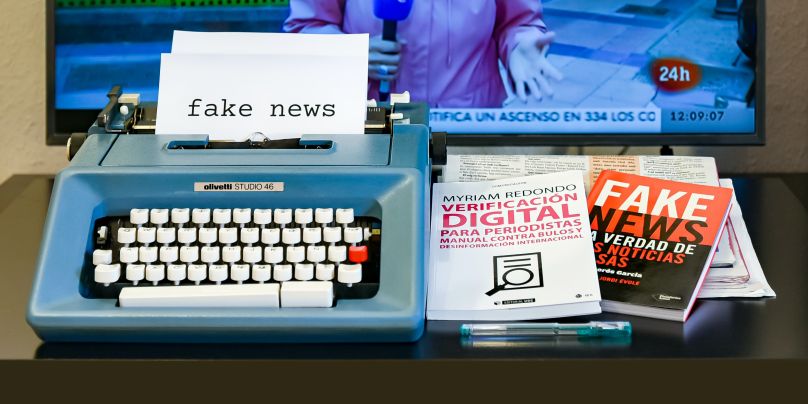
Stephen Yale-Loehr, Migrations
“To say that 98 terrorists made it into the U.S. is an exaggeration,” says Stephen Yale-Loehr, professor of immigration law. “These 98 were all caught.”
Additional Information
China Likely to Become A Lot More Insular in Its Policies with Re-election of Xi Jinping, Says Professor

Eswar Prasad, SAP
“In the top levels of the government in China, it is loyalism to Xi that has taken precedence over other factors. However there are even more important appointments that are coming at the technocratic level which we haven’t seen yet,” says Eswar Prasad, professor of economics and international trade policy.