
Einaudi Center for International Studies
Pelosi's Taiwan Trip Shows US and China Aren't Ready to Fight over 'Third Rail" of Chips

Sarah Kreps, PACS
"I think both the U.S. and China are starting to become a bit more pragmatic when it comes to semiconductors,” says Sarah Kreps, professor of government and public policy.
Additional Information
The Myth of the Libertarian Exit
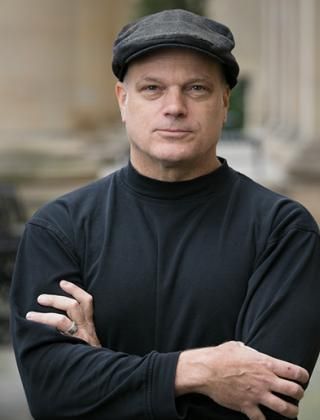
Raymond Craib, LACS
This piece features the new book Adventure Capitalism by Raymond Craib, professor of American history.
Additional Information
Immigrants Are Not Getting Social Security Numbers at the U.S. Border
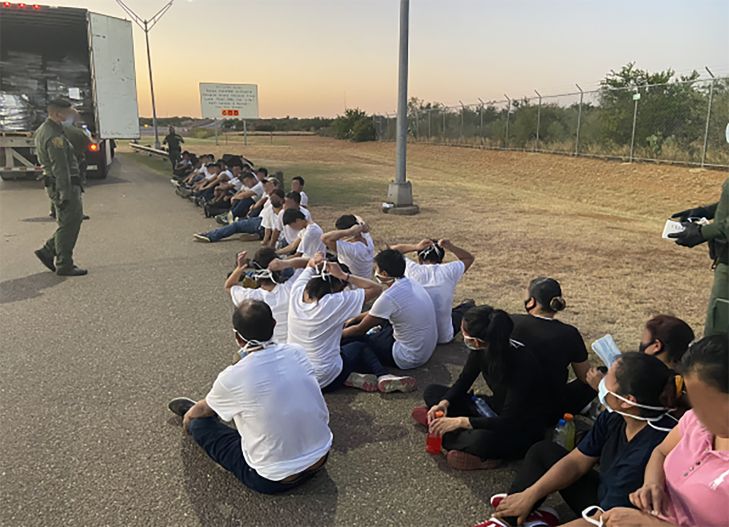
Stephen Yale-Loehr, Migrations
Stephen Yale-Loehr, professor of immigration law, agrees that Border Patrol agents won’t hand out Social Security numbers. Loehr says, “Even if they were to do it, it would be illegal for them to do it and they could be prosecuted for doing it. I believe it’s a false statement.”
Additional Information
Global Inequality Is Rising Again

Ravi Kanbur, PACS/SAP
This piece references research by Ravi Kanbur, professor of economics and policy, suggesting global inequality may rise in steady fashion for years to come.
Additional Information
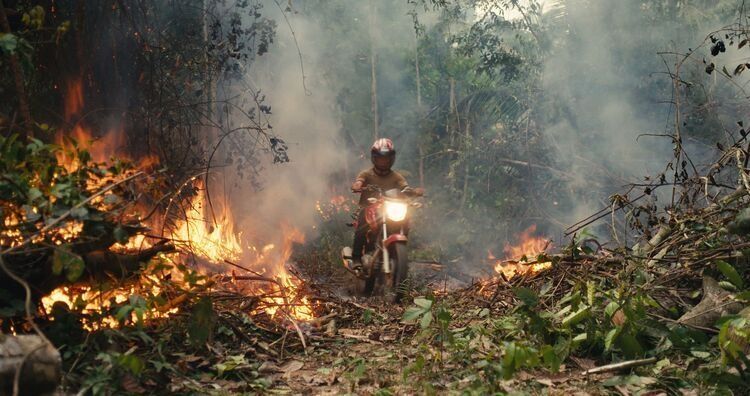
"The Territory" Film about indigenous rights and settler dreams in the Amazon forests of Brazil | Free Admission
November 29, 2022
4:45 pm
Willard Straight Theatre, Willard Straight Hall Theater
Featuring a post-screening panel discussion panel discussing indigenous rights in the Brazil US and will follow the film and includes Wendy Wolford (Global Development), Renata Marques Leitao (College of Human Ecology), and Eric T. Cheyfitz (American Indian and Indigenous Studies Program).
Check out the trailer below.
Pizza will be served. Showing will begin right away.
Co-sponsored by the Latin American and Caribbean Studies Program (LACS) and the American Indian and Indigenous Studies Program (AIIS) along with collaboration by Cornell Cinema and the Office of the Vice Provost for International Affairs.
The feature documentary debut of director Alex Pritz (“My Dear Kyrgyzstan”), THE TERRITORY follows the vital, inspiring fight of the Indigenous Uru-eu-wau-wau people of Brazil to defend their land from non-Indigenous farmers intent on colonizing their protected territory in the Amazon rainforest. Co-produced by the Uru-eu-wau-wau community, the film draws on intimate access to both the Indigenous perspective and the farmers who want their land to chronicle a conflict that has profound implications for the survival of a people and the planet.
Partially shot by the Uru-eu-wau-wau people and filmed over the course of several years, THE TERRITORY offers an authentic portrait of an Indigenous community’s daily life and struggles. With its breathtaking cinematography showcasing the dramatic landscape and richly textured sound design, the film brings audiences deep into the precious ecosystem they are fighting to protect.
Since the Uru-eu-wau-wau were first contacted by the Brazilian government in 1981, their territory has become an island of green rainforest surrounded by denuded farms and ranches — the results of four decades of unchecked deforestation. The community has faced environmentally destructive and often violent incursions into their sovereign territory by nonnatives seeking to exploit the land. Illegal logging and land clearing incursions have become more frequent and more brazen over the years.
Inside Uru-eu-wau-wau territory, there are fewer than 200 people, including elders and children, to defend nearly 7,000 square miles of rainforest. On the edges of the protected lands, a network of farmers organizes to stake their claims through official channels, while individual land-grabbers begin clear-cutting swaths of rainforest for themselves. With the community’s survival at stake, Bitaté Uru-eu-wau-wau and Neidinha Bandeira — a young Indigenous leader and his female mentor — must find new ways to protect the rainforest from encroaching invaders. But rather than rely on others to tell their story, the Uru-eu-wau-wau take control of the narrative and create their own news media team to bring the world the truth.
More on the film at:
https://films.nationalgeographic.com/the-territory
The Territory Trailer (2022)
Additional Information
Program
Einaudi Center for International Studies
Latin American and Caribbean Studies
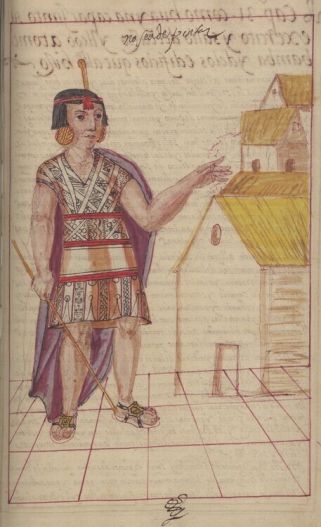
“Permanence and Ephemerality in Inca Architecture,” by Stella Nair, LACS Seminar Series 60th Anniversary, Reception follows
November 14, 2022
4:30 pm
Goldwin Smith Hall, G30
Co-sponsored by: History of Art Department
With its striking stonework, dramatically sited buildings, and impressive terraces cascading down steep mountainsides, Inca architecture has fascinated visitors to the Andes for centuries. Yet, this lithic architecture was only one part of the complex built environment of the Inca. In this talk, Nair explores how issues of permanence and ephemerality were crucial to Inca building practices and reveal the critical role gender played in creating and giving meaning to place.
Stella Nair’s scholarship focuses on the built environment of indigenous communities in the Americas. Trained as an architect and architectural historian, Nair has conducted fieldwork in Bolivia, Mexico, Peru, and the United States, with ongoing projects in the South Central Andes. Nair’s book, At Home with the Sapa Inca: Architecture, Space, and Legacy at Chinchero (University of Texas Press, 2015), examines the sophisticated ways in which the Inca manipulated space and architecture to impose their authority. She has also published (with Jean-Pierre Protzen), The Stones of Tiahuanaco: A Study of Architecture and Construction (Cotsen Institute of Archaeology Press, 2013), which explores one of the world’s most artful and sophisticated carving traditions.
Nair has received numerous research grants and fellowships from the American Philosophical Association, the Center for the Study of the Visual Arts (National Gallery of Art), Dumbarton Oaks, the Fulbright Institute, the Getty Foundation, and the John Carter Brown Library. More recently, Nair was awarded a Rome Prize by the American Academy of Rome and a John Simon Guggenheim Memorial Fellowship from the Guggenheim Foundation. Currently, Nair directs the Andean Laboratory and the Architecture laboratory at the Cotsen Institute of Archaeology.
Additional Information
Program
Einaudi Center for International Studies
Latin American and Caribbean Studies
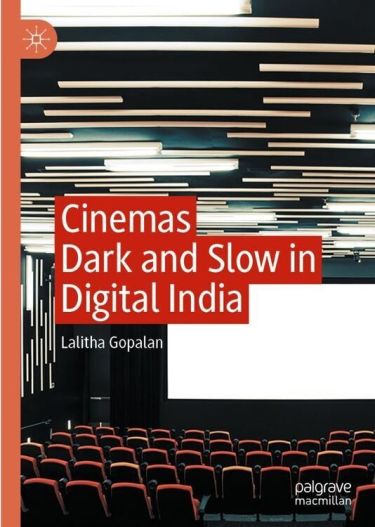
Cinemas Dark and Slow in Digital India
September 12, 2022
12:15 pm
Uris Hall, G08
Talk by Dr. Lalitha Gopalan
Cinemas Dark and Slow in Digital India provides a sustained engagement with contemporary Indian feature films from outside the mainstream, including Aaranaya Kaandam, I.D., Kaul, Chauthi Koot, Cosmic Sex, and Gaali Beeja, to undercut the dominance of Bollywood-focused film studies. Gopalan assembles films from Bangalore, Chennai, Delhi, Kolkata, and Trivandrum, in addition to independent productions in Bombay cinema, as a way of privileging understudied works that deserve critical attention. The book uses close readings of films and a deep investigation of film style to draw attention to the advent of digital technologies while remaining fully cognizant of ‘the digital’ as a cryptic formulation for considering the sea change in the global circulation of film and finance. This dual focus on both the techno-material conditions of Indian cinema and the film narrative offers a fulsome picture of changing narratives and shifting genres and styles. The book presentation will include a sequence of clips from a few select films considered in the book.
Lalitha Gopalan is an associate professor in the Department of Radio-Television-Film and affiliate faculty in the Department of Asian Studies and South Asia Institute. Her research and teaching interests are in the areas of Film Theory, Feminist Film Theory, Contemporary World Cinemas, Indian Cinemas, Genre Films, and Experimental Film and Video. Essays and books written by her include Cinemas Dark and Slow in Digital India (Palgrave Macmillan, 2021; Orient Blackswan 2021), Cinema of Interruptions: Action Genres in Contemporary Indian Cinema (London: BFI Publishing, 2002), and Bombay (London: BFI Modern Classics, 2005); and the edited volume The Cinema of India (London: Wallflower Press, 2010). Her current book project explores various experimental film and video practices across different locations globally. She has published essays in journals including Screen, Journal of Moving Image, Film Quarterly, New Cinemas: Journal of Contemporary Film, and many landmark anthologies. She has been a recipient of several grants including a Senior Fellowship from the Polish Institute of Advanced Study in Warsaw (PIAST); Provost’s Author’s Fellowship from the University of Texas at Austin; Tagore Fellowship from the Ministry of Culture, Government of India; Senior Long-Term Fellowship, American Institute of Indian Studies; and Fulbright Hays-Nehru Fellowship. Long interested in curatorial practices her recent co-curated projects with Anuj Vaidya include Cruel Cinema: New Directions in Tamil Cinema (2011-12) and Other Species, Other Times: New Video Art from India’ (2015-16). Lalitha Gopalan currently serves on the editorial board of Camera Obscura: Feminism, Culture, and Media Studies. She has served on several film festival juries and is currently on the advisory board of the 3rd Film Festival, San Francisco.
Additional Information
Program
Einaudi Center for International Studies
South Asia Program
As Ruble Cascaded Out of Russia via Crypto, Binance Capitalized

Sarah Kreps, PACS
“People in emerging markets have always found ways to move their capital out of the country to seek a more stable currency,” says Sarah Krepps, professor of government and public policy.
Additional Information
Topic
- Development, Law, and Economics
Program
A Global Food Crisis Is Unfolding
Chris Barrett, IAD/SEAP
“If you worry about domestic politics, if you worry about environmental matters, if you worry about immigration matters, if you worry about diplomacy in the military, you should be paying attention to the food crisis, because it is lurking in the background, pushing those things,” says Chris Barrett, professor of applied economics and management. Barrett is also quoted in this Insider piece about the global food crisis.
Additional Information
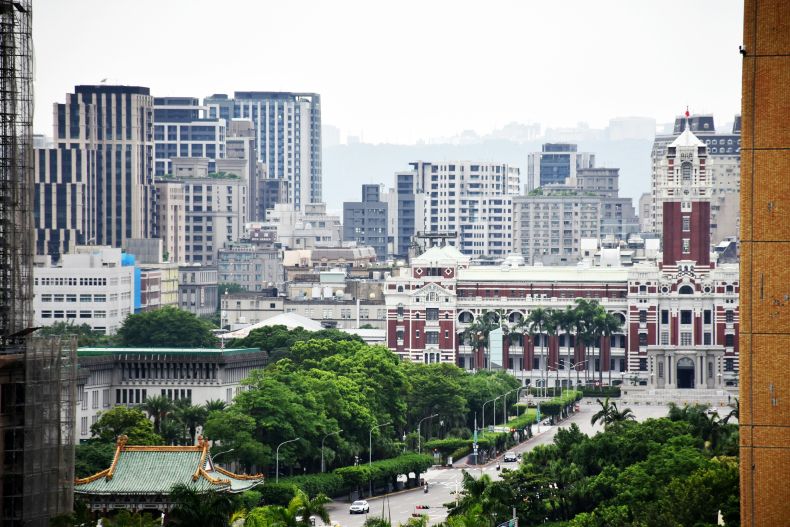
Pelosi’s Taiwan Trip Spurs New Military Activity in Pacific
Allen Carlson, CMSP/EAP/SAP/SEAP
“In the end, one would hope that the Speaker has made her point and will be restrained in speaking directly about independence while in Taiwan… while China will not go beyond previous shows of force,” says Allen Carlson, associate professor of government.