
Einaudi Center for International Studies
Building an Ontology of Art: Hindustan Painting as a Case Study
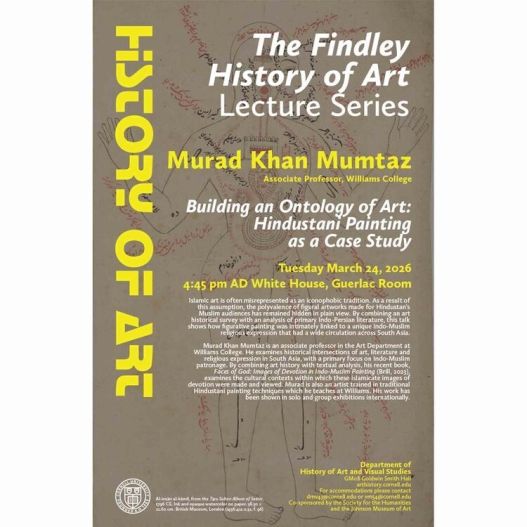
March 24, 2026
4:45 pm
A. D. White House, Guerlac Room
Department of History of Art & Visual Studies Findley Lecture Series.
Join us for a talk by Murad Khan Mumtaz, (Associate Professor, Williams College).
This Findley Lecture will take place in the AD White House's Guerlac Room.
Abstract
Islamic art is often misrepresented as an iconophobic tradition. As a result of this assumption, the polyvalence of figural artworks made for Hindustan’s Muslim audiences has remained hidden in plain view. By combining an art historical survey with an analysis of primary Indo-Persian literature, this talk shows how figurative painting was intimately linked to a unique Indo-Muslim religious expression that had a wide circulation across South Asia.
Biography
Murad Khan Mumtaz is an associate professor in the Art Department at Williams College. He examines historical intersections of art, literature and religious expression in South Asia, with a primary focus on Indo-Muslim patronage. By combining art history with textual analysis, his recent book, Faces of God: Images of Devotion in Indo-Muslim Painting (Brill, 2023), examines the cultural contexts within which these Islamicate images of devotion were made and viewed. Murad is also an artist trained in traditional Hindustani painting techniques which he teaches at Williams. His work has been shown in solo and group exhibitions internationally.
Additional Information
Program
Einaudi Center for International Studies
South Asia Program
Southwest Asia and North Africa Program
The Authoritarian Feelings Machine
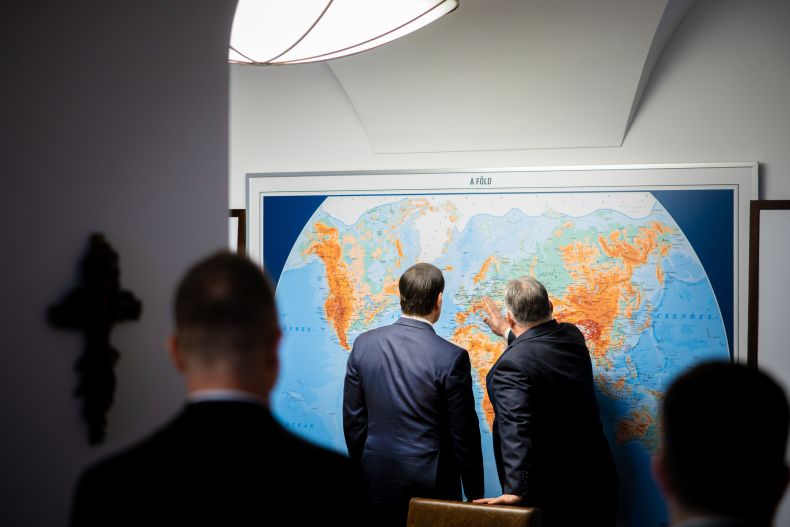
IES Director on Emotions as Political Tools
IES director Mabel Berezin talks with Jacobin about how leaders around the world have turned fear, grievance, and national pride into political instruments.
Additional Information
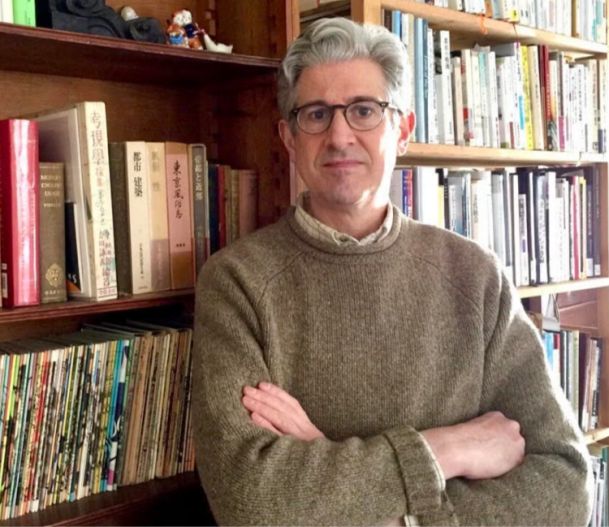
A History of Timelessness: Constructing Authenticity at the Ise Shrines
April 13, 2026
4:30 pm
Uris Hall, G-08
Speaker: Jordan Sand, Professor of Japanese History, Georgetown University
Abstract: The Ise shrines stand at the ritual center of Japanese imperial ideology. At the same time, they are admired around the world for their architecture and for the unique practice of periodic reconstruction. Yet the historical relationship between their ideological role and their architecture is seldom considered. By tracing the evolution of meanings attributed to the buildings and their reconstruction over a millennium, this lecture will reveal the many ways the shrine sites have been mobilized and show the gradual emergence of modern conceptions of architectural value.
About East Asia Program
As Cornell’s hub for research, teaching, and engagement with East Asia, the East Asia Program (EAP) serves as a forum for the interdisciplinary study of historical and contemporary East Asia. The program draws its membership of over 45 core faculty and numerous affiliated faculty, graduate, and undergraduate students from eight of Cornell’s 12 schools and colleges.
Additional Information
Program
Einaudi Center for International Studies
East Asia Program
China Approves 'Ethnic Unity' Law Requiring Minorities to Learn Mandarin

Magnus Fiskesjö, EAP/PACS/SEAP
Magnus Fiskesjö and Allen Carlson, both Cornell University associate professors, provide critical analysis of China's new ethnic unity law and its impact on minority rights.
Additional Information
IAD Community Grant Supports Research on Community Fisheries
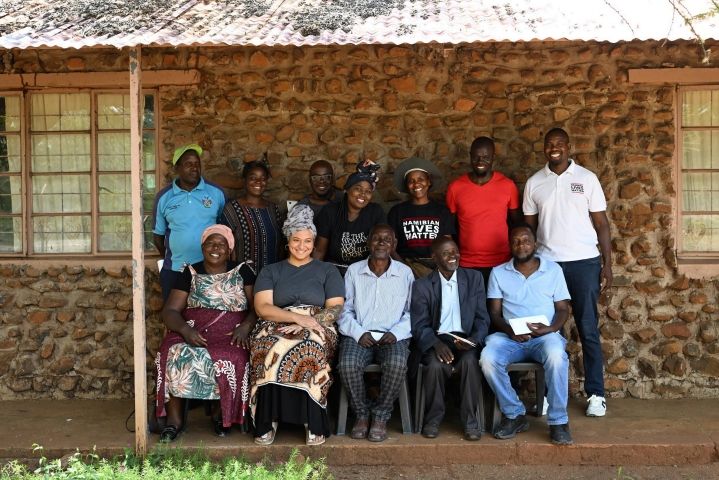
Cornell PhD candidate Aalayna R. Green's community project on “Care, Instead of Violence: Building Capacity and Countering Violence with Communal Fisheries in the Zambezi,” explores how community-managed fisheries could help strengthen local livelihoods along Namibia's Chobe River, where fishing plays a central role in daily life.
The project was funded by an Africa Community Grant from the Einaudi Center's Institute for African Development (IAD).
For many households in the region, fishing provides both income and an important source of food. At the same time, the river is also an international boundary between Namibia and Botswana. In some areas, fishermen from local Namibian communities have encountered difficulties while fishing near the border, including interactions with the Botswana Defense Force (BDF), which patrols parts of the river. These encounters have occasionally led to tensions that affect fishing activities and the security of local livelihoods.
Green’s research examines whether communal fisheries could offer a more stable framework for managing fishing access while supporting both community needs and sustainable resource use. The project places particular emphasis on approaches grounded in local knowledge and community participation.
One part of the work involves mapping fishing activity along the Chobe River. This mapping will help identify areas where fishing commonly takes place and locations that might support community-managed fishing points. It will also help clarify how communities currently use and depend on the river.
The project will also organize workshops and discussions with community members, village leadership, and regional stakeholders from both Namibia and Botswana. These gatherings are intended to share knowledge about fisheries management while opening space for dialogue about community experiences and potential cooperative solutions.
By focusing on community engagement and local capacity-building, the project aims to support fishing communities in the region while encouraging more collaborative approaches to managing shared natural resources.
Green is a PhD candidate at Cornell University in the Department of Natural Resources and the Environment (College of Agriculture and Life Sciences) and Department of Feminist, Gender & Sexuality Studies (College of Arts & Sciences). Her research examines the connections between conservation, livelihoods, and social justice.
IAD Community Grants support Cornell students conducting research and community-engaged work across Africa. Projects like Green's highlight how locally grounded approaches can contribute to both sustainable resource management and community well-being.
Additional Information
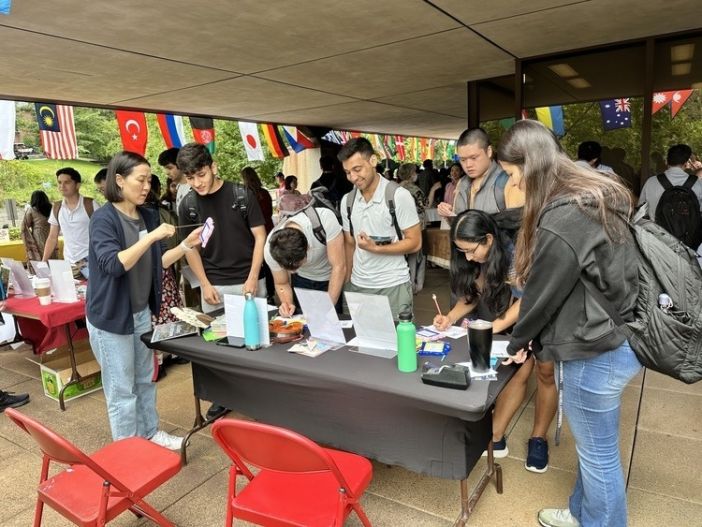
International Fair
August 26, 2026
11:00 am
Uris Hall, Terrace
International Fair showcases Cornell's global opportunities for undergraduate and graduate students. Explore the fair and find out about study abroad, international studies programs, funding opportunities like Global Internships, Laidlaw Scholars Program, graduate student fellowship and research awards, international minors, language study, and more.
The International Fair is sponsored by the Mario Einaudi Center for International Studies and Office of Global Learning (both part of Global Cornell) in partnership with the Language Resource Center.
Additional Information
Program
Einaudi Center for International Studies
Reppy Institute for Peace and Conflict Studies
East Asia Program
Southeast Asia Program
Latin American and Caribbean Studies
Institute for African Development
Institute for European Studies
South Asia Program
Migrations Program
Southwest Asia and North Africa Program
IES Graduate Fellows Symposium: Tracing Europe: Methods, Archives, and Interdisciplinary Encounters

May 7, 2026
9:00 am
Uris Hall, G08
9:00 - 10:15 am: Sites of Exchange: Economy, Community, and Heritage across Europe
Angela Kothe, “Rainbow Connection: An Economic Analysis of Gay Restaurants and Public houses in the UK”Duncan Eaton, “Interwar Sugar Production and the Challenges of Czechoslovak Integration”Julia Sebastien, “Walk Like a Roman: Immersive Embodied Role Play and Experiential Learning in Virtual Ancient Pompeii”10:30 am - 12:00 pm: Governing Europe: Responses to Conflict in the 20th and 21st Centuries
Georgy Tarasenko, “Religious Infrastructure and Public Opinion in Wartime Autocracies: Evidence from the Orthodox Church during Russia's Invasion of Ukraine”Frances Cayton, “Coming To: How Civic Consciousness Shapes Democratic Resilience”Kaitlin Findlay, “Evidence of Humanity: the International Committee of the Red Cross and Inspection Tour Photography, WWII" Madeleine Lemos, “Spain is Different: Tourism, Culture, and Reintegration in the 1950s and 60s”Lunch Break 12:00 - 1:00 pm
1:00 - 2:30 pm: Resonances: Making Sense of European Literatures, Arts and Music
Xinyu Zhang, “Was heißt Poignancy?”Spencer Hadley, “Poetry makes a statement at the 1977 Berliner Jazztage: Amiri Baraka’s “Advanced Workers” Meet the West German Press”Nora Siena, “Nanni Balestrini and the Cut-up Technique Before, During, and After Autunno Caldo”Chiara Visentin, “Bible for a Lordly Lady: Countess Marie de Champagne’s Patronage of Biblical Translation”
Additional Information
Program
Einaudi Center for International Studies
Institute for European Studies
Globalization’s Glue: Plywood and Pine Trees Across the Americas
May 5, 2026
12:20 pm
Uris Hall, G08
This talk will explore the social, environmental, and economic legacies of plywood across the Americas, focusing on Honduras and the U.S. South. During and after World War II, demand for southern pine lumber created patterns of inequality that continue to shape the contemporary world. In 1964, the Georgia Pacific Corporation invented a process to create glued plywood from southern pine, transforming the political economy of forests across the hemisphere. Using ethnographic and archival research in rural Honduras, Arkansas, and Florida, this talk will explore how the search for building materials transformed and connected places across the Americas in surprising ways.
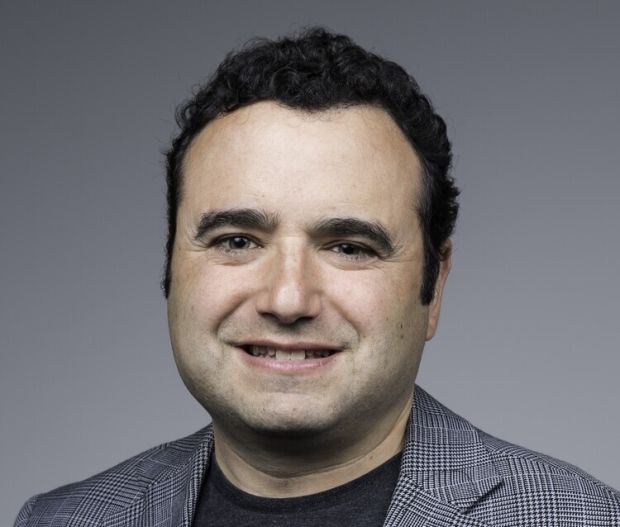
Daniel Reichman is Professor of Anthropology at the University of Rochester. A specialist in contemporary Latin America, he earned his PhD from Cornell and has conducted anthropological research in Honduras and Brazil. He is the author of two books, The Broken Village: Coffee, Migration, and Globalization in Honduras and Progress in the Balance: Mythologies of Development in Santos, Brazil. In addition to his academic writing, he writes for popular media outlets and has spoken on immigration policy at the White House, United Nations, and the Interamerican Development Bank. He is co-editor of the Lewis Henry Morgan Lectures, the longest running anthropology lecture series in North America, which is published by Duke University Press.
Additional Information
Program
Einaudi Center for International Studies
Latin American and Caribbean Studies
CANCELED - After Revelation: The Rabbinic Past in the Medieval Islamic World
April 30, 2026
4:45 pm
Uris Hall, G08
This event has been postponed for the Fall 2026 semester.
Talk by Marc Herman (Humanities, York University)
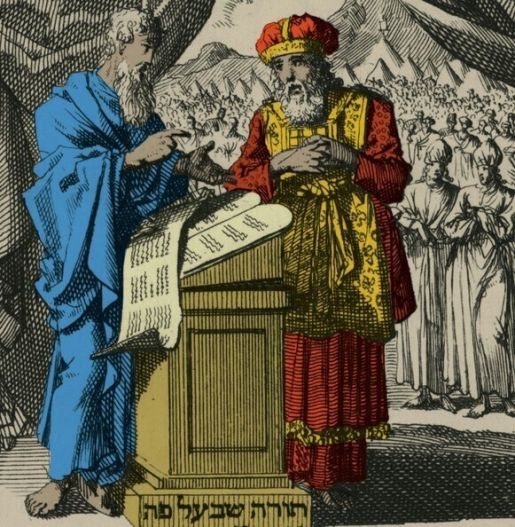
In this book talk, Marc Herman discusses his new book, After Revelation: The Rabbinic Past in the Medieval Islamic World. This book demonstrates that medieval Jewish legal thought was forged in dialogue with various and competing schools of Islamic law. Herman homes in on the central doctrine of post-biblical Judaism: the notion that God had supplemented the written Hebrew Bible with an Oral Torah. Tracing medieval interpretations of this idea from Baghdad to Córdoba to Cairo, three major centers of medieval Jewish life, Herman reveals previously unrecognized commonalities between Jewish and Islamic constructions of religious law. For medieval Jews and Muslims alike, legal theory was a primary form of religious self-fashioning, and as such, it must be understood in light of the cross-cultural discourses in which it was fashioned.
Marc Herman is an assistant professor in the Department of Humanities at York University who focuses on Jewish and Islamic intellectual history in the medieval Mediterranean and Judeo-Arabic law. Marc graduated from the University of Pennsylvania and held postdoctoral fellowships at Columbia University, Fordham University, Harvard University, Rutgers University, the University of Michigan, the University of Pennsylvania, and Yale Law School. He is the coeditor of Accounting for the Commandments in Medieval Judaism: Studies in Law, Philosophy, Pietism, and Kabbalah (Brill, 2021) and Worlds of Jewish Law: Premodern Legal Cultures in the Making (currently under review). His first book, After Revelation: The Rabbinic Past in the Medieval Islamic World, was published by the University of Pennsylvania Press in August 2025. Marc’s current project reconstructs the writing, rewriting, and transmission history of Maimonides’s Book of the Commandments.
Additional Information
Program
Einaudi Center for International Studies
Southwest Asia and North Africa Program
Nguyễn Modern: Imperial Vietnam and its Multicultural Futures
April 30, 2026
12:15 pm
Kahin Center
Gatty Lecture Series
Join us for a talk by Bradley Davis, Professor of History from the Eastern Connecticut State University.
This Gatty Lecture will take place at The Kahin Center, 640 Stewart Ave. Lunch will be served. For questions, contact seapgatty@cornell.edu.
Abstract
In 2025, leadership in the Socialist Republic of Vietnam initiated sweeping reforms to the administration of the country. Some territorial units became blended into others and long-standing categories in Vietnamese political geography, such as “city” thành phố and “province” tỉnh either transformed beyond recognition or vanished completely from the map. Despite its seeming novelty, and contrary to the judgments of policy analysts and commentators, these twentieth-century reforms were neither unprecedented nor, from a long-term historical view, entirely unexpected. In fact, we might find their clearest antecedents in reforms launched two centuries ago, when the imperial Vietnamese state sought to enhance its control over people, territory, and resources. Vietnam’s imperial past not only presaged its administrative present, it also opens a view towards possible multicultural futures.
About the Speaker
Bradley Camp Davis examines Vietnamese history with a multicultural and interdisciplinary approach. His publications include Imperial Bandits (University of Washington Press, 2017), which was long-listed for the ICAS book prize, and, as co-editor, a two-volume annotated collection of Yao texts, Sách Cổ Chữ Dao (Hanoi, 2009), and The Cultivated Forest (Washington, 2022) along with research articles in English, Vietnamese, and French. He has held visiting appointments at Université Paris-Cité, the Program in Agrarian Studies at Yale University, and, most recently the Institute for Advanced Study in Princeton. Currently, he is completing a book manuscript on the multi-species environmental history of imperial Vietnam as well as a book manuscript on the history of administrative reform. Since 2012, he has taught courses on Southeast Asian and world history at Eastern Connecticut State University.
Additional Information
Program
Einaudi Center for International Studies
Southeast Asia Program