
Einaudi Center for International Studies
Tenure Track Alternative Career Paths: Policy Consulting

November 17, 2021
12:00 pm
This webinar features two PhD graduates who will discuss their experience in finding alternative career paths and answer your questions about the world of think tanks. All are welcome to attend this free event hosted by Critical Ottoman & Post-Ottoman Studies (CO+POS) and co-sponsored by the Mario Einaudi Center for International Studies, the Society for the Humanities, Near Eastern Studies, and the Department of History.
Speakers:
Howard Eissenstat
Howard Eissenstat is an Associate Professor of History at St. Lawrence University in Upstate NY. His scholarship focuses on the relationship between religious and national identity in the late Ottoman contemporary and Modern Turkey, with additional work on contemporary Turkish politics and international relations. Eissenstat served as a Turkey Country Specialist for Amnesty International, USA between 2006 – 2017 and was primary author of the Turkey section of the Freedom House Annual Report from 2018 – 2020. His current research is on the place of non-Muslims in Turkish policy and politics since 1980.
Nicholas Danforth
Nicholas Danforth is author of the book The Remaking of Republican Turkey: Memory and Modernity since the Fall of the Ottoman Empire. He has covered U.S.-Turkish relations for the Hellenic Foundation for European and Foreign Policy (ELIAMEP), the German Marshall Fund of the United States, the Woodrow Wilson International Center for Scholars, and the Bipartisan Policy Center. Danforth received his M.A. from the School of Oriental and African Studies and his B.A. from Yale. He completed his Ph.D. in history at Georgetown University in 2015 and has written widely about Turkey, U.S. foreign policy, and the Middle East for publications including The Atlantic, Foreign Affairs, Foreign Policy, The New York Times, War on the Rocks, and The Washington Post.
Moderator:
Durba Ghosh
Durba Ghosh is a professor of history and the director of the Humanities Scholars Program at Cornell University. Prof. Ghosh is the author of Sex and the Family in Colonial India: the making of empire (Cambridge University Press, 2006), and Gentlemanly Terrorists: Political Violence and the Colonial State in India, 1919-1947 (Cambridge University Press, 2017). Her next project emerges from Gentlemanly Terrorists and considers how we commemorate national heroism in the postcolony.
About CO+POS:
Housed within the Mario Einaudi Center for International Studies at Cornell University, Critical Ottoman and Post-Ottoman Studies (CO+POS) highlights the latest in innovative research about Southwest Asia, North Africa, and Southeast Europe—a region encompassing the Turkic world, the Ottoman Empire, and its successor nation-states.
CO+POS gives scholars, artists, and practitioners a platform for challenging traditional understandings of this part of the world. From novel perspectives on the Ottoman Empire's architectural heritage to critical policy analyses of current events, CO+POS offers fresh approaches to the study of the dynamic region at the center of the Afro-Eurasia continent.
Additional Information
Program
Einaudi Center for International Studies
Institute for European Studies
How One Refugee Story Shows What Is Wrong With U.S. Immigration

Ian Kysel Mentioned in Forbes
Andrew Tisch of Forbes: "I had a chance to speak recently with Lazaro and Merlys from their temporary home in Kentucky, along with Ian Matthew Kysel, one of the lawyers who has been championing Merlys’ cause alongside a team of other lawyers and law students at Cornell Law School."
Additional Information
Forgotten War: The US in Afghanistan before 2001

November 15, 2021
4:45 pm
lecture with Seema Golestaneh. Rescheduled for November 15.
sponsored by Department of Near Eastern Studies, Iranian Student Association, and NES undergrad lunch series
Additional Information
Program
Einaudi Center for International Studies
South Asia Program
More than Soul Food: Black Food Bears Witness

Tao Leigh Goffe Quoted in Bloomberg
As Tao Leigh Goffe says, soul food is “adapted from high-calorie fuel rationed to enslaved people to eat in order to perform backbreaking labor.”
Additional Information
Religion Both Helped and Hurt During Pandemic

Landon Schnabel in Scientific American
April 2021: Schnabel found that, paradoxically, religion protected mental health but endangered physical health. This pattern was present across groups but was most pronounced among evangelical Christians.
Additional Information
Decolonizing Anti-Racism
November 9, 2021
4:30 pm
Uris Hall, G-08
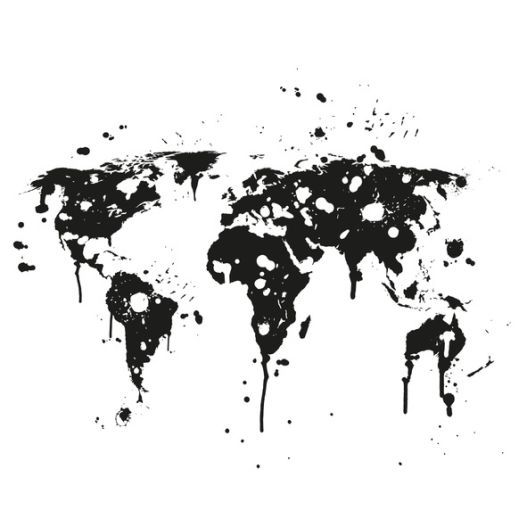
In their article “Decolonizing Anti-Racism” (2005), Bonita Lawrence and Ena Dua suggest that people of color are complicit in colonization and that anti-racism movements exclude Aboriginal people and perspectives. The theme “Decolonizing Anti-Racism” lays at the intersections of struggles for liberation, yet, at the same time, questions the possibilities of freedom in the context of the ongoing colonization of indigenous peoples and lands.
Bonita Lawrence will discuss her article in this Einaudi Center inequalities and social justice global research priority event.
Questions for exploration include: What are some of the bridges that can be built between Indigenous peoples and people of color in struggles against racism, social exclusion, poverty, racialization, police violence, as well as through shared histories of colonization and dispossession? Is it possible to think of an anti-racist politics that is devoid of anti-colonial politics? In what ways do extant imperial and colonial forces operate differently towards these communities in terms of necropolitics (Mbembe, 2002) in determining who is invited into the realm of social life and who, instead, is confined to social death? This question—who must die so we may live—is central to our discussion on the theme of “decolonizing anti-racism.”
Mohamed Abdou, Global Racial Justice Postdoctoral Fellow in the Einaudi Center, will moderate.
Bonita Lawrence teaches in the Indigenous Studies Program at York University in Toronto, Canada. She is Mi'kmaw, with Acadian and English background as well. Her research and publications have focused primarily on urban and non-status identities, and federally unrecognized Aboriginal communities. She is the author of Fractured Homeland: Federal Recognition and Algonquin Identity in Ontario (UBC Press, 2012) and "Real" Indians and Others: Mixed-Blood Urban Native People and Indigenous Nationhood (University of Nebraska Press and UBC Press, 2004).
This is a virtual event open to the general public via Zoom. Current members of the Cornell community with NetID are invited to view the Zoom discussion together in Room G-08 Uris Hall.
Cornell University is located on the traditional homelands of the Gayogo̱hó:nǫ' (the Cayuga Nation). The Gayogo̱hó:nǫ' are members of the Haudenosaunee Confederacy, an alliance of six sovereign nations with a historic and contemporary presence on this land. The confederacy precedes the establishment of Cornell University, New York state and the United States of America. We acknowledge the painful history of Gayogo̱hó:nǫ' dispossession, and honor the ongoing connection of Gayogo̱hó:nǫ' people, past and present, to these lands and waters.
Additional Information
Program
Einaudi Center for International Studies
Armenia: From the Inside Out - The Production of Knowledge & the Politics of Memory in Post-socialist Armenia
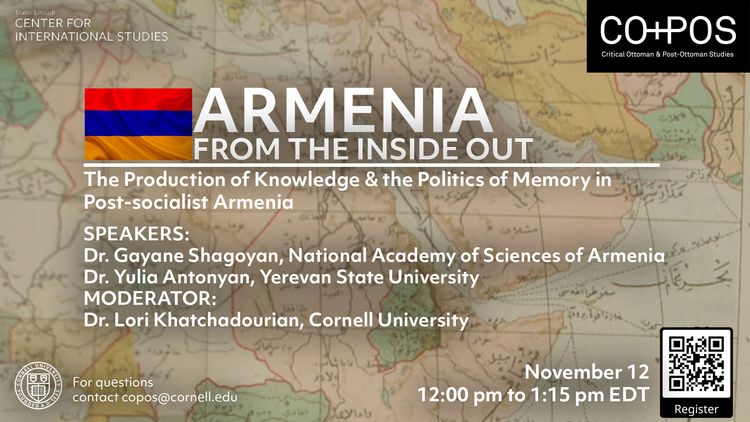
November 12, 2021
12:00 pm
In postsocialist Armenia, the production of knowledge and the politics of memory are related processes, both profoundly shaped by the Soviet legacy. In this webinar, two anthropologists discuss their work on the formation of Armenian intellectuals and the memory practices through which Armenian society confronts Stalinist repression trauma. What is the role of knowledge-makers in shaping landscapes of memory? How do personal experiences of becoming intelligentsia in Armenia, and experiencing intergenerational trauma as Armenians, shape ethnographic research on these topics?
Speakers:
Yulia Antonyan Associate Professor at the Department of Cultural Studies, Faculty of History, Yerevan State University (since 2008). Her professional interests are in the fields of anthropology of religion, anthropology of social structure, and intellectuals/intelligentsia. She mostly made fieldwork in Armenia and Armenian communities of Georgia, Syria and Lebanon. Dr. Antonyan has published around 45 articles in English, Armenian and Russian, and edited a volume on anthropology of elites in the South Caucasus (2016). You can find her major articles at https://yerevan.academia.edu/YuliaAntonyan․
Gayane Shagoyan is a leading researcher at the Department of Contemporary Anthropological Studies of the Institute of Archaeology and Ethnography, National Academy of Sciences of Armenia (IAE NAS RA). She received her PhD in anthropology from the Institute of Archaeology and Ethnography in 2010. The areas of her research interests include daily life, urban studies, and anthropology of memory. She is the author of about 90 publications including Seven Days and Seven Nights: Panorama of the Armenian Wedding (2011, Yerevan: “Gitutyun”, 618 p., in Armenian), co-author of Stalin Era Repressions in Armenia: History, Memory, and Daily Life (Yerevan: “Gitutyun,” 2015, 440 p., in Armenian).
Moderator:
Lori Khatchadourian is Associate Professor of Near Eastern Studies at Cornell University. Her research uses the methods of archaeology and ethnography to study the relations between people, power, and the material world. Dr. Khatchadourian studies the materiality of social life across temporal divides – ancient and modern – with a particular focus on Armenia and the South Caucasus. She is author of Imperial Matter: Ancient Persia and the Archaeology of Empires (2016) and numerous articles on the archaeology of the Caucasus, Anatolia, and Iran. Khatchadourian is currently working on a book about modernity and the Armenian experience, as told through the ruins of genocide, Soviet socialism, and war.
Hosted by CO+POS:
Housed within the Mario Einaudi Center for International Studies at Cornell University, Critical Ottoman and Post-Ottoman Studies (CO+POS) highlights the latest in innovative research about Southwest Asia, North Africa, and Southeast Europe—a region encompassing the Turkic world, the Ottoman Empire, and its successor nation-states.
CO+POS gives scholars, artists, and practitioners a platform for challenging traditional understandings of this part of the world. From novel perspectives on the Ottoman Empire's architectural heritage to critical policy analyses of current events, CO+POS offers fresh approaches to the study of the dynamic region at the center of the Afro-Eurasia continent.
Additional Information
Program
Einaudi Center for International Studies
Institute for European Studies
Renata Leitão

Assistant Professor, Design and Environmental Analysis
Additional Information
Role
- Faculty
- Einaudi Faculty Associate
- Global Public Voices Fellow 2021-22
Contact
Email: rml273@cornell.edu
Tejasvi Nagaraja
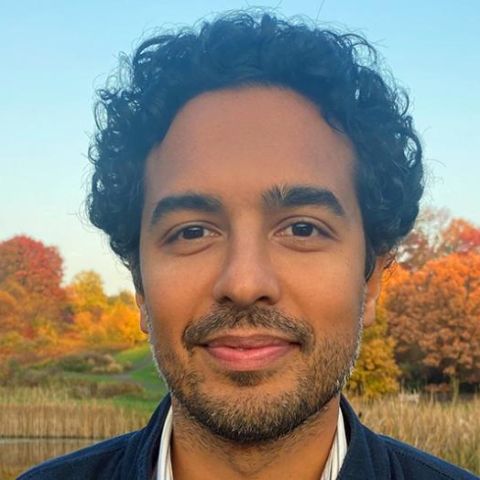
Assistant Professor, Labor Relations, Law, and History
Additional Information
Role
- Faculty
- Einaudi Faculty Associate
- Global Public Voices Fellow 2021-22
Contact
Email: tnagaraja@cornell.edu
Jamein Cunningham

Assistant Professor, Policy Analysis and Management
Additional Information
Role
- Faculty
- Einaudi Faculty Associate
- Global Public Voices Fellow 2021-22
Contact
Email: jc2579@cornell.edu