
Einaudi Center for International Studies
The Domestic Use of Federal Force and Civil-Military Relations in the Post-Reconstruction U.S., 1877-1921
November 18, 2021
11:25 am
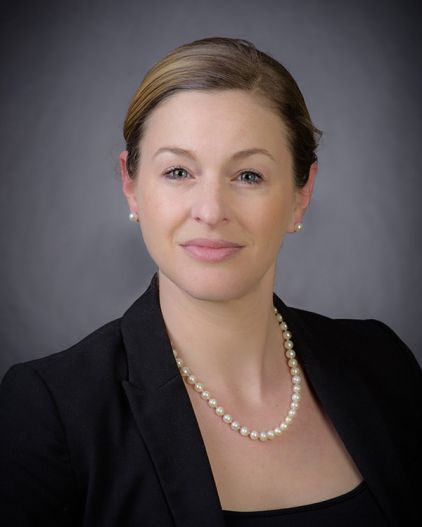
Lindsay P. Cohn, Associate Professor in National Security Affairs, US Naval War College in Newport, RI. She presents on this topic, based on research that appears in her forthcoming book, "Posse: Domestic Use of Federal Forces and U.S. Civil-Military Relations."
This seminar is part of a series organized by the Reppy Institute for Peace and Conflict Studies (PACS) and the Gender and Security Sector (GSS) Lab. Download the Fall 2021 Seminar Series schedule here.
Additional Information
Program
Einaudi Center for International Studies
Reppy Institute for Peace and Conflict Studies
How to Prevent Coups d’État
November 11, 2021
11:25 am
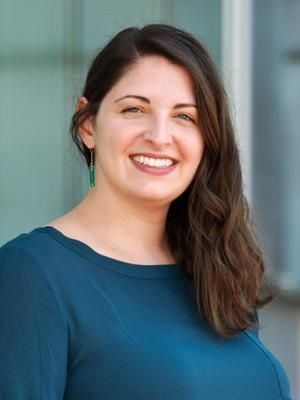
Erica De Bruin is an Associate Professor of Government at Hamilton College. She presents her new book How to Prevent Coups d’État: Counterbalancing and Regime Survival (Ithaca, NY: Cornell University Press, 2020)
This seminar is part of a series organized by the Reppy Institute for Peace and Conflict Studies (PACS) and the Gender and Security Sector (GSS) Lab. Download the Fall 2021 Seminar Series schedule here.
Additional Information
Program
Einaudi Center for International Studies
Reppy Institute for Peace and Conflict Studies
Whose America? Our America! --- Ayukawa Nobuo and the (Lost) Origin of Postwar Japanese Poetry
November 10, 2021
12:00 pm
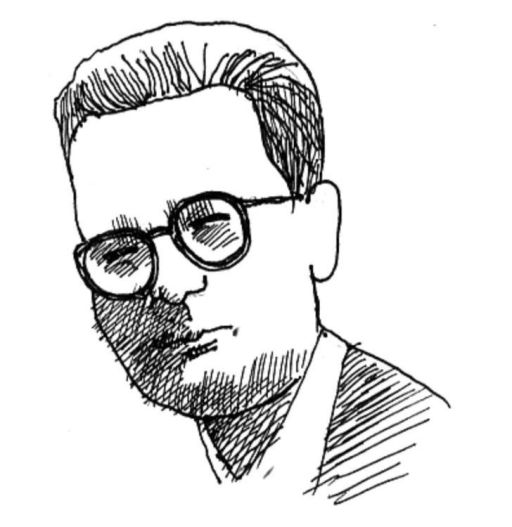
Whose America? Our America! --- Ayukawa Nobuo and the (Lost) Origin of Postwar Japanese Poetry is the focus of this Rough Work session with our guest speaker Yoshiaki Mihara (Hitotsubashi U. / Tokyo, Japan)
It is generally acknowledged that post-WWII Japanese poetry commenced with the formation of a coterie of young poets who called themselves Arechi-ha (“The Waste Land School”). It is also generally acknowledged that the coterie, as its self-naming well suggests, was heavily influenced by T. S. Eliot and his contemporary Modernist poets writing in post-WWI Europe. In this “Rough Work” session, Mihara would like to question the myth of this elective affinity by reading Ayukawa Nobuo (1920-1986), leading poet-critic of the coterie, especially his 1947 long poem “America” with the poet’s own “Notes” attached to it (in an ostensibly Eliotic fashion), together with his highly influential critical prose at that time, so as to examine what was at stake in the original moment of Sengo-shi (“Postwar Poetry”), which overshadows Japanese poetry, if not Japanese literature and criticism in general, even to this day.
Rough Work: Research in progress with an informal discussion for feedback and further exploration.
Additional Information
Program
Einaudi Center for International Studies
East Asia Program
"Legitimating the State: China,1300-present"
November 5, 2021
1:30 pm
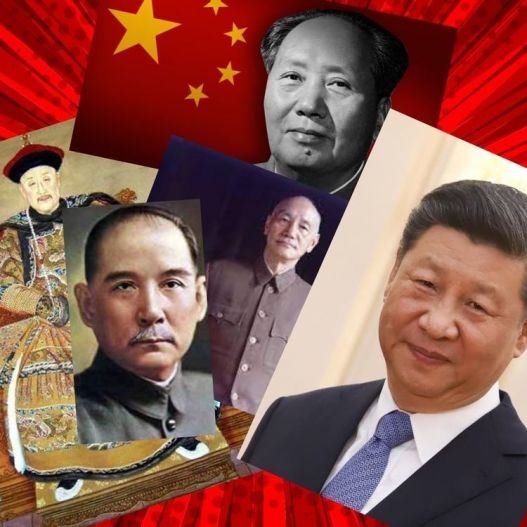
Legitimating the State: International Orders and Political Imaginations of China,1300-present
This round-table includes Prof. Tim Brook of the University of British Columbia, Professor David Robinson of Colgate University, Professor Jenny Day of Skidmore College, and Mara Yue Du of Cornell University. Panelists will discuss the evolving meaning of "China" and how the self-legitimating state in China interacted with changing domestic and global conditions from the Mongol period to the present.
This event is co-sponsored by the East Asia Program and the Central New York Humanities Corridor.
Additional Information
Program
East Asia Program
Einaudi Center for International Studies
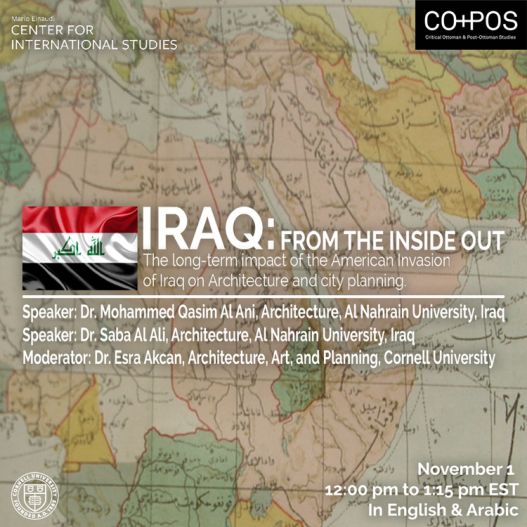
Iraq: From the Inside Out
November 1, 2021
12:00 pm
Iraq: From the Inside Out
After the American invasion of Iraq, along with a collapse of much of the social order, many of the state norms and regulations governing architecture, heritage sites, and city planning also broke down.
This webinar will feature two Iraqi scholars working on architecture and city planning in Baghdad. They will discuss transformations in the city’s built urban environment and highlight the prospects for solutions that would involve policy makers and the Iraqi society as a whole.
Speaker: Dr. Mohammed Qasim Al Ani, Architecture, Al Nahrain University, Iraq
Speaker: Dr. Saba Al Ali, Architecture, Al Nahrain University, Iraq
Moderator: Dr. Esra Akcan, Architecture, Art, and Planning, Cornell University
In English and Arabic
Register Here.
Additional Information
Program
Einaudi Center for International Studies
Institute for European Studies
Pedro X. Molina

Visiting Critic
Additional Information
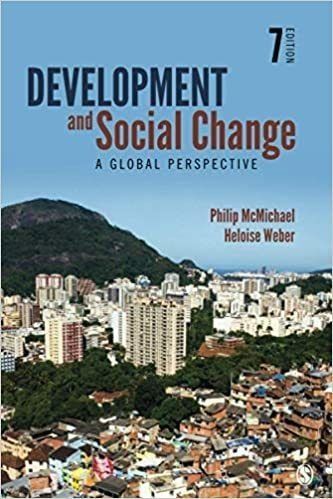
Development and Social Change: A Global Perspective
November 2, 2021
4:00 pm
How has development thinking and practice shaped our world? The answer lies in four interconnected phenomena—colonialism, the development era, the neoliberal globalization project, and sustainable development—according to Development and Social Change: A Global Perspective, 7th Edition, (Sage Publications, 2021), written by Philip McMichael, professor emeritus in the Department of Global Development, and Heloise Weber, senior lecturer in the School of Political Science and International Studies at the University of Queensland.
In a live, virtual Chats in the Stacks book talk, McMichael discusses “the development paradox” and how powerful nation-states aiming toward progress and prosperity can also produce crises that threaten the health and well-being of millions of urban-dwellers and rural cultures. McMichael also explores the possibilities of a world with more just social, ecological, and political relations.
A live Q&A will follow the talk. The audience is encouraged to submit their questions in the chat.
Additional Information
Program
Einaudi Center for International Studies
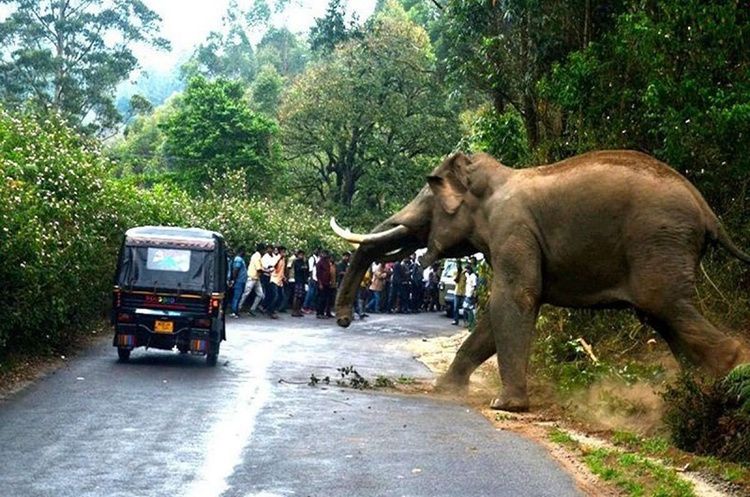
In Search of an End to Human-Elephant Conflict, by Rohan Munasinghe
November 29, 2021
12:15 pm
Uris Hall, G08
Elephants roam in about 60% of the land area in Sri Lanka, and in about 70% of that, the rural communities also live and cultivate, creating the perfect grounds for a deadly conflict. A total of 407 elephants and 121 farmers died because of human-elephant conflict in Sri Lanka in 2019 recording the world’s highest death toll due to human-elephant conflict (HEC) in that year. Crop and property damage due to HEC is already overwhelming, and there is no remedy in sight. Electric fencing, elephant raids, and elephant tracking have been exercised for decades now with very limited success. Deforestation, ill-planned development projects, and human encroaching are often blamed as the causes of HEC, however, such causes are irreversible, therefore, it’s time to have a fresh look at the problem and device such solutions that are effective. The way the problem is twined indicates that the key to save elephants is to stop elephants from crop-raiding and killing people in the form of unexpected close encounters. This is only possible if people know at least few minutes in advance the whereabouts of approaching elephants, so that they could team up and deliver a safe response before it is too late. So, is it possible to localize elephants from a distance? Well, the rumbles- the low frequency (14-24Hz) elephant calls might help. Particularly the seismic component of rumbles that propagate long distances through soil could be detected by an array of geophones to triangulate and localize elephants.
Rohan Munasinghe is a Fulbright Scholar at the Department of Global Development, CALS. He is a Professor at the Department of Electronic and Telecommunication Engineering, Sri Lanka where he works on several areas including human-elephant conflict, precession agriculture, drone applications, and adaptive traffic control. At Cornell, he intends to collaborate with the faculty at the Department of Global Development, the Ornithology Lab, Cornell AgriTech, and the CTL. He has written a textbook on control systems for undergraduates and have published many research papers. Rohan also leads the Technology Transfer Office of the University of Moratuwa, Sri Lanka where he gives leadership to IP management, Technology commercialization, and startup acceleration. Prof. Munasinghe has undergone training on intellectual Property at the CLDP, USPTO, and the University of New Hampshire. He also has completed WIPO DL courses on intellectual property. He has eight patents, seven designs, and one PCT pending. He has incorporated two startups with his students. Prof. Munasinghe provides his service to several national entities such as the National Science and Technology Commission, Center for Research and Development, National Innovation Agency, and National Science Foundation. He is a Charted Engineer, Senior Member of IEEE, and a member of Robotics and Automation Society of IEEE.
Additional Information
Program
Einaudi Center for International Studies
South Asia Program
Refugees Face Invisible Trauma
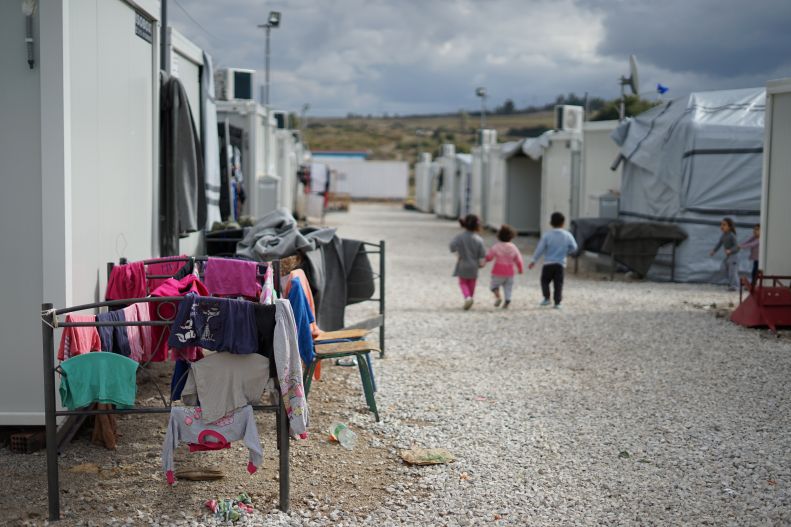
Gunisha Kaur on Burden of Instability
Einaudi's Migrations faculty fellow in Time Magazine: "For advocates of migrant rights, recognizing the sources of trauma is a critical first step."
Additional Information
Policing Armed Conflict
November 4, 2021
11:25 am
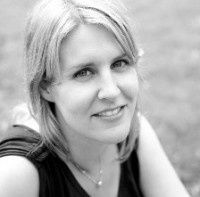
Kristine Eck is an Associate Professor at Uppsala University and Director of the Uppsala Rotary Peace Center. Her current research interests concern state coercion and policing. She presents a working paper, "Policing Armed Conflict." This seminar is part of a series organized by the Reppy Institute for Peace and Conflict Studies (PACS) and the Gender and Security Sector (GSS) Lab. Download the Fall 2021 Seminar Series schedule here.
Additional Information
Program
Einaudi Center for International Studies
Reppy Institute for Peace and Conflict Studies