
Einaudi Center for International Studies
Afghan Students Find Haven at Cornell
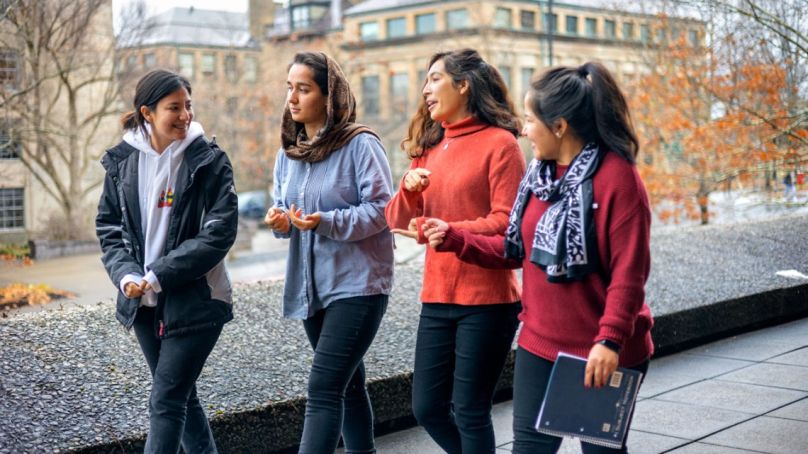
Einaudi Center Welcomes Women Scholars
“The events that brought these students here are traumatic, but their stories demonstrate real bravery and leadership,” said VP Wendy Wolford.
Additional Information
Alex Nading
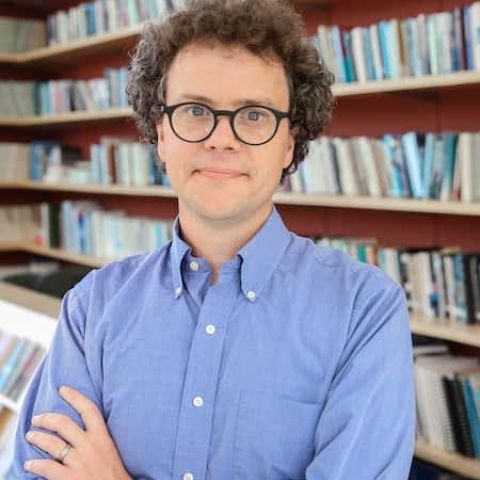
Associate Professor, Anthropology
Alex Nading is a medical and environmental anthropologist in the College of Arts and Sciences. His research, mostly focused on Nicaragua, has examined transnational campaigns against dengue fever, bacterial disease, and chronic kidney disease, as well as grassroots movements to address these issues.
He is the former editor (2021-24) of Medical Anthropology Quarterly and author of two books, "Mosquito Trails: Ecology, Health, and the Politics of Entanglement" (2014) and "The Kidney and the Cane: Planetary Health and Plantation Labor in Nicaragua" (2025).
Additional Information
Program
Role
- Faculty
- LACS Core Faculty
- LACS Director
- LACS Steering Committee
Contact
Email: amn242@cornell.edu
Conferences
Einaudi Center conferences gather faculty experts and researchers, students, policymakers, and the local, national, and international community for conversations about world challenges and how we can work together to meet them.
Join Us
Global engagement and problem-solving are more important than ever. Join the conversation! We invite you to attend our in-person and virtual events and watch videos of past events.
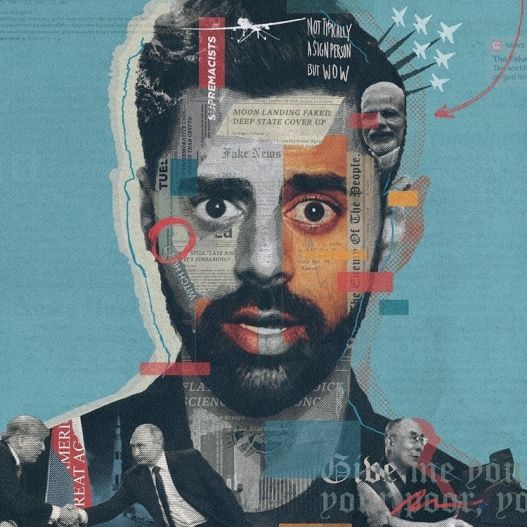
Caricaturing Religious Difference and the Pop Culture Muslim
February 21, 2022
12:15 pm
Uris Hall, G08
Talk by Samah Choudhury (Religious Studies, Ithaca College)
Our contemporary moment has witnessed a precipitous rise in the presence of American Muslim comedians in pop culture - on television, movies, and on the stage. I map their unprecedented popularity to the contemporary moment when American “Muslim” humor is named as such, as well as the complications that arise from imposing a religious referent interchangeably with terms like “racial” or “ethnic” as they relate to the constitution of the 21st-century Western subject. This gendering, racialization, and a growing progressive consensus on issues of intersectionality have come to provide a common language for comedians to identify as Muslim over strictly racial and ethnic nomenclature. Yet this humor replicates a subjugating racialized, religionized, and "masculine" vision of Islam – outside of themselves – by limiting its articulation to normative Sunni ideals and injunctions. For comedians like Hasan Minhaj, there is an inconsistent stepping in and out in of language that names him as Muslim, Indian, Desi, or simply “brown” that relies on aesthetics of American Blackness to register an opposition to white secularity.
Samah Choudhury is an Assistant Professor of Religious Studies at Ithaca College. Her research surrounds Islam, humor, and the politics of social legibility in the United States. Her current book manuscript looks at the ways that Islam and Muslims are articulated through standup comedy and how they speak back to broader transnational practices and discourses of race, masculinity, and secularism. She holds a PhD from UNC Chapel Hill in Religious Studies.
Co-sponsored by the Asian American Studies Program and the Religious Studies Program.
Photo: Netflix/Patriot Act with Hasan Minhaj
Additional Information
Program
Einaudi Center for International Studies
South Asia Program
Info Session: Migrations Grants for Faculty

December 13, 2021
4:00 pm
Uris Hall, Einaudi Conference Room G-08
Join us for an information session to learn more about the new cycle of Migrations grants, open to all PI-eligible faculty (including tenured, tenure-track, professors of practice, senior research associates, and clinical-track faculty), irrespective of their college or school. Faculty-led programs and centers within the university are also welcome to apply.
With support from the Mellon Foundation Just Futures Initiative and Global Cornell, we are funding U.S.-focused work that has long-term and discernible benefits addressing racial and immigrant justice on campus and beyond. Research that has a broader international focus may apply for multispecies, interdisciplinary Migrations grants on any subject related to migration. We offer two tracks, based on our funding sources.
Track 1: Mellon Foundation Just Futures Initiative: Supports research and engagement focused on the United States and centered on the connections between racism, dispossession, and migration in interdisciplinary, innovative, and impactful ways.
Just Futures Team Research Grants, three grants of up to $150,000.Just Futures Small Grants, up to five grants of up to $10,000.Just Futures Engagement Grants, four to eight grants of up to $25,000.Track 2: Migrations: A Global Grand Challenge: Researching, Teaching, and Building for a World on the Move. Supports innovative, multispecies, and interdisciplinary approaches to key international migration issues. Aims to cultivate collaborations that advance science, scholarship, teaching, outreach, and engagement in ways that generate new insights into critical problems.
Migration Cross-Disciplinary Research (Team Research Grants) and Migrations Research (Individual Faculty): $10,000–$50,000 maximum awards. The objective of this funding opportunity is to promote path-breaking research on migrations at Cornell and, in particular, research with an impact that might resonate across multiple fields of study.The Cornell Migrations co-directors will address any questions about priorities, selection criteria, budgets, and other guidance on how to prepare a successful application. Proposals are due January 31, 2022.
This is a hybrid event. Please join us in person in Uris Hall G08 or register via Zoom for virtual.
Additional Information
Program
Einaudi Center for International Studies
Institute for European Studies
JP Morgan Boss Regrets Saying Bank Will Outlast Chinese Communist Party

“Dimon’s apology shows the degree of deference foreign businesses have to show to the Chinese government in order to remain in its good graces and maintain access to the country's markets,” says Eswar Prasad, professor of economics and international trade policy.
Additional Information
Higher Inflation is Real, But We're Not Returning to the 1970s

Daniel Alpert, CRADLE
“That the unique historical and economic circumstances of the 1970s gave rise to a near cultish obsession with changes in price levels, shunting aside the importance of equitable growth, is a tragedy,” says Daniel Alpert, visiting fellow at the Law School.
Additional Information
Jury in Kyle Rittenhouse Trial Has Deliberated for 23 Hours with No Verdict

Valerie Hans, Law
Valerie Hans, professor of law, explains that the jury is likely using a meticulous, evidence-based approach due to the amount of time that has passed and their request for a video. Hans’ insights also appear in this New York Times article.
Additional Information
Institute for African Development Seminar: Student Presentations

December 2, 2021
2:40 pm
G-08 Uris Hall
Issues in African Development Seminar Series examines critical concerns in contemporary Africa using a different theme each semester. The seminars provide a forum for participants to explore alternative perspectives and exchange ideas. They are also a focal activity for students and faculty interested in African development. In addition, prepares students for higher level courses on African economic, social and political development. The presentations are designed for students who are interested in development, Africa’s place in global studies, want to know about the peoples, cultures and societies that call Africa home, and explore development theories and alternate viewpoints on development.
Additional Information
Program
Einaudi Center for International Studies
Institute for African Development
Language Resource Center Speaker Series - Yarden Kedar

March 15, 2022
3:30 pm
Stimson Hall, G25
"Bilingual Community-Based Language Pedagogy: An Arab-Jewish Language Café in Jerusalem"
Yarden Kedar
Israel Institute Visiting Faculty, Department of Psychology, Cornell University
The Good Neighbors – Abu Tor/Al-Thuri project is a grassroots, volunteer-based initiative that started in 2014 in order to promote a shared life approach and to build a joint community between Jews and Palestinians who live side by side in Abu Tor, a binational neighborhood, which is located on the seam between East and West Jerusalem.
This unique project, which is extraordinary given the long geopolitical and national conflict and the explosive daily tension between Arabs and Jews, includes initiatives such as language courses in Arabic and in Hebrew; a community organic garden; "Abu-Job" – a job placement project; a bilingual street library; and a variety of community events and festivities that are organized by and intended for Jerusalemites from both nationalities.
We focus on the Language Café, an authentic, bottom-up local initiative in which Jews and Palestinians actively teach and learn Hebrew and Arabic from each other. This study explores the unique bilingual pedagogy that has evolved in the Language Café and the participants' perceived language learning process and its outcomes (i.e., their motivations to learn the language of the other group, their attitudes toward the learning situation, and its potential outcomes, particularly sociocultural outcomes).
The findings reveal that the pedagogical model that has been developed and employed by the Language Café non-professional tutors promotes values of equity, equality, and mutual respect among the Jewish and Palestinian participants alike. Moreover, this new model builds on the language and cultural repertoire of the participants, hence affording them the opportunity to learn and teach each other's language and culture. Despite the long-standing political tension, the language tutors seem to have created a safe learning environment that allows both Jewish and Palestinian participants to feel at ease. Participants express genuine interest and desire to learn the language and culture of the other national, religious, and cultural group. Furthermore, they report having gained not only conversational language skills in the languages they wanted to learn but also novel insights about each other's cultures, enabling them to engage in various social activities within their neighborhood and beyond.
These findings may contribute to the development and advancement of both formal and informal pedagogical frameworks worldwide – in language as well as other subject matters – based on inter-group appreciation and collaboration. Such frameworks could also bring about more tolerant and integrated societies in conflict zones.
Bio: Yarden Kedar is an Israel Institute Visiting Faculty in the Department of Psychology at Cornell University. He has served as Head of the Early Childhood Education Department in the Faculty of Education at Beit Berl College between 2015-2021. He is also the Head of the Language and Cognition Development Lab at Beit Berl College.
Dr. Kedar received his Ph.D. in Developmental Psychology (2007) from Cornell University and then became a Kreitman Post-Doctoral Fellow in the Department of Psychology at Ben-Gurion University (2007-2010), focusing on the neurolinguistic aspects of syntactic processing in young children.
Dr. Kedar's research interests relate to Language Acquisition, Cognitive Development, and Early Childhood Education across several cultures and languages and a variety of child populations (e.g., infants, children, and adults; monolinguals and bilinguals; Arabic, English, and Hebrew learners). In other lines of research, he explores the interaction between language and socioemotional aspects of development such as immigration, gender, and various preschool educational environments.
This event will be held in person in G25 Stimson and will also be streamed live over Zoom. Join us at the LRC or on Zoom.
The event is free and open to the public. Campus visitors and members of the public must adhere to Cornell's public health requirements for events, which include wearing masks while indoors and providing proof of vaccination or a recent negative COVID-19 test.
Additional Information
Program
Einaudi Center for International Studies
Latin American and Caribbean Studies