
Einaudi Center for International Studies
Pedro X. Molina

Visiting Critic
Additional Information
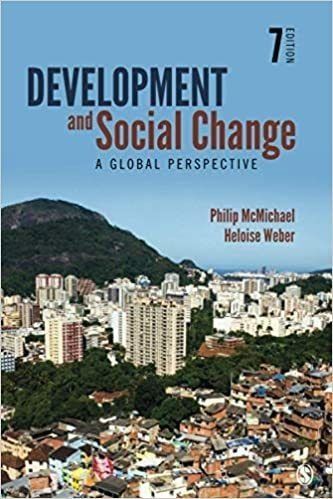
Development and Social Change: A Global Perspective
November 2, 2021
4:00 pm
How has development thinking and practice shaped our world? The answer lies in four interconnected phenomena—colonialism, the development era, the neoliberal globalization project, and sustainable development—according to Development and Social Change: A Global Perspective, 7th Edition, (Sage Publications, 2021), written by Philip McMichael, professor emeritus in the Department of Global Development, and Heloise Weber, senior lecturer in the School of Political Science and International Studies at the University of Queensland.
In a live, virtual Chats in the Stacks book talk, McMichael discusses “the development paradox” and how powerful nation-states aiming toward progress and prosperity can also produce crises that threaten the health and well-being of millions of urban-dwellers and rural cultures. McMichael also explores the possibilities of a world with more just social, ecological, and political relations.
A live Q&A will follow the talk. The audience is encouraged to submit their questions in the chat.
Additional Information
Program
Einaudi Center for International Studies
In Search of an End to Human-Elephant Conflict, by Rohan Munasinghe
November 29, 2021
12:15 pm
Uris Hall, G08
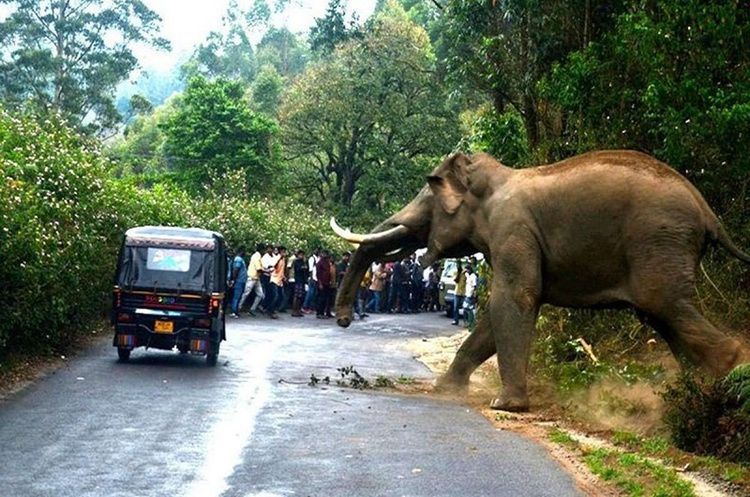
Elephants roam in about 60% of the land area in Sri Lanka, and in about 70% of that, the rural communities also live and cultivate, creating the perfect grounds for a deadly conflict. A total of 407 elephants and 121 farmers died because of human-elephant conflict in Sri Lanka in 2019 recording the world’s highest death toll due to human-elephant conflict (HEC) in that year. Crop and property damage due to HEC is already overwhelming, and there is no remedy in sight. Electric fencing, elephant raids, and elephant tracking have been exercised for decades now with very limited success. Deforestation, ill-planned development projects, and human encroaching are often blamed as the causes of HEC, however, such causes are irreversible, therefore, it’s time to have a fresh look at the problem and device such solutions that are effective. The way the problem is twined indicates that the key to save elephants is to stop elephants from crop-raiding and killing people in the form of unexpected close encounters. This is only possible if people know at least few minutes in advance the whereabouts of approaching elephants, so that they could team up and deliver a safe response before it is too late. So, is it possible to localize elephants from a distance? Well, the rumbles- the low frequency (14-24Hz) elephant calls might help. Particularly the seismic component of rumbles that propagate long distances through soil could be detected by an array of geophones to triangulate and localize elephants.
Rohan Munasinghe is a Fulbright Scholar at the Department of Global Development, CALS. He is a Professor at the Department of Electronic and Telecommunication Engineering, Sri Lanka where he works on several areas including human-elephant conflict, precession agriculture, drone applications, and adaptive traffic control. At Cornell, he intends to collaborate with the faculty at the Department of Global Development, the Ornithology Lab, Cornell AgriTech, and the CTL. He has written a textbook on control systems for undergraduates and have published many research papers. Rohan also leads the Technology Transfer Office of the University of Moratuwa, Sri Lanka where he gives leadership to IP management, Technology commercialization, and startup acceleration. Prof. Munasinghe has undergone training on intellectual Property at the CLDP, USPTO, and the University of New Hampshire. He also has completed WIPO DL courses on intellectual property. He has eight patents, seven designs, and one PCT pending. He has incorporated two startups with his students. Prof. Munasinghe provides his service to several national entities such as the National Science and Technology Commission, Center for Research and Development, National Innovation Agency, and National Science Foundation. He is a Charted Engineer, Senior Member of IEEE, and a member of Robotics and Automation Society of IEEE.
Additional Information
Program
Einaudi Center for International Studies
South Asia Program
Refugees Face Invisible Trauma

Gunisha Kaur on Burden of Instability
Einaudi's Migrations faculty fellow in Time Magazine: "For advocates of migrant rights, recognizing the sources of trauma is a critical first step."
Additional Information
Policing Armed Conflict

November 4, 2021
11:25 am
Kristine Eck is an Associate Professor at Uppsala University and Director of the Uppsala Rotary Peace Center. Her current research interests concern state coercion and policing. She presents a working paper, "Policing Armed Conflict." This seminar is part of a series organized by the Reppy Institute for Peace and Conflict Studies (PACS) and the Gender and Security Sector (GSS) Lab. Download the Fall 2021 Seminar Series schedule here.
Additional Information
Program
Einaudi Center for International Studies
Reppy Institute for Peace and Conflict Studies
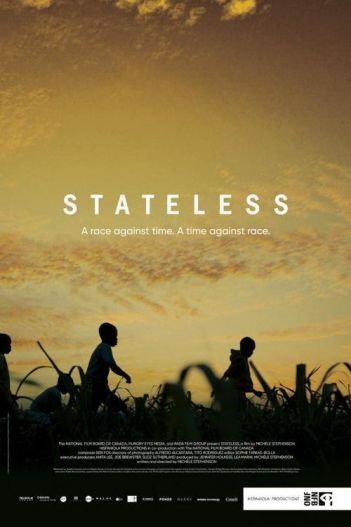
"STATELESS: A race against time. A time against race” LACS FILM SERIES with Zoom Q&A with Director Michele Stephenson
October 21, 2021
6:00 pm
Kaufmann Auditorium , G64 Goldwin Smith Hall
LACS FILM SERIES with Zoom Q&A with Director Michele Stephenson
Kaufmann Auditorium (G64 Goldwin Smith Hall) 6 PM
Stateless looks at the complex politics of immigration and race in the Dominican Republic and Haiti, using a combination of magical realism and hidden camera techniques.
Additional Information
Program
Einaudi Center for International Studies
Latin American and Caribbean Studies
Humanitarian Parole for Afghans

Einaudi Faculty and Law Students Support Legal Cases
Additional Information
Supply Chain Lessons From Long Beach

Daniel Alpert, CRADLE
This opinion piece references recent research by Daniel Alpert, visiting fellow in the Law School, about the challenges underemployment is likely to pose in coming years.
Additional Information
Humor vs. Power: Cartooning in Latin America and the Caribbean
October 28, 2021
5:00 pm
G01 , Stimson Hall
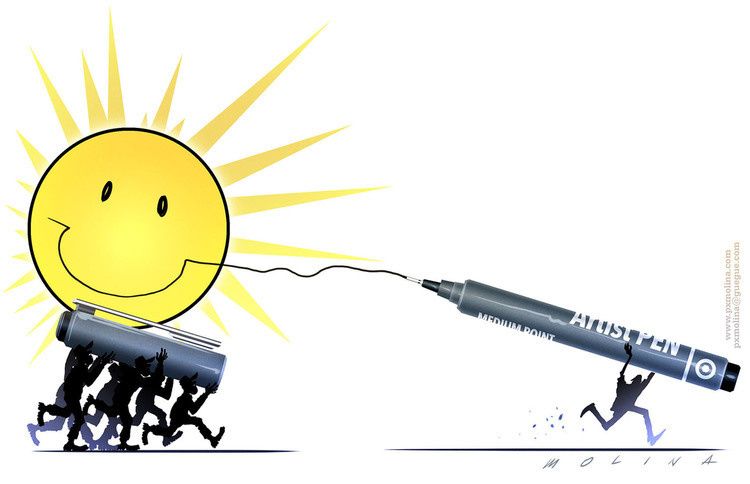
Hear from four Latin American and Caribbean political cartoonists on the challenges of their craft and creativity across the region. The session will be moderated by Nicaraguan political cartoonist Pedro X. Molina, IIE Artist Protection Fund Fellow and Visiting Critic at the Einaudi Center's Latin American and Caribbean Studies Program (LACS). A hybrid event.
Panelists
Angel Boligan (Boligán – Cartooning for Peace), Cuba/Mexico
Rayma Suprani (RAYMA – Cartooning for Peace), Venezuela
Xavier Bonilla (BONIL – Cartooning for Peace), Ecuador
Moderator
Pedro X Molina (PxMolinA), Nicaragua/USA, winner of the 2021 Gabo Award for Excellence
Join us in person in G-01 Stimson Hall (to the right of Day Hall) at 5:00 pm. Portions will be in Spanish with simultaneous translation available on Zoom.
Join us online by registering at: https://cornell.zoom.us/webinar/register/WN_F90ezDImTkiMkxFJ7jhA8w
Additional Information
Program
Einaudi Center for International Studies
Latin American and Caribbean Studies
China's Power Shortages, Housing Struggles Put the Brakes on Its Economy

Eswar Prasad, SAP
“China’s growth momentum has taken a sharp hit from the combination of deleveraging, squeeze on property speculation, and energy shortages,” says Eswar Prasad, professor of economics and international trade policy.