
Einaudi Center for International Studies
Resistance Through Poetry in Pakistan: Tradition and Personal Journey, by Harris Khalique

April 19, 2021
11:00 am
In this presentation, Harris Khalique will trace the evolution of resistance poetry in Urdu from the times of Jaffer Zatalli to the present day. He will also look at the wider multilingual literary landscape of Pakistan and the role played by poetry to challenge oppression in the country's political history. He will explore the troubled relationship between art and power and how poets have challenged authority over centuries, giving a voice to the voiceless, the marginalized, and the invisible. He will also speak about his own understanding and personal journey as a contemporary poet within the rich tradition of verse in South Asia.
Harris Khalique is a leading Pakistani poet and author in Urdu and English with nine collections of verse, two books of non-fiction and several hundred articles and columns on international development, human rights, history, culture and literature behind him. He is a recipient of the Presidential Pride of Performance Award and UBL Literary Excellence Award in Pakistan and a University of Iowa Honorary Fellow in Writing. His work has been translated into several languages and anthologized internationally.
Additional Information
Program
Einaudi Center for International Studies
South Asia Program
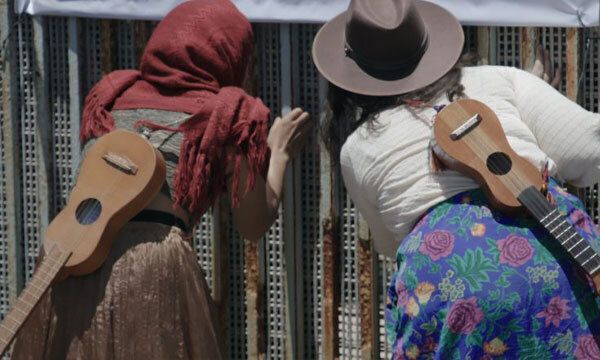
Fandango at the Wall
April 26, 2021
12:01 am
with a panel discussion featuring filmmaker Varda Bar-Kar and others on Tuesday, April 27 at 1pm
Ithaca Premiere>2020 > USA > Directed by Varda Bar-Kar
An exuberant documentary that follows masterful son jarocho (a 300-year-old folk music rooted in the land that combines African, Indigenous and Spanish traditions) musicians from Veracruz, Mexico to the US-Mexico border where they join renowned New York Maestro Arturo O'Farrill and his Afro Latin Jazz Orchestra for a transformational music & dance festival, Fandango Fronterizo, taking place on both sides of the border. The event resulted in an album, a book and this documentary, directed by Cornell alumna Varda Bar-Kar '82. Subtitled. Cosponsored by the Latin American Studies Program. More at fandangowall.com/
1 hr 32 min
We will start taking reservations one week in advance of a film's first play date.
Reservations can be made here:
https://cinema.cornell.edu/virtual-cinema-order-form
Additional Information
Program
Einaudi Center for International Studies
"Borders and Species Extinction," by Emily Vázquez Enríquez, Border Environments, A Special Events Series

April 15, 2021
1:00 pm
Sponsored by the Central New York Humanities Corridor from an award by the Andrew W. Mellon Foundation
Professor Vázquez Enríquez writes at the intersection of the environmental humanities and the fields of border and migration studies. Her first book project theorizes the concept of border biomes to think about the mutual entanglement between human and nonhuman entities in relation to border settings and migration flows in the Americas. In her work, she examines questions of ecopolitics in transnational settings, the relationships between migrants and border communities with border ecologies, and queries regarding the different forms of environmental racism faced by immigrants.
Emily Celeste Vazquez Enriquez holds a licenciatura in Hispanic literature from the Autonomous University of Chihuahua, Mexico, an M.A. in Spanish with specialization in Latin American literature from the University of Texas at El Paso, and a PhD in Romance Studies from Cornell University. Focused on the fields of border and migration studies, in her research she analyzes the social and discursive intersections between speculation and environment. Particularly, she is interested in studying speculative border fiction depicting the built and natural environments of the Guatemala-Mexico and Mexico-U.S. borderlands.
Co-Sponsored by: Latin American Studies Program, Latina/o Studies Program, Department of Comparative Literature, Cornell Cinema, and the Migrations Initiative
Additional Information
Program
Einaudi Center for International Studies
Latin American and Caribbean Studies
"Wild Relatives" panel discussion
April 13, 2021
12:00 pm
Film Overview:
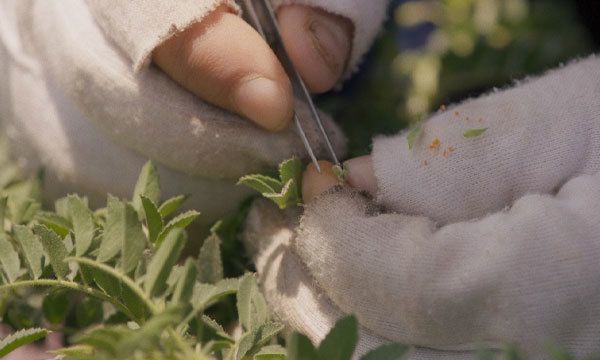
Deep in the earth beneath the Arctic permafrost, seeds from all over the world are stored in the Svalbard Global Seed Vault to provide a backup should disaster strike. Wild Relatives starts from an event that has sparked media interest worldwide: in 2012 an international agricultural research center was forced to relocate from Aleppo to Lebanon due to the Syrian Revolution turned war, and began a laborious process of planting their seed collection from the Svalbard back-ups. Following the path of this transaction of seeds between the Arctic and Lebanon, a series of encounters unfold a matrix of human and non-human lives between these two distant spots of the earth. It captures the articulation between this large-scale international initiative and its local implementation in the Bekaa Valley of Lebanon, carried out primarily by young migrant women. The meditative pace patiently teases out tensions between state and individual, industrial and organic approaches to seed saving, climate change and biodiversity, witnessed through the journey of these seeds."The film is in Arabic, Norwegian, and English, with English subtitles. Running time: 64 min.
Streaming details and more information
Panelists:
Rachel Bezner Kerr, Professor of Global Development, Cornell University. She does transdisciplinary research on social, health, environmental and political dimensions of agriculture in Africa. Major themes include agroecology, climate change adaptation, gender and social inequity, food and nutrition security. She has published over 60 scientific articles, in journals such as Proceedings of the National Academy of Sciences, and Agriculture, Ecosystems and Environment. She is a Coordinating Lead Author for the ‘food chapter’ for the Intergovernmental Panel on Climate Change upcoming report on climate change impacts, vulnerabilities and adaptation. She also co-authored a report on agroecology for the United Nations Committee for World Food Security.
Johanna Sellman, Assistant Professor of Arabic Literature in the Department of Near Eastern Languages and Cultures at The Ohio State University. She received a PhD in Comparative Literature from UT Austin and at OSU she researches and teaches in the fields of modern Arabic literature, migration, translation, and Arab diasporic theatre. Her current book project Speculative Belongings: 21st Century Arabic Literature of Migration in Europe analyzesthe transformations of Arabic migration literature in an era of mobility, displacement, and globalization.
The moderators of the event are:
Amr Leheta, PhD student in the Department of Near Eastern Studies at Cornell University working on modern Egyptian history, with a focus on the production of territory in the Sinai PeninsulaEleanor Paynter, postdoctoral associate in Migrations with the Mario Einaudi Center for International Studies, focused on displacement in the Mediterranean
WILD RELATIVES - Trailer from KLE on Vimeo.
Additional Information
Program
Einaudi Center for International Studies
CCCI: Tibet, China, and Settler Colonialism
April 12, 2021
4:30 pm
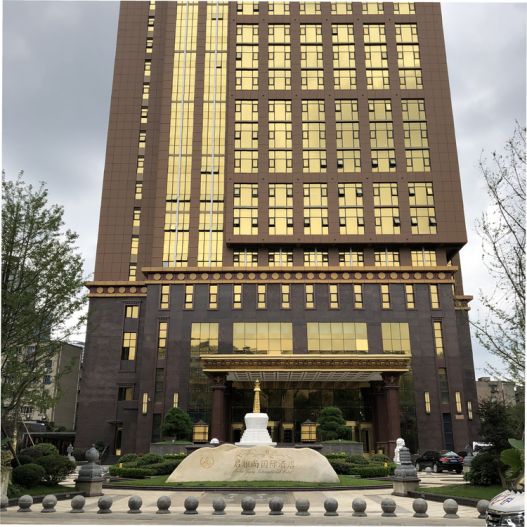
CCCI welcomes Gerald Roche, Senior Research Fellow, Politics, LaTrobe University to speak on Tibet, China, and Settler Colonialism. Tibet, China, and Settler Colonialism He states:
The term settler colonialism is increasingly being used to describe the relationship between the People’s Republic of China and its so-called ethnic minorities, such as Tibetans and Uyghurs. In this talk, I will provide a brief overview of settler colonialism as both a framework for scholarly analysis and real-world practice of domination. I will also explore how this term is being applied to the PRC, with reference to Tibet, and discuss how describing the Tibetan situation as settler-colonial differs from other approaches to the Tibet issue. As a way of illustrating this approach, I will discuss urbanization in Tibet as a technique of settler colonialism, particularly the relationship between urbanization and migration.
Additional Information
Program
Einaudi Center for International Studies
East Asia Program
“An Uncharted Modernity”: The Architecture of Muzharul Islam, by Nurur Rahman Khan
April 12, 2021
11:00 am
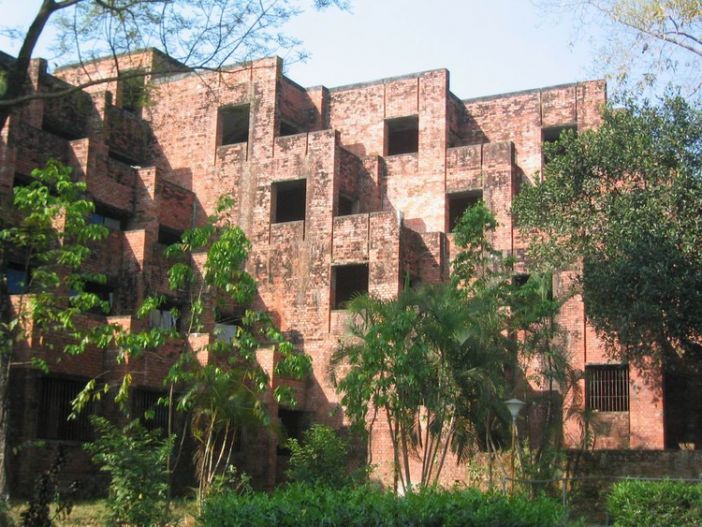
As a witness to the famine caused by the British in India, Partition and the bloody aftermath, the futile East-West Pakistan relationship, the language movement, and the inevitable Liberation War, Muzharul Islam was not contained by the typical “postcolonial" hangover and neither was he an advocate of the “regional”. Islam saw “modernity” as a “politics” of nation-building and was therefore able to hold three otherwise opposed positions, without any conflict with each other: Marxist politics, the progressive attitude of the west, and the need for a strong a cultural identity. His architecture not only laid the foundation of modern architecture in the region but also set on to voice a perception of “modernity” that would fuse a solidarity of the thinkers, artist, writers and even politicians of his time. “An Unchartered Modernity” is journey of the works of Muzharul Islam, seen beyond the typical “gaze” of modern architecture. Muzharul Islam is considered one of the greatest architects of the Indian subcontinent and his work till date remains not only as a source for understanding “modernity” in Bengal, but also to look beyond the confinement of “regionalism” and charters a path in architecture where architecture is able to recalibrate its role.
Dr Nurur Rahman Khan is a partner of the renowned architectural practice of Tanya Karim N R Khan and Associates. He graduated from Bangladesh University of Engineering and Technology, and completed his Masters from the same institution with the honor of Ahsanur Rahman Gold Medal. He went on to do this Doctoral Degree at IUAV University of Venice. He is an educator who has taught and lectured in many Universities and Seminars and currently a Professor at Bangladesh University and adjunct faculty of Stamford University Dhaka, and visiting faculty at North South University. He also was a Masters studio guide at IUAV. He is a scholar on Muzharul Islam, Louis I Kahn’s work in the subcontinent and the critique of Modern Architecture in the region. He is the author of The Assembly Building, a book published on the occasion of the birth centennial of Louis I Kahn, and Muzharul Islam: Selected Drawings, the first book to be published on Muzharul Islam. .
Additional Information
Program
Einaudi Center for International Studies
South Asia Program
Wild Relatives
April 15, 2021
12:01 am
Ithaca Premiere>2018 > Germany/Lebanon/Norway > Directed by Jumana Manna
Forced to relocate from Aleppo to Lebanon due to the Syrian civil war, an international agricultural research center must begin the laborious process of replanting its seed collection from the back-up bank located beneath the Arctic permafrost in the Svalbard Global Seed Vault. The film captures the articulation between this large-scale international initiative and its local implementation in the Bekaa Valley of Lebanon, carried out primarily by young migrant women. In Arabic, Norwegian & English. Subtitled. Cosponsored by Cornell's Migrations Initiative and the Einaudi Center. More at www.jumanamanna.com/Wild-Relatives
1 hr 5 min
We will start taking reservations one week in advance of a film's first play date.
Reservations can be made here:
https://cinema.cornell.edu/virtual-cinema-order-form
WILD RELATIVES - Trailer from KLE on Vimeo.
Additional Information
Program
Einaudi Center for International Studies
Siba N’Zatioula Grovogui

Professor, Africana Studies
Siba N’Zatioula Grovogui's research focuses on international relations theory, political theory, and African thought. Watch his faculty profile on video.
Additional Information
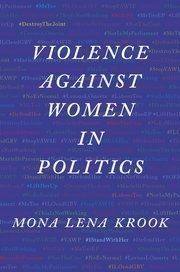
Violence Against Women in Politics
March 4, 2021
11:25 am
Prof. Mona Krook leads an interactive discussion of her new book, Violence Against Women in Politics (Oxford University Press, 2020).
The author will join for a conversation about their work. No formal presentation will be given; please read in advance. A link to the reading will be sent with the registration confirmation.
Part of the Reppy Institute for Peace and Conflict Studies (PACS) seminar series.
About the author
Mona Lena Krook is a Professor in the Department of Political Science at Rutgers University. She earned her Ph.D. from Columbia University. Her interests include democratization and good governance, gender and electoral politics, electoral gender quotas, candidate selection, political representation, political parties, and qualitative methods. Among her many publications include: Quotas for Women in Politics: Gender and Candidate Selection Reform Worldwide (Oxford University Press 2009) and The Impact of Gender Quotas (Oxford University Press, 2012), and most recently, Violence Against Women in Politics (Oxford University Press, 2020).
Additional Information
Program
Einaudi Center for International Studies
Reppy Institute for Peace and Conflict Studies
Disrupting the Autocratization Sequence: Towards Democratic Resilience

February 25, 2021
11:25 am
Anna Lührmann joins the Reppy Institute for Peace and Conflict Studies (PACS) for a discussion of her working paper, "Disrupting the Autocratization Sequence: Towards Democratic Resilience."
The author will join us for a discussion of her work. No formal presentation will be given; please read in advance. A link to the reading will be sent with the registration confirmation.
About the author
Anna Lührmann is an Associate Professor at the University of Gothenburg (Docent) and the Deputy Director of the Varieties of Democracy Institute (V-Dem). Prior to turning to academia, Anna was a Member of Parliament in the German National Parliament (2002- 2009) and later worked in Sudan for two years. She received her PhD in 2015 from Humboldt University (Berlin) with a thesis on United Nation’s electoral assistance. Anna Lührmann holds a M.A. degree in “Research Training in Social Sciences” from Humboldt University (Berlin), a M.Sc. degree in Gender and Peace Studies from Ahfad University (Sudan) and a B.A. in Political Sciences from FernUniversität Hagen (Germany). She served as a consultant for UNDP, the World Bank and others. Her research has been published among others in the American Political Science Review, Electoral Studies, Democratization and the Journal of Democracy.
Current research
Anna's current research focuses on how and why democracy is eroding in many countries across the world and what we can do to stop it. Furthermore, she leads V-Dem’s Pandemic Backsliding project, which investigates how government responses to Covid-19 affect democracy. She also contributes to the Failing and Successful Sequences of Democratization- Project.
Additional Information
Program
Einaudi Center for International Studies
Reppy Institute for Peace and Conflict Studies