
Einaudi Center for International Studies
Rebecca Morgenstern Brenner
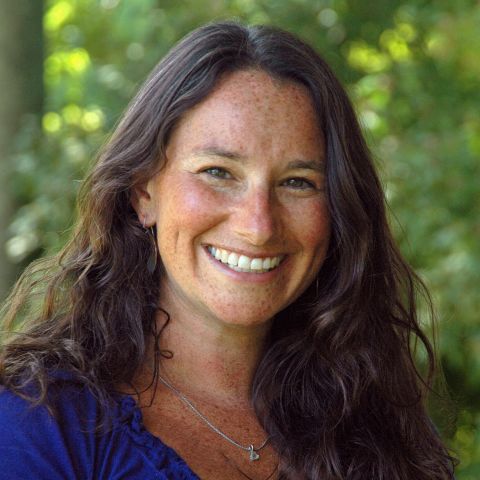
Associate Teaching Professor
Rebecca Morgenstern Brenner is an Associate Teaching Professor in the Brooks School of Public Policy at Cornell University, with additional collaborations as a Cornell Atkinson Sustainable Future Senior Faculty Fellow, Mario Einaudi Center for International Studies Faculty Associate, and a Faculty Fellow in the Einhorn Center for Community Engagement, and won the
Additional Information
Stacey Langwick

Associate Professor, Anthropology
Stacey A. Langwick, College of Arts and Sciences, is an anthropologist of healing and medicine in Africa.
Additional Information
Andre Kessler

Professor, Ecology, and Evolutionary Biology
Additional Information
Cindy Hsin-Liu Kao

Assistant Professor, Design and Environmental Analysis
Cindy Hsin-Liu Kao is an assistant professor in the College of Human Ecology and a field faculty in Information Science. She founded and directs the Hybrid Body Lab, which focuses on the invention of culturally-inspired materials, processes, and tools for crafting technology on the body surface. Her research practice themed Hybrid Body Craft blends aesthetic and cultural perspectives into the design of on-body interfaces. She also creates novel processes for crafting technology close to the body.
Additional Information
Robert C. Hockett

Edward Cornell Professor of Law
Additional Information
Free Webinar: Study Battling Birds in Panama with Bird Cams Lab
January 28, 2021
12:00 pm
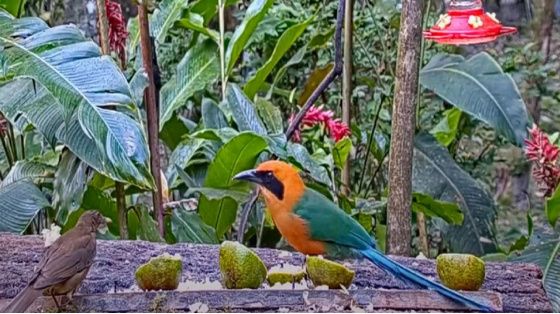
Learn how you can turn observations into scientific data using the live Bird Cams Panama Fruit Feeder Cam hosted by the Cornell Lab of Ornithology. The Bird Cams Lab project uses the power of audience participation to make new discoveries about bird behavior using Bird Cams footage. The current investigation is called Battling Birds: Panama Edition. Watch as tropical birds vie for food and position against the backdrop of a lush cloud forest. Anyone can participate in Bird Cams Lab. Learn how by tuning into our conversation with Project Leader Rachael Mady and Bird Cams Communications Specialist Ben Walters.
Register to attend on Zoom
Image: Clay-colored Thrush and Rufous Motmot © Cornell Lab Bird Cams
Additional Information
Program
Einaudi Center for International Studies
Latin American and Caribbean Studies
Ian Hewson

Associate Professor, Microbiology
Ian Hewson is an associate professor in the Department of Microbiology in the College of Agriculture and Life Sciences. He is a biological oceanographer working on the impacts of viruses on aquatic biogeochemistry. Hewson is the director of undergraduate studies and program coordinator for Marine Biology at Cornell. His research focuses on marine microbiology, marine ecology, biological oceanography, and marine science.
Additional Information
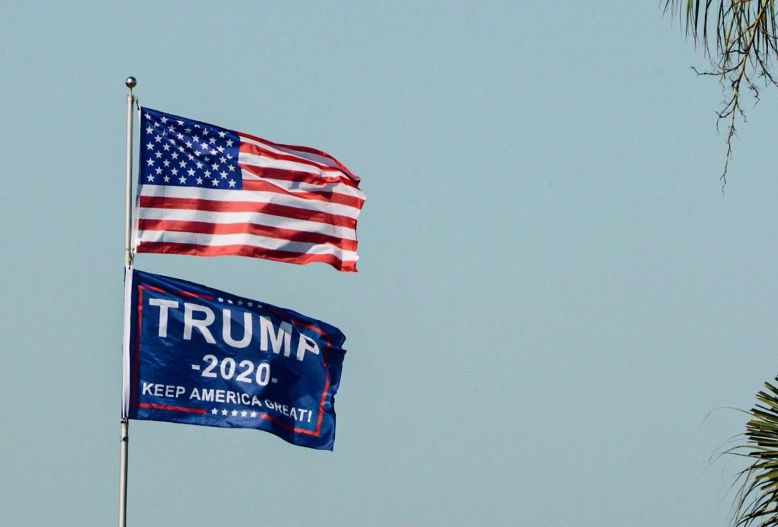
Is Democracy in Danger?
Riedl and Roberts in Washington Post
Einaudi director Rachel Beatty Riedl and LASP director Ken Roberts explain how democracies around the world resist authoritarian factions.
Additional Information
George A. Hay

Charles Frank Reavis Sr. Professor of Law and Professor of Economics
George Hay is one of the foremost antitrust authorities in the United States. Professor Hay teaches a variety of law and law-related courses in both the Law School and the College of Arts and Sciences and lectures on antitrust throughout the United States and the rest of the world.
Additional Information
Valerie Hans

Charles F. Rechlin Professor of Law
Valerie P. Hans conducts empirical studies of law and the courts and is one of the nation's leading authorities on the jury system. She studies the diverse forms of citizen participation in legal decision making in other countries.