
Einaudi Center for International Studies
Video: Polarized (Democracy 20/20)

Polarized: Partisanship, Social Movements, and the Transformation of American Democracy
Parties and movements have long provided a voice to U.S. citizens and connected them to the government, but these mediating roles are in flux. In their place is a more polarized "red" and "blue" America. This October 30 webinar from Democracy 20/20 examines how social movements and changes in the two major political parties are redefining American democracy.
Additional Information
Already enrolled as a European Studies Minor? Join us!
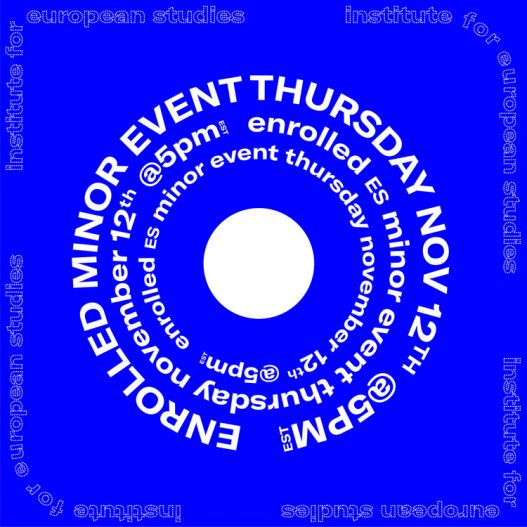
November 12, 2020
5:00 pm
If you’re already enrolled in the ES minor, join us on Thursday, November 12th at 5:00 pm (virtually) to learn what opportunities are available to you and to meet other students interested in European Studies.
Take a 2-minute mini-quiz to see how far along you are in completing the minor.
Have questions? Contact the Institute for European Studies directly for an advising appointment.
Additional Information
Program
Einaudi Center for International Studies
Institute for European Studies
Learn more about becoming a minor in European Studies!
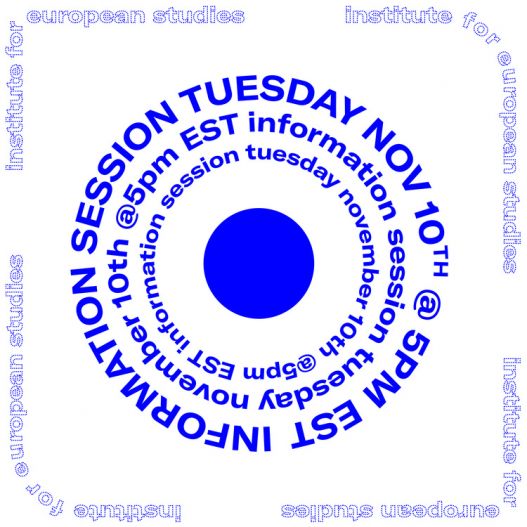
November 10, 2020
5:00 pm
The Institute for European Studies is excited to let you know that students currently enrolled in Comparative Literature, Government, History, History of Art, and Romance Studies courses have already completed the first requirements for a European Studies (ES) Minor.
Through an interdisciplinary curriculum, you can mold the ES Minor to your interests. You’ll have the opportunity to explore Europe’s past, present, and future and demonstrate a knowledge of European languages, culture, history, politics, and international relations.
The minor offers the chance to take courses across colleges on subjects that shape your understanding of a globalizing world, while also providing you with an area of expertise. You will gain critical thinking skills, language abilities, and helpful frameworks for assessing today’s most pressing issues in Europe and around the world.
Join us for an information session on Tuesday, November 10th at 5:00 pm to chat about your interests and learn more about the European Studies minor from IES faculty, staff, and student representatives.
If you’re already enrolled in the minor, join us on Thursday, November 12th at 5:00 pm to learn what opportunities are available to you and to meet other students interested in European Studies.
Take a 2-minute mini-quiz to see how far along you are in completing the minor.
Contact the Institute for European Studies directly for an advising appointment.
Additional Information
Program
Einaudi Center for International Studies
Institute for European Studies
Sowing Seeds of Peace: Inside Colombia’s Peace-building Initiatives, with Lillian Hall and Andres Ruiz
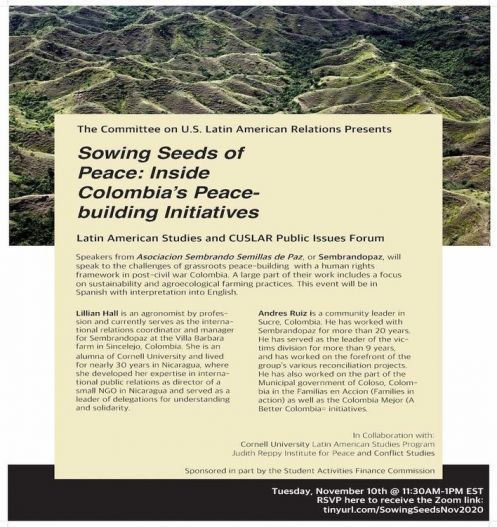
November 10, 2020
11:30 am
In this CUSLAR and LASP Public Issues Forum, speakers from Asociacion Sembrando Semillas de Paz, or Sembrandopaz, will speak to the challenges of grassroots peace-building with a human rights framework in post-civil war Colombia. A large part of their work includes a focus on sustainability and agroecological farming practices.
This event will be in Spanish with interpretation into English.
Lillian Hall '84 is an agronomist by profession and currently serves as the international relations coordinator and manager for Sembrandopaz at the Villa Barbara farm in Sincelejo, Colombia. She is an alumna of Cornell University and lived for nearly 30 years in Nicaragua, where she developed her expertise in international public relations as director of a small NGO in Nicaragua and served as a leader of delegations for understanding and solidarity
Andres Ruiz is a community leader in Sucre, Colombia. He has worked with Sembrandopaz for more than 20 years. He has served as the leader of the victims division for more than 9 years, and has worked on the forefront of the group’s various reconciliation projects. He has also worked on the part of the Municipal government of Coloso, Colom-bia in the Familias en Accion (Families in action) as well as the Colombia Mejor (A Better Colombia) initiatives.
Register at: tinyurl.com/SowingSeedsNov2020
The Committee on U.S. Latin American Relations (CUSLAR), in partnership with the Cornell Latin American Studies Program and the Judith Reppy Institute for Peace and Conflict Studies, is sponsoring this event highlighting the role of community initiatives in constructing peace in Colombia. The event is sponsored in part by the Student Activities Finance Commission and funded in part by the LASP Undergraduate International Studies and Foreign Language (UISFL) grant from the US Department of Education.
Additional Information
Program
Einaudi Center for International Studies
Reppy Institute for Peace and Conflict Studies
Latin American and Caribbean Studies
The Hundred Years’ War on Palestine
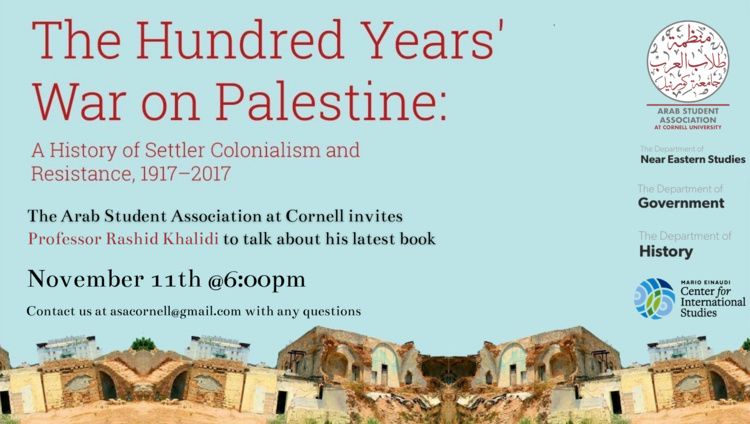
November 11, 2020
6:00 pm
The Cornell Arab Student Association in coordination with the Near Eastern Studies, Government, and History departments, as well as the Einaudi Center for International Studies and Reppy Institute for Peace and Conflict Studies, invites Professor Rashid Khalidi of Columbia University to talk about his latest book, The Hundred Years’ War on Palestine: A History of Settler Colonialism and Resistance.
Professor Khalidi is a leader in his field and serves as the director of the Middle East Institute of Columbia’s School of International and Public Affairs. For any questions please contact us at asacornell@gmail.com.
Feel free to check out the Facebook event with this link https://fb.me/e/3LLzsC1nN and mark yourself as going!
Additional Information
Program
Einaudi Center for International Studies
Reppy Institute for Peace and Conflict Studies
The Police and the Public: Global Perspectives (Lund Critical Debate)

December 9, 2020
6:30 pm
Protests against racism and police violence crescendoed in the United States and around the world in 2020. In the United States and internationally, how can we balance social justice, accountability, and personal freedom with demands for order and security?
This Lund Critical Debate brings together the United Nations’ police commissioner and a noted expert on political conflict resolution to discuss strategies—both inside and outside the policing framework—for public safety and law enforcement. The conversation will address current questions around security and policing, including political violence, racial injustice and Black Lives Matter, and global responses to unlawful use of force.
The panel welcomes questions in advance and during the event. Registration is required.
Panelists
Luís Carrilho, United Nations Police Adviser. He has served since November 2017 as police commissioner and director of the UN’s Police Division. He previously served as the police commissioner in multidimensional United Nations peacekeeping operations in Timor Leste, Haiti, and the Central African Republic.
Christian Davenport, Professor, Department of Political Science and Public Policy, University of Michigan. His research focuses on racism, social movements, and political conflict, including human rights violations, genocide, torture, political surveillance, and civil war. His most recent book is The Peace Continuum: What It Is and How To Study It (Oxford University Press, 2018).
Moderator
Sabrina Karim, Reppy Institute for Peace and Conflict Studies; Hardis Family Assistant Professor for Teaching Excellence, Department of Government, A&S. Her research focuses on conflict and peace processes, international involvement in post-conflict security, and state building in the aftermath of civil war.
About the Debate
This year’s Lund Critical Debate is hosted by the Mario Einaudi Center for International Studies and Reppy Institute for Peace and Conflict Studies, part of the Einaudi Center. Established in 2008, the Einaudi Center's Lund Critical Debate Series is made possible by the generosity of Judith Lund Biggs ’57.
Additional Information
Program
Einaudi Center for International Studies
Reppy Institute for Peace and Conflict Studies
East Asia Program
Southeast Asia Program
Latin American and Caribbean Studies
Institute for African Development
Institute for European Studies
South Asia Program
Semi-Study Break: World Music of the Moment with Global Cornell

November 16, 2020
11:00 am
Celebrate International Education Week #IEW2020 with Global Cornell!
Join DJ Daniel Bass of WRFI's Monsoon Radio for world music of 2020—from coronavirus and mass incarceration, to migration, love, dancing, and beyond. Jonathan Miller of Homelands Productions cohosts.
For semi-finals: It's a semi-study break. See you there.
Registration is required.
Daniel Bass (South Asia Program) has been a radio DJ for nearly 30 years. As an undergraduate at Carleton College, he was music director of KRLX, the student-run radio station, and hosted a weekly show. In graduate school at the University of Michigan, he cohosted a weekly show of South Asian music on WCBN, the college/community radio station in Ann Arbor. In 2013, he started Monsoon Radio on WPKN in Bridgeport, Connecticut. He brought the show to Ithaca's WRFI in 2017. Monsoon Radio features music of South Asia, its influences and diasporas, branching out to music of the Indian Ocean and the Muslim world and fusions from all over the globe. Until the pandemic forced the show into hiatus, Monsoon Radio aired every other Tuesday night on WRFI, 88.1 FM, and wrfi.org.
Jonathan Miller's work as a journalist, writer, and editor has taken him to more than 20 countries in Asia, the Americas, Africa, Europe, and the Pacific. His radio and television reports have been broadcast on NPR, Marketplace, BBC, PBS NewsHour, and other outlets. As executive director of the journalism collective Homelands Productions, he has designed and produced multi-platform projects on cultural change, globalization and work, and the future of food. He serves as board chair of Ithaca City of Asylum. From 2016 to 2018 he was associate director of communication at the Mario Einaudi Center for International Studies.
Register here: https://cornell.zoom.us/webinar/register/WN_hjkj48IdQ7yEVetaG1QFlA
Additional Information
Program
Einaudi Center for International Studies
South Asia Program
Latin American and Caribbean Studies
Institute for African Development
Institute for European Studies
Reppy Institute for Peace and Conflict Studies
East Asia Program
Southeast Asia Program
Doctoral Candidate Awarded Peace Scholar Dissertation Fellowship

Cameron Mailhot, a doctoral candidate in government, has been awarded a Peace Scholar Dissertation Fellowship from the U.S. Institute of Peace (USIP) for his outstanding dissertation on peace processes.
In his dissertation, “Blueprints for Peace: International Missions, Domestic Commitments, and Post-Conflict Reforms,” Mailhot examines variation in the international enforcement of peace agreements and effects this has on peace outcomes.
The USIP Peace Scholar Dissertation Fellowship program has supported the dissertations of 339 young scholars since 1988. Many of them have gone on to distinguished careers in research, scholarship, and policymaking. This nonresidential fellowship is awarded to PhD students enrolled in U.S. universities who are writing doctoral dissertations on topics broadly related to conflict management, peacebuilding and other related security studies. The award carries a $20,000 stipend and is funded by the Minerva Research Initiative.
Mailhot's research focuses on the role of the international community in post-conflict countries. His research, fieldwork, and training have been supported by American Councils, the Cornell Department of Government, the Judith Reppy Institute for Peace and Conflict Studies, the Mario Einaudi Center for International Studies, the Purdue Peace Project, and the US Department of State. During his time in Kosovo, he is a Visiting Scholar at the Centre for Political Courage. Beyond his dissertation, his research interests include nation and state-building, the origins of social and political trust, and transnational linkages of white nationalism in the U.S. and Europe.
Prior to starting his PhD, Mailhot worked in the Human Rights Program at the University of Minnesota, where he conducted research on transitional justice and contributed to a consortium dedicated to increasing public awareness of the patterns of disappearances in northern Mexico. Cameron is from Crosby, Minnesota, and holds a B.A. from the University of Minnesota, Twin Cities.
You can read more about Mailhot's dissertation project here.
Additional Information
POSTPONED - Self-Devouring Growth Book Talk
December 4, 2020
12:00 pm
****EVENT POSTPONED****
MORE INFORMATION WILL BE AVAILABLE EARLY NEXT SEMESTER. WE HOPE TO RESCHEDULE FOR A DATE IN FEBRUARY.
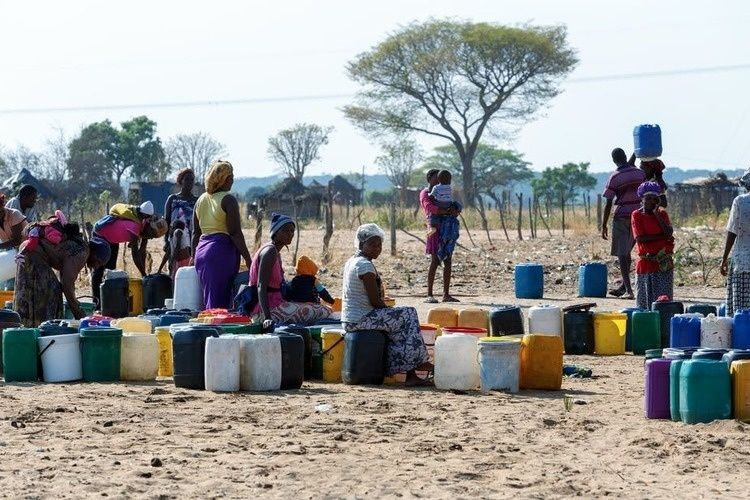
Julie Livingston will talk about her recent book Self-Devouring Growth: A Planetary Parable as Told from Southern Africa (Duke University Press, 2019).
We encourage you to join a book discussion group on November 30th before this author talk. Register for those groups here.
Self-Devouring Growth is a parable for our times, set within Botswana’s economic miracle. Livingston examines how the imperative for continual uninterrupted economic growth generates ways of living now that destroy the capacity for liveliness in the future. She asks readers to imagine how else we might organize our energies, and calls on us all to examine the groundwork we are laying down for the future.
This a work that will be of interested to all who are care about the entanglements of health, ecology and economy as they work for greater justice and healing. It will have lasting impact in the fields of anthropology, history, environmental studies and African Studies.
Julie Livingston is currently the Silver Professor of Social and Cultural Analysis and History at New York University. She was named a MacArthur Fellow by the James D. and Catherine T. MacArthur Foundation in 2013. In addition to Self-Devouring Growth, she is the author of the award-winning book Improving Medicine: An African Oncology Ward in an Emerging Cancer Epidemic (Duke University Press, 2012), and of Debility and the Moral Imagination in Botswana (Indiana University Press, 2005).
During this webinar, Julie Livingston will read from Self-Devouring Growth and talk with Stacey Langwick (Anthropology) about her hopes in writing it. We will draw on the conversations in the book groups earlier in the week to share with her how the story provoked us to think about the moral and material worlds that we need to build in order to address the health and environmental crises defining the start of the 21st century, and there will be time for questions.
The book is free to all Cornell students, staff, and faculty through the Cornell library.
Organizer: The Qualities of Life working group at the Mario Einaudi Center for International Studies
Co-sponsors:
American Indian and Indigenous Studies Program
Carl L. Becker House
Cornell Botanic Gardens
Cornell Global Health Program (Ithaca)
Cornell School of Public Health
Department of Anthropology
Department of Global Development (formerly Development Sociology)
Department of History
Department of Science and Technology Studies
Policy Analysis and Management
Weill Cornell Global Health Program (NYC)
Collaborating Organizations:
Global Health Student Advisory Board
Partners in Health Engaged
Planetary Health Club
Additional Information
Program
Einaudi Center for International Studies
Self-Devouring Growth Discussion Groups
November 30, 2020
12:00 am
Please join us in reading and discussing
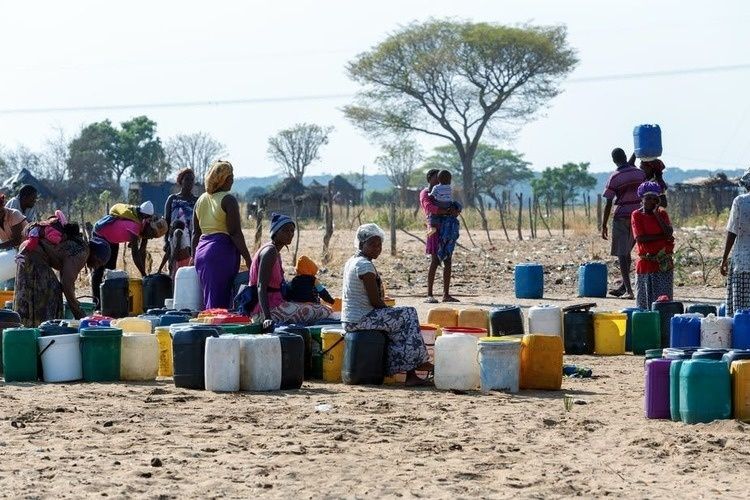
Self-Devouring Growth: A Planetary Parable as Told from Southern Africa
By Julie Livingston (Duke University Press, 2019)
This is a book for our moment. A parable for our times set within Botswana’s economic miracle. A story that is meant to provoke us to think about the moral and material worlds that we need to build in order to address the health and environmental crises defining the start of the 21st century.
Livingston examines how the imperative for continual uninterrupted economic growth generates ways of living now that destroy the capacity for liveliness in the future. She asks readers to imagine how else we might organize our energies, and calls on us all to examine the groundwork we are laying down for the future.
Book discussion groups will be held throughout the day on Monday, November 30th in preparation for an author event on Friday, December 4th from 12:00-1:15pm. Please register for the discussion sections below. Registration will close on November 20th to give us time to organize discussion groups, and you will be given a list of one-hour time slots to chose from on November 23.
This book is free to all Cornell students, staff and faculty through the Cornell library.
Organizer: The Qualities of Life working group at the Mario Einaudi Center for International Studies
Co-sponsors:
American Indian and Indigenous Studies Program
Carl L. Becker House
Cornell Botanic Gardens
Cornell Global Health Program (Ithaca)
Cornell School of Public Health
Department of Anthropology
Department of Global Development (formerly Development Sociology)
Department of History
Department of Science and Technology Studies
Policy Analysis and Management
Weill Cornell Global Health Program (NYC)
Collaborating Organizations:
Global Health Student Advisory Board
Partners in Health Engaged
Planetary Health Club
Additional Information
Program
Einaudi Center for International Studies