
Einaudi Center for International Studies
Crafting the Empire’s Echo: Design, Labor, and Politics in Contemporary India

March 2, 2026
12:15 pm
Uris Hall, G08
Talk by Llerena Guiu Searle (Anthropology, University of Rochester)
In order to build a more just world order, philosopher Olúfémi Táíwo argues that we must contend with the fact that our current social order builds on relations of colonialism that did not end with colonial independence in the 1940s-1960s. Slavery, colonialism, and racial capitalism have created what he calls the “Global Racial Empire” which accumulates advantages and disadvantages, harms and capabilities unevenly (2022). How might we understand “design” as a set of practices that operates within such a world system? Drawing on eight months of ethnographic fieldwork with furniture and interior designers in India, this talk examines the ways in which designers navigate capitalist markets that continue to be haunted by colonialism. On the one hand, creative experts shaping elite Indian homes describe design as an anti-colonial project, poised to free India from tastes, fashions, and products from abroad. On the other, designers navigate hierarchies of values set by global markets, including demand for exotic, uniquely “Indian” products. Furniture and interior production also relies on production methods still defined through neocolonial discourses of “crafts difference” (McGowan 2009) and on caste and class dynamics that legitimize labor exploitation. By investigating how these unseen forces – histories, values, and ideologies – structure design practice in India, this paper contributes to our understanding of the politics of the creative industries and their imbrication in “Global Racial Empire.”
Llerena Guiu Searle is an Associate Professor of Anthropology and of Visual & Cultural Studies at the University of Rochester, where she also co-edits the Lewis Henry Morgan Lecture Series. She is the author of Landscapes of Accumulation: Real Estate and the Neoliberal Imagination in Contemporary India (University of Chicago Press, 2016). Her research examines capitalism and the production of the built environment in urban India.
Additional Information
Program
Einaudi Center for International Studies
South Asia Program
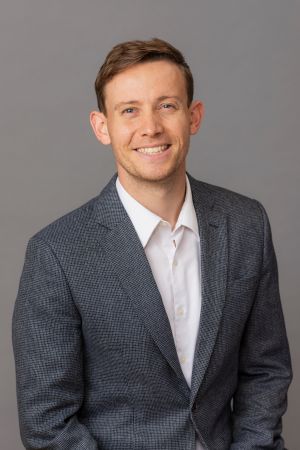
Convexity and Short-termism in Banker Compensation
White Paper
Additional Information
Type
- White Paper
- CRADLE White Paper Series
Publication Details
Publication Year: 2025
The Costs of Magical Realism: Europe, NATO, and Ukraine Face the Trump Challenge

April 28, 2026
5:00 pm
Goldwin Smith Hall, G64
IES Luigi Einaudi Distinguished Lecture
With the second Trump administration challenging the basic tenets of transatlantic relations, Europeans must find a way to contain the damage and chart a new path forward. Doing so successfully will require an understanding of the post-Cold War history of Europe, NATO, and Ukraine. In this lecture, Professor Mary Elise Sarotte, Director of Yale’s Brady-Johnson Program in Grand Strategy, will highlight how this history illuminates the tensions between Europe and the United States today. Drawing on her award-winning book Not One Inch: America, Russia, and the Making of Post-Cold War Stalemate, Sarotte will both illuminate how we got to where we are—and what might happen as American foreign policy enters an era of “magical realism.”
About the Speaker
Mary Elise Sarotte is the Brady-Johnson Professor of Grand Strategy with a tenured joint appointment at the Yale School of Management. An expert in the history of international relations, she directs the Brady-Johnson Program in Grand Strategy.
Professor Sarotte has held tenured faculty appointments at the University of Cambridge, the University of Southern California, and, most recently, the Johns Hopkins School of Advanced International Studies or SAIS, where she was the inaugural holder of the Marie-Josée and Henry R. Kravis Distinguished Professorship of Historical Studies.
Host and Sponsors
This event is hosted by the Institute for European Studies (IES), part of the Mario Einaudi Center for International Studies. The IES Luigi Einaudi Distinguished Lecture is an annual event.
Additional Information
Program
Einaudi Center for International Studies
Institute for European Studies
Reppy Institute for Peace and Conflict Studies
When AI Safety Isn’t Enough—Managing Risk at the AI/Nuclear Weapons Nexus
February 26, 2026
12:00 pm
Uris Hall, G08
Amidst many proposals to incorporate AI into some aspect of the nuclear enterprise, many efforts are underway today to improve the safety of AI so that its introduction into any given part of the nuclear enterprise does not pose undue risk. Yet it does not seem possible to reduce the risks of such introduction to zero. Given that point of departure, this talk will address various criteria to that can help the cognizant individuals to make some kind of assessment for the risk associated with the incorporation of a particular AI application into some aspect of the nuclear enterprise.
About the speaker
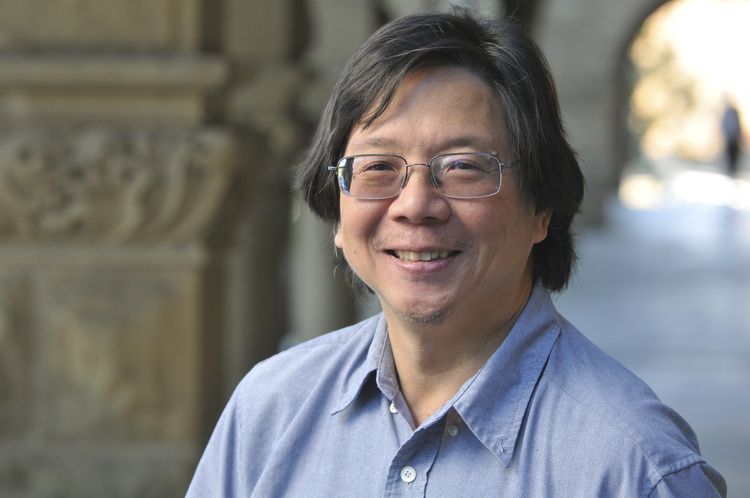
Herbert Lin is a senior research scholar at Stanford University's Center for International Security and Cooperation and a research fellow at the Hoover Institution. His work focuses on the national security impact of emerging technologies, especially digital technologies such as cyber, artificial intelligence, and influence operations. He directs and serves as editor-in-chief of the Stanford Emerging Technology Review (setr.stanford.edu). Lin is Chief Scientist, Emeritus for the Computer Science and Telecommunications Board of the National Research Council, leading key studies on public policy and information technology from 1990 to 2014. He served on President Obama’s Commission on Enhancing National Cybersecurity in 2016, was named a fellow of the American Association for the Advancement of Science in 2019, participated in the Aspen Commission on Information Disorder in 2020, and was on the Bulletin of Atomic Scientists’ Science and Security Board from 2016 to 2025. Previously, he was a professional staff member for the House Armed Services Committee, focusing on defense policy and arms control. Lin holds a doctorate in physics from MIT.
Avocationally, he is a longtime folk and swing dancer (and sometimes dance teacher), a very mediocre magician (https://www.youtube.com/watch?v=zqgpaiK1xh8), and a connoisseur of dim sum.
Host
Reppy for Peace and Conflict Studies, part of the Einaudi Center for International Studies
Additional Information
Program
Einaudi Center for International Studies
Reppy Institute for Peace and Conflict Studies
The Politics of Sexual Violence at South Africa’s Truth and Reconciliation Commission
February 19, 2026
12:00 pm
Uris Hall, G08
In the late 1990s, as the hearings of South Africa’s Truth and Reconciliation Commission (TRC) began, stories of past abuse, including sexual violence, within the exiled camps of the African National Congress (ANC) emerged. Despite women alluding to or directly describing violence they had suffered within the ANC, ultimately the final report of the TRC made little reference to sexual violence or violence against women within the ANC. It instead focussed on ‘political’ violence, including torture and execution, meted out to members suspected of being (or found to be) spies. While officially gender neutral, this political violence was inescapably gendered male, as only male victims were discussed, and always within the frame of ‘political violence’, even when the torture they suffered had a sexual character. Women’s experiences were not investigated as political violence. This paper reads the TRC’s and ANC’s deployments of the concept of ‘politics’ to ask how these approaches frame or erase violence against women in the context of a political movement, and how particular violence is defined as ‘political’ or ‘intimate.’
Speaker
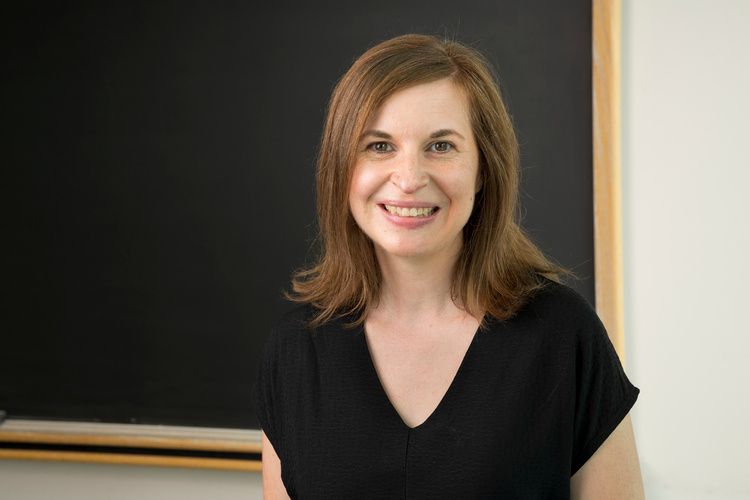
Rachel Sandwell is assistant professor in the Department of History at Cornell University. She works on the intellectual and social history of decolonization in southern Africa, with a particular focus on women and gender politics. Her first book, National Liberation and the Political Life of Exile: Sex, Gender, and Nation in the Struggle Against Apartheid, was published with Ohio University Press, New African Histories series in late 2025.
Host
Reppy Institute for Peace and Conflict Studies, part of the Einaudi Center for International Studies
Co-sponsor
Gender and the Security Sector Lab
Additional Information
Program
Einaudi Center for International Studies
Reppy Institute for Peace and Conflict Studies
International Monitoring and Domestic Accountability: Evidence from the United Nations Human Rights Council
February 12, 2026
12:00 pm
Uris Hall, G08
This article examines how international monitoring affects legal accountability for human rights violations. International organizations often publicize human rights violations to pressure non-compliant states to change their behavior; however, recent research suggests that publicity can prompt intransigence or backlash, undercutting the advancement of human rights. Drawing on the sociological concept of reactivity, I argue that states respond to monitoring strategically: they adopt some visible accountability measures to signal their intention to comply, while also attempting to reduce the risk that future violations will be uncovered. To test this argument, I leverage a lottery used to determine the schedule of Universal Periodic Review, a human rights monitoring mechanism implemented by the United Nations Human Rights Council. Consistent with my argument, I find that monitoring increases the likelihood that political prisoners are released and that government officials are prosecuted for past violations, but decreases the likelihood that truth commissions are created.
Speaker
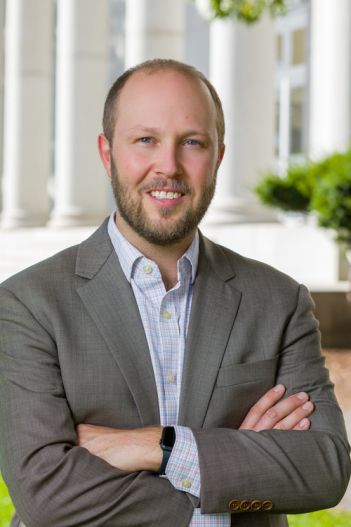
Averell Schmidt is an Assistant Professor in the Department of Government and in the Jeb E. Brooks School of Public Policy at Cornell University. He studies international relations, with a focus on the politics of international law and organizations. He received his Ph.D. from Harvard University in 2024, and joined Cornell in 2025 after completing a postdoctoral fellowship at Brown University.
Host
Reppy Institute for Peace and Conflict Studies, part of the Einaudi Center for International Studies
Additional Information
Program
Einaudi Center for International Studies
Reppy Institute for Peace and Conflict Studies
When Rivers Are Killed and Made to Kill: Fluvial Necropolitics and Emergent Solidarities in Militarized Bosnia

February 5, 2026
12:00 pm
Uris Hall, G08
When you follow the river, new constellations of the political come into view. This talk examines how rivers in Bosnia and Herzegovina become sites where the afterlives of war, the NATO‑brokered peace de/industrial complex, and global border regimes converge to produce fluvial necropolitics and new kinds of solidarities. Through three ethnographic scenes—military/industrial toxic dumping on the Neretva; refugee deaths and solidarities along the Serbian border on the Drina; and the lethal 2024 landslide on the Neretva—I show how rivers are simultaneously harmed, weaponized, and mobilized. Methodologically, I propose thinking from Bosnia, foregrounding a shared present that exceeds ethnic and national boundaries, and pairing ethnography with autoethnography to illuminate how people understand, endure, and resist the multi-scalar assaults on ecologies of living.
About the speaker
Saida Hodžić is an Associate Professor of Anthropology and Feminist, Gender, and Sexuality Studies at Cornell University and the organizer of the Refugees Know Things project. Her book The Twilight of Cutting: African Activism and Life after NGOs (2017) examines imperialism from the South. She studies and writes about the afterlives of war, dissent, survivance, and solidarity.
Host
Reppy Institute for Peace and Conflict Studies, part of the Einaudi Center for International Studies
Additional Information
Program
Einaudi Center for International Studies
Reppy Institute for Peace and Conflict Studies
Southwest Asia and North Africa Program
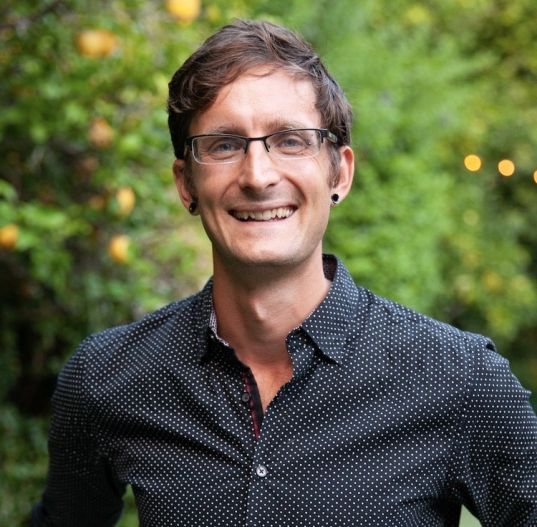
Mental States: Ordering Psychiatric Disorder in France
February 20, 2026
3:00 pm
Uris Hall, G08
Presented by Alex V. Barnard, Assistant Professor of Sociology at New York University (NYU)
Is there an underlying order to how societies classify, treat, and control madness? Both popular and scholarly portrayals of contemporary mental health systems emphasize service fragmentation and inter-professional competition. In this talk, I draw on a year of in-depth fieldwork in France, including observations in a public mental health clinic, social service office, and courts, supplemented with nearly two-hundred interviews with administrators and clinicians, to show the underlying logic to the trajectories of people with serious mental illness through the welfare state. As I show, decision-making across these sites is linked by a shared conception, both embedded in formal policy and informal practices, of what makes someone a malade—a real mentally-ill person. This strong medical and bureaucratic identity ties this population to a paternalist, protective psychiatric system, in sharp contrast to the U.S., where the absence of a clear administrative category for this population leads to a chaotic mix of coercion and care from jails, shelters, and hospitals. While these results reveal the power of the French state to construct a particular definition of what it means to have a serious mental illness, I show how defining the population in this way constrains attempts to reform the system. This talk suggests how the dynamic interplay between categories adopted in official policy, used in professional practice, and adopted by populations themselves can reproduce national differences, even in an era where psychiatric knowledge and medical treatment are converging across national borders.
Speaker
Alex V. Barnard is an assistant professor of sociology at New York University and holds a PhD in sociology from the University of California, Berkeley. His work examines medical and bureaucratic decision-making, welfare policy, and social control comparatively. His previous book, Conservatorship: Inside California's System of Coercion and Care for Mental Illness (Columbia University Press), examines California's involuntary treatment system, showing how a failure of government oversight and inter-agency coordination leads to the extensive use of coercive interventions that provide neither care nor control. Ongoing projects include examining trends in national legislation around involuntary psychiatric treatment, analyzing variation in the policing of protests and university responses to the 2024 student protest encampments, and the governance of emerging addictions to online gambling and AI.
Host
Institute for European Studies, part of the Einaudi Center for International Studies
Co-host
The Department of Sociology Colloquium Series
Additional Information
Program
Einaudi Center for International Studies
Institute for European Studies
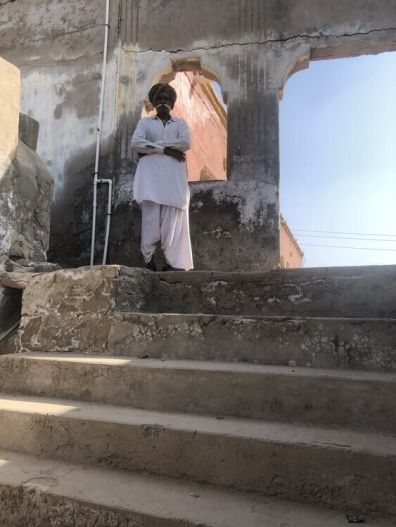
Where the Ghosts of War Sleep: Enemy Property and the Ruins of 1971 in Pakistan
February 2, 2026
12:15 pm
Uris Hall, G08
Talk by Sadia Mahmood, South Asia Program, Cornell University
Mainstream historiography on South Asia has largely overlooked the afterlives of the colonial Enemy Property regime in postcolonial India, Pakistan, and Bangladesh. Drawing on archival records from Pakistan and India, as well as oral accounts from the Thar borderlands of Sindh, this talk traces how “enemy property” was produced, contested, and redistributed in early postcolonial South Asia. I situate Pakistan’s practices of seizing and reallocating enemy-owned assets within a longer international legal genealogy that emerged during World Wars I and II, when the confiscation of enemy property became a routine instrument of wartime governance. Transplanted into British India, this legal and administrative apparatus continued to shape Pakistan’s bureaucratic imagination during the 1965 and 1971 Indo-Pak wars. I argue that the category of enemy property migrated from a European imperial wartime technology to a postcolonial mode of governing minorities in South Asia, often blurring the distinction between wartime enemies and religious communities deemed politically suspect. In the Thar borderlands, the ruins of officially classified “enemy properties” function not only as material remnants but also as markers of social and emotional vulnerability through which local populations continue to navigate their dispossession.
Sadia Mahmood is an Assistant Professor at Quaid-e-Azam University, Pakistan, and a Visiting Scholar at the South Asia Program, Cornell University. Her work examines the making of postcolonial religious minorities, the histories of caste-oppressed communities, and state-making in Pakistan. Her research centers on the desert borderlands of Tharparkar, where memories of the 1971 Indo-Pak war continue to shape collective memory and everyday life. She works with Pakistan’s diverse Hindu and Sikh communities in Sindh and Punjab provinces. Her articles have appeared in South Asia: Journal of South Asian Studies (2024), where she published “The Long Migration: Revisiting the Postcolonial Minority/Refugee Crisis and Governance in East Pakistan,” and in The Indian Economic & Social History Review (2023), where she published “Untouchability, Caste, and the Electorate: Revisiting Legacies of the Poona Pact in Pakistan.” She also has forthcoming contributions, including “Historical Lines in the Dunes: Tharparkar,” in the Handbook of Sindhi Studies (Routledge).
Additional Information
Program
Einaudi Center for International Studies
South Asia Program
The Birth of Indian Liberalism

April 20, 2026
12:15 pm
Uris Hall, G08
Talk by Rahul Sagar (Political Science, NYU Abu Dhabi)
Letters to an Indian Raja (1891) was the first work of political theory to be published in modern India. It advised Maharajas to introduce liberal values and constitutional government in the self-governing Native States. Such reform would, it argued, make Indians freer and happier than they were in British India, and thus allow Maharajas to credibly challenge colonial rule. The rediscovery of this long-lost text overturns the long-held belief that Indian liberals merely borrowed their ideas from Britain and were eager to collaborate with the British. On the contrary, it reveals that they sought to make the Native States less vulnerable to both domineering Britons and despotic Maharajas—and that they were the first to discern how difficult it is to uphold liberal values in multicultural societies.
Rahul Sagar is a Global Network Associate Professor at NYU Abu Dhabi. His most recent books include The Progressive Maharaja: Sir Madhava Rao’s Hints on the Art and Science of Government (Oxford University Press, 2022) and To Raise A Fallen People: The Nineteenth-Century Origins of Indian Views on International Politics (Columbia University Press, 2022). He received his BA from Oxford and his PhD from Harvard and has previously served on the faculty at Princeton and NUS.
Additional Information
Program
Einaudi Center for International Studies
South Asia Program