
Einaudi Center for International Studies
Information Session: East Asia Program Funding

November 18, 2025
2:00 pm
Uris Hall, 153
The East Asia Program (EAP) offers several funding opportunities to support student research and study related to East Asia.
Applications open Friday, November 14, 2025.
In person or join virtually: https://cornell.zoom.us/j/96326164591?pwd=blycNanfjyZvIATeenFOxSKAfEFLv….
Can't attend? Contact eap@cornell.edu.
Additional Information
Program
Einaudi Center for International Studies
East Asia Program
Collaboration Excavates the Ancient City of Sardis
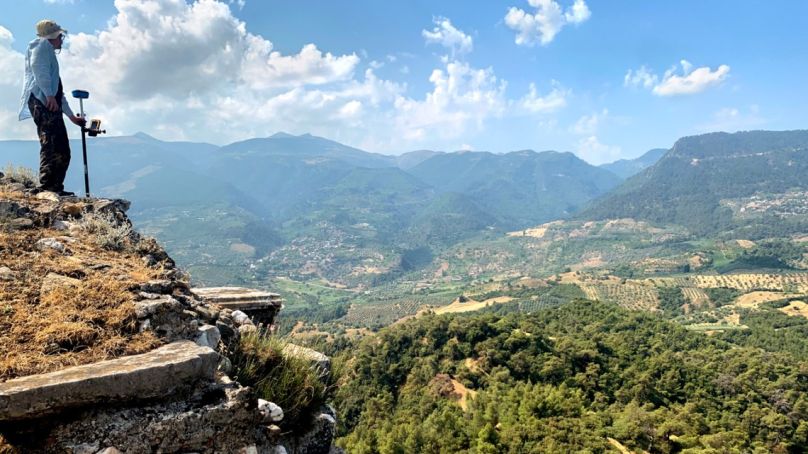
Project Includes Einaudi Faculty Researchers
Annetta Alexandridis (IES) and Benjamin Anderson (IES/SWANA) are part of a long-term project studying Sardis, Turkey—now a UNESCO World Heritage site.
Additional Information
U.S. Boat Strikes in Pacific, Caribbean: Key Questions About Trump's Drug War

Ken Roberts, LACS
Cornell government professor Ken Roberts said recent U.S. military strikes near Venezuela are unlikely to curb fentanyl or cocaine trafficking, arguing the operation targets the wrong region and instead appears aimed at pressuring President Maduro’s regime.
Additional Information
Chats and Texts are Getting Public Figures Into Trouble

Sarah Kreps, PACS
Sarah Kreps, a Cornell University professor who teaches about politics and technology, provides commentary on the persistent overconfidence of politicians engaging in risky private communications.
Additional Information
Immigration Crackdown Hits Day Laborers, Street Vendors
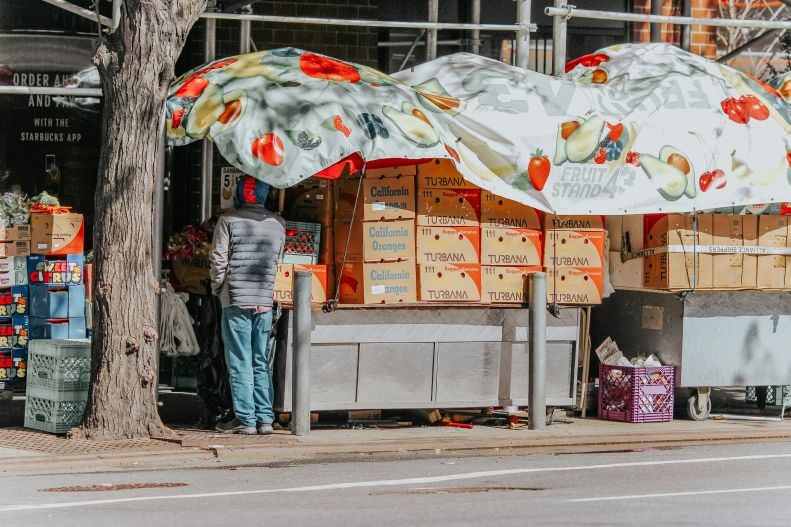
Shannon Gleeson, Migrations
Shannon Gleeson, a Cornell University labor relations professor, discusses the vulnerability of immigrant day laborers and street vendors who lack workplace protections.
Additional Information
Maduro Hits Back: "A Pattern of Interventionism"
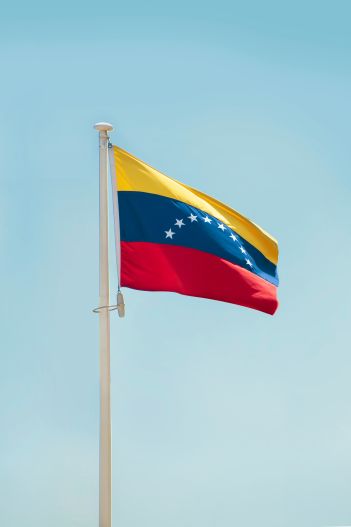
Kenneth Roberts, LACS
Kenneth Roberts (LACS) speaks with Newsweek about the military's Venezuelan “drug boat” strikes and the resurgence of U.S. interventionism in Latin America.
Additional Information
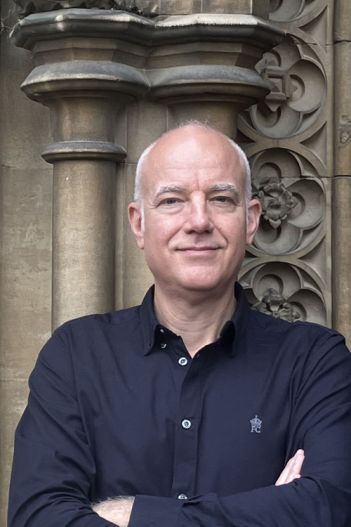
Cornell Classical Chinese Colloquium: Peach Spring Grotto: Vernacular Rituals of the Plum Mountain Region, Hunan
November 21, 2025
3:30 pm
Rockefeller Hall, Room 374
Speaker: Mark Meulenbeld, Associate Professor, School of Chinese, The University of Hong Kong
Description:
Daoist priests in central and northern Hunan Province (PRC), an area known as Plum Mountain (Meishan 梅山), are the custodians of many local traditions. Among them is an ancient and elaborate ritual dedicated to a sacred site famous since medieval times: Peach Blossom Spring (Taohuayuan 桃花源), or Peach Spring Grotto (Taoyuandong 桃源洞), locally also referred to as Immortals’ Precinct of Peach Spring (Taoyuan Xianjing 桃源仙境). More specifically, in addition to a written iteration by the poet Tao Qian 陶潛, the site’s miraculous efficacy is ritually channelled into households of the region, consecrated on domestic altars, and its transcendent beings embodied by domestic spirit-mediums. A variety of these local traditions have long been transmitted in manuscript form. The present CCCC session will zoom in on a ritual manual transmitted by a lineage of Daoist priests from Yangyuan 楊源 Village in central Hunan, who practice their rituals in the surrounding towns, villages, and hamlets. Copied in 1942 by a Daoist priest named Zhang Youli 張攸利, the tradition recorded in the first half of the manuscript is titled “To Sing Ballads for [spirit-mediums] Seated at the Altar” (Chang Zuotan Ge 唱坐壇歌). It contains several narratives that revolve around the regional lore of Peach Spring Grotto.
To join virtually: https://cornell.zoom.us/j/96053368226?pwd=mNysMAyctkp5VLnC27BEAqbnu52X6…
About Cornell Classical Chinese Colloquium
The group meets monthly during the semester to explore a variety of classical Chinese texts and styles. Other premodern texts linked to classical Chinese in Japanese, Korean, and Vietnamese have also been explored. Presentations include works from the earliest times to the 20th century. Workshop sessions are led by local, national, and international scholars. Participants with any level of classical Chinese experience are welcome to attend.
o At each session, a presenter guides the group in a reading of a classical Chinese text. Attendees discuss historical, literary, linguistic, and other aspects of the text, working together to resolve difficulties in comprehension and translation.
o No preparation is required; all texts will be distributed at the meeting.
o Refreshments will be served.
Additional Information
Program
Einaudi Center for International Studies
East Asia Program
International Research Showcase
November 19, 2025
4:30 pm
Atkinson Hall, Ground Floor
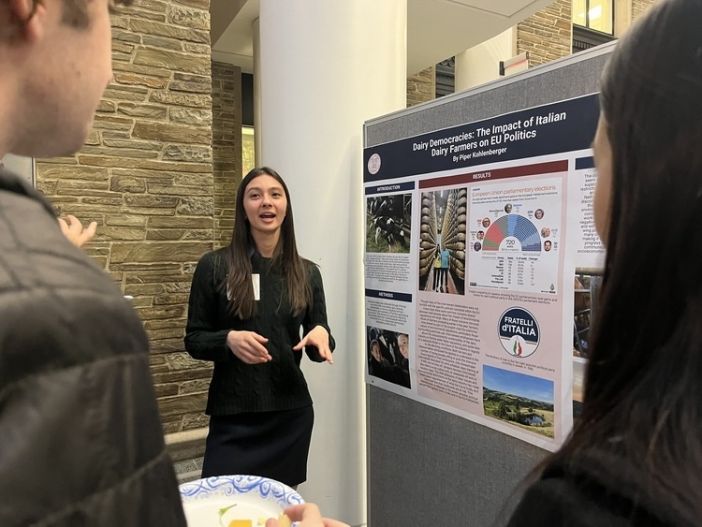
Come and explore the wide range of international work being done at Cornell! This annual showcase features a concurrent student poster session and speed talks by Einaudi Center graduate students and visiting scholars. Refreshments will be served.
Student Experience Poster Session
Over 70 undergraduates will present their international summer experiences. They conducted research, worked in Global Internships, and put leadership into action as Laidlaw scholars.
Applications are open now for Global Internships and the Laidlaw Leadership and Research Program.
Global Research Speed Talks
Graduate students and visiting scholars from the Mario Einaudi Center for International Studies will present three-minute speed talks on their interdisciplinary and international research. Speakers will address topics such as fascism in 20th century Spain, regenerative agriculture in England, migrant labor in India, and more.
***
The International Research Showcase is hosted by the Einaudi Center for International Studies and cosponsored by the Office of Global Learning. Both are part of Global Cornell.
Additional Information
Program
Einaudi Center for International Studies
Reppy Institute for Peace and Conflict Studies
East Asia Program
Southeast Asia Program
Latin American and Caribbean Studies
Institute for African Development
Institute for European Studies
South Asia Program
Migrations Program
Southwest Asia and North Africa Program
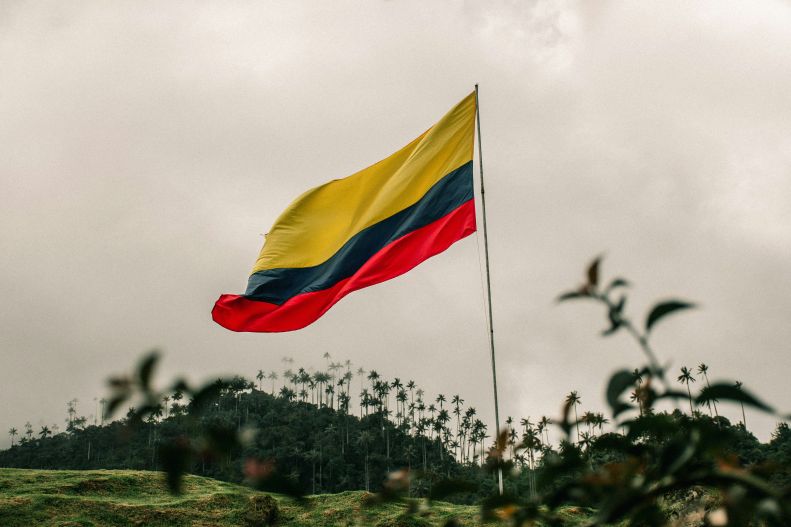
Trump's Colombia Tariffs Would Flip US Policy on Drugs, Trade
Ken Roberts, LACS
Ken Roberts, a Cornell University professor specializing in Latin American politics, comments on Trump's use of tariffs as a tool for political leverage over foreign governments.
Additional Information
Value Added Policies for Critical Minerals and Their Geopolitical Challenges: Indonesia's Experience
November 10, 2025
4:30 pm
Atkinson Hall, 121
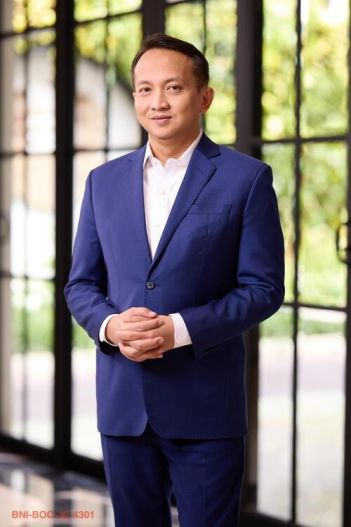
Septian Hario Seto (Executive Secretary of National Economic Council, Republic of Indonesia) will be joined on November 10, by moderator Jenny Goldstein (Global Development) and faculty respondents Vibha Kalra (Chemical + Biomolecular Engineering), James Rogers (Brooks School/Tech Policy Institute), and Esteban Gazel (Earth and Atmospheric Sciences).
Abstract: Indonesia’s value-added strategy for critical minerals—centered on export restrictions for nickel ore, domestic processing mandates, fiscal incentives, and a combination of investment and industrial policies—aims to shift the economy from raw-ore extraction to higher-value manufacturing. Using nickel as the focal case, the presentation will show evidence of success: a rapid build-out of industrial capacity for nickel processing; the emergence of industrial parks (e.g., Morowali and Weda Bay) that integrate power, logistics, and services; movement up the value chain from ore to ferronickel/NPI, stainless steel, and battery-grade intermediates (MHP, nickel sulfate); rising foreign direct investment with technology-transfer provisions; and a measurable shift in export composition toward processed products and EV-related inputs.
These gains are unfolding within a sharp geoeconomic rivalry. Chinese firms, which dominate processing capabilities for most critical minerals globally, have played a pivotal role in financing and operating Indonesian projects—accelerating capacity growth, technology adoption, and offtake in the early years. Therefore, this presentation also explains Indonesia’s strategy in responding to the geopolitical tension between China and Western countries, particularly the United States, by prioritizing national interests as the main reference point and maintaining the long-standing principle of an independent and active foreign policy. In addition, it will discuss the Government of Indonesia’s ongoing efforts to address key ESG issues, including tailings management, deforestation, and carbon emissions.
Bio: Septian Hario Seto is an accomplished economist and currently serves as a Member of the National Economic Council (DEN) of the Republic of Indonesia. Seto has played a key role in navigating complex financial strategies that drive critical development initiatives across both public and private sectors.
A graduate of the University of Indonesia with a BA in Economics in 2006 and SKEMA Business School in 2008, Seto began his career as an analyst at Principia Management Group before advancing to Corporate Finance Manager at PT Toba Bara Sejahtera. His exceptional performance in both roles led to his recruitment by the government, where he brought significant expertise in capital raising, debt structuring, and strategic crisis management.
Since 2015, he has held various influential roles as an Expert Staff across key ministries, including the Executive Office of the President, Coordinating Ministry for Political, Legal, and Security Affairs, and Coordinating Ministry for Maritime Affairs and Investments.
With a strong track record in the coal mining industry and nickel downstream processing, as well as significant contributions to major projects such as the Jakarta-Bandung High-Speed Rail, Jabodebek LRT, toll road development across Java and Sumatra, Kertajati International Airport, and Kediri Airport, Seto has demonstrated his dedication to supporting sustainable economic and infrastructure development at the national level.
Registration Required: In Person
Co-Sponsoring Units: Cornell Atkinson Center for Sustainability, Southeast Asia Program, Cornell Energy Transition Initiative
Additional Information
Program
Southeast Asia Program
Einaudi Center for International Studies