
Einaudi Center for International Studies
To Understand Trump, Look to the Roman Empire

Barry Strauss, PACS
Professor emeritus Barry Strauss (PACS) says President Trump’s Middle East diplomacy echoes Rome’s blend of trust, power, and calculated reward in pursuit of empire and stability.
Additional Information
America’s Gravity-Defying Economy

Eswar Prasad, SAP
Eswar Prasad, a Cornell University professor, comments on how the AI boom could exacerbate global economic challenges and job creation concerns for low-income countries.
Additional Information
World in Focus: Drone Threats in Europe

October 28, 2025
4:00 pm
Uris Hall, G08
Join Einaudi Center experts for World in Focus Talks on global events in the news and on your mind. Our faculty's research and policy insights put the world in focus.
This year we’re hosting informal campus discussions on many Tuesday afternoons. This week’s topic:
Hostile drone activity has risen sharply in Europe this fall. The incidents have shut down airports, heightened military alertness, and triggered diplomatic responses from NATO and EU countries. Many analysts believe the incursions are part of a Russian-led hybrid warfare campaign designed to disrupt aviation and critical infrastructure, probe defenses, and test NATO’s resolve.
How will different parts of Europe react to drone threats? What could be the impacts on international relations and the conflict in Ukraine?
***
Featured Faculty
James Rogers | Brooks Tech Policy InstituteBryn Rosenfeld (IES) | GovernmentMagnus Fiskesjö (EAP, PACS, SEAP) | AnthropologyAgnieszka Nimark (PACS) | Affiliated ScholarChris Way (IES, PACS) | GovernmentDavid Cortright (PACS) | Visiting Scholar
***
Conversations Matter at Einaudi
This conversation is hosted by the Mario Einaudi Center for International Studies and its regional and thematic programs. Find out what's in store for students at Einaudi!
Additional Information
Program
Einaudi Center for International Studies
Reppy Institute for Peace and Conflict Studies
East Asia Program
Southeast Asia Program
Latin American and Caribbean Studies
Institute for African Development
Institute for European Studies
South Asia Program
Migrations Program
Southwest Asia and North Africa Program
Workshop: The Border-Industrial Complex
December 5, 2025
11:00 am
Uris Hall, G08
This workshop will examine the cultures of technological surveillance and the discursive configuration of threats to “national security” at the U.S.-Mexico border. The irruption of technologies such as drones, virtual walls, surveillance towers, cameras, motion sensors, and tunnel detectors will be studied as part of the construction of what journalist Todd Miller calls the “border-industrial complex,” the lucrative military security infrastructure of transnational violence criminalizing racialized bodies. We will analyze the cultural implications of technologies of the global military-industrial complex in the media and audiovisual productions of the last two decades between Mexico and the United States. Our conceptual framework will examine three key debates about the border-industrial complex with the assigned readings: 1) The rise of the neoliberal border infrastructure (Thomas Nail); 2) The imbrication of transnational militarism and border security (Todd Miller); and 3) the weaponizing of drones (Camilla Fojas). We will consider the film Sleep Dealer (Alex Rivera, 2008) as the main cultural object of discussion and counterpoint.
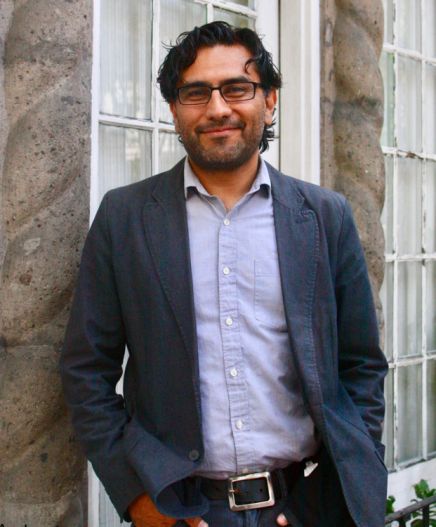
Oswaldo Zavala is Professor of contemporary Latin American literature and culture at the College of Staten Island and at the Graduate Center of the City University of New York (CUNY). He is the author of La modernidad insufrible. Roberto Bolaño en los límites de la literatura latinoamericana contemporánea (2015), Volver a la modernidad. Genealogías de la literatura mexicana de fin de siglo (2017), Drug Cartels Do Not Exist. Narcotrafficking in US and Mexican Culture (2018), and La guerra en las palabras. Una historia intelectual del “narco” (1975-2020) (2022). He co-edited, with Viviane Mahieux, Tierras de nadie: el norte en la narrativa mexicana contemporánea (2012); with José Ramón Ruisánchez, Materias dispuestas: Juan Villoro ante la crítica (2011); and with Magdalena Perkowska, Tiranas ficciones. Poética y política de la escritura en la obra de Horacio Castellanos Moya (2018). He has published more than fifty articles on contemporary Latin American narrative, the U.S.-Mexico border, and the link between violence, culture and late capitalism.
Additional Information
Program
Einaudi Center for International Studies
Latin American and Caribbean Studies
Vietnamerica: The Story of the Nation's Largest Refugee Group
November 18, 2025
5:00 pm
Rockefeller Hall, 374
Join SEAP and GETSEA for a simulcast film screening of Vietnamerica.
We will watch the film on the Cornell campus, then join an online discussion with audiences at universities across the US for a Q&A with the filmmakers.
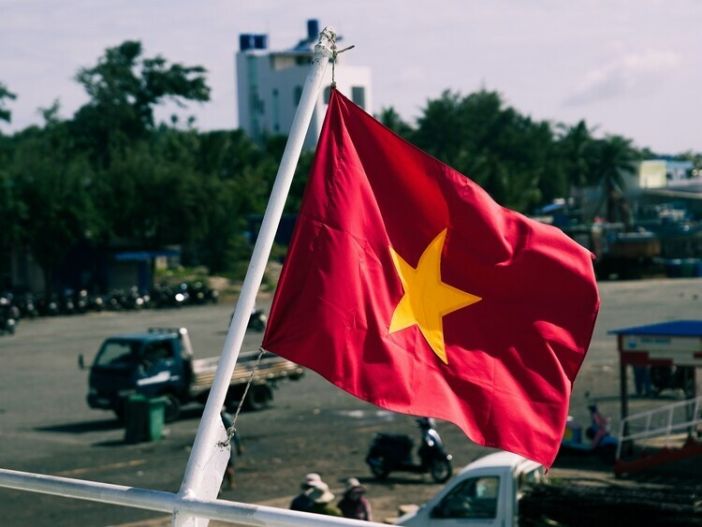
Following the wars in Vietnam, over two million people fled to country with the collapse of the Republic of Vietnam. That exodus, referred to by many as “the boat people” resulted in nearly half dying while in flight, battling the elements, starvation, and pirates.
Vietnamerica follows Master Nguyen Hoa as he returns to former refugee camps in Southeast Asia after three decades abroad to search for the graves of his wife and two children. Having fled Vietnam in 1981 on a boat with his family and friends, Hoa was the only survivor.
Executive Producer Nancy Bui of the Vietnamese Heritage Foundation joins GETSEA and over 20 universities across North America to watch Vietnamerica together simultaneously and connect via Zoom for a discussion with the filmmaker about the Vietnamese diaspora, their struggle, and how Master Hoa’s story is a prism to see the larger group.
Additional Information
Program
Einaudi Center for International Studies
Southeast Asia Program
Migrations Program
Information Session: Global Internships
November 3, 2025
1:00 pm
Go global in summer 2026! Global Internships give you valuable international work experience in fields spanning global development, climate and sustainability, international relations, communication, business, governance, and more.
Applications are open now.
Register here. Can’t attend? Contact programs@einaudi.cornell.edu.
***
The Mario Einaudi Center for International Studies hosts info sessions for graduate and for undergraduate students to learn more about funding opportunities, international travel, research, and internships. View the full calendar of fall semester sessions.
Additional Information
Program
Einaudi Center for International Studies
Reppy Institute for Peace and Conflict Studies
East Asia Program
Southeast Asia Program
Latin American and Caribbean Studies
Institute for African Development
Institute for European Studies
South Asia Program
Migrations Program
Southwest Asia and North Africa Program
Language Resource Center Speaker Series - Daniel Kaufman - Current Challenges in Urban Language Revitalization
November 14, 2025
12:00 pm
Stimson Hall, G25
"Current Challenges in Urban Language Revitalization"
Daniel Kaufman
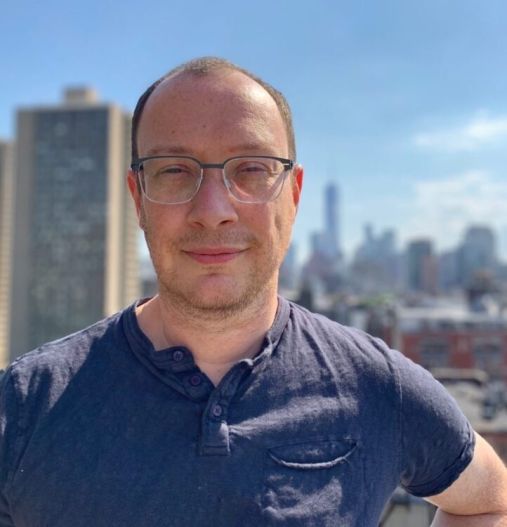
Associate Professor of Linguistics, Queens College and the CUNY Graduate Center
In this talk, I discuss the efforts of the Endangered Language Alliance in New York City to document and support several languages of immigrant and indigenous New Yorkers. After a brief overview of the ongoing project, now in its 15th year, to take stock of and map New York City's true linguistic diversity, I focus on two distinct sides in the revitalization of languages in our diaspora setting: one socio-political, and the second, grammatical.
The first challenge is that of creating a space for languages that are not generally heard in public, despite in some cases being spoken by many thousands of people in the city. This is closely tied up with showing younger community members that it is possible to learn their heritage language despite a dearth of materials and resources. The invisibilization of certain languages in the city has been gravely exacerbated by the current political climate, in which immigrants, and especially indigenous migrants from Mexico and Central America, are being forced further into the shadows, as recent enforcement policies have made it amply clear that language and appearance are primary factors in warrantless apprehensions.
To end on a lighter note, the second challenge I discuss relates to teaching highly complex word structure to speakers of English and Spanish, and introduces an online tool that we have developed precisely for this purpose. The tool allows linguists to create a word-building model for any language that translates from a set of basic meanings to a fully formed word while highlighting the function of each affix. This draws inspiration from the "root word method," which has been employed to good effect in the revitalization of Mohawk and other Haudenosaunee languages.
Bio: Daniel Kaufman received a Ph.D. in Linguistics from Cornell in 2010 and prior to that, a B.A. in Linguistics from the University of the Philippines, where he specialized in the Austronesian languages of Island Southeast Asia. He is a founding co-director of the Endangered Language Alliance, a non-profit organization based in New York City, and Associate Professor at Queens College, City University of New York. He has contributed to the understanding of Austronesian language typology and history through a number of publications as well as helping to set a model for language documentation in urban contexts. He is currently involved in computational projects to facilitate the sharing of language documentation materials as well as the formal modeling of phonological, morphological, and syntactic systems.
This event will be held in person in G25 Stimson and will also be streamed live over Zoom (registration required). Join us at the LRC or on Zoom.
The event is free and open to the public.
The event is co-sponsored by the Department of Linguistics.
Additional Information
Program
Einaudi Center for International Studies
Latin American and Caribbean Studies
Io Capitano
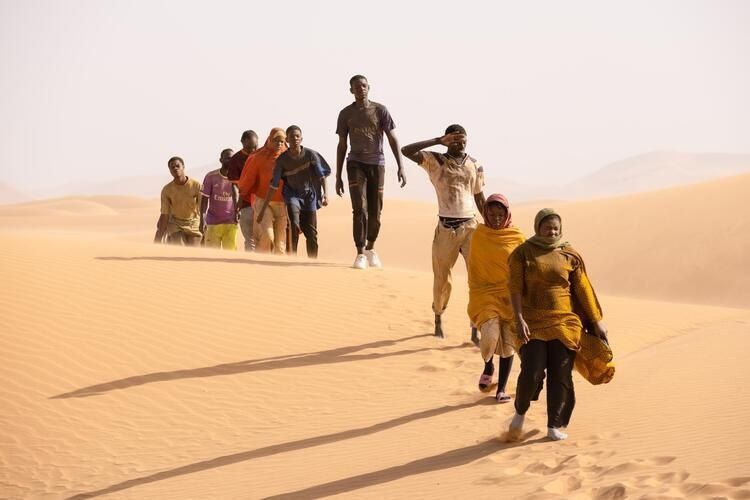
October 29, 2025
6:00 pm
Cornell Cinema
Io Capitano (translated as "I’m the Captain") is a contemporary drama capturing the journey of two young Senegalese men seeking a brighter future in Europe. Between their dreams and reality lies a treacherous journey through a labyrinth of checkpoints, the scorched Saharan desert, a fetid North African prison, and the vast waters of the Mediterranean where thousands have died packed inside vessels barely fit for passage. As they navigate dangerous sea crossings and uncertain borders, the film highlights the courage, desperation, and hope that drive migrants in search of safety and a better life.
Combining intimate storytelling with broader political context, Io Capitano offers a compelling look at modern migration challenges and the human stories behind the headlines.
Following the film, we will be joined by Tristan Ivory (assistant professor, global labor and work) and Gehad Madi (United Nations Special Rapporteur on the human rights of migrants).
Free admission! This event is part of the Migrations Program's film series at Cornell Cinema. Cosponsors include the Institute for African Development and the Institute for European Studies. All all are part of the Mario Einaudi Center for International Studies.
Additional Information
Program
Einaudi Center for International Studies
Institute for African Development
Institute for European Studies
Migrations Program
Is Economics Promoting Inequality?

Kaushik Basu, CRADLE
Mainstream economics has often underestimated the critical role of trust and cooperation in enabling prosperity. As a result, it has justified and even encouraged the greed, exploitation, and extreme inequality that are eroding political accountability, contributing to rising nationalism, and undermining human well-being.
Additional Information
Information Session: Laidlaw Scholars Leadership & Research Program
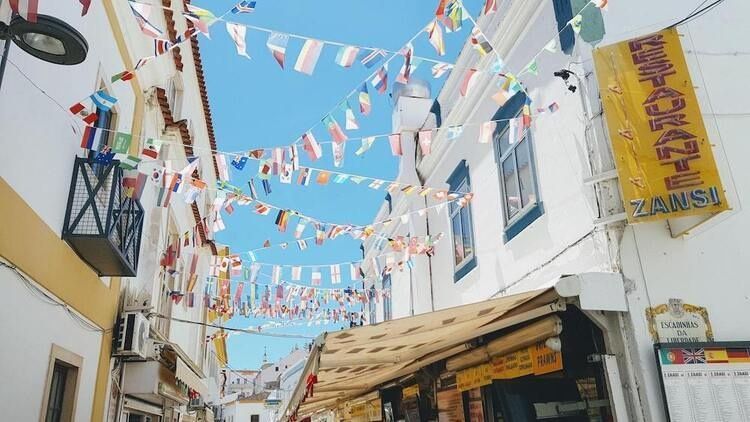
October 29, 2025
5:00 pm
The Laidlaw Scholars Leadership and Research Program promotes ethical leadership and international research around the world—starting with the passionate leaders and learners found on campuses like Cornell. Open to first- and second-year students, the two-year Laidlaw program provides generous support to carry out internationally focused research, develop leadership skills, engage with community projects overseas, and become part of a global network of like-minded scholars from twenty universities worldwide.
At this session, we'll share more information about the program, including Cornell's cohort-based intercultural community-engaged learning summer experience in Ecuador, and tips for writing a successful application. Applications are due January 12, 2026.
Applicants are also strongly encouraged to attend a Q+A webinar about the summer experience in Ecuador. Q+A webinars are scheduled for November 5 and November 6.
Register here. Can’t attend? Contact programs@einaudi.cornell.edu.
***
The Mario Einaudi Center for International Studies hosts info sessions for graduate and for undergraduate students to learn more about funding opportunities, international travel, research, and internships. View the full calendar of fall semester sessions.
Additional Information
Program
Einaudi Center for International Studies
Reppy Institute for Peace and Conflict Studies
East Asia Program
Southeast Asia Program
Latin American and Caribbean Studies
Institute for African Development
Institute for European Studies
South Asia Program
Migrations Program