
Einaudi Center for International Studies
A Postcolonial Theory of Free Speech
December 4, 2025
12:15 pm
Kahin Center
Gatty Lecture Series
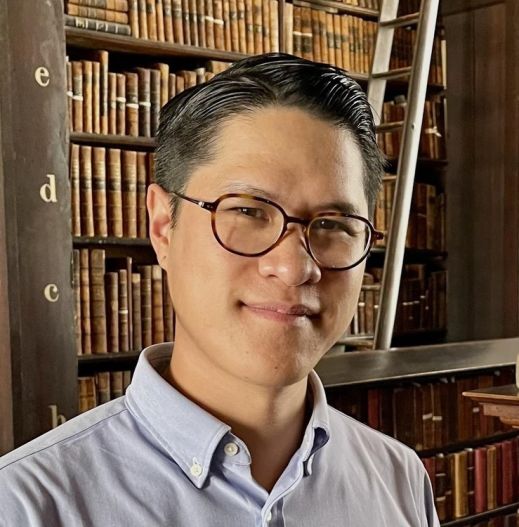
Join us for a talk by Kevin D. Pham from the University of Amsterdam, who will discuss theories of free speech among Vietnamese revolutionaries.
This Gatty Lecture will take place at the The Kahin Center, 640 Stewart Ave. Lunch will be served. For questions, contact seapgatty@cornell.edu.
Abstract
In this presentation, Kevin D. Pham shows how revolutionaries in Vietnam debated the value of free speech. Drawing on the writings of the Nhân Văn-Giai Phẩm (NVGP), a movement of intellectuals who proclaimed support for free speech and communist revolution in North Vietnam in the late 1950s, Pham shows how the NVGP defend free speech as a collective, rather than individual, right and as something that can invigorate the Party so that it can more effectively guide the people towards socialism. They argue that free speech can: 1) help the Party redress their mistakes, 2) identify what is good and bad for the people, and 3) create a socialism that celebrates human diversity. Departing from theories of free speech that emphasize the individual, the NVGP’s theory overlaps with theories that emphasize free speech’s benefits for society. But whereas John Stuart Mill—the eminent defender of free speech—was concerned with conformity, the NVGP was concerned with declining trust between the Party and the people. And whereas Marxist theories of free speech tend to focus on how free speech can help the oppressed win power, the NVGP focuses on how free speech can help socialist transition after winning power. Ultimately, the NVGP offer us a postcolonial theory of free speech, one that presents freedom of speech as the key to long lasting freedom after achieving independence from colonialism.
About the Speaker
Kevin D. Pham is Assistant Professor of Political Theory at the University of Amsterdam. His research explores how theories of democracy, freedom, and revolution travel across cultures and are adapted by activists and intellectuals responding to colonialism and postcolonial nation building. His book, The Architects of Dignity: Vietnamese Visions of Decolonization (Oxford University Press, 2024), is the first to introduce Vietnamese political thought to the field of political theory. His articles appear in journals such as Theory & Event, European Journal of Political Theory, Review of Politics, Polity, and Philosophy and Global Affairs, among others. He co-hosts two podcasts (Nam Phong Dialogues and Viet History Makers) that make Vietnamese history accessible to a broad public.
Additional Information
Program
Einaudi Center for International Studies
Southeast Asia Program
10,000 Years of Versatility: Exploring the Diversity and Legacy of the Bottle Gourd

November 13, 2025
12:15 pm
Kahin Center
Gatty Lecture Series
Join us for a talk by Marlie Lukach, PhD student in Plant Breeding and Genetics, who will discuss lagenaria siceraria, the bottle gourd.
This Gatty Lecture will take place at the The Kahin Center, 640 Stewart Ave. Lunch will be served. For questions, contact seapgatty@cornell.edu.
Abstract
Lagenaria siceraria, commonly known as bottle gourd, is a crop of immense historical significance, as one of the first domesticated crops, with its use dating back over 10,000 years. Its journey across almost every continent, adapting to a diverse range of climates and overcoming abiotic and biotic stressors, is a testament to its remarkable adaptability and diversity. The early interest in bottle gourd may have stemmed from its versatility: the immature fruits, leaves, stems, and flowers are edible, while the mature fruit’s hard rind can be used for storage vessels, tools, musical instruments, amulets, or art. Despite this adaptability and importance for early humans, there is a pressing need for further research to better understand the adaptability, diversity, and cultural importance of bottle gourds. This study employs a three-part approach to provide resources for advancing discovery, investigating global diversity, and preserving bottle gourds. Objective 1 focuses on understanding the cultural importance of bottle gourds. In collaboration with Cornell University’s Southeast Asia Program and Kasetsart University in Thailand, we explore the cultural significance of bottle gourds in Southeast Asian countries. Objective 2 aims to improve the sharing of scientific knowledge of bottle gourd by creating a crop ontology to help standardize data collection. This collaborative effort includes researchers from the US, Thailand, and Turkey working on bottle gourds. Lastly, Objective 3 centers on enhancing our understanding of the phenotypic and genotypic diversity of bottle gourds globally using bottle gourd germplasm from 19 countries held in the USDA National Plant Germplasm System
About the Speaker
Marlie Lukach is a 6th-year PhD student in the Plant Breeding and Genetics Program working in the Jean-Luc Jannink Lab. She grew up not far from Ithaca in Endicott, NY. While she lived in a rural area, she went to school in town. Growing up in both settings, Marlie learned how disconnected these worlds can be and worked on reconnecting them with her involvement in 4H at the local, state, and national levels. Marlie completed her Bachelor's degrees at Cornell University in Agricultural Science and International Agriculture and Rural Development in 2020.
From these two programs, she developed a passion for underutilized crops across the globe.
During Marlie’s time in the Plant Breeding and Genetics Program, she has worked on a variety of projects such as heavy metal accumulation in winter squash for baby food markets, carbohydrate accumulation of winter squash, and building models using handheld near-infrared (NIR) spectrometers to predict quality traits in winter squash. But, her passion has driven her to pursue an overarching objective of how to make underutilized crops more accessible while helping to preserve biodiversity. Marlie has worked in partnership with the USDA to trial a variety of underutilized cucurbits, which include squashes, cucumbers, melons, watermelons, and, of course, gourds, to better understand how they perform in temperate climates, as well as traveling to Thailand to explore the cultural connections and diversity of gourds present in Southeast Asia.
Outside of research, Marlie is an active member of SEAP, serving as a committee member for the planning of the 2025 SEAP Grad Conference and as the building coordinator for the Kahin Center. And, in her free time is an avid equestrian and goat farmer.
Additional Information
Program
Einaudi Center for International Studies
Southeast Asia Program
Champassak Royalty and Sovereignty: Within and Between Nation States in Mainland Southeast Asia

September 18, 2025
12:15 pm
Kahin Center
Gatty Lecture Series
Join us for a talk by Ian Baird from the University of Wisconsin-Madison, who will discuss the nuances of sovereignty as constructed by Champassak royals.
This Gatty Lecture will take place at the The Kahin Center, 640 Stewart Ave. Lunch will be served. For questions, contact seapgatty@cornell.edu.
Abstract
The House of Champassak was established, in 1713, by an important Buddhist monk from Vientiane named Phra Khou Phonsamek, who supported Chao Nokasat (Chao Soyisamouth), an estranged Vientiane royal, to become the first king of Champassak. However, Champassak only remained an independent sovereign power until 1778, when it was forced to become a vassal of Siam. Since then, the House of Champassak has always had to maneuver and negotiate to maintain varying degrees of sovereign power, whether it be with the Thais, Cambodians, French, the Royal Lao government, or others. In my new book, Champassak Royalty and Sovereignty (University of Wisconsin Press, 2025), I consider the ways that the House of Champassak has both asserted different sovereign claims and achieved diverse kinds of sovereign power—both formally and informally—and has developed different practices that have helped them obtain varying degrees of sovereign power. The book is not bounded by modern nation states, and therefore considers Champassak royals in Champassak-proper, in present-day southern Laos, but also in northeastern Thailand, northeastern Cambodia, and in Europe and North America, where most of the family has settled since the communist takeover of Laos in 1975. Crucially, I argue that sovereignty is fundamentally contingent and always in flux, thus requiring constant efforts—either explicit or more subtle—to reinforce, construct and reproduce various fields of sovereignty.
About the Speaker
Ian G. Baird is a Professor of Geography and Southeast Asian Studies at the University of Wisconsin-Madison. He has various interests and mainly conducts research in Laos, Thailand and northeastern Cambodia. His recent books include Champassak Royalty and Sovereignty: Within and Between Nation-States in mainland Southeast Asia (University of Wisconsin Press, 2025), Thailand’s Volunteer Hill Tribe Militia (1970-1983): An Under- Recognized Anti-Communist Force (White Lotus Press, 2024), and Rise of the Brao: Ethnic Minorities in Northeastern Cambodia during Vietnamese Occupation (University of Wisconsin Press, 2020).
Additional Information
Program
Einaudi Center for International Studies
Southeast Asia Program
The Moderate Middle: The Suharto Regime and Indonesia’s Engagement with the New International Economic Order (NIEO), 1968-1984

September 11, 2025
12:15 pm
Kahin Center
Gatty Lecture Series
Join us for a talk by Brad Simpson from the University of Connecticut, who will discuss Indonesian politics and policies surrounding the New International Economic Order.
This Gatty Lecture will take place at the The Kahin Center, 640 Stewart Ave. Lunch will be served. For questions, contact seapgatty@cornell.edu.
Abstract
Historians writing about the 1970s movement for a New International Economic Order (NIEO) have focused most of their attention to its most radical proponents and bitter opponents. But Indonesia pursued a ‘middle path’ of moderate advocacy for an NIEO that attempted to accommodate the interests of both wealthy industrialized states like the US and Japan, and developing state members of the G-77 whose radical politics the anticommunist regime in Jakarta often opposed. While many Indonesian officials embraced some elements of the radical analysis of NIEO advocates, most believed that Indonesia’s needs were better served by a modest reform politics than by confrontation with the West.
About the Speaker
Brad Simpson is Professor of History and Asian Studies at the University of Connecticut. He is the author of Economists with Guns: Authoritarian Development and US-Indonesian Relations, 1960-1968 and The First Right: Self-Determination and the Transformation of International Order, 1941-2000 (Oxford, August 2025). He is now working on an international history of Indonesia's engagement with the politics of human rights and developmental during the Suharto era (1966-1998).
Additional Information
Program
Einaudi Center for International Studies
Southeast Asia Program
Domestic Nationalism: Muslim Women, Health and Modernity in Indonesia

September 4, 2025
12:15 pm
Kahin Center
Gatty Lecture Series
Join us for a talk by Chiara Formichi, H. Stanley Krusten Professor of World Religions in the Department of Asian Studies.
This Gatty Lecture will take place at the The Kahin Center, 640 Stewart Ave. Lunch will be served. For questions, contact seapgatty@cornell.edu.
Abstract
Domestic Nationalism argues that Muslim women in Java and Sumatra, from the late 1910s to the 1950s, were central to Indonesia’s progress as guardians and promoters of health and piety through gendered activities of care work. While sidelined in the Dutch colonial project of hygienic modernity, women’s labor of social reproduction became increasingly visible during the Japanese Occupation and early years of independence. Women from all walks of life were called upon to fulfill domestic and motherly roles for the production and socialization of laborers, soldiers, and citizens.
The medicalization of cleanliness, intersecting with multiple patriarchal orders, marginalized women’s traditional influence and knowledge. However, leveraging the critical importance of infant care, cleanliness, and nutrition, women pushed against the boundaries imposed on them by the colonial and postcolonial state. Largely absent from government archives, their words and acts are evident in vernacular magazines and visual sources drawn from official outreach, news and lifestyle media, and advertisements. Women writers rearticulated scientific mothering, nationalist maternalism, and Islamic ideals of motherhood to create a public voice through gendered care work.
The framework of Domestic Nationalism proposes that as the modern Indonesian nation-state took shape capitalizing on the public function of mothering, so did homemaking become a crossroads of national and international approaches to development, blurring nonaligned self-reliance and global capitalist interests.
About the Speaker
Chiara Formichi is the H. Stanley Krusen Professor of World Religions’ Director of the Religious Studies Program, and Professor in Asian Studies, at Cornell University. She specializes on Islam in Southeast Asia. Her research and publications focus on the intersection of religion and politics in colonial and postcolonial Southeast Asia, and on the relationship between Islamic Studies and Asian Studies. She has published two single-authored books, edited five volumes or special issues, and over 20 journal articles and book chapters. Chiara’s third monograph, Domestic Nationalism: Muslim Women, Health, and Modernity in Indonesia is forthcoming in October with Stanford University Press.
Additional Information
Program
Einaudi Center for International Studies
Southeast Asia Program
Localizing Surrealism: A Cross-Cultural Study of Modern Taiwanese Poetry 超現實主義的在地化:台灣現代詩的跨文化研究

August 28, 2025
5:00 pm
Uris Hall, G08
Localizing Surrealism: A Cross-Cultural Study of Modern Taiwanese Poetry
超現實主義的在地化:台灣現代詩的跨文化研究
Speaker:
Cheng-Chung Liu, Professor and Chair, Department of Chinese Literature
National Taiwan University
This lecture will be delivered in Mandarin.
Description:
臺灣日常語言展現出混融的性格,台灣文學創作也充滿跨文化視域。以超現實主義在臺灣詩壇的流衍而言,便有三種路徑可說:一是殖民地時期以日本詩壇為中介 ,通過日文去吸收與創作。相對於歐洲的革命精神與日本的知性思維,殖民地的超現實顯現出一種病弱、壓抑的特殊樣態。二是戰後初期由中國大陸移居臺灣的詩人,主要受到超現實繪畫的啟發,再參考少量的中譯文獻,將視覺經驗轉譯為漢語的創作方法。三是嘗試融貫西方非理性思維與包含禪宗在內的中國傳統詩學,追求純粹經驗,以及化矛盾為和諧的技術。上述三種路徑相互交錯,使得超現實主義以混成的形象再現。
This lecture is sponsored by a grant from the Taipei Economic and Cultural Office in New York and co-organized by the East Asia Program and the Department of Asian Studies.
Additional Information
Program
Einaudi Center for International Studies
East Asia Program
India Need Not Panic Over Tariffs
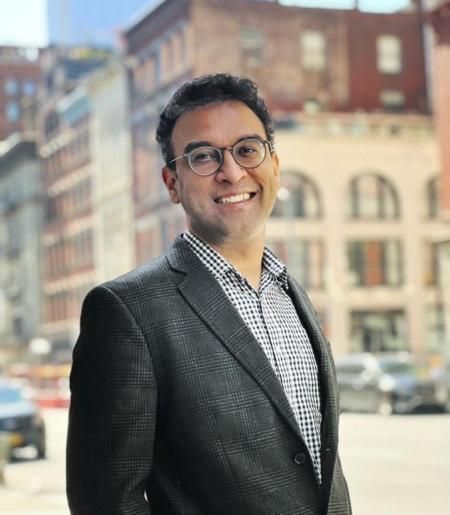
Rohit Lamba, SAP
“The response to US weaponization of trade should be mature statecraft” says Rohit Lamba, Assistant Professor of Economics.
Additional Information
Why Do Donors Neglect Some Humanitarian Emergencies?

October 23, 2025
12:00 pm
Uris Hall, G08
What explains the fact that the humanitarian response in some crises is well funded, while other emergencies are largely neglected? How do recent funding cuts affect the work of humanitarian organizations and the lives of affected people?
This lecture will give an overview of the literature on funding allocations of humanitarian aid, focusing on three groups of factors: humanitarian needs, donor countries’ interests, and media coverage. A recent study will be presented of why donors fund some humanitarian emergencies but neglect others. The study uses a novel statistical approach, relying on an underused dataset and considering funding requirements per emergency. While humanitarian needs and donor interests play a role, the most consistent factor influencing how donors allocate their funding is media coverage.
The lecture will provide an overview of practical ways of overcoming imbalances in funding allocations and delivering aid in more effective ways. Pooled funds like the UN’s Central Emergency Response Fund (CERF) can provide funding more quickly and more strictly based on needs. CERF relies heavily on tools to make funding decisions in a systematic, evidence-based way, and is the biggest financier of anticipatory action globally.
As funding for humanitarian action is being cut, it is more important than ever to ensure the most urgent humanitarian needs of affected people are identified and addressed.
About the speaker
Nicolas Rost is head of programme for the UN’s global humanitarian fund, CERF. At the Central Emergency Response Fund, Nico works on providing humanitarian financing as quickly as possible for new emergencies, for anticipatory and early action, and for neglected and underfunded crises. Previously, he worked on evaluations of humanitarian programmes, on coordinating development programmes in Palestine, humanitarian funds in Somalia, the Central African Republic and Yemen, for the UN’s refugee agency in the Central African Republic and Geneva, and for a German NGO in Madagascar. Nico is also a visiting scientist at the Harvard Humanitarian Initiative where his research focuses on early warning signs of humanitarian crises. He holds a Master’s degree in political science from the University of North Texas, and a Master’s and PhD in politics and public administration from the University of Konstanz. He has published a book and, together with his co-authors, articles on anticipating displacement, genocide and civil war, mediation and peacekeeping, in the International Journal of Forecasting, the Journal of Conflict Resolution, Journal of Peace Research, and other journals. He lives in Brooklyn, New York, with his wife and their three sons.
Host
Reppy Institute for Peace and Conflict Studies, part of the Einaudi Center for International Studies
Co-host
Africana Studies and Research Center
Co-sponsor
Institute for African Development
Additional Information
Program
Einaudi Center for International Studies
Reppy Institute for Peace and Conflict Studies
Institute for African Development
Paul Kaiser
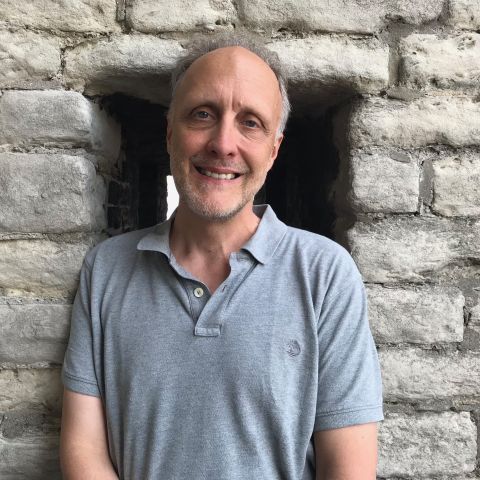
Einaudi Center Practitioner in Residence
Additional Information
Information Session: Critical Language Scholarship (CLS) Program

September 30, 2025
4:30 pm
Uris Hall, G08
The Critical Language Scholarship (CLS) Program provides fully funded immersive summer programs for U.S. undergraduate and graduate students to learn languages of strategic importance to the United States’ national security, economic prosperity, and engagement with the world. Each summer, over 500 American students enrolled at colleges and universities across the United States spend approximately eight weeks studying one of a dozen languages either overseas or virtually. Participants gain the equivalent of one year of language study, as the CLS Program maximizes language and cultural instruction in an intensive environment.
Can't attend? Email programs@einaudi.cornell.edu for more information.
Additional Information
Program
Einaudi Center for International Studies
Reppy Institute for Peace and Conflict Studies
East Asia Program
Southeast Asia Program
Latin American and Caribbean Studies
Institute for European Studies
South Asia Program
Migrations Program
Institute for African Development
Southwest Asia and North Africa Program