
Einaudi Center for International Studies
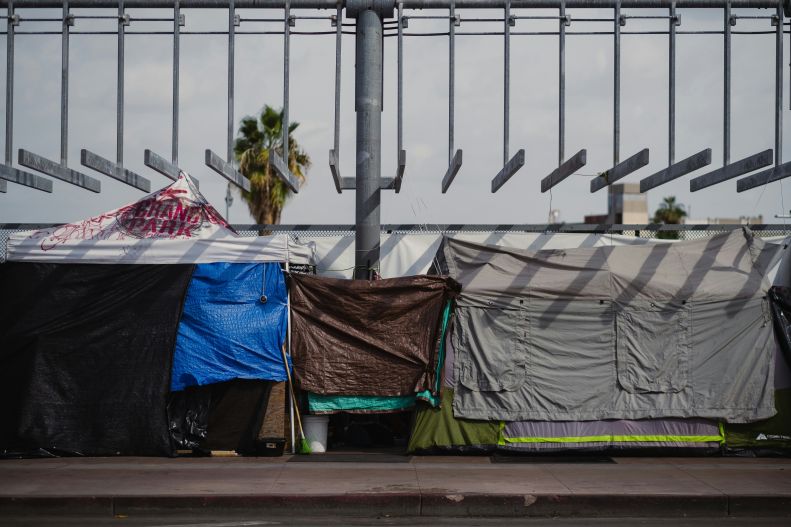
Homelessness and Mental Illness: How Trump’s New Order Could Backfire
Isabel Perera, IES
In this op-ed, Isabel Perera (IES) examines the consequences of a recent executive order that urges local authorities to force mentally ill homeless people into hospitals.
Additional Information
From Sicario to Emilia Pérez: Securitarian violence and technopolitical surveillance culture in the Mexican “drug wars
December 4, 2025
4:45 pm
A.D. White House
National security discourses have profoundly permeated the film industry in the United States for decades. Through direct and indirect intervention in major film productions, US security institutions (including the Pentagon, DEA, CIA, and FBI) have pushed for what Matthew Alford and Tom Secker call “national security cinema,” with hundreds of films complacent with a transnational militarist agenda promoting state violence in the global south. For this presentation I will analyze the films Sicario (Denis Villeneuve, 2015) and Emilia Pérez (Jacques Audiard, 2024) as symptomatic not only of securitarian propaganda criminalizing racialized populations but also erasing the devasting effects of the US-backed militarized antidrug policy in Mexico. I will ultimately consider the normalization of the militarization and its technopolitical surveillance culture (following the work of scholars Camilla Fojas, Huub Dijstelbloem, and Iván Chaar López) through the “drug wars” narrative at the US-Mexico border region.
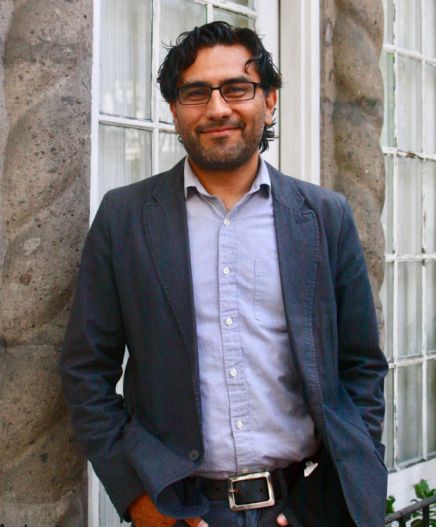
Oswaldo Zavala is Professor of contemporary Latin American literature and culture at the College of Staten Island and at the Graduate Center of the City University of New York (CUNY). He is the author of La modernidad insufrible. Roberto Bolaño en los límites de la literatura latinoamericana contemporánea (2015), Volver a la modernidad. Genealogías de la literatura mexicana de fin de siglo (2017), Drug Cartels Do Not Exist. Narcotrafficking in US and Mexican Culture (2018), and La guerra en las palabras. Una historia intelectual del “narco” (1975-2020) (2022). He co-edited, with Viviane Mahieux, Tierras de nadie: el norte en la narrativa mexicana contemporánea (2012); with José Ramón Ruisánchez, Materias dispuestas: Juan Villoro ante la crítica (2011); and with Magdalena Perkowska, Tiranas ficciones. Poética y política de la escritura en la obra de Horacio Castellanos Moya (2018). He has published more than fifty articles on contemporary Latin American narrative, the U.S.-Mexico border, and the link between violence, culture and late capitalism.
Additional Information
Program
Einaudi Center for International Studies
Latin American and Caribbean Studies
Diplomatic Chain Reactions
November 13, 2025
12:00 pm
Uris Hall, G08
Nuclear issues are forever. Whether dealing with the Cold War nuclear arms race, or the legacy of nuclear testing in the Pacific, nuclear challenges persist for decades. This presentation looks at two case studies in nuclear history. First, exploring the intense nuclear cooperation between the U.S. and Russia that began in the 1990s, only to founder on the rocks of new international realities. In all, 50,000 metric tons of highly enriched uranium, the equivalent of 20,000 nuclear weapons, were taken out of Russian stockpiles before the program ended.
The Cold War also ushered in an age of nuclear testing, including the “Bravo Test,” the most powerful hydrogen bomb tested by the United States. The presentation focuses on “Bravo” and the 66 other tests in the Republic of the Marshall Islands, and the consequences that continue to reverberate.
The presentation highlights some of the Pacific environmental champions who see climate change as existential a threat as the nuclear legacy. Reppy Fellows will recognize the cross currents in diplomacy, conflict, and environment that make today’s global environmental problems so vexing.
Tom Armbruster served as Nuclear Affairs Officer at the U.S. Embassy in Moscow and Ambassador to the Marshall Islands. Insights into these assignments will give anyone considering a career in diplomacy an inside look at the realities, complexities, and opportunities in a Foreign Service career.
About the speaker
As a Foreign Service Officer, Tom served in Helsinki, Finland; Havana, Cuba; Moscow, Russia; Nuevo Laredo, Mexico; Dushanbe, Tajikistan; Vladivostok, Russia; and Majuro, Republic of the Marshall Islands. After retiring as Ambassador to the Marshall Islands (2012-2016) Tom served in senior advisor roles at the U.S. Mission to the United Nations and U.S. Embassy Nuku`alofa, Tonga. He led Inspector General missions to Colombia, Denmark, Chad, Mauritania, Nepal and Bangladesh.
Foreign Service highlights include leading a counternarcotics delegation to Kabul, serving as lead negotiator for a treaty in force with Russia on emergency response, and attending “Cool School,” an arctic survival course while “Polar Affairs Officer.” He is the only American diplomat to travel to the Soviet Union by kayak, paddling with a group of Finns from Helsinki to Tallinn.
Mr. Armbruster holds Masters’ degrees from the Naval War College and St. Mary’s University. He speaks Russian and Spanish. Publications include articles in State Magazine, the Foreign Service Journal, Above and Beyond, Chesapeake Bay and the book How to Become an Ambassador. He lives in Ithaca with his wife Kathy, Marshallese dog “Skipjack” and Russian cat “Vika."
Host
Reppy Institute for Peace and Conflict Studies, part of the Einaudi Center for International Studies
Additional Information
Program
Einaudi Center for International Studies
Reppy Institute for Peace and Conflict Studies
Peasant History and the Accumulation of Difference in Colonial Panjab
November 10, 2025
12:15 pm
Uris Hall, G08
Peasant History and the Accumulation of Difference in Colonial Panjab
Talk by Navyug Gill, History, William Paterson University
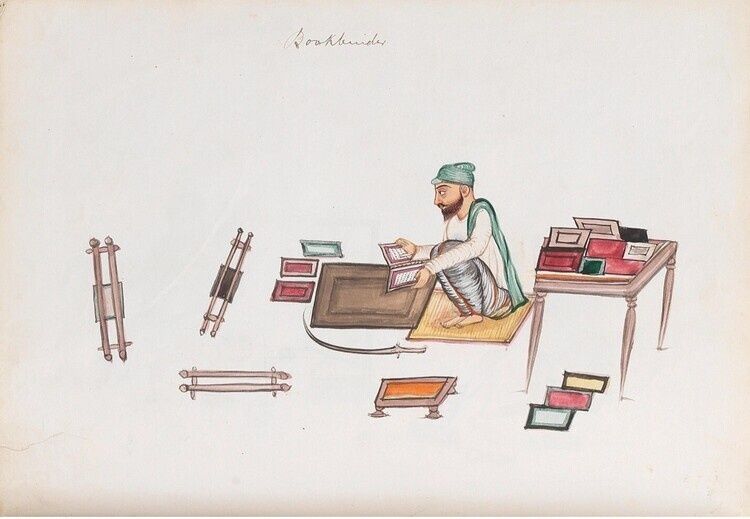
One of the most durable figures in modern history, the peasant has long been a site of intense intellectual and political debate. Yet underlying much of this literature is the assumption that the peasantry simply existed everywhere, a general if not generic group, traced backward from the present to antiquity. Within the British empire, Panjab has been regarded as the quintessential agrarian province inhabited by a diligent, prosperous and “martial race” of peasants. Against such essentialist depictions, I explore the landowning peasant and landless laborer as novel political subjects forged in the encounter between colonialism and struggles over culture and capital within Panjabi society. Colonial officials and ascendant Panjabis together disrupted existing forms of identity and activity to generate a new kind of rural hierarchy in the late nineteenth and early twentieth centuries. Through an interrogation of a disparate archive – settlement reports and legal judgments to labor contracts, vernacular poetry, and family budgets – I challenge the givenness of the peasant by explicating the ideological and material divisions that transformed the equation of power in the countryside, and thus reconfigured global capitalism. Weaving together economic logic with cultural difference, this presentation offers a way to rethink the itinerary of comparative political economy alongside alternative possibilities for emancipatory futures.
Navyug Gill is a historian of modern South Asia and global history. He is an Associate Professor in the Department of History, Philosophy, and Liberal Studies at William Paterson University. His research explores questions of agrarian change, labor politics, caste hierarchy, postcolonial critique, and histories of capitalism. His first book, Labors of Division: Global Capitalism and the Emergence of the Peasant in Colonial Panjab, was published by Stanford University Press in 2024. A South Asa edition was released by Navayana in 2025. The book won the “Henry A. Wallace Award” for the best book on agricultural history outside the US from the Agricultural History Society. Gill’s scholarly and public writings have appeared in venues such as Past and Present, the Journal of Asian Studies, Economic and Political Weekly, Al Jazeera, the Law and Political Economy Project, and Trolley Times.
Additional Information
Program
Einaudi Center for International Studies
South Asia Program
CANCELED - Crafting the Empire’s Echo: Design, Labor, and Politics in Contemporary India

November 3, 2025
12:15 pm
Uris Hall, G08
Talk by Llerena Guiu Searle (Anthropology, University of Rochester)
In order to build a more just world order, philosopher Olúfémi Táíwo argues that we must contend with the fact that our current social order builds on relations of colonialism that did not end with colonial independence in the 1940s-1960s. Slavery, colonialism, and racial capitalism have created what he calls the “Global Racial Empire” which accumulates advantages and disadvantages, harms and capabilities unevenly (2022). How might we understand “design” as a set of practices that operates within such a world system? Drawing on eight months of ethnographic fieldwork with furniture and interior designers in India, this talk examines the ways in which designers navigate capitalist markets that continue to be haunted by colonialism. On the one hand, creative experts shaping elite Indian homes describe design as an anti-colonial project, poised to free India from tastes, fashions, and products from abroad. On the other, designers navigate hierarchies of values set by global markets, including demand for exotic, uniquely “Indian” products. Furniture and interior production also relies on production methods still defined through neocolonial discourses of “crafts difference” (McGowan 2009) and on caste and class dynamics that legitimize labor exploitation. By investigating how these unseen forces – histories, values, and ideologies – structure design practice in India, this paper contributes to our understanding of the politics of the creative industries and their imbrication in “Global Racial Empire.”
Llerena Guiu Searle is an Associate Professor of Anthropology and of Visual & Cultural Studies at the University of Rochester, where she also co-edits the Lewis Henry Morgan Lecture Series. She is the author of Landscapes of Accumulation: Real Estate and the Neoliberal Imagination in Contemporary India (University of Chicago Press, 2016). Her research examines capitalism and the production of the built environment in urban India.
This presentation is supported by the Central New York Humanities Corridor
Additional Information
Program
Einaudi Center for International Studies
South Asia Program
Let Activists Protest and Speak: How Peaceful Actors Curb Militant Support
October 30, 2025
12:00 pm
Uris Hall, G08
Armed militant organizations and affiliated peaceful activist groups often co-exist within dissident movements. Although states tend to identify and repress activists within these movements as fronts for their militant counterparts, there is little research on how activist actions or the repression they face affect support for militant organizations. In this paper, I argue that state repression of peaceful activism boosts support for militant organizations, whilst activist mobilizing propaganda promoting peaceful means diminishes support for them. To test these expectations, I conducted a list experiment in Southeast Turkey, where the militant organization PKK and the activist political party HDP garner significant support. My research design presents sympathizer individuals with treatment videos that vary in the degrees of state repression of activists, and activist mobilizing propaganda. Results demonstrate that the state repression of peaceful activists leads to an immediate increase in support for the militant organization. Conversely, when activists advocate for peaceful mobilization, support for the militant organization diminishes. These findings demonstrate that the immediate attitudinal influence of powerful activist rhetoric is the opposite of what the state justification for its repression rests upon: if activists can convey their calls for peaceful mobilization without state repression, they can diminish support for their militant counterparts.
About the speaker
Ipek Sener studies international relations, conflict and security, great power politics, and quantitative political methodology. Her projects explore the relationship between illegal militant organizations and legal activist organizations within dissident movements, investigating how activist actions influence support for militancy and how militant propaganda can radicalize activists. Another set of projects analyzes how international actors, institutions, and great power competition influence the likelihood and microdynamics of civil war. She uses experimental, quasi-experimental, and observational designs, as well as text-as-data methods in her work. Ipek is a College Fellow at Harvard University, and she earned her Ph.D. in Political Science from Washington University in St. Louis.
Host
Reppy Institute for Peace and Conflict Studies, part of the Einaudi Center for International Studies
Additional Information
Program
Einaudi Center for International Studies
Reppy Institute for Peace and Conflict Studies
Southwest Asia and North Africa Program
A Separate Peace? Withdrawal Bargains and Civil War Intervention
October 16, 2025
12:00 pm
Uris Hall, G08
Civil wars become international conflicts when outside states provide support to rebel groups. Sometimes, external intervention is driven by affinity for the rebel group and a desire to achieve the rebel group’s goals. Sometimes, however, external intervention is driven by tensions on other issues, for example, international rivalry, territorial disputes, or regional leadership. We develop a game-theoretic model to understand the conditions under which a government may break a rebel-external state coalition through bargaining on an international issue. We provide evidence of the empirical relevance of our theory through statistical analysis of civil conflicts, along with an examination of early Libyan intervention in the Chadian civil war. Our argument provides new insight on the connections between domestic and international conflict and the outcomes of internationalized civil wars
About the speaker
Brett Ashley Leeds is Radoslav Tsanoff Professor of Political Science at Rice University. She is currently co-Editor-in-Chief of International Organization. Leeds’s research focuses on the design and effects of international agreements (particularly military alliances), and also on connections between domestic politics and foreign policy. She is the co-author of Domestic Interests, Democracy, and Foreign Policy Change (with Michaela Mattes, Cambridge Elements in International Relations series, 2022). In 2008, Leeds received the Karl Deutsch Award from the International Studies Association, which is presented annually to a scholar in International Relations within ten years of Ph.D. who is judged to have made the most significant contribution to the study of International Relations and Peace Research. In 2019, Leeds won the Lifetime Achievement Award from the Conflict Processes Section of APSA in recognition of scholarly contributions that have fundamentally improved the study of conflict processes. She served as President of the International Studies Association during 2017-18, President of the Peace Science Society during 2018-19, and as Chair of the Rice University Department of Political Science from 2015-2025.
Host
Reppy Institute for Peace and Conflict Studies, part of the Einaudi Center for International Studies
Additional Information
Program
Einaudi Center for International Studies
Reppy Institute for Peace and Conflict Studies
Information Session: Laidlaw Scholars Leadership & Research Program

October 15, 2025
5:00 pm
The Laidlaw Scholars Leadership and Research Program promotes ethical leadership and international research around the world—starting with the passionate leaders and learners found on campuses like Cornell. Open to first- and second-year students, the two-year Laidlaw program provides generous support to carry out internationally focused research, develop leadership skills, engage with community projects overseas, and become part of a global network of like-minded scholars from twenty universities worldwide.
At this session, we'll share more information about the program, including Cornell's cohort-based intercultural community-engaged learning summer experience in Ecuador, and tips for writing a successful application. Applications are due January 12, 2026.
Applicants are also strongly encouraged to attend a Q+A webinar about the summer experience in Ecuador. Q+A webinars are scheduled for November 5 and November 6.
Register here. Can’t attend? Contact programs@einaudi.cornell.edu.
***
The Mario Einaudi Center for International Studies hosts info sessions for graduate and for undergraduate students to learn more about funding opportunities, international travel, research, and internships. View the full calendar of fall semester sessions.
Additional Information
Program
Einaudi Center for International Studies
Reppy Institute for Peace and Conflict Studies
East Asia Program
Southeast Asia Program
Latin American and Caribbean Studies
Institute for African Development
Institute for European Studies
South Asia Program
Migrations Program
Information Session: Laidlaw Scholars Leadership & Research Program

October 7, 2025
5:00 pm
Uris Hall, G02
The Laidlaw Scholars Leadership and Research Program promotes ethical leadership and international research around the world—starting with the passionate leaders and learners found on campuses like Cornell. Open to first- and second-year students, the two-year Laidlaw program provides generous support to carry out internationally focused research, develop leadership skills, engage with community projects overseas, and become part of a global network of like-minded scholars from twenty universities worldwide.
At this session, we'll share more information about the program, including Cornell's cohort-based intercultural community-engaged learning summer experience in Ecuador, and tips for writing a successful application. Applications are due January 12, 2026.
Applicants are also strongly encouraged to attend a Q+A webinar about the summer experience in Ecuador. Q+A webinars are scheduled for November 5 and November 6.
Can’t attend? Contact programs@einaudi.cornell.edu.
***
The Mario Einaudi Center for International Studies hosts info sessions for graduate and for undergraduate students to learn more about funding opportunities, international travel, research, and internships. View the full calendar of fall semester sessions.
Additional Information
Program
Einaudi Center for International Studies
Reppy Institute for Peace and Conflict Studies
East Asia Program
Southeast Asia Program
Latin American and Caribbean Studies
Institute for African Development
Institute for European Studies
South Asia Program
Migrations Program
On Being Bengali: Abul Mansur Ahmed’s Politics of Language
September 29, 2025
12:15 pm
Uris Hall, G08
Talk by Ahona Panda (History, Claremont McKenna College)
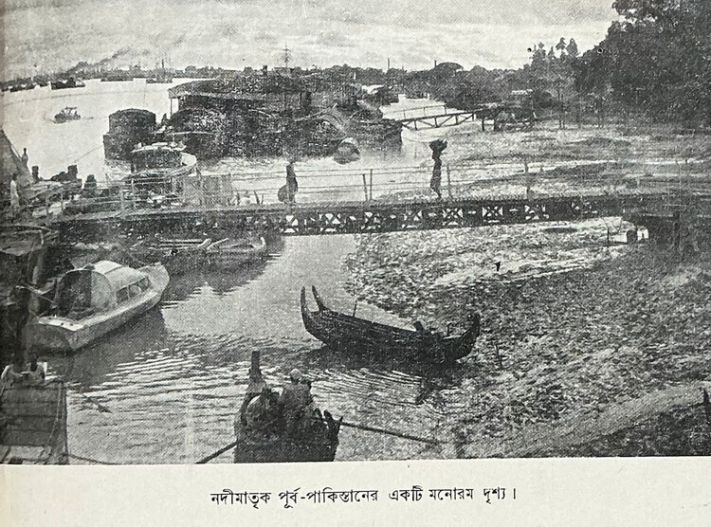
The talk explores the entwined political and literary lives of the Bengali politician and writer, Abul Mansur Ahmed (1898-1979), and studies him as a person who lived through the political articulations of three nationalisms: Indian, Pakistani, and Bangladeshi. From his early involvement in the Indian National Congress, to his shift to the Muslim League and formation of Pakistan, and later his role in shaping the Awami League and modern Bangladesh, Ahmed’s life reflects the deep contradictions of his time. In this talk, I explore how, for Ahmed, “Muslim” was not merely a religious category, but a social class formation produced through colonial agrarian structures and shaped by Hindu cultural and linguistic hegemony. Language, then, became both a site of resistance and a battleground for Muslims and Hindus: who controlled Bengali? Who spoke for its future? Ahmed’s suspicion of Hindu-Muslim unity stemmed from a trenchant critique of elite Hindu appropriation of language and culture. And yet, Bengali–– and language itself–– remained a terrain of unresolved tension and closeness between the two communities.
I situate Ahmed alongside literary friends like Kazi Nazrul Islam, political figures like Chittaranjan Das, A.K. Fazlul Huq and H.S. Suhrawardy, as well as humanists like Ahmed Sharif and Anisuzzaman, who held out hope that the Bengali language could transcend nation-state divisions. As India-Bangladesh relations continue to worsen, the talk rethinks whether language is the site of irreconcilable difference, or the elusive site of what binds us beyond the injustices of class, race, and history.
Ahona Panda is a historian of South Asia and Assistant Professor of History at Claremont McKenna College. In 2025-2026, she is a Visiting Scholar of South Asian History at Cornell University. Her research focuses on the intersections of language, land, and politics in Bengal from the colonial period to the postcolonial present. She is currently completing a book titled Language and its Communitas: The Life of Bengali, 1793–1971, which explores the political and emotional life of the Bengali language, and the material, national, and literary histories that shaped it. Her broader scholarly interests include philology, economic and environmental history of the Bengal delta, and the long history of Hindu–Muslim relations in South Asia.
Additional Information
Program
Einaudi Center for International Studies
South Asia Program