
Einaudi Center for International Studies
Panama Accepted Asylum-seekers the US Didn’t Want. Then its Troubles Began.

Ian Kysel, Migrations
Ian Kysel, associate clinical professor of law, says “It’s appropriate for states to collaborate on how to respond to migration. But the first principle of that has to be to ensure that the rights of all migrants are protected.”
Additional Information
Global Confidence Slumps as Trade Turmoil Looms Over IMF Meetings

Eswar Prasad, SAP
“We have seen this huge shock. Every open economy that relies on trade is going to get squeezed, and on top of that you will have [negative] confidence effects,” says Eswar Prasad, senior professor of international trade policy.
Additional Information
Cornell Gamelan Ensemble Concert

May 6, 2025
7:30 pm
Klarman Hall, Klarman Hall Atrium
Under Guest Director Heri Purwanto, a freelance musician from Surakarta, Indonesia, the Cornell Gamelan Ensemble presents a varied program of traditional Javanese music in the Klarman Hall Atrium.
Co-sponsors: The Department of Music, the Mario Einaudi Center for International Studies, the Department of Asian Studies, and the Southeast Asia Program.
Additional Information
Program
Einaudi Center for International Studies
Southeast Asia Program
Thailand, Uyghurs, and a Shifting Foreign Policy Toward China

Magnus Fiskesjö interviewed by The Diplomat
Magnus Fiskesjö (SEAP/EAP) spoke with The Diplomat after Thailand secretly deported at least 40 Uyghurs to China.
In late February, Thailand ignored international pleas for mercy and secretly deported at least 40 Uyghurs to China, prompting accusations that Bangkok had bowed to pressure from Beijing and eliciting an angry response from Washington.
Additional Information
Speed Talks: Building Solidarity and Resistance

May 14, 2025
4:30 pm
This event has been postponed until fall 2025.
***
Join the Einaudi Center and researchers from across campus for three-minute speed talks and community conversation on ways to organize and push back against fast-moving federal actions.
Speakers will jump off from interdisciplinary and international research to provide a fresh perspective on current U.S. public policy and the potential for effective collective action. Together we'll look at challenges faced and solutions found in a variety of academic fields and places around the world—to help us think through how to unify disparate interests and find allies to resist democratic backsliding.
The event features clusters of speed talks on related topics, with time for Q&A and conversation on each topic.
***
Speakers
David A. Bateman | GovernmentSidney Tarrow (IES) | GovernmentPrisca Jöst | Public Policy
More speakers to be confirmed.
***
Sponsors
This conversation is hosted by the Mario Einaudi Center for International Studies, partnering with Cornell Brooks School of Public Policy's Governance and Local Development Institute and Data and Democracy Lab.
Find out how graduate and undergraduate students can get started at Einaudi.
Additional Information
Program
Einaudi Center for International Studies
Reppy Institute for Peace and Conflict Studies
East Asia Program
Southeast Asia Program
Latin American and Caribbean Studies
Institute for African Development
Institute for European Studies
South Asia Program
Migrations Program
International Relations Minor Career Paths

April 29, 2025
4:00 pm
Rockefeller Hall, 105
Are you considering starting a career that utilizes regional expertise, language skills, or experience with foreign policy? Ever wondered what it's like to work in various capacities in governments, how to prepare yourself to be a successful applicant for jobs, or what work will let you utilize your knowledge of the world? Are you curious to learn more about current events, history, or the broader global implications of your major? Whether you are interested in a possible career in public service, academia, or the private sector, the international relations undergraduate minor can help you explore these opportunities.
Please join the Einaudi Center for International Studies for a discussion about career paths and opportunities at the State Department and in public service, featuring Cornell alumni who will share their insights:
Jason Oaks, Deputy National Intelligence Officer for East Asia, U.S. Department of StateAngie Yucht Swenson, Founder and Principal of AYS Tutoring and Consulting, LLC
To attend virtually, register here.
This session is presented by the Einaudi Center and the faculty advisor of the international relations minor, Oumar Ba. The minor is open to all Cornell undergraduate students interested in learning about the politics, economics, history, languages, and cultures of the world.
Additional Information
Program
Einaudi Center for International Studies
Reppy Institute for Peace and Conflict Studies
East Asia Program
Southeast Asia Program
Latin American and Caribbean Studies
Institute for African Development
Institute for European Studies
South Asia Program
Migrations Program
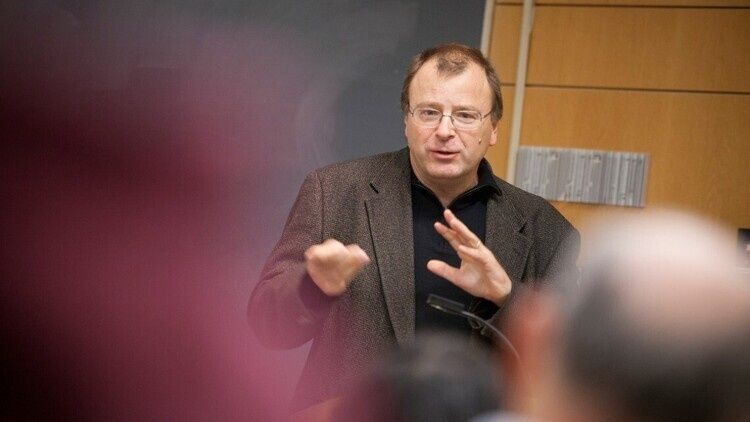
Politics, Markets, and Governance in Africa: A Conference in Honor of Nicolas van de Walle
May 9, 2025
9:00 am
Warren Hall, B75
Our cherished friend and colleague Nicolas van de Walle (1957-2024) shaped the field of political science and African politics in substantial and important ways. His insights into the politics of economic policymaking and “permanent crisis,” the driving forces of regime dynamics, electoral politics, and democratic transitions continue to underpin the foundations of comparative politics.
Beyond his written work, van de Walle’s legacy is firmly anchored in how he treated his fellow scholars—at home at Cornell and around the world. His kindness, generosity of spirit, intellectual curiosity, and joy in the ongoing process of learning from others. These are the characteristics that define him to so many who were lucky enough to know him and interact with him. He has served as a mentor to hundreds: offering support, incisive feedback, advice, and conversation to think through the politics of our time. We honor him as a brilliant scholar and a gentle soul who lifted others up and made our collective humanity richer.
This conference in his honor will focus on the core themes of African political economy, regimes, and modes of electoral and social participation and contestation.
Hosted by the
Institute for African Development (Einaudi Center for International Studies); Department of Government; College of Arts and Sciences; and the Center on Global Democracy (Cornell Jeb E. Brooks School of Public Policy).
Organizers
Rachel Beatty Riedl, Peggy J. Koenig ‘78 Director of the Center on Global Democracy (Brooks School of Public Policy) and Professor, Government; Rachel Bezner Kerr, Director, Institute for African Development, and Professor, Global Development; Sabrina Karim, Associate Professor, Department of Government; Muna Ndulo, William Nelson Cromwell Professor of International & Comparative Law, Cornell Law School; and, Oumar Ba, Assistant Professor, Government, Cornell
Additional Information
Program
Einaudi Center for International Studies
Institute for African Development
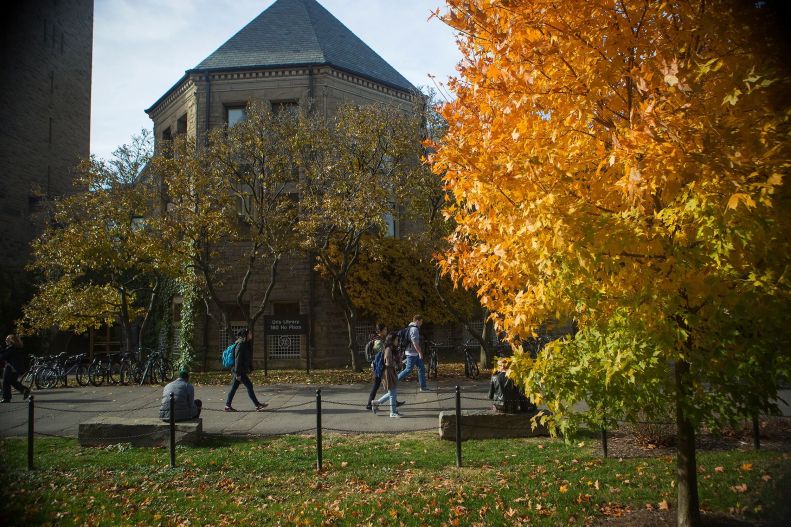
Our Foreign Students Are Terrified, and They’re Right to Be
Rachel Beatty Riedl and Stephen Yale-Loehr, Migrations
International students are vital to campuses, writes former Einaudi director Rachel Beatty Riedl and Stephen Yale-Loehr (Migrations) in this New York Times op-ed.
Additional Information
PACT FOR THE FUTURE: The United Nations and International Development in a Time of Change
April 25, 2025
3:30 pm
Warren Hall, 175
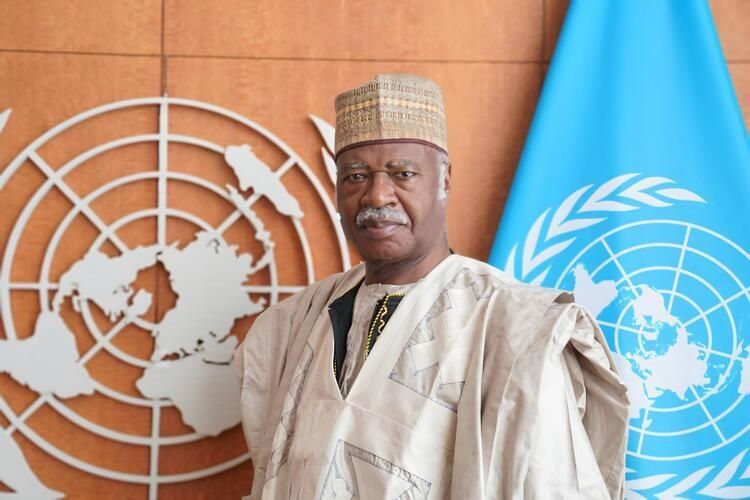
You’re Invitedto a special lecture: PACT FOR THE FUTURE: The United Nations and International Development in a Time of Change Presented by Philémon Yang, President of the 79th Session of the United Nations General Assembly
Join us for a timely and thought-provoking lecture by Ambassador Philémon Yang, Cameroonian statesman, diplomat, and current President of the 79th Session of the UN General Assembly. With decades of international experience—including service as Prime Minister of Cameroon, High Commissioner to Canada, and leadership within the African Union and UN—Ambassador Yang offers unique insights into global development, diplomacy, and cooperation in an era of transformation.
This event is sponsored by the Brooks School's Center on Global Democracy, the Einaudi Center for International Studies, Covernance and the Local Development Institute, and the Polson Institute.
All are welcome.
Additional Information
Program
Einaudi Center for International Studies
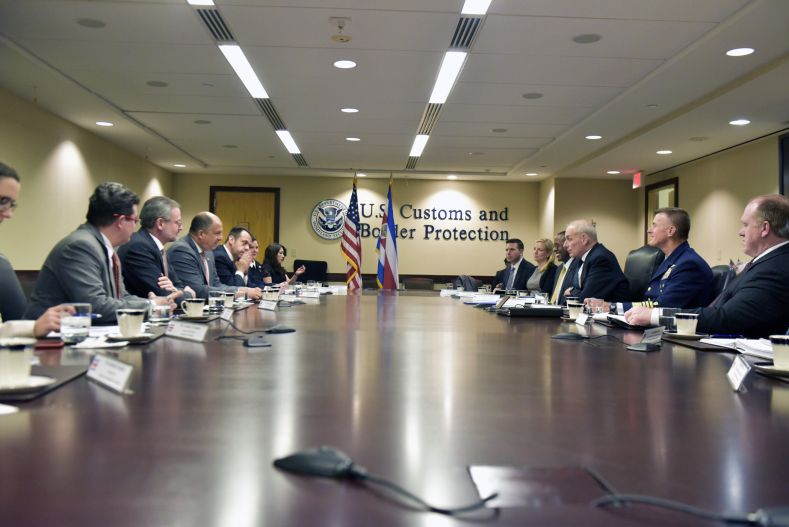
Costa Rica Violated Rights of 81 Migrant Children Deported by U.S., Lawsuit Says
Ian Kysel, Migrations
Ian Kysel, associate clinical professor of law, explains that complaints against Costa Rica can be brought to the panel of experts.